Best Betta Rock Cave: Two Stone-Look Hideouts Compared
As an Amazon Associate we earn from qualifying purchases. Details
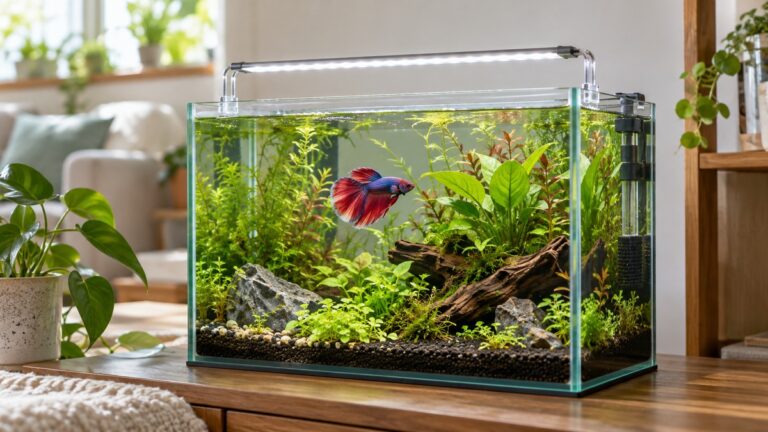
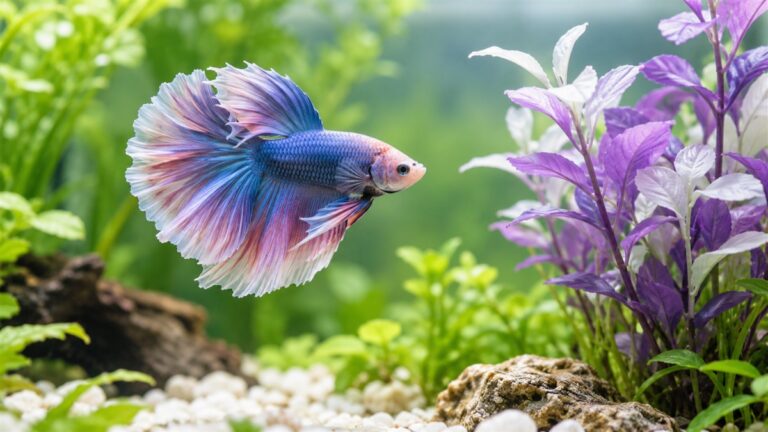
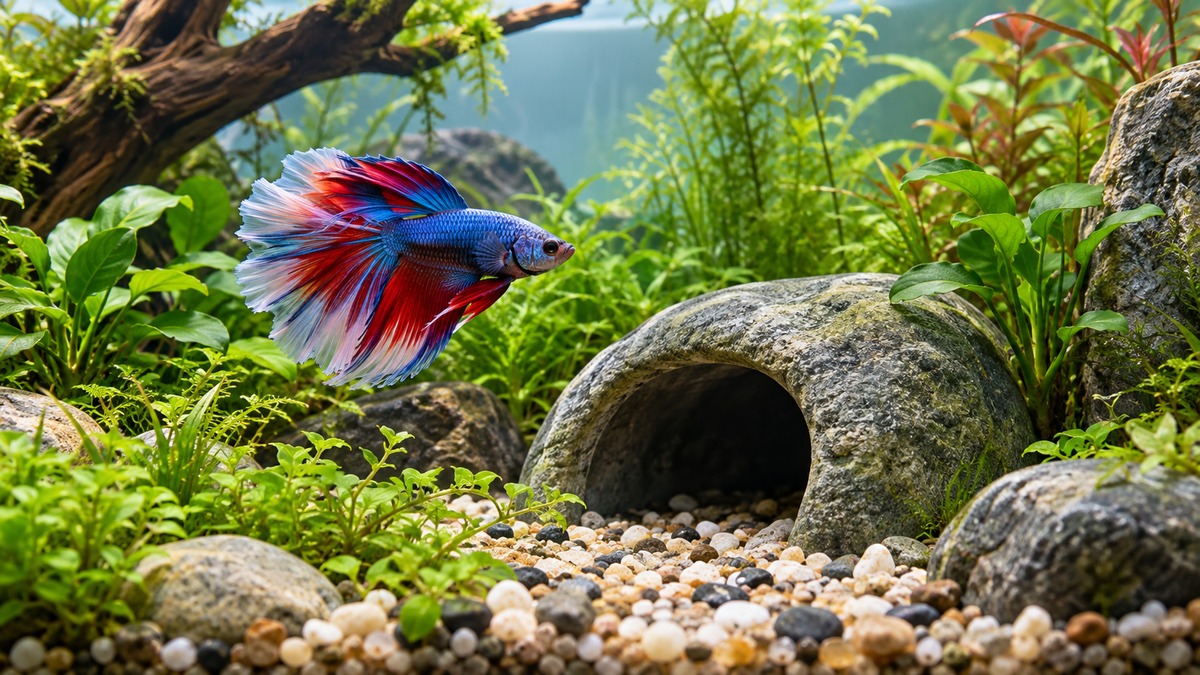
A betta rock cave gives your betta a place to rest, hide and feel less exposed in its tank. Bettas set up territories even when they are kept alone, and they enjoy a decorated tank, so a cave suits a single fish well. This roundup compares the two stone-look caves that fit this keyword and explains what to check before buying one. Other cave styles, such as coconut shell, driftwood-look silk and conch shell, fall outside this keyword, so they are left out. Keep the tank at 5 gallons or more for a single betta, the minimum this site recommends. Use the criteria below to judge finish, opening, edges and fit.
Quick answer
Choose the Ameliade cave if you want a plain stone-colored hideout with a simple shape. Choose the SpringSmart cave if you want a granite-textured ceramic shelter with two openings and a listing that says it has no sharp or rough edges. Both are small, with widths of 3.5 inches to 3.55 inches, so depth and opening matter more than outer size. Neither listing gives an opening measurement, so measure your fish and the opening before you buy. Keep the tank heated and filtered at 5 gallons or more; a cave does not change that minimum.
What matters for this keyword
Opening size relative to the fish
A betta has to pass through the opening without catching its fins, so the opening is the first measurement to check. Neither the Ameliade nor the SpringSmart listing gives an opening size. The Ameliade bullets say its hollow form gives shelter, hiding spots and room for spawning, but they stop short of a diameter. The SpringSmart listing mentions dual openings, which tells you there are two ways in, not how wide either one is.
Edges and finish
The edge is the part that touches fins, so it matters more than the stone pattern. The SpringSmart listing says the cave has no sharp or rough edges and links that to avoiding fin scrapes. The Ameliade listing says nothing about edges, and it lists the care instruction as fragile. Inspect each cave on arrival, before it goes into the tank, and run a fingertip along the rim and opening. Both picks are ceramic, so the finish and the opening are what separate them.
Weight and placement
Both caves are light. The Ameliade listing gives 4.96 ounces and the SpringSmart listing gives 5.28 ounces. Light decor can shift on a bare bottom, so set it on sand or gravel and check that it stays where you put it. If you are still choosing a base for the tank, the guide on sand or rocks for a betta tank covers how each base changes placement.
Cleaning and water testing
Rinse the cave with plain water when you clean the tank. The Ameliade listing says a simple rinse is all it needs. Rinsing does not replace water testing. Ammonia is colorless and, even at levels toxic to fish, odorless, so the only way to know whether ammonia is present is to test the water.
Tank size and the single-betta floor
A cave is decor, not a fix for a small tank. This site’s minimum for one betta is a heated, filtered tank of 5 gallons or more. Wikipedia notes that bettas kept with other fish need at least 45 litres, about 10 gallons. Before you add any cave, check your tank size guide for betta fish and a heater for a betta tank.
1. Ameliade Betta Fish Tank Rock Cave Decor Aquarium Accessories, Medium (Best plain stone look)
Specs from the listing (checked 2026-10-13):
- Color: Stone
- Material: Ceramic
- Item Dimensions D x W x H: 3.26"D x 3.55"W x 3.55"H
- Item Weight: 4.96 ounces
- Product Care Instructions: Fragile
Pros
- The listing gives the color as Stone and the style as Natural.
- The listing says the surface imitates natural stone texture.
- The listing says a simple rinse with water is all it needs for cleaning.
Cons
- The listing gives no opening size for the hollow cave.
- The listing marks the care instruction as fragile.
- One highlight calls it a small fish bowl ornament, which points to bowl decor.
Best for: A single betta in a heated tank that needs one simple stone-look hideout.
Skip if: Skip it if you need a stated opening size or two entrances before you buy.
View on Amazon (affiliate link)
2. SpringSmart Betta Fish Tank Decor Rock Cave, Aquarium Hideout Accessories (Best for two openings)
Specs from the listing (checked 2026-10-13):
- Color: Gray
- Material: Ceramic
- Product Dimensions: 3.5"D x 3.5"W x 3.35"H
- Item Weight: 5.28 ounces
- Item Highlight: Granite-textured ceramic shelter with dual openings for shrimp and hermit crab to rest and breed; natural-looking decorations
Pros
- The listing describes two openings for fish to rest and breed in.
- The listing says it has no sharp or rough edges, so fins should not scrape.
- The listing gives the color as Gray and the material as ceramic with a granite pattern.
Cons
- The listing gives no size for either opening.
- The highlight names shrimp and hermit crab first, so the listing aims beyond bettas.
- The listing calls the ceramic safe and non-toxic for fishes without citing a test.
Best for: A single betta, or a small tank that also holds shrimp and needs two entrances.
Skip if: Skip it if you need a measured opening that you can match to your fish.
View on Amazon (affiliate link)
How to choose between the two
Choose the Ameliade cave if you want one plain stone shape and you are willing to check its opening yourself. Its listing gives the color as Stone and the style as Natural, so it fits a stone-look setup without a pattern to match.
Choose the SpringSmart cave if you want two openings in a ceramic piece with a granite pattern. Its listing describes the cave as a shelter that betta, shrimp and other small fish can use, so it fits a community tank that also holds shrimp.
Choose neither if you cannot measure the opening, because neither listing gives you that number. In that case, look for a listing that states the opening size before you spend money.
If you are setting up a first betta, buy the tank and heater first and the cave second. A cave is the last piece that changes how the fish uses the tank, so it should not decide the tank size.
The table below puts the listed details side by side. A blank cell in the table means the listing does not state that detail.
| Detail | Ameliade | SpringSmart |
|---|---|---|
| Color | Stone | Gray |
| Material | Ceramic | Ceramic |
| Depth | 3.26 inches | 3.5 inches |
| Width | 3.55 inches | 3.5 inches |
| Height | 3.55 inches | 3.35 inches |
| Weight | 4.96 ounces | 5.28 ounces |
| Opening size | Not stated | Not stated, two openings |
| Edges | Not stated | No sharp or rough edges |
Ameliade’s depth is 3.26 inches and SpringSmart’s depth is 3.5 inches. The difference is 3.5 minus 3.26, which equals 0.24 inch. Check: 3.26 plus 0.24 equals 3.5, so the difference is right. End to end, the two depths add to 6.76 inches: 3.26 plus 3.5 equals 6.76. Check the other way: 6.76 minus 3.5 equals 3.26, which matches the first depth. The depth gap is small, so the choice will not change the floor space much. Decide on the opening, the edges and the finish instead.
Mistakes to avoid
- Buying decor sold as a fish bowl ornament. One Ameliade highlight calls the cave a small fish bowl ornament. That wording points to bowl decor, and this site does not recommend a bowl as a betta home.
- Choosing by the word safe. Neither listing uses the phrase betta safe. The SpringSmart bullets say its ceramic is safe and non-toxic for fishes, which is the seller’s claim and not a test result you can check from the page.
- Skipping the opening check because the cave looks small enough. A small cave can still have an opening that is too tight for the fish.
- Treating a cave as a substitute for water care. A hideout does not show you ammonia or nitrite levels.
Checklist before you buy
- Opening: write down your fish’s body width, then check the opening on the listing. Neither listing gives an opening size, so measure the cave yourself with a ruler before you decide.
- Edges: look for a statement about sharp or rough edges, then inspect the rim and the opening on arrival.
- Depth: compare the listed depth with the floor space you have. Ameliade gives 3.26 inches of depth and SpringSmart gives 3.5 inches.
- Weight: note the listed weight so you can judge stability on your base. Ameliade gives 4.96 ounces and SpringSmart gives 5.28 ounces.
- Care instructions: the Ameliade listing marks the cave as fragile, so lift it with both hands and set it down gently.
- Claims: read words such as safe and non-toxic as the seller’s wording. Look for confirmation in the maker’s manual rather than in the title.
Setting one up in the tank
Rinse the cave in plain water before you place it. Set it on a flat part of the base rather than on a slope where it can tip. Then watch your betta for a few days. If the fish ignores the cave, leave it where it is and watch again instead of moving it every day. A cave is decor, so the fish decides whether it gets used.
When a rock cave is not the answer
A cave cannot correct a tank that is too small, too cold or unfiltered. If the home is a bowl or a container under 2.5 gallons, the cave changes nothing about the setup, because this site does not recommend bowls as a betta home. A cave also cannot tell you whether a fish is unwell. If your betta looks unwell, ask an experienced fish keeper or an aquatic vet, and do not dose any medication based on a decor page.
Who should skip a rock cave
Skip a rock cave if your tank is under the 5-gallon minimum, because a cave will not make a smaller tank suitable. Skip either pick if you need a stated opening size before you buy and you cannot measure the opening yourself. Skip both if you expected a listing that gives a measured fit for a betta’s body; neither listing does. A cave that you can set in a heated, filtered tank of 5 gallons or more is the case this guide is written for.
FAQ
Does a rock cave help a betta?
It gives a single betta a place to rest out of open water and a place to hide when it wants privacy. The cave supports that need, but it does not replace a heater, a filter or regular water tests.
How big a tank does a cave need?
Tank size matters more than cave size. Wikipedia notes that bettas kept with other fish need at least 45 litres, about 10 gallons, so a cave is never a reason to keep a betta in anything smaller.
Is a ceramic cave safe for my betta?
Both picks in this guide are ceramic. The SpringSmart listing says its ceramic is safe and non-toxic for fishes. The Ameliade listing says its ceramic has the function of filtering water. Neither listing cites a test for these claims, so check the water after you add the cave.
Can a betta get stuck in the opening?
It is possible to misjudge an opening, which is why measurement matters. Neither listing gives a size, so measure the opening with a ruler and compare it with your fish before you add the cave. If you cannot measure it, do not buy on looks alone.
What is the difference between the two caves?
The main differences are the opening and the finish. The Ameliade cave is a single stone-colored piece. The SpringSmart cave is gray, with a granite pattern and two openings. Their depths differ only slightly, so shape and finish will decide the choice.
How do I clean a cave?
Rinse it with water when you clean the tank. Do not use soap unless the maker’s manual says it is safe for aquarium decor.
What should I test in the water first?
Test for ammonia first, because it is odorless and toxic even when you cannot smell it. A good test kit includes a TAN test, a pH test and a thermometer, since the toxic share of ammonia depends on pH and temperature. Nitrite is toxic to fish at levels as low as 0.10 mg/L, so test for it as well.
Should I buy two caves for one tank?
The Ameliade listing says you can use one cave alone or buy several of different sizes to place together. Add a second cave only after the first one shows a clear use in your tank, and apply the opening check to each one.
What if my betta does not use the cave?
Not every betta uses a hideout right away. Give it several days while the heater and filter run normally and the water stays tested. Move the cave only if its spot looks wrong, for example a spot that sits in strong flow from the filter.
Bottom line
Pick the Ameliade cave if you want one plain stone-colored hideout and you can measure its opening. Pick the SpringSmart cave if you want two openings in a ceramic piece whose listing describes no sharp or rough edges. Either way, measure the opening first, rinse with water, test the water, and keep the tank heated and filtered at 5 gallons or more. If your tank is smaller than that, a cave will not change the fit.
Sources
- Siamese fighting fish, Wikipedia: bettas set up territories when housed alone, and kept with other fish they need at least 45 litres, about 10 gallons.
- Ammonia in Aquatic Systems, UF/IFAS: ammonia is odorless and must be tested; a good test kit includes a TAN test, a pH test and a thermometer, and nitrite is toxic at 0.10 mg/L.