Top Fin Water Test Vial
As an Amazon Associate we earn from qualifying purchases. Details
If you searched for a Top Fin water test vial, you likely have a Top Fin test kit and need a replacement vial, or you want to know whether Top Fin sells one on its own. On 2026-10-18 we searched Amazon for that exact phrase and the results did not show a Top Fin vial. They showed API test kits, test strips, a multi-parameter kit from other brands, bacteria tests for drinking water, and one pack of empty glass tubes.
Quick answer
We could not find a Top Fin test vial on Amazon. The closest standalone item is the BASE WAVE Aquarium Test Glass Tube 6-pack (5 ml glass tubes with plastic caps). Its listing does not say it fits any kit, so check your kit’s tube before ordering. If your current kit is an API kit, the API Freshwater Master Test Kit and the API pH Test Kit each include their own tube or tubes in the box.
What a test vial does
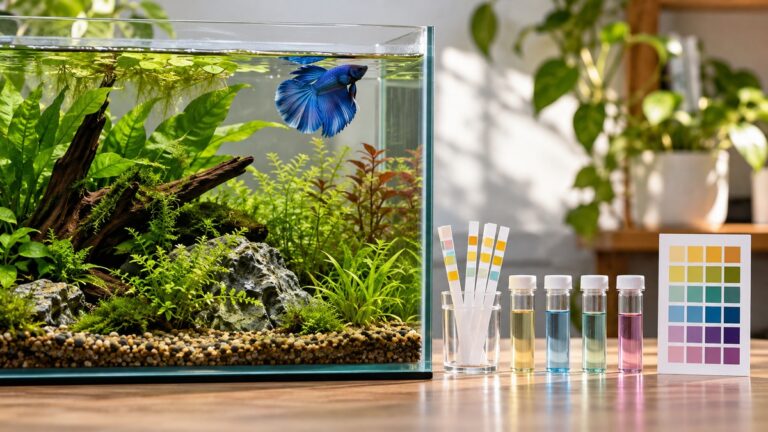
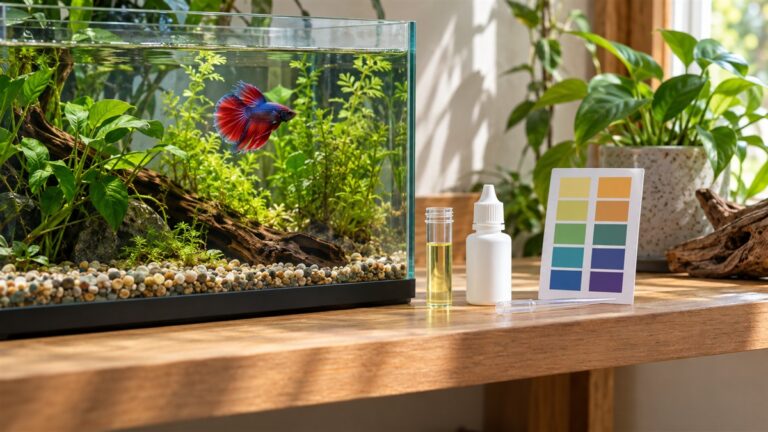
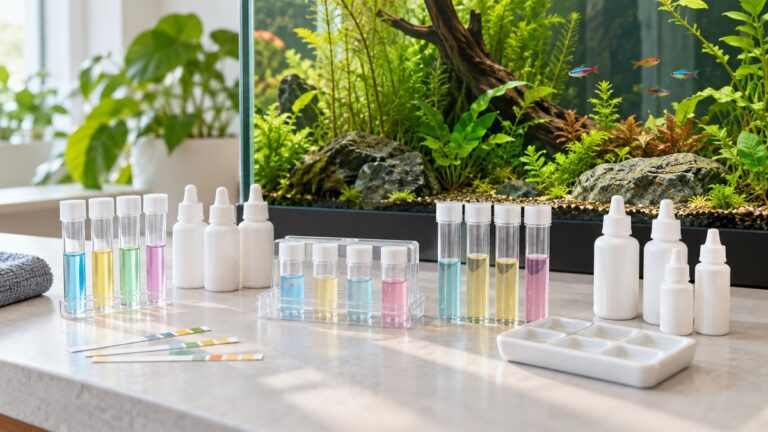
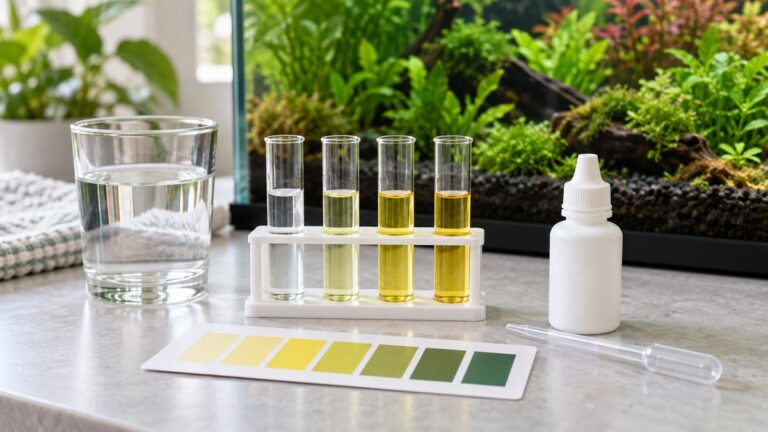
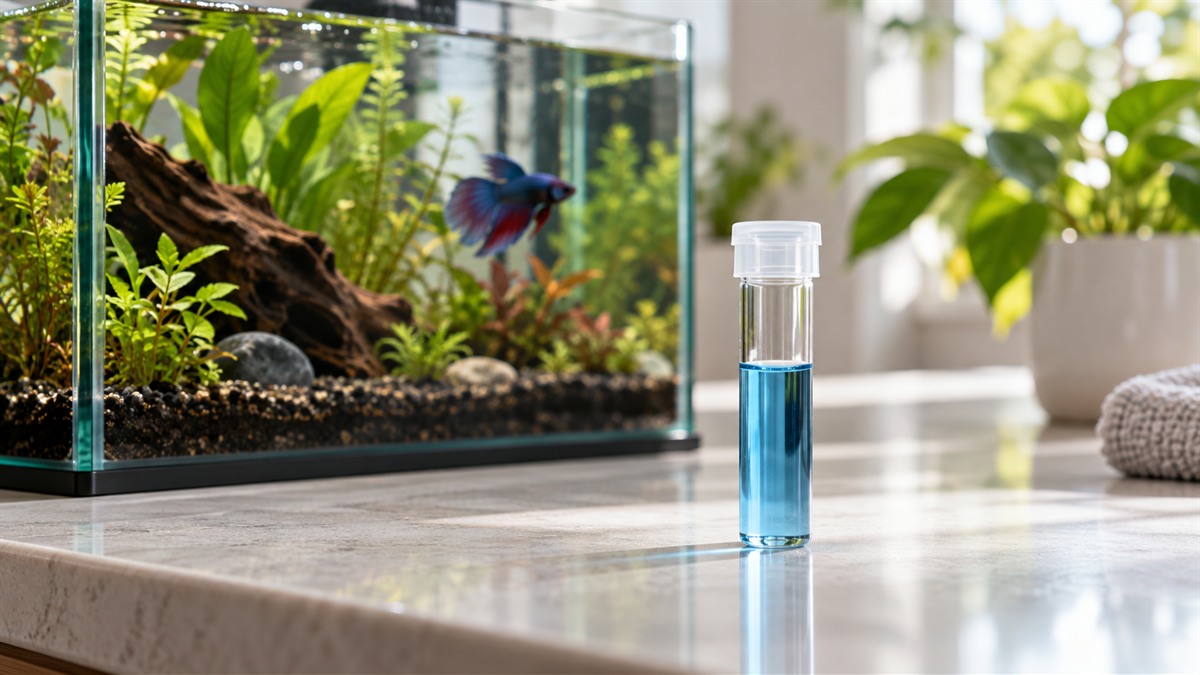
A kit’s vial, also called a test tube, holds the water sample while you add reagent drops and read the color against the card. The tube is not a separate measurement, it is just the container, so a replacement works only if its size and cap suit the reagent instructions that came with the kit. The UF/IFAS publication on ammonia in aquatic systems says hobbyists should invest in a dependable water quality test kit, and notes that a good ammonia kit includes a TAN test, a pH test and a thermometer. A cracked or stained vial makes the color harder to read, which defeats that purpose.
The listings
| Product | Tubes in the box | Tests | Checked |
|---|---|---|---|
| BASE WAVE glass tube 6-pack | 6 empty tubes, 5 ml | None, container only | 2026-10-18 |
| API Freshwater Master Test Kit | 4 tubes with caps | pH, high range pH, ammonia, nitrite, nitrate | 2026-10-17 |
| API pH Test Kit | 1 tube with cap | pH 6.0 to 7.6 | 2026-10-18 |
BASE WAVE Aquarium Test Glass Tube, 6-pack (5 ml)
Specs (from the listing, checked 2026-10-18): six glass tubes with plastic caps; 5 ml; listed size 4 inches (102 mm) by 1/2 inch (12 mm); weight 2.18 ounces; manufacturer listed as guanyu aquarium. The bullets say it is suited to testing hardness, carbonate, nitrate, nitrite, pH and more, and to lab and classroom use.
Listing conflict: the size line labels the dimensions “D x L” but gives 4 inches first and 1/2 inch second, which reads as diameter 4 inches by length half an inch. That is clearly reversed; the tube is a long thin tube. The listing does not name any kit it fits.
Best for: spare tubes for an owner whose existing tube is a similar glass vial. Skip if: your kit’s tube is a different size or uses a special cap.
View on Amazon (affiliate link)
API Freshwater Master Test Kit (800 tests)
Specs (from the listing, checked 2026-10-17): 7 bottles of testing solution, 1 color card and 4 tubes with cap; 800 tests per kit; for freshwater aquariums only; item dimensions 9.13 x 3.5 x 4.65 inches; 1.15 pounds; model number 34.
Listing conflict: the bullet says the kit monitors 5 parameters (pH, high range pH, ammonia, nitrite, nitrate), while the product description says six; the Amazon page lists four tubes for those tests.
Best for: a full freshwater kit with its tubes included, so you do not need to buy a vial separately. Skip if: you only need a spare tube.
View on Amazon (affiliate link)
API pH Test Kit (250 tests)
Specs (from the listing, checked 2026-10-18): one bottle of testing solution, one color card and one test tube with cap; reads pH 6.0 to 7.6; 250 tests; weight 2.4 ounces; manufacturer Mars Fishcare; model 28. The listing says to use it for weekly monitoring and when water or fish problems appear.
Best for: a pH-only check with a single tube included. Skip if: you also want ammonia, nitrite and nitrate; the Master Kit covers those.
View on Amazon (affiliate link)
What you are reading through the vial
Ammonia is the reading that matters most to a betta keeper. UF/IFAS says ammonia is colorless and, even at levels toxic to fish, odorless, so a test is the only way to know it is there. It adds that un-ionized ammonia is approximately 100 times more toxic to fish than the ionized form, and that the toxic share rises with pH and temperature. That is why a pH tube and an ammonia tube are often used together. If a tube is scratched, stained or cracked, replace it before you trust a color match.
A planning example for a 5 gallon tank: Aqueon’s care guide suggests changing 10% of the water weekly in a filtered aquarium, which is 0.5 gallons, or 25% every two weeks, which is 1.25 gallons. Testing the day before a water change shows you what the change has to fix; testing again an hour or two afterwards shows whether it worked. The timing is our suggestion, not a source rule.
How many vials do you need?
A worked example: suppose you test ammonia, nitrite and nitrate in one session. If each test needs its own tube, that is 3 tubes in use at once. A 6-pack covers two such sessions without washing; the Master Kit’s 4 tubes cover one session with one spare. If you only wash and reuse tubes, one is enough, but the colors can carry over if rinsing is poor. This is a planning example, not an instruction from either listing.
- Rinse well. Rinse a tube with the tank water you are about to test, since leftover reagent changes the reading. This is our own habit, not a source claim.
- Keep the caps. The Master Kit lists “tubes with cap”; a tube without its cap is harder to shake or cover.
- Match the card. A new tube should hold the same volume of water as the one in your kit. The BASE WAVE listing says 5 ml; check your kit’s directions for the volume it wants.
- Test weekly. Both API listings say to use the kit for weekly monitoring and when water or fish problems appear.
If your Top Fin kit is a strip kit
Strip kits have no vial at all: you dip a strip in the tank and read the pad colors against the chart. See our guides to water quality test strips and the freshwater test kit. The API 5-in-1 strip listing says it monitors pH, nitrite, nitrate, carbonate and general hardness, with 100 strips in the box.
Frequently asked questions
Does Top Fin sell a separate test vial?
We did not find one on Amazon on 2026-10-18. Contact the maker or check your kit’s box for the exact replacement part.
Can I use an API tube with another kit?
The listings do not say. Check the volume your kit’s directions call for before mixing parts.
How often should I test?
Both API listings say weekly, and when water or fish problems appear. UF/IFAS says to test ammonia immediately when fish behavior changes, including reduced feeding.
For reading results, see our API Freshwater Master Test Kit chart guide.