Best Fish Tank Water Quality Test Strips for Bettas
As an Amazon Associate we earn from qualifying purchases. Details
fish tank water quality test strips help you check what you cannot see in a betta tank. This guide helps you decide which strip kit fits a small heated, filtered setup, what each kit checks for, and how often to test. You will learn which kits include ammonia, how many strips you get, how readings work, and what to check on the listing before you buy. It covers freshwater betta tanks of 5 gallons or more, which is the common expert recommendation for a single betta. If your tank is new, small, or recently changed, regular checks help you spot shifts early and act with water changes and conditioner.
Quick answer
For most single betta owners, choose fish tank water quality test strips that include ammonia, pH, nitrite, and nitrate, with a readable color chart. Ammonia matters because waste builds fast in 5 gallons of water, and strips without ammonia miss that check. If you test twice each week while a filter matures, a 50-count bottle lasts about 25 weeks, while a 150-count or 175-count pack lasts much longer. Small kits suit one tank, while larger counts suit several tanks or frequent checks. Shoppers looking for api fish tank water test options or api test strips betta fish searches should compare the same points: ammonia coverage, freshwater use, strip count, and clear timing steps. Check the listing for the full parameter list.
What matters for fish tank water quality test strips
Ammonia coverage
Ammonia comes from waste and uneaten food. Many 6-in-1 strips check nitrate, nitrite, hardness, chlorine, alkalinity, and pH but do not list ammonia. For a betta, ammonia is an important check during the first weeks and after changes to feeding, filter media, or tank mates. The listings here differ. Some state ammonia nitrogen in the title or bullets, while one lists 6 parameters without ammonia. If the listing does not state ammonia, plan a separate ammonia check and read the Fish Tank Test Strip Color Chart before you compare colors.
Parameter mix and freshwater fit
Strip kits range from 6-in-1 to 11-in-1. More pads do not always help a beginner. A useful betta mix covers pH, nitrite, nitrate, hardness, alkalinity, chlorine, and ammonia. All the picks here list freshwater aquarium use in the title, bullets, or recommended uses. Some also list saltwater, ponds, or shrimp tanks. That extra fit does not hurt, but read the freshwater side of the chart. For background on tank context, see How Big of a Tank Do Betta Fish Need and Best Freshwater Fish Tank Water Test Kit.
Strip count, packaging, and shelf life
Counts here range from 25 Count to 175 Count. One listing packs 150 strips as 50 strips in a bottle plus 100 in separate bags, while another uses a sealed bottle and another uses a screw-top container. Once opened, one listing advises use within 3 months for maximum accuracy. That matters if you buy bulk for one betta. A large count helps only if you can keep strips dry and use them before they age. The listing states package dimensions such as 5.39 x 2.13 x 2.09 inches and weights such as 2.39 ounces, which help you judge storage size.
Reading steps and timing
Dip time and read time differ by kit. Examples from the listings include dip for 2 seconds, hold horizontally for 30 seconds, wait 60 seconds for nitrate and nitrite, and wait 60 seconds before reading. One kit asks for a separate dip for the ammonia pad. Another kit uses an app scan instead of color guessing. Short steps suit quick weekly checks, but you must follow the exact seconds on your chart. Skipping the wait or shaking the strip can change the color. If timing feels hard to follow, a kit with larger color blocks or app reading may suit you better.
Color chart clarity and extras
A clear chart reduces misreads. The listings mention non-bleeding colors, large color blocks, clear comparison chart, testing tubes, thermometer, and eBook guidance. Extras do not replace correct range coverage. Check the pH range on the listing. Several listings here state Ph Range 6.0-8.0. Bettas in the wild have been found in water with pH from 6.9 to 8.2, so a chart that covers your tap water range matters. For related checks, see 5 in 1 Water Test Strips and Best Ph Water Tester for Fish Tank.
Top picks for betta tanks
The cards below show specs, strengths, and limits. The notes that follow add who each kit fits best.
1. AAwipes 8-in-1 Aquarium Test Kit for Fish Tanks – Quick & Accurate Water Testing Strips (Best overall)
Specs from the listing (checked 2026-10-10):
- Number of Items: 50
- Item Weight: 2.39 ounces
- Package Dimensions: 5.39 x 2.13 x 2.09 inches; 2.4 ounces
Pros
- States 8-in-1 coverage including ammonia plus pH, alkalinity, hardness and chlorine
- States 50 strips in sealed bottle for single-tank routine
- Lists freshwater and saltwater aquarium plus pond and shrimp tank use
Cons
- Included Components lists only Aquarium Test Kit with no tubes or eBook
- Ammonia pad needs separate 5-second dip which adds a step
Best for: Single betta owners who want ammonia plus core checks in 50 strips
Skip if: You want tubes, eBook guidance, or more than 50 strips per pack
View on Amazon (affiliate link)
2. 11 in 1 – Aquarium Test Strips | 950 Tests – 150 Strips | Fish Tank Aquariums Water Test Kit (Most parameters)
Specs from the listing (checked 2026-10-10):
- Unit Count: 150 Count
- Ph Range: 6.0-8.0
- Included Components: 100 Test Strips (50 in Bag, 50 in Bottle), Color Chart, eBook & Testing Tubes
Pros
- States 150 strips split between bottle and bags plus color chart, eBook and testing tubes
- Lists pH, carbonate, alkalinity, chlorine, hardness, nitrite, nitrate, copper and iron uses
- States freshwater and saltwater tank use including betta fish tank
Cons
- Listing advises use within 3 months once opened which can waste bulk for one betta
- Large multi-bag supply needs careful dry storage
Best for: Multi-tank homes that want tubes and guidance with strips
Skip if: You test one betta weekly and want a small bottle that stays fresh longer
View on Amazon (affiliate link)
3. EASYTEST 8-Way Aquarium Test Strips with Ammonia, 50PCS Fish Tank Test Kit (Best instructions)
Specs from the listing (checked 2026-10-10):
- Number of Items: 50
- Recommended Uses For Product: Ammonia Test, Aquarium, Chlorine Test, Nitrate Test, Nitrite Test, Water Hardness Test, ph Test
- Included Components: Aquarium Test Kit
Pros
- States 8 core metrics including ammonia nitrogen plus carbonate
- States 50-count size that suits weekly betta checks
- States fresh and salt water fit including betta tanks and ponds
Cons
- Ammonia pad cut-off and different wait times add handling steps
- No stated pH range numbers in specs
Best for: Beginners who want clear short read times and ammonia coverage
Skip if: You want one single wait time for all pads
View on Amazon (affiliate link)
4. 175-Count 8-Way Aquarium Test Strips with Ammonia-Fish Tanks&Ponds (Best bulk pack)
Specs from the listing (checked 2026-10-10):
- Unit Count: 175 Count
- Item Weight: 2.8 ounces
- Package Dimensions: 5.31 x 2.17 x 2.13 inches; 2.8 ounces
Pros
- States 175 strips for frequent testing across tanks
- States 8 parameters including ammonia-nitrogen on one strip
- States airtight moisture-proof case with extended handle and 6mm pad spacing
Cons
- 175 count may age before one betta owner finishes it
- Pad 8 needs 120S wait which is longer than other pads
Best for: Frequent testers or several tanks needing many strips
Skip if: You own one betta and test weekly with limited dry storage
View on Amazon (affiliate link)
5. Digital Aquarium Water Test Kit, App-Enabled 10-in-1 Fish Tank Test Kit for Freshwater & Saltwater (Best app reading)
Specs from the listing (checked 2026-10-10):
- Unit Count: 10 Count
- Ph Range: 6.0-8.0
- Included Components: Mobile App, Test strips
Pros
- States app scan reading to reduce manual color guessing
- States 10-in-1 coverage for freshwater and saltwater including betta tanks
- States Ph Range 6.0-8.0 for chart context
Cons
- Unit Count is 10 Count so long-term use needs more strips
- App use needs a phone and scan step each time
Best for: Readers who struggle with color charts and want guided reads
Skip if: You want bulk strips for months of routine checks
View on Amazon (affiliate link)
6. Tetra EasyStrips 6-in-1 Aquarium Water Test Strips, 25 Count (Best small pack)
Specs from the listing (checked 2026-10-10):
- Unit Count: 25 Count
- Ph Range: 6.0-8.0
- Item Weight: 15 g
Pros
- States 6 tests on one strip for nitrate, nitrite, hardness, chlorine, alkalinity and pH
- States 25 Count small pack plus 60-second read
- States freshwater or saltwater aquarium use with weekly routine
Cons
- Listing does not state ammonia so a separate ammonia check is needed
- 25 count needs a second pack for twice-weekly new-tank checks
Best for: New owners who want a simple weekly 6-in-1 routine to start
Skip if: You need ammonia on the same strip
View on Amazon (affiliate link)
AAwipes 8-in-1 notes
This is an 8-in-1 kit with 50 strips in a sealed bottle. The listing states tests for pH, ammonia, alkalinity, hardness, and chlorine, plus nitrate and nitrite in the bullets. The stated dip steps are 2 seconds for pads 1-7 and 5 seconds for pad 8 for ammonia, then hold horizontally for 30 seconds for pads 1-7. Item weight is 2.39 ounces and package size is 5.39 x 2.13 x 2.09 inches. It lists indoor freshwater and saltwater use, plus ponds and shrimp tanks. It fits a single betta owner who wants ammonia plus core checks in a smaller 50-count pack. Skip it if you want more than 50 strips or a kit with testing tubes included, because the listing states Included Components as Aquarium Test Kit only.
SJ WAVE 11 in 1 notes
This kit lists 150 strips total, described as 50 strips in a bottle and 100 in separate bags, plus a color chart, eBook, and testing tubes. It lists 11 parameters and states uses for pH, carbonate, total alkalinity, free chlorine, total hardness, nitrite, nitrate, copper, and iron. Ph Range is listed as 6.0-8.0. It also states use for betta fish tank, freshwater fish tanks, saltwater aquariums, and fish ponds. It fits a household with more than one tank or a reader who wants tubes and written guidance with strips. Skip it if you want a small bottle that stays sealed for months, because the listing advises use within 3 months once opened for maximum accuracy.
EASYTEST 8-way notes
This is a 50-count 8-way kit that lists ammonia nitrogen, pH, hardness, alkalinity, chlorine, nitrate, nitrite, and carbonate. The steps state dip the entire strip for 2s, read most indexes at 15s, and read nitrate and nitrite at 60s, with a separate cut-off step for the ammonia pad. It lists fresh and salt water use and names betta tanks, shrimp tanks, and outdoor ponds. It fits a beginner who wants ammonia coverage and short read times for twice-weekly checks. Skip it if you dislike multi-step timing, because the ammonia pad needs separate handling and different wait times apply to different pads.
Yiffer 175-count notes
This is a 175-count 8-way pack with ammonia-nitrogen, pH, total alkalinity, carbonate, hardness, free chlorine, nitrate, and nitrite. It states 6mm spacing between pads, large color blocks, dip for 2 seconds, hold 1-7 pads for 30s and pad 8 for 120s, and an airtight moisture-proof case with an extended handle. Item weight is 2.8 ounces and package size is 5.31 x 2.17 x 2.13 inches. It fits frequent testers or clubs with several tanks who want many strips on hand. Skip it if you own one betta and test weekly, because 175 strips may age before you finish them unless you store them well sealed.
Droplytix digital notes
This is a 10-count app-enabled 10-in-1 kit that lists mobile app plus test strips as included components. It states use for freshwater fish tanks, saltwater aquariums, reef aquariums, planted aquariums, shrimp tanks, betta tanks, turtle aquariums, and nano aquariums. The bullets describe dip, scan, and receive results instead of manual color matching. It fits a reader who struggles with color charts and wants phone-guided reading for a small tank. Skip it if you want bulk strips for months of checks, because the listing states Unit Count of 10 Count, so you will need more strips for long-term use.
Tetra EasyStrips notes
This is a 25-count 6-in-1 kit that lists nitrates, nitrites, water hardness, chlorine, alkalinity, and pH levels. It states results in 60 seconds and use in both freshwater and saltwater aquariums, with weekly use after water changes or when adding new fish. Item weight is 15 g and Ph Range is listed as 6.0-8.0. It fits a betta owner who wants a simple weekly routine and a small count to start. Skip it if you need ammonia on the same strip, because the listing does not state ammonia coverage, so you would need a separate ammonia check.
Comparison table
| Kit | Count from listing | Parameters stated | Ammonia stated | Read timing stated |
|---|---|---|---|---|
| AAwipes 8-in-1 | 50 | pH, ammonia, alkalinity, hardness, chlorine, nitrate, nitrite | Yes | 2 seconds dip, 30 seconds hold |
| SJ WAVE 11 in 1 | 150 Count | pH, carbonate, alkalinity, chlorine, hardness, nitrite, nitrate, copper, iron | Yes, in bullets | Dip then compare to chart |
| EASYTEST 8-way | 50 | pH, hardness, alkalinity, chlorine, nitrate, nitrite, carbonate, ammonia nitrogen | Yes | 15s most pads, 60s nitrate and nitrite |
| Yiffer 8-way | 175 | Ammonia-nitrogen, pH, alkalinity, carbonate, hardness, chlorine, nitrate, nitrite | Yes | 30s for pads 1-7, 120s for pad 8 |
| Droplytix 10-in-1 | 10 Count | Ammonia, nitrate, nitrite, pH, GH, KH, chlorine, and more | Yes | Dip and app scan |
| Tetra 6-in-1 | 25 Count | Nitrates, nitrites, hardness, chlorine, alkalinity, pH | Not stated | Wait 60 seconds |
How to choose for a betta tank
Start with ammonia. If the strip lacks ammonia, you still need that check another way. For cycling tanks, new filters, or cloudy water, ammonia plus nitrite tell you more than hardness alone. The 8-in-1 and 10-in-1 and 11-in-1 kits here that state ammonia suit that need. The 6-in-1 Tetra kit does not state ammonia, so treat it as a follow-up tool, not a full starter.
Match count to your routine. Weekly testing uses about 4 strips per month. Twice-weekly testing uses about 8 strips per month. A 25-count pack covers about 6 months of weekly checks. A 50-count pack covers longer, while 150 or 175 counts suit several tanks. Do not buy bulk unless you can keep the bottle sealed and dry. One listing warns to use strips within 3 months of opening.
Read the timing before you buy. If a kit needs separate dips or different waits per pad, practice the steps first with clean hands and a timer. Dip depth, shake, and light all shift color reading. Use the same light each time and read at the exact second shown. If color vision makes matching hard, the app-scan kit may reduce guesswork, though you still must dip and scan as directed.
Check freshwater range. Several listings state Ph Range 6.0-8.0. That covers many tap supplies, but confirm your source water falls inside the chart steps. If your pH reads at the top or bottom edge every time, check the listing or maker page for the full chart image. For water source choices, see Water to Use for Betta Fish and When to Add Water Conditioner to Fish Tank.
Think about tank size. Listed tank size is often total capacity, not usable water volume after gravel, decor, and low fill. A 5-gallon tank may hold less than 5 gallons of water, so waste can rise faster than the label suggests. Bettas set up territories even when housed alone and enjoy a decorated tank, and sources note at least about 10 gallons when housed with other fish. For single-betta sizing, see Is a 5 Gallon Tank Good for a Betta and Best Way to Clean a Betta Fish Tank.
Planning example for strip use
This planning example uses our planning estimate to show how count choice changes buying.
Define the scenario once. Assume one betta in a 5-gallon filtered, heated tank. Assume you test twice each week for the first 8 weeks, then once each week for the next 16 weeks. Assume 1 strip per check. These numbers are our planning estimate, not a care rule.
Step 1: early checks. 2 strips per week x 8 weeks = 16 strips. Re-verify: 2 x 8 = 16. Correct.
Step 2: later checks. 1 strip per week x 16 weeks = 16 strips. Re-verify: 1 x 16 = 16. Correct.
Step 3: total for 24 weeks. 16 + 16 = 32 strips. Re-verify: 16 + 16 = 32. Correct.
Step 4: compare packs. A 25-count pack falls short by 7 strips, because 32 – 25 = 7. Re-verify: 32 – 25 = 7. A 50-count pack leaves 18 strips, because 50 – 32 = 18. Re-verify: 50 – 32 = 18. A 150-count pack leaves 118 strips, because 150 – 32 = 118. Re-verify: 150 – 32 = 118.
Decision point: for this 24-week plan, a 50-count kit covers the period with spare strips, while a 25-count kit needs a second pack. Bulk 150-count or 175-count packs leave many strips, which helps only if you test more tanks or can keep strips fresh. If the listing advises use within 3 months of opening, weekly single-tank use may waste bulk strips.
5 common mistakes with test strips
Buying strips without ammonia and thinking the tank is safe
A clear nitrite and nitrate reading does not rule out ammonia. If your kit does not state ammonia, add that check. New tanks, overfeeding, and dead plant leaves can raise waste before other numbers move. Read the parameter list on the listing, not just the front title.
Comparing colors too early or too late
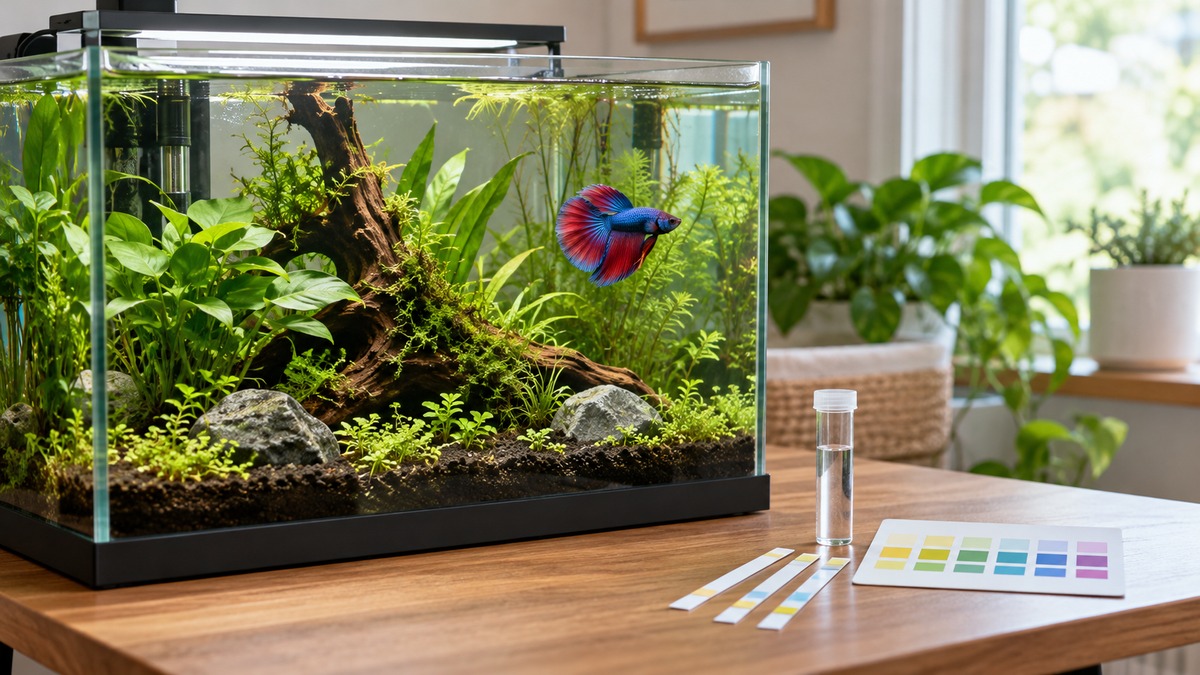
Each pad has its own time. Reading at 15 seconds when the chart asks for 60 seconds understates nitrate or nitrite. Waiting too long darkens pads as they dry. Use a phone timer, hold the strip level, and read under steady white light. Keep the Fish Tank Test Strip Color Chart flat and dry.
Dipping the wrong way
Some kits dip all pads for 2 seconds, while one kit dips the ammonia pad separately for 5 seconds. Dipping twice or leaving the strip underwater longer can flood pads and blur colors. Follow the exact dip line. Do not shake off drops if the listing says to hold without shaking.
Storing strips in a damp stand
Bathroom counters, wet hands, and open caps shorten strip life. Close the cap at once, keep the desiccant inside if present, and never return a used strip to the bottle. If strips smell damp, stick together, or show off colors before use, check the listing guidance and replace them.
Testing only after the fish looks ill
Strips work best as a routine. Test weekly, after water changes, after adding plants or tank mates, and when behavior changes. Bettas can breathe surface air through a labyrinth organ and may survive poor water longer, which can hide a problem until it is serious. For disease or injury signs, consult an experienced fish keeper or an aquatic vet rather than changing many things at once.
Care and safety notes from sources
Betta splendens is a freshwater fish native to Mainland Southeast Asia, including Thailand, Vietnam, Cambodia, Laos, Myanmar, and Malaysia. In the wild it tolerates wide swings, with air from 15 C to 40 C and water pH from 6.9 to 8.2 reported, but home tanks still need steady, humane conditions. Males are highly territorial and frequently fight when kept together, and females can also become territorial in confined spaces. This site recommends heated, filtered tanks of 5 gallons or more for a single betta and never recommends bowls or tanks under 2.5 gallons. Do not guess heater or filter settings from rules of thumb. Wattage, flow, and adjustability must come from the listing or maker page, and betta filters must be gentle. Follow the maker manual for your heater, filter, and conditioner.
FAQ
Do fish tank water quality test strips check ammonia?
Some do and some do not. Several picks here state ammonia or ammonia nitrogen, while the 6-in-1 Tetra listing does not state ammonia. Read the bullet list and spec fields. If ammonia is missing, you need a separate ammonia check for a new or small betta tank.
How often should a beginner test a betta tank?
Many guides suggest weekly checks, plus extra checks after water changes, new fish, or filter changes. The Tetra listing says test weekly, after water changes, or when adding new fish. During the first weeks with a new filter, more frequent checks help you catch waste spikes. Follow your conditioner and filter manuals for action steps.
Are strips as exact as liquid kits?
Strips suit quick trend checks, while liquid kits often give finer steps. Strips depend on timing, light, and storage. One listing notes use within 3 months of opening for best accuracy. See Best Freshwater Fish Tank Water Test Kit to compare formats before you choose.
What pH range should the chart cover?
Check that your tap and tank readings fall within the printed steps. Wild betta waters have been reported from pH 6.9 to 8.2, but home tanks should stay steady. If you read at the edge of the chart every time, check the listing chart image or ask the maker.
Can I use these strips in ponds or saltwater tanks?
Several listings state freshwater and saltwater use, plus ponds or shrimp tanks. The AAwipes, SJ WAVE, EASYTEST, Yiffer, and Tetra listings each state freshwater plus saltwater or pond use. Always read the freshwater section for a betta and follow the timing for each pad.
How should I store test strips?
Keep them sealed, dry, and at room temperature. Close the cap right after you take one strip. Avoid wet hands and steamy stands. One listing uses a well-sealed bottle to block moisture, another uses a screw-top container, and another uses an airtight case. If pads bleed color before use, replace the pack.
What should I do if a reading looks wrong?
Test again with a fresh strip, check the timer and light, and confirm you used the right dip steps. Do a partial water change only as your conditioner and filter manuals direct, and recheck later. For illness, odd swelling, or injury, consult an experienced fish keeper or an aquatic vet. This site gives no medical or dosing advice.
Bottom line
Choose fish tank water quality test strips with stated ammonia coverage for a new or small betta tank, then match count to your routine. Pick a 25-count or 50-count kit for one 5-gallon betta tank with weekly checks. Pick a 150-count or 175-count pack only if you run several tanks or test often and can keep strips sealed. If color matching is hard, consider the 10-count app-scan kit for learning, then move to a larger pack. Before you buy, confirm freshwater use, the full parameter list, dip and read seconds, and strip count on the listing.
Sources
- Siamese fighting fish: native range, labyrinth organ, pH range, territorial behavior, and tank decoration needs