Can Guppies Eat Betta Food?
As an Amazon Associate we earn from qualifying purchases.
Can guppies eat betta food? They can in the sense that they will take it if it is small enough, but the sources checked for this guide do not say that betta food suits guppies. The sources say that different fish species have different nutritional requirements, and that food pieces must fit the fish’s mouth. Betta food is made for one species. Whether it is a good diet for guppies is a question the sources do not answer, so the guidance below covers what to check and when to ask.
Quick answer
- The sources do not say betta food is a suitable diet for guppies. The Merck disorders chapter says “different fish species have different nutritional requirements.”
- Check pellet size first. The UF/IFAS fish nutrition publication says the mouth gape of a smaller fish may not allow it to eat a larger pellet.
- Feed in small portions and remove uneaten food, because overfeeding is named as a common cause of water problems.
- If guppies are not thriving on a food, speak with an experienced fish keeper or an aquatic veterinarian rather than switching products by guesswork.
Why the answer is not a simple yes or no
A food made for betta is formulated around the needs of betta. The sources do not compare betta diets with guppy diets, so no source can confirm that a betta food is complete or balanced for guppies. The Merck disorders chapter gives the general reason to be careful: “one of the most common contributors to illness or death in aquarium and pond fish is improper nutrition,” and “different fish species have different nutritional requirements.”
The UF/IFAS fish nutrition publication (FA096) adds that for species other than the well-studied farm fish, “nutritional management is based on a combination of application of knowledge generated for the species mentioned above and the experience of successful aquarists.” In other words, many ornamental species are fed using general practice rather than detailed published diets. That is why the sources cannot give a firm answer for guppies.
Commercial dry foods are the common starting point. The Merck providing-a-home page says that “commercial dried foods, such as pellets, flakes, or granules, are a good choice because they are usually formulated to contain the proper mix of nutrients for your fish when fed properly.” The qualifier matters. A food is formulated for a species, and it works best when fed to that species in the right amounts.
Check the pellet or flake before you feed
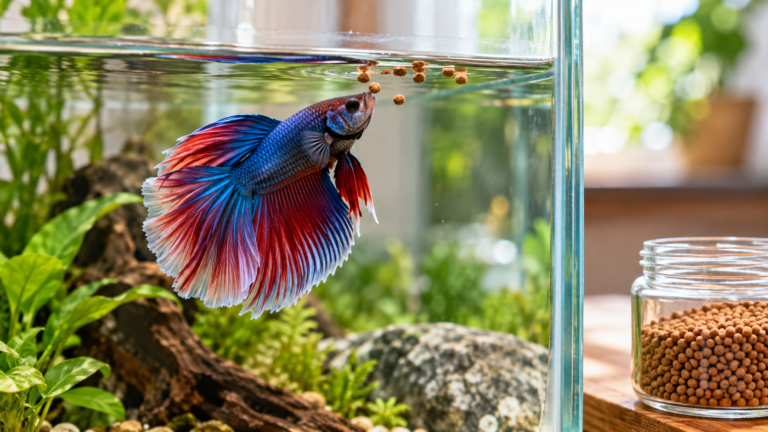
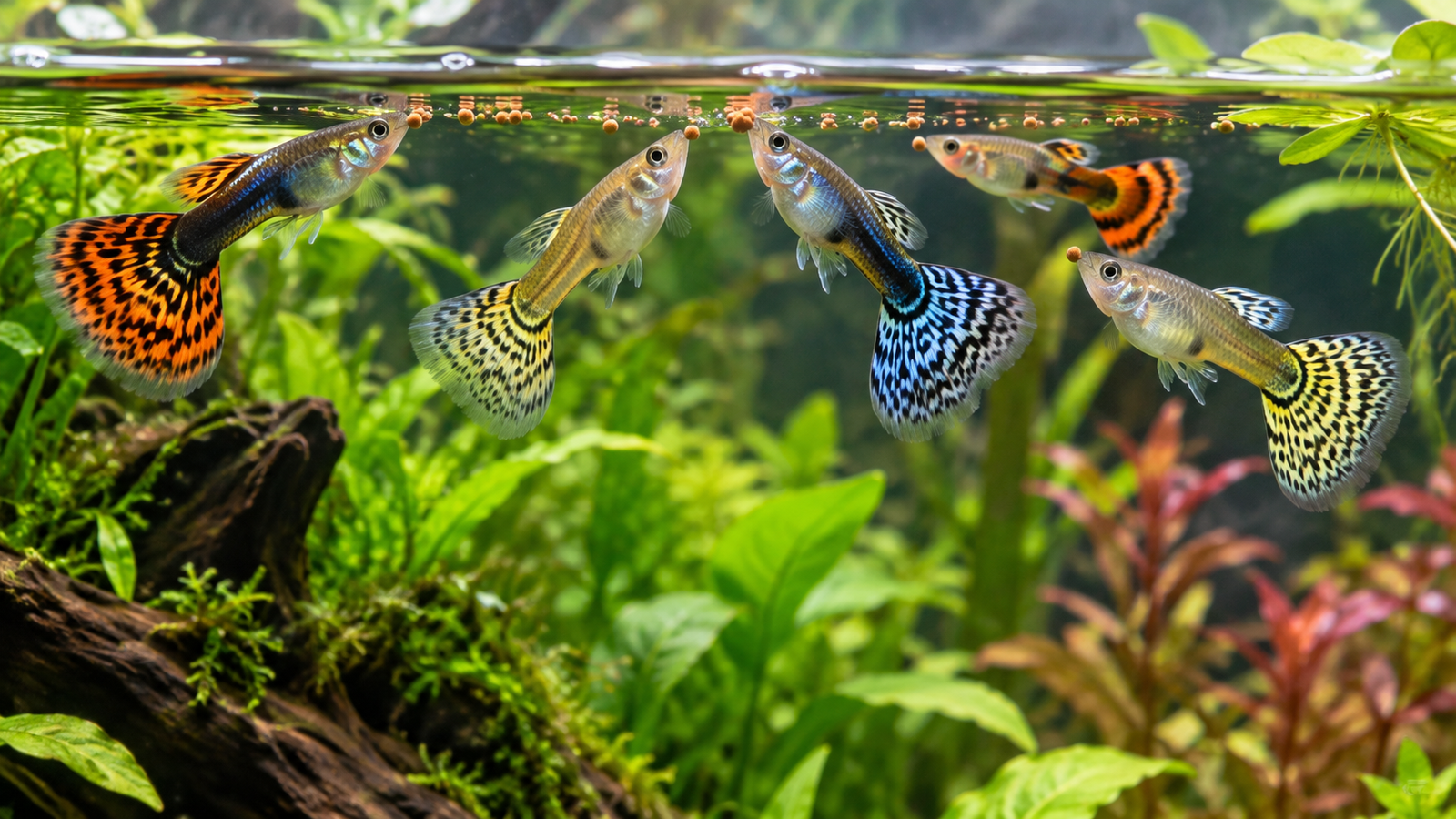
Size is the first physical check. The FA096 publication says “the pellet size is very important. For larger fish, a very small pellet may be unacceptable and the mouth gape of smaller fish may not allow consumption of a larger pellet.” Guppies are small fish, so a betta pellet may be larger than they can take, or it may sink in a way they cannot reach. Put a few pieces in a cup of tank water, and see whether they can be broken or eaten by the smallest fish in the tank.
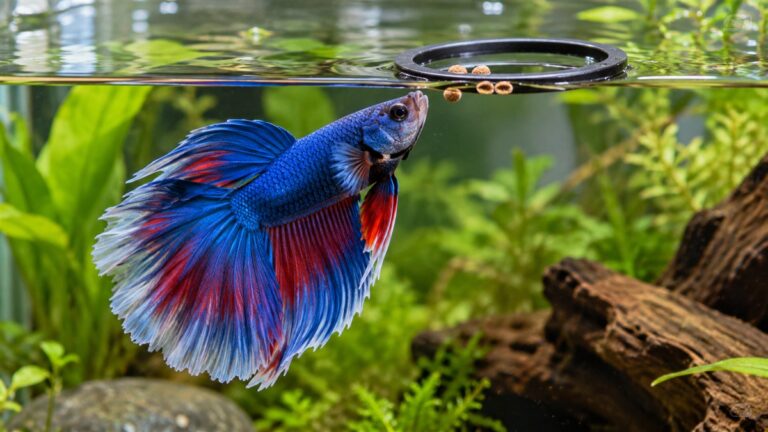
The FA096 publication also notes a problem with sinking pellets: “the potential for rapid sinking unless the pellet is extruded.” The Merck providing-a-home page says owners need to know “where your fish naturally feed in the water column, such as at the surface, in the middle, or at the bottom.” A food that sinks quickly may be missed by fish that feed near the surface. Watch where the fish eat, and remove the uneaten part.
Portions and frequency
Overfeeding is the bigger risk for most home tanks. The FA096 publication says “the most common mistake made by pet owners is over-feeding their fish, often with resulting degradation of water quality.” The Merck providing-a-home page makes the same point: “overfeeding can lead to health problems as well as a dirty tank.” If guppies get a betta food and the tank gets dirtier, the food portion is the first thing to check.
The sources give a general feeding rate for adult fish in a production context: “0.5–1.0% body weight per day” for maintenance. This is not a guppy figure. It is included so that portions are measured against body weight rather than guessed. The sources do not give a feeding rate for guppies.
A simple routine is to give a small portion, watch it disappear, and remove what is left after a short time. The Merck page says that “a variety of foods should be fed, with one primary dietary source supplemented with other foods that provide necessary nutrients.” If you use betta food, treat it as one part of the diet, not the only food.
Safe sourcing and storage
Food quality also matters. The Merck disorders chapter says that “moldy feeds should always be discarded,” and it describes aflatoxin from mold on feed as a cause of tumors and death. Store food in a dry, sealed container and buy in smaller amounts. The providing-a-home page says that “food should not be stored for excessive periods of time.”
Live foods carry their own risk. The Merck chapter says that “wild-harvested live foods may harbor parasites or other harmful organisms that can cause disease in fish,” and advises buying live foods “from a reputable source.” This applies whether the food is intended for betta or for guppies.
What to do if guppies do poorly
The sources do not describe a guppy-specific feeding problem, so the steps below are general guidance.
- Check the water first. The Merck page says “poor water quality is the most common cause of environmental-related diseases in fish.”
- Reduce portions and remove uneaten food before changing the food itself.
- Test the water if feeding changes or fish look unwell. The UF/IFAS ammonia publication (FA031) says water quality should be tested “immediately any time fish appearance or behavior changes (including reduced feeding).”
- If the guppies stop eating, lose weight, or show other signs of illness, speak with an experienced fish keeper or an aquatic veterinarian.
For a related discussion of feeding a small fish, see how many pellets to feed a betta, which covers the portion question for betta fish. For water testing options, see freshwater fish tank water test kits.
How we chose
The sources were chosen for the feeding question, not for a product. This guide uses a university extension publication and a veterinary reference, all opened on 2026-10-24. Retail product pages, ingredient listings and forum posts were not used. A claim appears in the body only when a source states it, or when it is labeled as general guidance. No source opened for this guide compares betta food with guppy food, so the guide does not make that comparison.
What we could not verify
The sources do not address betta food and guppies together. They cover nutrition, feeding and water quality in general terms.
What the sources do not say
- No source says whether betta food is a complete or balanced diet for guppies.
- No source gives a guppy feeding rate or schedule.
- No source lists the ingredients a guppy needs.
- No source describes harm or benefit from betta food in guppies.
- The sources do not say how betta food compares with guppy food in pellet size or protein.
Frequently asked questions
Will guppies eat betta pellets?
Guppies may take betta pellets if the pieces are small enough for their mouths. The sources do not say whether the pellets are suitable as a regular diet. Check the size first, and watch how the fish eat.
Is betta food safe for guppies?
The sources do not say betta food is unsafe for guppies, and they do not say it is safe. Because species have different nutritional requirements, a food made for one species should not be assumed to suit another.
How much betta food should I give guppies?
The sources do not give a guppy portion. Feed a small amount, remove uneaten food, and avoid overfeeding, which the sources name as the most common feeding mistake.
Can guppies eat fish flakes meant for other species?
The sources do not address specific brands or flakes. The general rule in the sources is that the food should fit the fish’s mouth and feeding position. A flake that floats on the surface may not suit fish that feed at the bottom.
When should I see a vet about guppy feeding?
See an aquatic veterinarian or an experienced fish keeper if guppies stop eating, lose weight, or show changes in swimming or color. Describe the food, the portions and the water readings when you call.
Sources
- UF/IFAS Extension, “Fish Nutrition” (FA096), https://edis.ifas.ufl.edu/publication/FA096 (opened 2026-10-24).
- Merck Veterinary Manual, “Providing a Home for Fish,” https://www.merckvetmanual.com/all-other-pets/fish/providing-a-home-for-fish (opened 2026-10-24).
- Merck Veterinary Manual, “Disorders and Diseases of Fish,” https://www.merckvetmanual.com/all-other-pets/fish/disorders-and-diseases-of-fish (opened 2026-10-24).
- UF/IFAS Extension, “Ammonia in Aquatic Systems” (FA031), https://edis.ifas.ufl.edu/publication/FA031 (opened 2026-10-24).