Betta Fish Treats: What the Sources Say
As an Amazon Associate we earn from qualifying purchases.
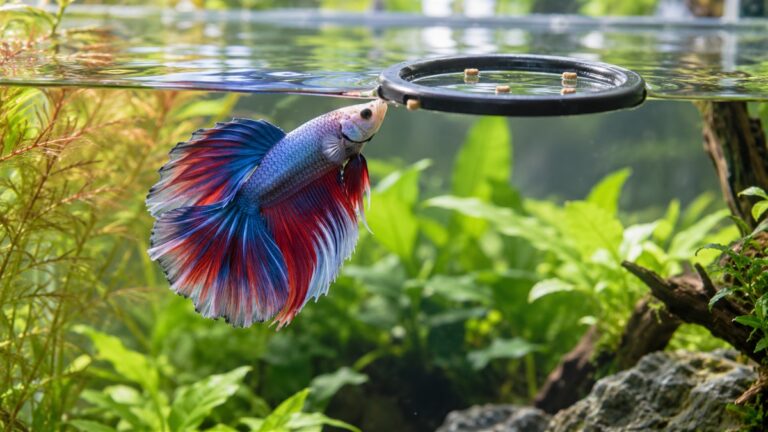
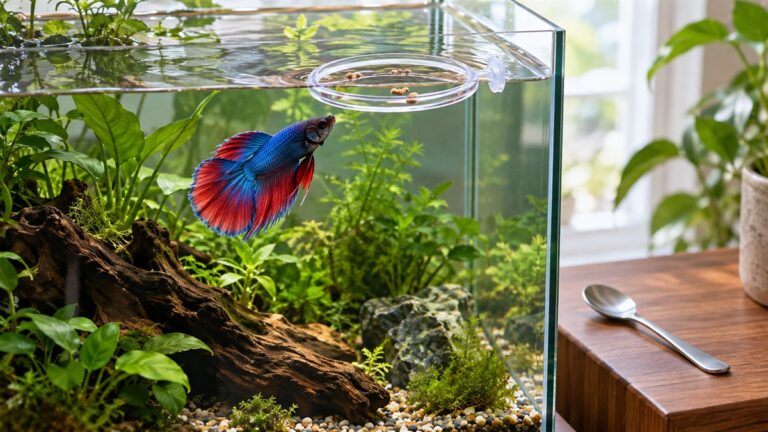
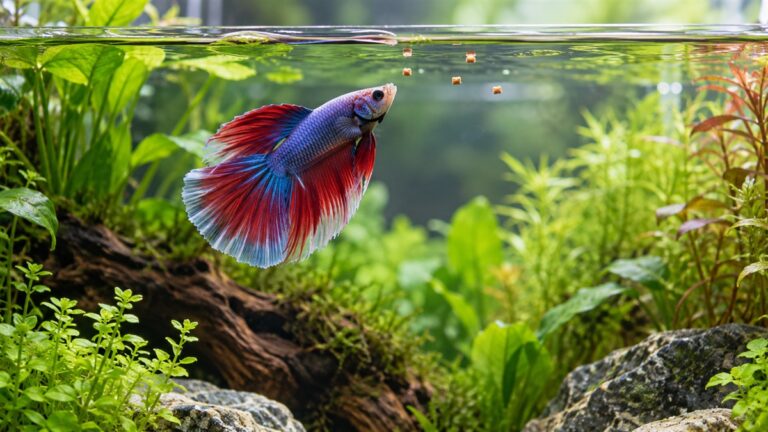
The person typing “betta fish treats” wants to know which extra foods are safe to give a betta and how often to give them. The sources opened for this guide do not rate or name betta treats, and they do not give a feeding schedule for treats. What they do cover is the base diet, the value of commercial foods formulated for fish, the risks of live food and overfeeding, and the ammonia that uneaten food produces. A treat is any food given outside the regular diet, and the same rules about quantity, cleanliness and uneaten food apply to it. The guide below explains what the sources support and what they leave open.
Quick answer
- The sources checked for this guide do not rate, name or recommend specific betta treat products.
- Merck says commercial dried foods such as pellets, flakes or granules are a good choice because they are usually formulated to contain the proper mix of nutrients when fed properly.
- UF/IFAS says overfeeding is a major cause of high ammonia, so any treat that goes uneaten adds to the problem.
- Merck lists natural foods such as shrimp pieces and plant material as supplements, and says to remove any uneaten food after feeding.
What the sources mean by a base diet
The Merck Veterinary Manual chapter on providing a home for fish says that commercial dried foods, such as pellets, flakes, or granules, are a good choice because they are usually formulated to contain the proper mix of nutrients for your fish when fed properly. The important words are “when fed properly.” A commercial food is designed to be the main diet. A treat is an extra, and the sources do not say how much of a betta’s diet should come from anything other than a base food.
The UF/IFAS betta publication says that betta nutrition in aquaculture is fairly simple and varies according to the age of the fish. The publication is describing commercial rearing, not a home aquarium, and it does not provide a home feeding plan. It does show that the species’ nutrition is built on a base diet, with other foods added for particular purposes such as breeding.
Live and frozen foods
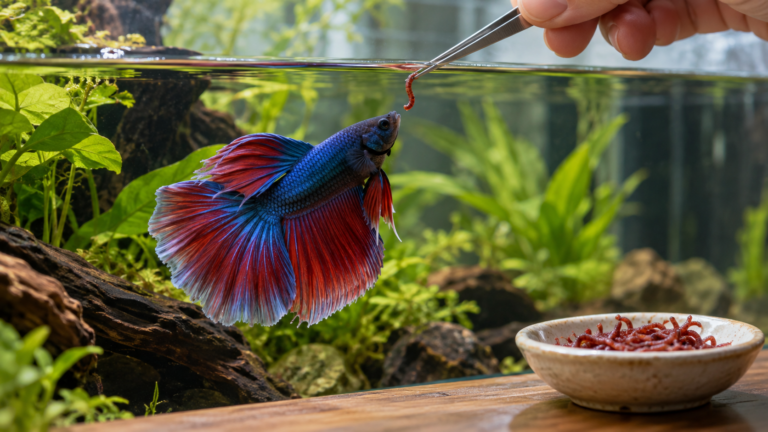
Many betta owners use live or frozen foods as treats. The UF/IFAS betta publication discusses these foods mainly in the context of breeding and rearing. It says that the addition of live or frozen feeds such as blood worms may improve egg and larval quality in breeding fish. It also says that proper storage and feeding regimens—avoiding overfeeding and water fouling—as well as clean sources of live feeds are very important considerations. The statement is about broodstock and young fish, so it does not show that a live food is better for an adult betta in a home tank.
The sources do not give a list of live foods that are safe or unsafe for a home betta, and they do not discuss the parasite risk of a particular live food source. The safe point the sources support is simple: the source of any live food should be clean, and the food should not foul the water. A treat that is not clean is not a treat worth giving.
Natural foods as supplements
The Merck providing-a-home chapter says that natural foods such as shrimp pieces and plant material can be used as supplements. The phrase “supplements” matters. It describes an addition to a regular diet, not a replacement for it. The chapter does not give a list of which natural foods are suitable for a betta, and it does not say how much to offer.
A home owner who uses shrimp pieces or plant material as an extra food should check the source, remove what the betta does not eat, and keep the portions small. That approach follows the sources’ general rules, but the sources do not give a portion size. Anything beyond that is a judgment call the sources do not settle.
Overfeeding and uneaten food
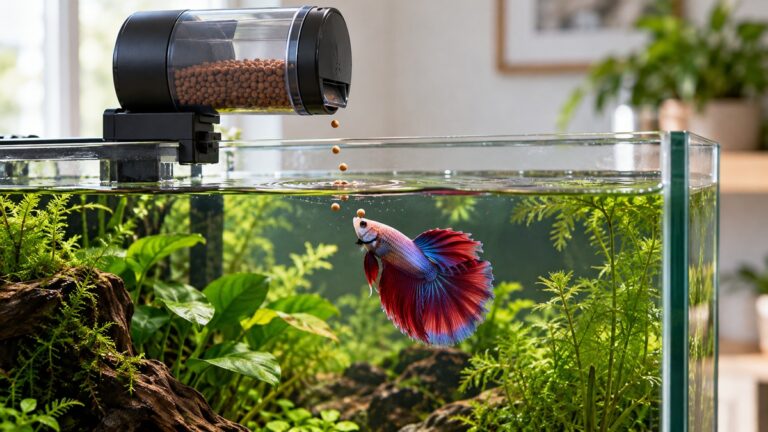
Every treat adds food to the tank. The UF/IFAS ammonia publication states that overfeeding is a major cause of high ammonia concentrations, and it notes that fish may not eat during periods of ammonia stress, and the uneaten feed will only make the situation worse. The Merck providing-a-home chapter says overfeeding can lead to health problems as well as a dirty tank. The Merck routine health chapter gives a simple daily step: feed fish and remove any uneaten food.
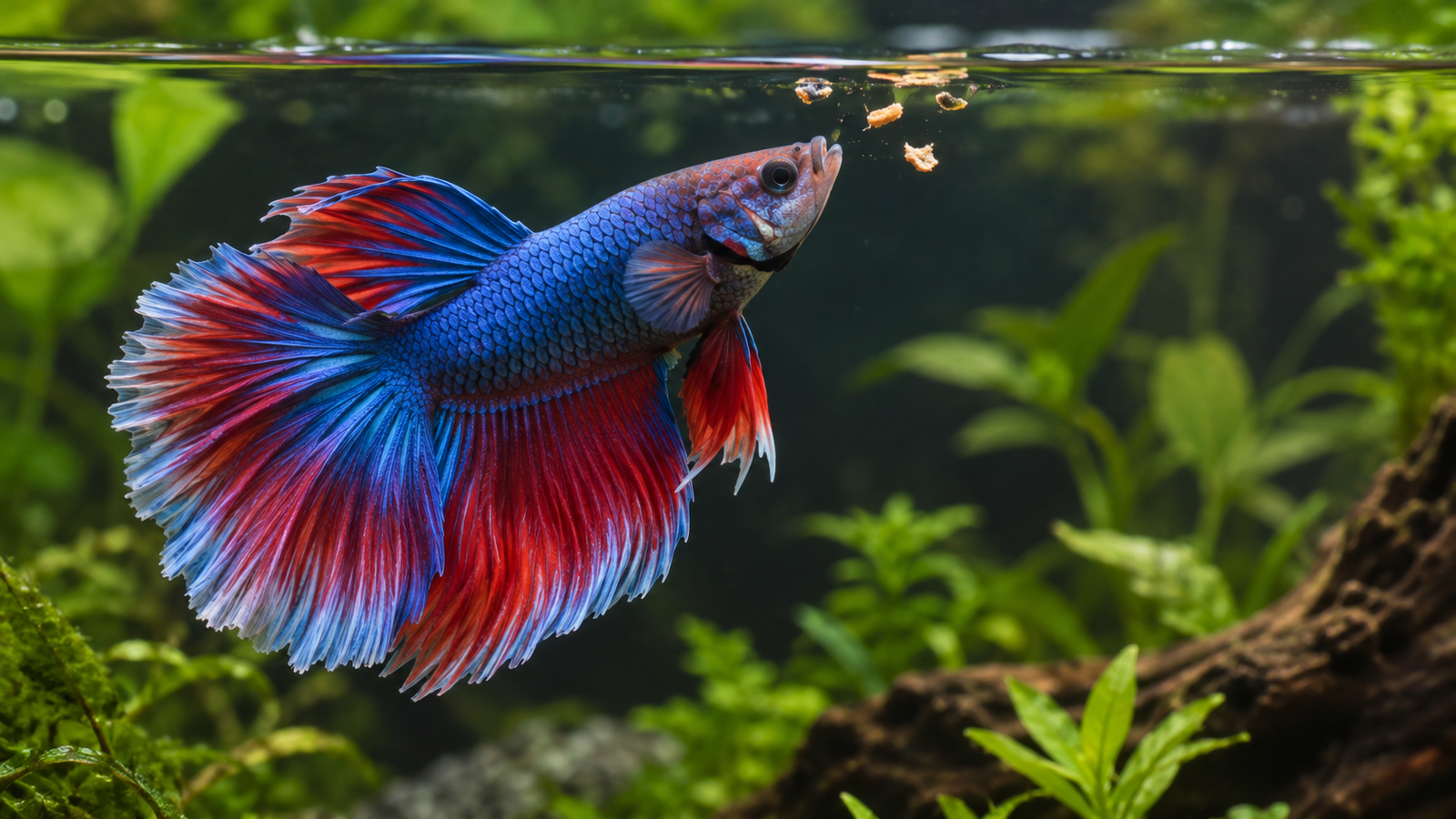
For treats, the practical rule that follows from the sources is to give only what the fish will eat promptly and to remove anything left over. A treat that sinks into the substrate or drifts into decor is not eaten by the fish in any useful sense, and it adds waste. If you see uneaten food, that is a sign to reduce the amount next time. A cleaning routine that addresses leftover food is in best way to clean a betta fish tank.
Ammonia is the reason this matters. The UF/IFAS publication says that a new biofilter requires six to eight weeks to build up enough bacteria to reduce ammonia and nitrite, so a tank that is new or recently changed is more sensitive to extra food. To check the water, a guide to testing for ammonia is best ammonia test kit for aquarium.
A practical checklist for any treat
Use the sources’ general rules to judge any treat you are considering. First, check that the food comes from a clean source and is not carrying visible debris. Second, give a small amount and watch whether the betta eats it promptly. Third, remove anything uneaten. Fourth, keep an eye on the water, because the sources link overfeeding to ammonia and to a dirty tank. Fifth, if the betta stops eating, becomes lethargic or shows any other sign on the Merck illness list, do not keep feeding treats to see if it improves. Describe the signs to an experienced fish keeper or an aquatic veterinarian.
The sources do not say how often a treat can be given, and this guide does not set a frequency. The honest answer is that the base food should carry the diet, and the treat should be a small, occasional addition that does not change the water.
How we chose
This guide uses only sources opened on 2026-10-24. The selection rule was to use university extension and veterinary references whose text covers fish nutrition, feeding or the water effects of food. Each quote was matched word for word to the text of the source. Retail pages and product listings were not used, so there are no product names, prices, ratings or recommendations here. Where a source describes a general principle, the guide says it is general.
What we could not verify
The sources checked for this guide do not evaluate betta treats as a category. They do not list which treats a home betta should or should not eat, and they do not compare freeze-dried, frozen and live foods for adult bettas in a home tank.
What the sources do not say
- Which specific betta treats are safe, how much nutritional value any treat has, or whether a treat should be used in place of a base food.
- How often a betta can receive a treat, or what portion size is appropriate.
- The parasite or disease risk of any particular live food for a home betta.
- Whether shrimp, plant material or any other natural food changes the diet in a meaningful way for an adult betta.
Frequently asked questions
What is the best treat for a betta fish?
The sources do not name a best treat, and this guide will not pick one. The sources say a commercial dried food formulated for fish is a good base diet when fed properly. Treats should be small additions to that diet, not replacements for it.
Can I feed my betta bloodworms?
The UF/IFAS betta publication mentions blood worms among live or frozen feeds in its discussion of breeding and larval quality. It does not say that bloodworms are a safe everyday treat for an adult betta in a home tank. The general rules still apply: use a clean source, give a small amount, and remove what is not eaten.
How often should I give my betta a treat?
The sources do not give a frequency. They do say overfeeding is a major cause of high ammonia and can lead to a dirty tank. Keep treats small and occasional, and watch the water between feedings.
Do treats cause cloudy water?
Treats that go uneaten can add to the waste in a tank. The UF/IFAS ammonia publication links overfeeding to high ammonia, and the Merck routine health chapter says to remove uneaten food. The sources do not say that a treat causes cloudy water in every case. A water test is the only way to see what is happening in your tank.
What should I do if my betta stops eating after a treat?
The sources say fish may not eat during periods of ammonia stress, so a fish that stops eating is a reason to check the water. Do not keep adding food to test it. If the fish stays off food or shows other signs from the Merck list, describe the tank and the signs to an aquatic veterinarian or an experienced fish keeper.
Sources
- University of Florida IFAS Extension, “Evolution, Culture, and Care for Betta splendens” (FA212), https://edis.ifas.ufl.edu/publication/FA212, opened 2026-10-24.
- University of Florida IFAS Extension, “Fish Nutrition” (VM114/FA096), https://edis.ifas.ufl.edu/publication/FA096, opened 2026-10-24.
- University of Florida IFAS Extension, “Ammonia in Aquatic Systems” (FA031), https://edis.ifas.ufl.edu/publication/FA031, opened 2026-10-24.
- Merck Veterinary Manual, “Providing a Home for Fish,” https://www.merckvetmanual.com/all-other-pets/fish/providing-a-home-for-fish, opened 2026-10-24.
- Merck Veterinary Manual, “Routine Health Care of Fish,” https://www.merckvetmanual.com/all-other-pets/fish/routine-health-care-of-fish, opened 2026-10-24.