Do Betta Fish Need a Heater? A Practical Guide
As an Amazon Associate we earn from qualifying purchases.
Do I need a heater for betta fish? In a typical home, yes. The Aquarium Co-Op betta guide says a heater is needed, and it gives about 80 degrees Fahrenheit as the temperature bettas prefer. It also notes that ordinary US room temperatures of 67 to 69 degrees are too cold for them. Without a heater, the guide says a betta becomes lethargic and can get sick from the stress of cold water. This page explains the reasoning, what the other sources add, and how to decide for your own room.
Quick answer
- Plan on a heater for a betta kept in a normal indoor room.
- The guide gives about 80 degrees as the preferred range, compared with room temperatures of 67 to 69 degrees.
- Steady temperature matters: Wikipedia says consistency is more important than range, and sudden changes can cause shock.
- A thermometer tells you what the water actually is, not what you assume.
- If your fish is sluggish or looks ill, ask a vet rather than adjusting things blindly.
Why bettas and room temperature do not match
Bettas come from Southeast Asia, from places such as Cambodia, Laos, Thailand and Vietnam, where Wikipedia says they live in marshes, floodplains and paddy fields. Those are warm, shallow waters. A living room kept comfortable for people is cooler than that. The Aquarium Co-Op guide notes that bettas are more active in warmer water and that typical indoor room temperatures are too cold. In other words, the usual answer to “do betta fish need a heater” is that the room alone will not do the job.
What a heater actually does
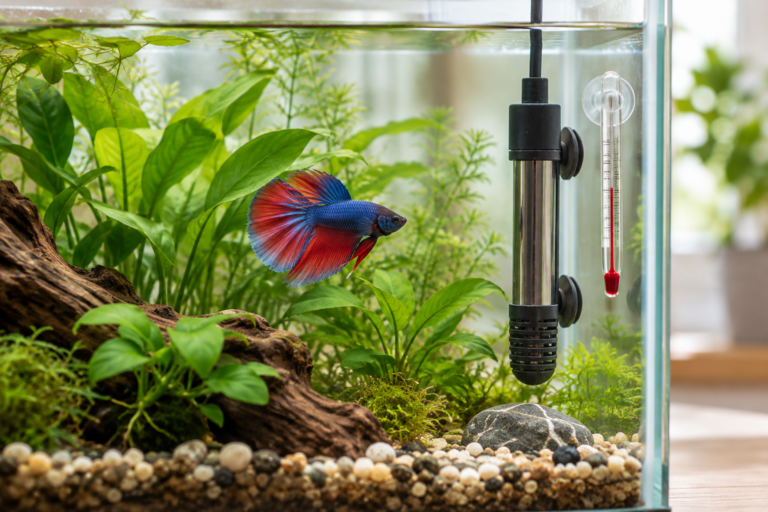
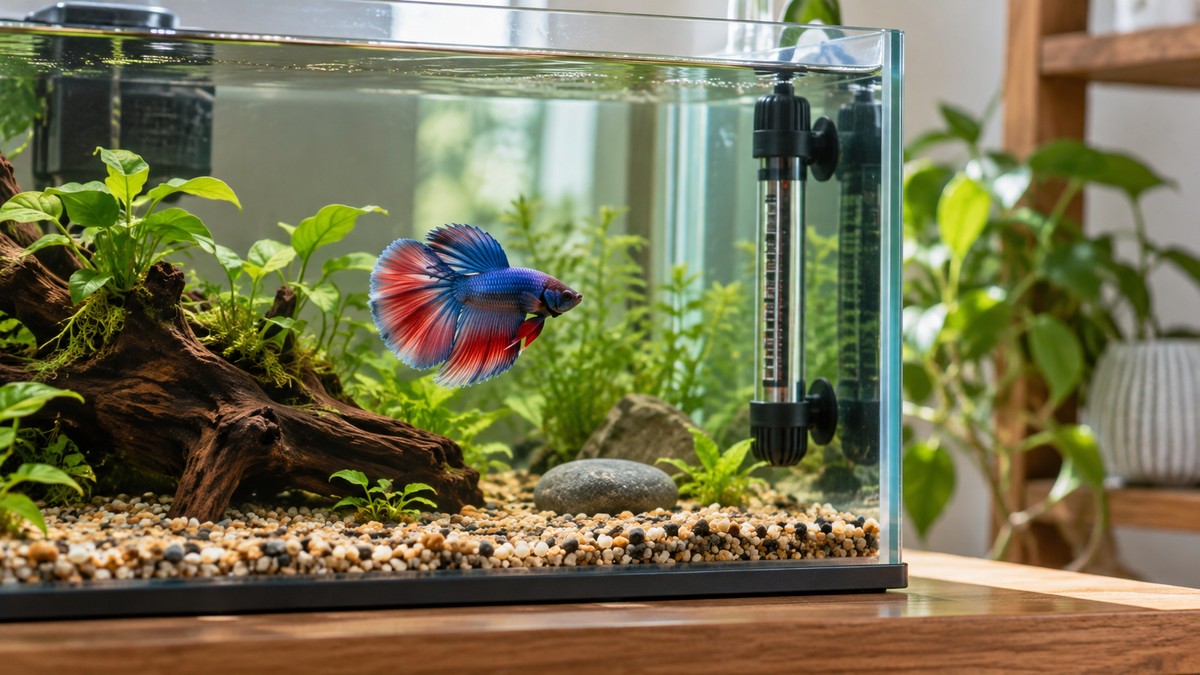
Wikipedia describes aquarium heaters as a heating element with a thermostat, which lets the keeper hold water warmer than the surrounding air. Wikipedia also notes that tropical tanks average about 25 degrees Celsius, or 77 degrees Fahrenheit. That is a general figure for tropical tanks, while the betta guide names a preference closer to 80 degrees. A heater with a thermostat is the tool that holds the number you choose, and a thermometer confirms it.
Is there a situation where you can skip it?
The sources do not describe a safe no-heater setup for bettas, so this guide does not promise one. Wikipedia does say acrylic tanks insulate better than glass, so in colder climates they hold tropical temperatures more easily and need less heater capacity. That reduces how hard a heater works, but it does not remove the need. If your room is regularly warm, measure the water first with a thermometer before deciding. If you are unsure, ask a vet or an experienced local fish store.
The same Wikipedia article adds a trade-off to keep in mind: warmer water holds less dissolved oxygen, though fish also become more active and use more oxygen. That is one reason steady, moderate heat with some surface movement is preferred over pushing the temperature as high as possible.
Heater, tank size and filter work together
Tank size
The betta guide recommends at least 5 to 10 gallons, since more water gives room to swim and longer gaps between cleanings. See our tank size guide for bettas and the longer piece on how many gallons a betta needs. Bigger water volumes also change temperature more slowly than very small bowls, which fits the consistency point above.
Filter flow
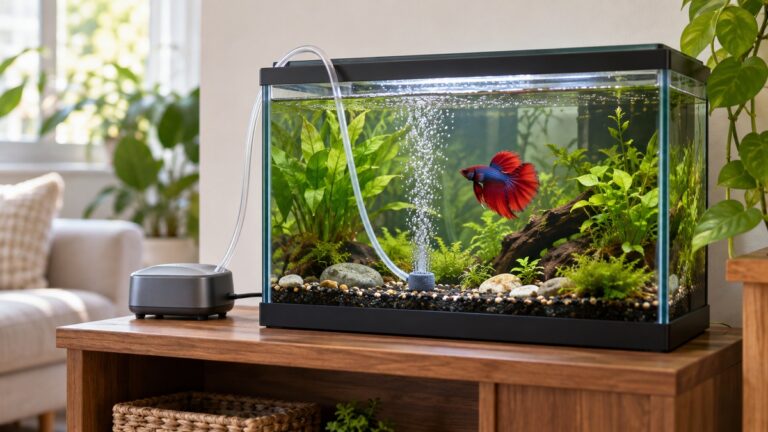
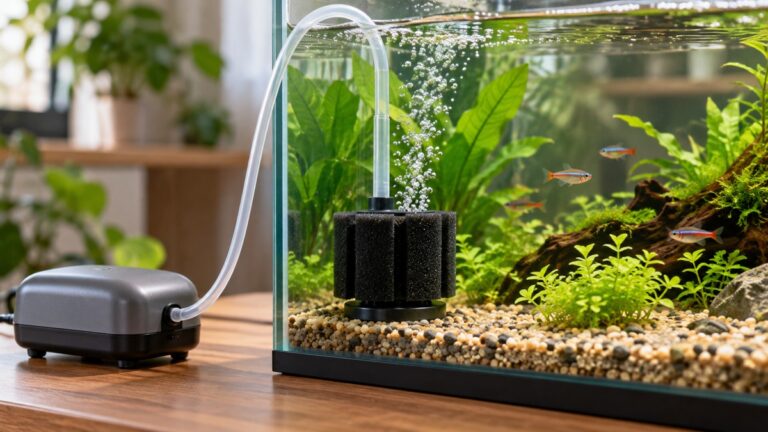
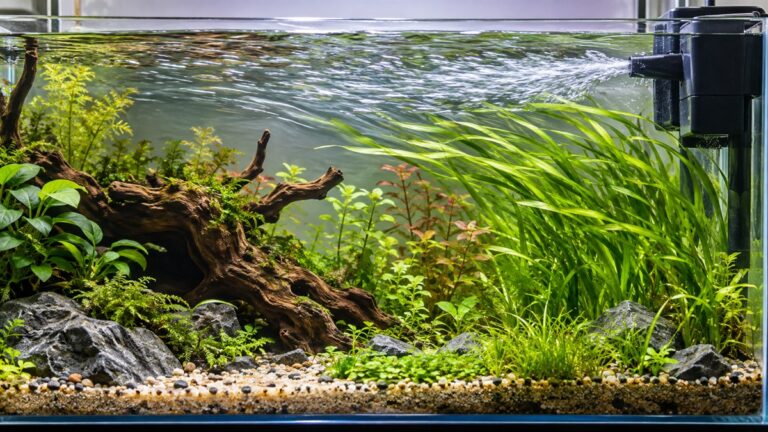
Bettas have long fins and, according to the guide, struggle in strong currents. It suggests a gentle sponge filter or a smaller filter with adjustable flow, and notes that some surface agitation helps prevent an oily film. A heater and a gentle filter fit together in the same tank without conflict, but check that the heater is not placed directly in front of a strong outflow if you use one.
How to set up and check a heater
- Measure first. Put a thermometer in the tank for a day and note the reading. Wikipedia lists glass alcohol, adhesive strip and battery LCD thermometers as common types.
- Pick a heater that matches the tank. Follow the maker’s size guidance on the box; this guide does not state wattage because the sources do not.
- Install as instructed. Follow the manual about water level and unplugging before handling.
- Allow it to settle. Watch the thermometer over a day before adding a fish.
- Keep watching. Check the thermometer regularly, because heaters can fail.
If you want to compare models, our write-up of six small heaters for bettas goes through listed options.
Thinking about the room you actually have
Rooms are not all alike. A bedroom with a window that gets cold at night, a kitchen counter near an oven, and an office with air conditioning all behave differently, and the water follows them. The sources give a comparison point: typical US room temperatures of 67 to 69 degrees against a preferred 80 or so for a betta. Whatever your room is, write down the thermometer reading morning and evening for a few days. A tank that swings a lot between those readings is not giving the fish the steady conditions Wikipedia says matter more than any single number. A heater with a thermostat is the usual way to flatten those swings, and placing the tank away from windows, vents and doors helps it do so. If the readings are steady and warm, you will see that in your own notes; if they are low or uneven, that is your answer. Keep the notes handy if you ever need to describe the setup to a vet.
Common mistakes
- Relying on the air temperature in the room as a stand-in for the water.
- Skipping a thermometer and trusting the heater dial.
- Changing the temperature quickly, which Wikipedia says can cause shock.
- Putting a bowl without a heater in a cool room.
- Treating a sluggish fish with guesses instead of asking a vet.
FAQ
What temperature do bettas like?
The Aquarium Co-Op guide says they prefer temperatures around 80 degrees Fahrenheit and are more active in warmer water.
Are room temperatures too cold?
The same guide says typical US room temperatures of 67 to 69 degrees are too cold for bettas.
What happens without a heater?
The guide says a betta becomes lethargic and may get sick from the stress of cold water.
Does a bigger tank help?
The guide recommends at least 5 to 10 gallons. A larger volume gives room to swim and longer gaps between cleanings, though the sources do not say it replaces a heater.
Can I use the same heater advice for other fish?
Not necessarily. Needs differ by species. For a related question see do rasboras need a heater.
Bottom line
If your room sits near the 67 to 69 degrees the guide describes, get a heater and a thermometer, and keep the temperature steady. If the fish seems unwell, ask a vet.