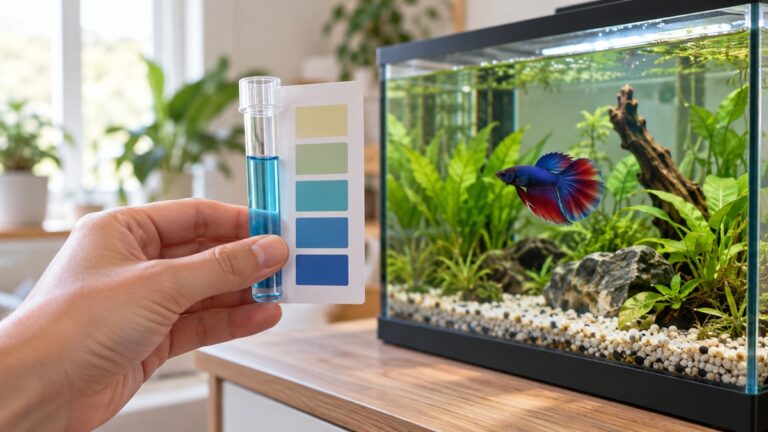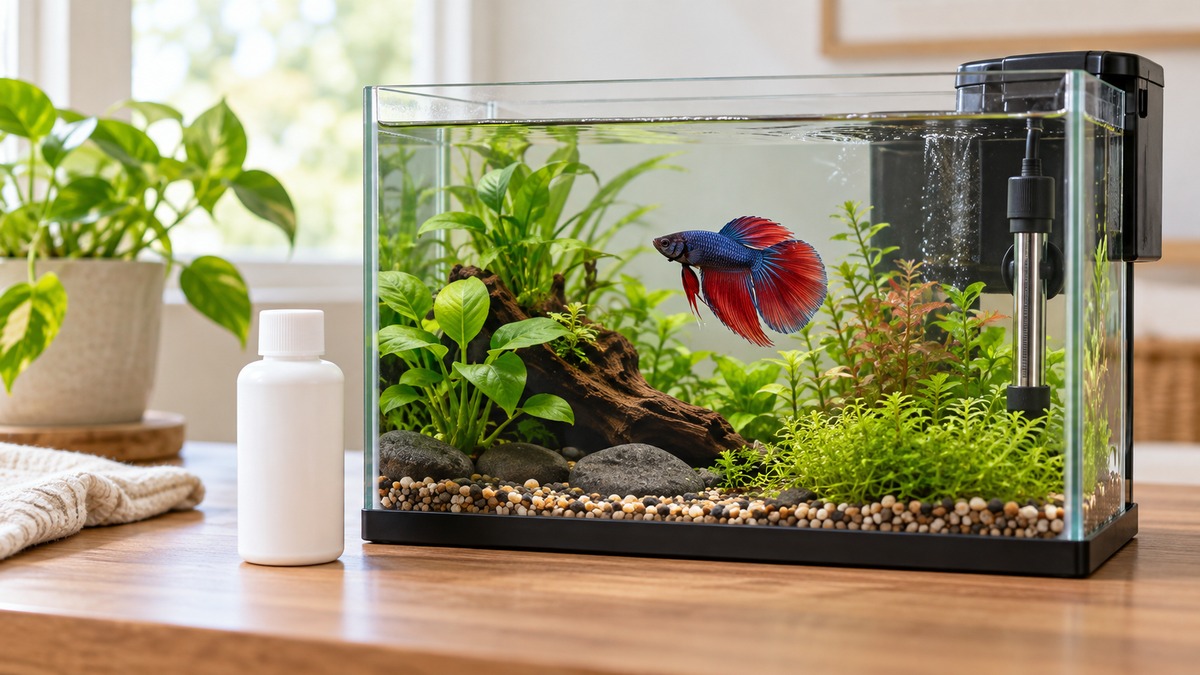
Aqueon Betta Bowl Plus Water Conditioner Guide
As an Amazon Associate we earn from qualifying purchases. Details
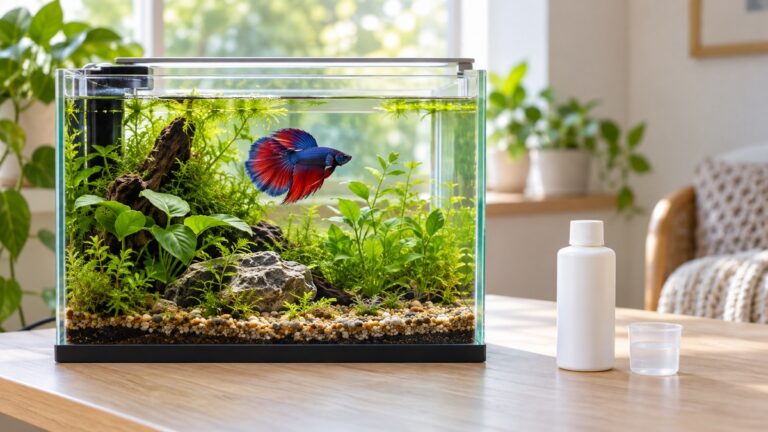
aqueon betta bowl plus water conditioner is a tap water conditioner made for betta tanks that neutralizes chlorine, chloramines, and ammonia while adding trace elements for bettas. This guide helps you decide if that small bottle fits your setup, how it compares with other water conditioners, and what to check before you buy.
You will learn what this type of conditioner does and does not do, how dose size affects small tanks, and when a larger bottle makes more sense. The focus is a humane setup with heated, filtered housing. This site recommends at least 5 gallons for a single betta and does not recommend bowls or containers under 2.5 gallons as a permanent home.
Quick answer
Aqueon Betta Bowl Plus Water Conditioner suits a betta owner who wants a small, betta-labeled bottle with a measured dose. The listing states 4 fluid ounces, liquid form, and a dose of 5mL (1 tsp) for every 1 gallon of temperature adjusted tap or purified water. It also states it detoxifies heavy metals, ammonia and other elements that are released from fish waste, plus trace elements specifically formulated for bettas.
If you keep a filtered 5-gallon tank and change water weekly, a larger multi-tank conditioner may be easier to manage. If you need ammonia detoxification plus chlorine and chloramine removal, check the listing for that exact wording before you buy. For general water to use for betta fish, start with dechlorinated tap water and follow the conditioner label. The product cards in this guide compare five water conditioners that list fish as the target species.
What matters for a betta water conditioner
A water conditioner for bettas must make tap water safe at each water change. These five points change which bottle fits your routine.
1. What it neutralizes
Read the bullets for chlorine, chloramines, heavy metals, and ammonia. Not every bottle lists all four. The Aqueon listing states it neutralizes chlorine, chloramines and ammonia and detoxifies heavy metals. The API listing states it neutralizes chlorine, chloramines and other chemicals. The Tetra listing states it neutralizes or removes harmful chlorine, chloramines and heavy metals. The TankFirst listing states it removes chlorine, chloramines, and detoxifies ammonia. The Microbe-Lift pond listing states dechlorination and detoxification language. Choose a bottle whose listing names the tap-water risks you need to cover, and check the listing if ammonia detoxification matters to you.
2. Dose size and small-tank control
Betta tanks use small water volumes per change, so dose control matters. Aqueon states add 5mL (1 tsp) for every 1 gallon. TankFirst states use 1 capful or 1 teaspoon per 10 gallons from a 500 mL bottle that treats 1,000 gallons. A small bottle with a dosage cap can be easier for 1-gallon partial changes, while a concentrated bottle designed around 10 gallons per dose needs careful measuring for a betta tank. Check whether the listing includes a cap, dropper, or measuring guide, and check the listing for the exact milliliters per gallon.
3. Bottle volume and storage
Bottle volume affects how long one purchase lasts and how much space it takes. The products in this guide state 4 fluid ounces, 16.9 fluid ounces, 128 Fluid Ounces, 3.78 liters, and 202.8 Fluid Ounces. A 4 fluid ounces bottle takes little shelf space and fits a single-tank routine. A 3.78 liters bottle weighs 5 pounds and needs secure storage away from children and pets. A case format with 6 packs takes more room. Match bottle volume to how many tanks you maintain and how often you change water.
4. Freshwater use and target species
All five picks below list Fish under Pet Type or Target Species. The Aqueon, API, Tetra, TankFirst, and Microbe-Lift listings each name fish use. Avoid hydroponics or garden-only dechlorinators for a betta tank unless the listing clearly states fish aquarium use. For background on best betta water conditioner how to use routines, confirm freshwater aquarium use on the label.
5. Extras: slime coat, vitamins, and trace elements
Some conditioners add extras beyond dechlorination. Aqueon lists PLUS trace elements specifically formulated for bettas. Tetra lists essential vitamins and minerals and natural biopolymers, and states it enhances protective slime coat to help wounds heal. TankFirst describes odor-free additives and states it is trusted for sensitive fish. These extras do not replace a heater, gentle filter, or water testing. If your fish is injured, consult an experienced fish keeper or an aquatic vet rather than relying on a conditioner. No dosing instructions for medications are given in this guide.
Betta housing note before you buy conditioner
Conditioner does not fix too-small or unheated housing. This site recommends heated, filtered tanks of at least 5 gallons for a single betta. It does not recommend bowls, vases, or containers under 2.5 gallons as a permanent home.
Bettas set up territories even when housed alone and enjoy a decorated tank, and Bettas require at least 45 litres (about 10 gallons) if housed with other fish. Bettas are exceptionally tolerant of low oxygen levels and poor water quality thanks to a labyrinth organ that allows them to take in surface air, but tolerance is not good welfare. For tank size planning, see how many gallons do a betta fish need and minimum size tank for betta fish. For heat planning, see best betta water heater.
1. Aqueon Aquarium Fish Tank Betta Bowl Plus Water Conditioner, 4 Ounce (Best for single betta tanks)
Specs from the listing (checked 2026-10-10):
- Liquid Volume: 4 fluid ounces
- Item Form: Liquid
- Target Species: Fish
- Included Components: Aqueon Betta Bowl Plus Water Conditioner for Betta Fish Tanks, 4 Oz
- Product Dimensions: 1.7 x 5.4 x 1.7 inches; 4 ounces
Pros
- States per-1-gallon dose that maps to small buckets
- States detoxification of heavy metals and ammonia plus betta trace elements
- Small 4 Oz bottle with dosage cap included
Cons
- Small 4 fluid ounces volume needs more frequent replacement for multi-tank homes
- Listing does not state slime-coat or vitamin additives
Best for: One betta in a filtered tank where you treat 1-gallon buckets
Skip if: You maintain several tanks and prefer a bulk bottle or need a per-10-gallon concentrate
View on Amazon (affiliate link)
2. API TAP Water Conditioner Aquarium Water Conditioner 1-Gallon Bottle (Best large bottle)
Specs from the listing (checked 2026-10-10):
- Liquid Volume: 3.78 liters
- Item Weight: 5 pounds
- Item Form: Liquid
- Target Species: Fish
- Product Dimensions: 10 x 10 x 15 inches; 5 pounds
Pros
- States 3.78 liters for long use across many water changes
- Names freshwater and saltwater aquarium use with fish as target
- Super strength, high concentration formula wording
Cons
- Listing excerpt does not state milliliters per gallon, so check the listing for small-tank measuring
- 10 x 10 x 15 inches; 5 pounds bottle needs secure storage
Best for: Multi-tank homes that want one large freshwater and saltwater conditioner
Skip if: You want a per-gallon betta dose printed in the short bullets
View on Amazon (affiliate link)
3. Tetra AquaSafe Plus Water Conditioner, 202.8 oz (Case of 6) (Best with slime coat wording)
Specs from the listing (checked 2026-10-10):
- Liquid Volume: 10 gallons
- Number of Packs: 6
- Target Species: Fish
- Unit Count: 202.8 Fluid Ounces
- Product Dimensions: 10 x 7.88 x 10.5 inches; 12.68 pounds
Pros
- States chlorine, chloramines and heavy metals coverage
- States slime-coat support plus natural biopolymers and vitamins and minerals
- States use for new aquariums, partial changes, and evaporation replacement
Cons
- Case format with Number of Packs 6 and 202.8 Fluid Ounces takes more storage
- Listing excerpt does not state ammonia detoxification
Best for: Owners who want heavy-metals wording plus slime-coat language
Skip if: You need a small single-tank bottle or stated ammonia detoxification
View on Amazon (affiliate link)
4. TankFirst Complete Aquarium Water Conditioner – Fish Water Conditioner, Instantly Removes Chlorine (Best concentrated small bottle)
Specs from the listing (checked 2026-10-10):
- Liquid Volume: 16.9 fluid ounces
- Item Weight: 1.2 pounds
- Item Form: Liquid
- Target Species: Fish
- Product Dimensions: 8 x 3 x 2.5 inches; 1.23 pounds
Pros
- States chlorine, chloramine and ammonia detox coverage in one line
- States treats 1,000 gallons from 16.9 fluid ounces
- Describes odor-free formula and freshwater, marine, and reef use
Cons
- Per-10-gallons dose needs fractional measuring for 1-gallon betta changes
- Listing does not state included measuring syringe
Best for: Owners who treat larger volumes and want ammonia wording
Skip if: You only do 1-gallon bucket changes and prefer whole-teaspoon doses
View on Amazon (affiliate link)
5. Microbe-Lift Super Dechlorinator Plus Water Conditioner for Ponds, 1 Gallon (Best pond-size concentrate for fish rooms)
Specs from the listing (checked 2026-10-10):
- Liquid Volume: 1 gallons
- Item Weight: 9 pounds
- Unit Count: 128 Fluid Ounces
- Target Species: Fish
- Product Dimensions: 6 x 6 x 12.25 inches; 9 pounds
Pros
- States 128 Fluid Ounces for high-volume use
- States concentrated dechlorination and detoxification wording
- Single 1 bottle format with fish target species
Cons
- Pond-oriented label and 9 pounds weight make small betta dosing harder
- Must not use with permanganate-based treatments per listing
Best for: Fish rooms or pond plus aquarium homes that need bulk dechlorination
Skip if: You want a betta-specific dose cap or aquarium-only directions
View on Amazon (affiliate link)
Comparison table from the listings
| Product type | Stated volume | Stated dose or treats claim | What listing says it neutralizes |
|---|---|---|---|
| Aqueon Betta Bowl Plus Water Conditioner, 4 Ounce | 4 fluid ounces | 5mL (1 tsp) for every 1 gallon | Chlorine, chloramines and ammonia; detoxifies heavy metals |
| API Tap Water Conditioner, 1-Gallon Bottle | 3.78 liters | Super strength, high concentration formula; check listing for mL per gallon | Chlorine, chloramines and other chemicals |
| Tetra AquaSafe Plus, case format | 202.8 Fluid Ounces; Number of Packs 6 | Check listing for mL per gallon | Chlorine, chloramines and heavy metals |
| TankFirst Complete Aquarium Water Conditioner | 16.9 fluid ounces | 1 capful or 1 teaspoon per 10 gallons; treats 1,000 gallons | Chlorine, chloramines, and detoxifies ammonia |
| Microbe-Lift Super Dechlorinator Plus for Ponds, 1 Gallon | 128 Fluid Ounces; 1 gallons | Highly concentrated; check listing for mL per gallon | Chlorine, chloramines, chlorine deioxide wording in listing |
Tank size in listings is often total capacity, not usable water volume once substrate and decor are added. The same idea applies to conditioner bottles: stated fluid ounces is bottle volume, not the volume of tank water it will treat without checking the dose rate. Always use the dose section of the label.
How to choose for your situation
Match the bottle to your tank size, change volume, and storage.
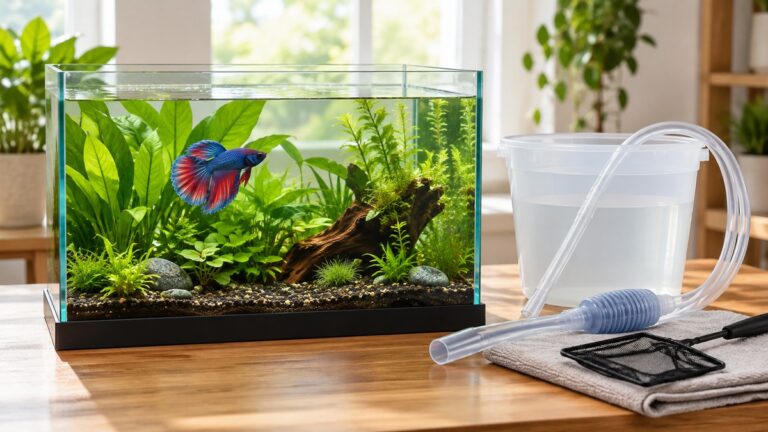
If you have one betta in a 5-gallon filtered tank, a small bottle with a 1-gallon dose step is simple to measure. The Aqueon pick states 4 fluid ounces with a convenient dosage cap included and a 5mL per 1 gallon dose. That structure fits partial changes where you treat 1 gallon or 2 gallons at a time in a bucket before adding water to the tank.
If you maintain several tanks or a larger aquarium plus a betta tank, a larger volume may reduce reorders. The API pick states 3.78 liters and 5 pounds, with Item Form Liquid and Target Species Fish. The Tetra case states 202.8 Fluid Ounces across Number of Packs 6. Those formats suit a fish room or club setting, but they need measuring tools for small betta water changes. Check the listing for the dispenser type.
If ammonia detoxification is listed as a need on your water-change plan, narrow to listings that name ammonia. Aqueon states detoxifies heavy metals, ammonia and other elements that are released from fish waste. TankFirst states detoxifies ammonia. API and Tetra in the data here do not state ammonia detoxification in the quoted bullets, so check the listing if you need that function.
If your tap water contains heavy metals, narrow to listings that name heavy metals. Aqueon and Tetra both name heavy metals in the data. TankFirst, API, and Microbe-Lift in the data here use different wording, so check the listing for your municipal water report terms.
For timing, see when to add water conditioner to fish tank and for method comparison see stress coat vs tap water conditioner. For filter pairing, see best water filter for betta fish. Betta filters must be gentle, and when a filter’s flow is not adjustable the listing should be checked for baffle or low-flow options.
Planning example for a 5-gallon betta tank
This section is our planning estimate for choosing a bottle size. It does not state how much conditioner your tank needs. Always follow the label and the manufacturer’s manual.
Define the hypothetical scenario once. Hypothetical tank: labeled size 5 gallons. Hypothetical routine: change 1 gallon twice per week. Hypothetical conditioner A: dose 5mL per 1 gallon. Hypothetical conditioner B: dose 1 teaspoon per 10 gallons.
Step 1: weekly treated water. 1 gallon per change x 2 changes = 2 gallons per week. Re-verify: 1 + 1 = 2.
Step 2: monthly treated water. 2 gallons per week x 4 weeks = 8 gallons per month. Re-verify: 2 x 4 = 8.
Step 3: conditioner A use. 5mL per 1 gallon x 2 gallons per week = 10mL per week. Re-verify: 5 x 2 = 10.
Step 4: four-week total for conditioner A. 10mL per week x 4 weeks = 40mL per four weeks. Re-verify: 10 x 4 = 40.
Step 5: conditioner B comparison. 1 teaspoon per 10 gallons means 1 gallon needs one-tenth of a teaspoon. For 2 gallons per week, weekly amount = 2 divided by 10 = 0.2 teaspoons per week. Re-verify: 2 / 10 = 0.2.
Step 6: four-week total for conditioner B. 0.2 teaspoons per week x 4 weeks = 0.8 teaspoons per four weeks. Re-verify: 0.2 x 4 = 0.8.
What this changes: conditioner A uses whole-milliliter doses that are easy to measure with a teaspoon or dosage cap for 1-gallon buckets. Conditioner B uses a fractional teaspoon for the same small change, so you need a small syringe or careful measuring to avoid overdosing. If you prefer simple 1-gallon bucket dosing, a bottle that states milliliters per 1 gallon fits better. If you treat larger volumes, a per-10-gallons concentrate may last longer. Check the product listing for the exact measuring device included.
Five common mistakes with betta water conditioner
1. Treating the tank size as the water-change volume
A 5-gallon tank rarely needs 5 gallons of conditioner dosed at once. Most routines treat only the replacement water in a separate bucket. Measure the bucket volume, not the glass size. Usable water volume is lower once substrate, plants, and decor displace water. When in doubt, measure the bucket with a marked pitcher.
2. Using untreated tap water for top-offs
Evaporation replacement still needs conditioned water if you use tap water. Tetra bullets state use with monthly partial water changes, or evaporation replacement. API bullets state use when adding or changing water. Treat top-off water before it enters the tank and match temperature.
3. Mixing conditioner types without reading labels
Do not stack dechlorinators, slime-coat products, and ammonia detoxifiers without label guidance. Overlapping doses can confuse your water-test readings. Pick one primary conditioner for routine changes. If you use a second product, check both listings for compatibility and follow the manufacturer’s manual. For background, read how to use api tap water conditioner.
4. Expecting conditioner to cycle a tank
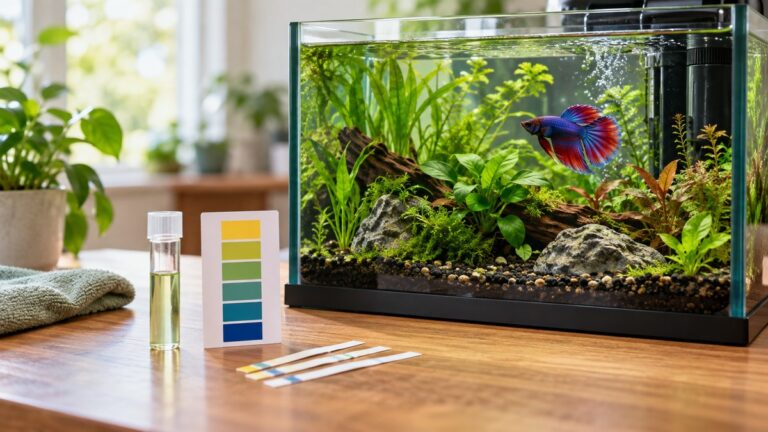
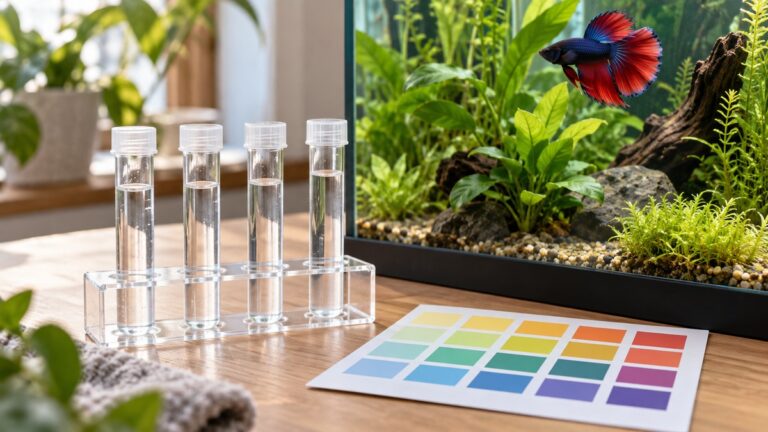
Conditioner makes tap water safe from chlorine and related chemicals. It does not establish biological filtration. A new tank still needs a gentle filter, heat, and time for beneficial bacteria to develop. Test ammonia, nitrite, and nitrate with a liquid kit and follow water-change guidance. See best freshwater fish tank water test kit.
5. Keeping a betta in a bowl because the label says bowl
The word bowl on a small conditioner bottle does not mean a bowl is good housing. Bowls lack stable heat and filtration and swing in temperature. Use a heated, filtered tank of at least 5 gallons. If you already have a small container, use it only as a temporary transport or water-change bucket, not as a home. See best keeping a betta fish in a bowl for why this site advises against bowls.
Care and safety notes
Store conditioner bottles upright, closed, and out of reach of children and pets. The API bottle states Product Dimensions 10 x 10 x 15 inches; 5 pounds, so secure it where it cannot fall. The TankFirst bottle states Product Dimensions 8 x 3 x 2.5 inches; 1.23 pounds. The Microbe-Lift pond bottle states Product Dimensions 6 x 6 x 12.25 inches; 9 pounds.
Do not use permanganate-based treatments with the Microbe-Lift pond product because its bullets state do not use with permanganate-based treatments. For any product, if the listing does not state compatibility with invertebrates, live plants, or saltwater, check the listing or ask the maker. The Microbe Life Hydroponics product in the data is aimed at Target Species Plants and hydroponics systems, so it is not included as a pick for fish tanks.
Betta splendens is a freshwater fish native to Mainland Southeast Asia, including Cambodia, Laos, Myanmar, Malaysia, Thailand and Vietnam. Males are highly territorial and frequently fight when kept together, and female bettas can also become territorial toward one another in confined spaces. House males alone and avoid tank mates in small tanks. In the wild, B. splendens is listed as vulnerable because of pollution and habitat destruction, which is another reason to avoid releasing aquarium fish or water into local waterways.
FAQ
Does aqueon betta bowl plus water conditioner remove chlorine and chloramines?
The listing states it neutralizes chlorine, chloramines and ammonia and detoxifies heavy metals. Use it when filling with tap water or performing water changes, following the 5mL per 1 gallon direction. Check the product listing for any updates to the wording.
How much do I use for a 5-gallon betta tank?
The Aqueon listing states add 5mL (1 tsp) for every 1 gallon of temperature adjusted tap or purified water. Treat only the replacement water in a bucket, not the full tank volume at once unless the label directs otherwise. If you change 2 gallons, that is two 1-gallon doses measured separately. Check the listing and follow the manufacturer’s manual.
Is this conditioner enough for a new tank without a filter?
No. Conditioner handles tap-water chemicals. It does not replace a gentle filter, heater, and water testing. Choose a low-flow filter rated for bettas and confirm whether flow is adjustable. If the listing does not state adjustable flow, assume it is not adjustable and plan to baffle or redirect output after checking maker guidance.
Can I use API Tap Water Conditioner or Tetra AquaSafe Plus for a betta?
Both list Fish as Pet Type and Target Species and state freshwater aquarium use in the bullets. API states use when adding or changing water and when adding new fish to freshwater and saltwater aquariums. Tetra states use when setting up a new aquarium, with monthly partial water changes, or evaporation replacement. Either can fit a betta routine if you measure the small dose correctly. Check the listing for the exact dose.
What is the difference between TankFirst and Aqueon for small changes?
Aqueon states a per-1-gallon dose, which maps directly to 1-gallon buckets. TankFirst states 1 capful or 1 teaspoon per 10 gallons and states the 500 mL bottle treats 1,000 gallons. TankFirst may last longer across many gallons, but small betta changes need fractional measuring. Pick the dose step you can measure accurately every time.
Is Microbe-Lift pond conditioner safe for a betta tank?
The Microbe-Lift pick in this guide lists Pet Type Fish and Target Species Fish and describes concentrated dechlorination. Its title names ponds and its stated volume is 1 gallons with Unit Count 128 Fluid Ounces. Pond bottles are often concentrated for large volumes, so small-tank measuring is harder. Check the listing for aquarium dose directions before using it in a 5-gallon tank.
Do I need trace elements or vitamins in a conditioner?
Not required for safe tap water, but some owners prefer them. Aqueon states PLUS trace elements specifically formulated for bettas. Tetra states essential vitamins and minerals with natural biopolymers. These do not replace varied feeding, heat stability, and clean water. If health signs appear, consult an experienced fish keeper or an aquatic vet.
How should I store a 1-gallon conditioner bottle?
Keep it sealed, upright, and in a cool, dry place away from children and pets. A 1-gallon bottle is heavy: Microbe-Lift states Item Weight 9 pounds and API states Item Weight 5 pounds. Pour over a sink, recap at once, and check the listing for shelf-life guidance.
Bottom line
Choose Aqueon Betta Bowl Plus Water Conditioner if you want a 4 fluid ounces bottle with a stated 5mL per 1 gallon dose and betta trace elements. Choose a larger fish-listed conditioner if you run more than one tank or want fewer reorders, and measure small doses with care. Whatever you pick, house the betta in a heated, filtered tank of at least 5 gallons, treat replacement water before it enters the tank, and check the product listing for dose, compatibility, and storage.
Sources
- Siamese fighting fish: native range, labyrinth organ, territorial behavior, tank decoration and 45 litres grouping note, wild vulnerable status