API Stress Coat Water Conditioner for Bettas
As an Amazon Associate we earn from qualifying purchases. Details
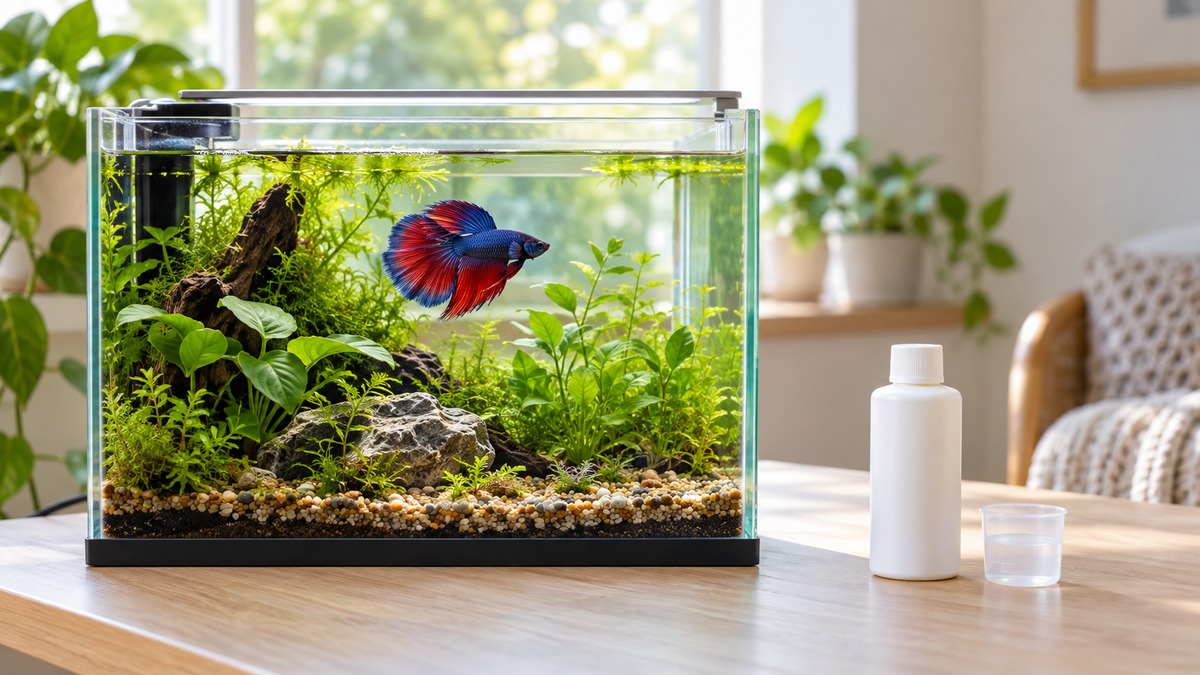
Many first-time betta owners see API Stress Coat on the store shelf and wonder whether they need it. A water conditioner is only one part of a betta setup, so the real question is whether it fits your tank size, your tap water and how accurately you can measure a small dose. This page walks through those checks in plain terms.
For a single betta, small doses matter. Measure against the tank volume you actually have, not the bottle’s largest size, and avoid guessing by eye. You may not need to switch products at all if your current conditioner already works for your water. Compare the options, then decide whether API Stress Coat or a simpler conditioner suits you.
Quick answer
If you want one bottle that both treats tap water and is marketed for slime-coat support, the API listing in the 16-Ounce Bottle size is the direct match for this search. The listing states you add 5 ml for each 10 gallons of aquarium water, and you double the dose to replace slime coat and to repair damaged skin and fins. It also says to use it when adding or changing water, when adding new fish, and when fish are sick or injured. For disease or injury, consult an experienced fish keeper or an aquatic vet.
If you want a plain dechlorinator without aloe, look at the Aqueon or Fritz listings. If you want a very concentrated bottle for larger water changes, look at the Seachem or Fritz listings. If you want an option that mentions vitamins and biopolymers, look at the Tetra listing. For general tap water questions, see Best Betta Water Conditioner How to Use and When to Add Water Conditioner to Fish Tank.
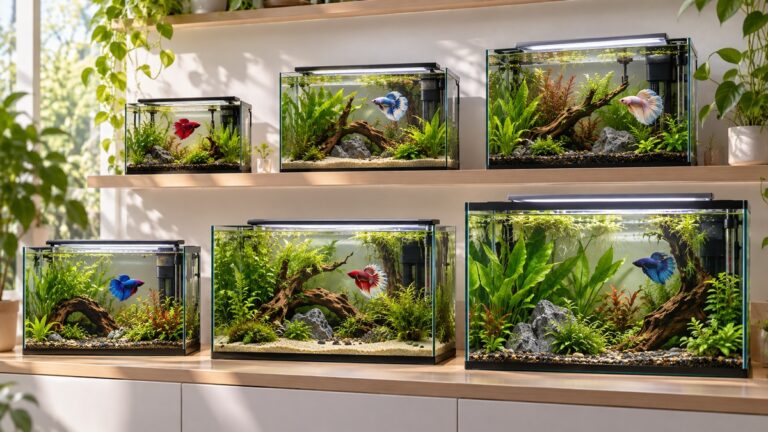
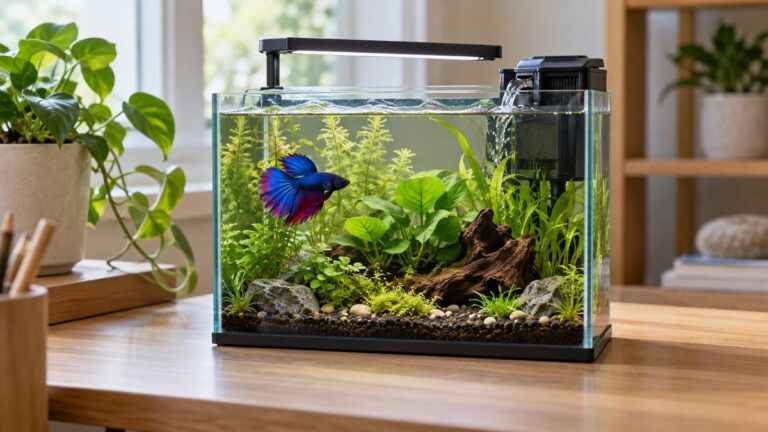
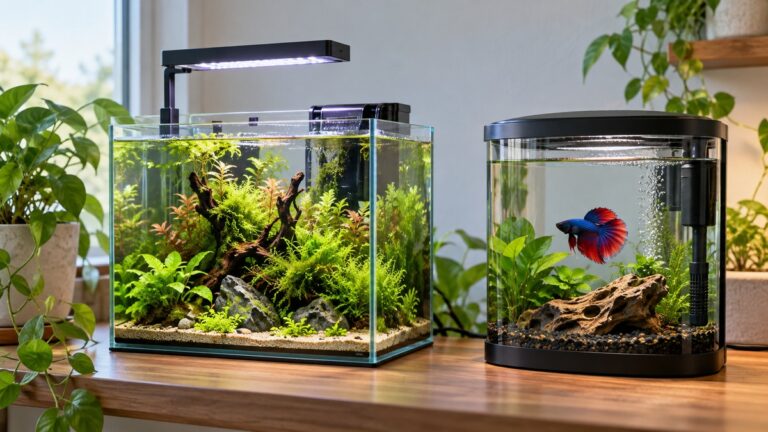
Our site recommendation for welfare is a heated, filtered tank of 5 gallons or more for a single betta. We never recommend bowls or very small cubes as a permanent home. Bettas set up territories even when housed alone and enjoy a decorated tank, and sources note they need more room when housed with other fish. For tank size background, see What Size Aquarium for Betta Fish and Minimum Size Tank for Betta Fish.
What matters for a betta water conditioner
A conditioner has one essential job. It must make tap water safe by handling chlorine and related chemicals before that water touches your fish. Everything else is secondary.
These five points change the choice of conditioner for a betta tank.
1. What it removes or detoxifies
Read the listing for the exact words. The API Stress Coat listing says it removes chemicals from tap water that are harmful to fish and makes tap water safe. The Aqueon listing says it neutralizes chlorine and chloramines in tap water and detoxifies heavy metals, ammonia and other elements released from fish waste. The Tetra listing says it neutralizes or removes harmful chlorine, chloramines and heavy metals. The Fritz listing says it instantly neutralizes chlorine, chloramines and heavy metals and lowers toxic levels of ammonia and nitrite rapidly.
Do not assume two bottles handle the same list. If your city uses chloramines, choose a listing that names chloramines. If the listing does not state what it handles, check the product listing or manufacturer page before you buy.
2. Dose size for a single betta tank
Small tanks make measuring hard. A 5-gallon tank needs a fraction of the dose written for 10 gallons or 50 gallons. Look for a bottle with a dosage cap, clear ml marks, or drops-per-gallon directions.
The API listing states 5 ml for each 10 gallons. The Aqueon listing states 5 mL per 10 gallons and says a dosage cap is included. The Fritz listing states one teaspoon (5 ml) treats 50 gallons, or about 2 drops per gallon. The Seachem listing is a concentrated formula and does not state ml per gallon in its bullets. Whether a bottle is 118 ml, 473 ml or 16 oz, the bottle size changes how long it lasts, not how it works. A larger bottle makes sense only if you can measure small amounts accurately.
For water basics, see Water to Use for Betta Fish.
3. Slime-coat and stress claims
Betta safe is a marketing phrase unless the listing details back it up. The API listing says it replaces fish’s protective coat damaged by handling or fish fighting with Aloe Vera extract. The Tetra listing says it enhances protective slime coat to help wounds heal and mentions natural biopolymers. The Fluval listing says it coats delicate scales and fins to protect against minor abrasions and mentions herbal extracts.
Treat these as added features, not medicine. No conditioner cures disease. For injury or illness, consult an experienced fish keeper or an aquatic vet. We give no dosing instructions for medications.
4. Freshwater fit and tank mates
All picks here list Fish as pet type and list freshwater use, but check target details. Some listings also mention marine, reef, ponds, or plants. That extra range does not hurt a betta, but it should not decide your choice. What matters is whether the directions fit freshwater water changes and whether the bottle is easy to dose for 5 gallons or more.
Bettas are exceptionally tolerant of low oxygen levels and poor water quality thanks to a labyrinth organ that allows them to take in surface air. That tolerance does not mean poor water is acceptable. It means they often survive bad setups longer, which hides the harm. Regular treated water changes and a gentle filter still matter. For filter help, see Best Water Filter for Betta Fish.
5. Bottle size, form, and usable volume
Tank size in listings is often total capacity, not usable water volume. Substrate, decor, plants, and a lowered water line reduce actual water. Conditioner dose should match actual water changed, not the number printed on the tank box.
All picks here list Item Form as Liquid. Bottle sizes in the listings include 8 fluid ounces, 16 fluid ounces, 16 Ounce, 67 fluid ounces, 250 ml, 500 mL, and 2 liters. Larger bottles last longer but are harder to store and measure for one small tank. Smaller bottles are easier to handle but run out faster if you do frequent changes on a larger tank. Check the listing for shelf life and cap design.
Products that fit this search
1. API Stress Coat Aquarium Water Conditioner 16-Ounce Bottle (Best overall)
Specs from the listing (checked 2026-10-10):
- Liquid Volume: 0.48 liters
- Item Form: Liquid
- Unit Count: 16 Ounce
- Model Number: 85C
- Target Species: Fish
Pros
- Listing states 5 ml per 10 gallons with double dose option for slime coat support
- Listing names Aloe Vera extract for protective coat replacement
- Listing says use when adding or changing water, adding new fish, and when fish are sick or injured
Cons
- Aloe formula adds more than a plain dechlorinator, which some owners do not want
- Small water changes need careful 1 ml measuring to avoid waste
Best for: Single-betta owners who want tap treatment plus slime-coat wording in one bottle
Skip if: Skip if you want a plain dechlorinator without aloe or drops-per-gallon directions
View on Amazon (affiliate link)
2. Aqueon Aquarium Water Conditioner Bottle, 8 Ounces (Best small bottle)
Specs from the listing (checked 2026-10-10):
- Liquid Volume: 8 fluid ounces
- Item Form: Liquid
- Unit Count: 8 Ounce
- Model Number: 100106004
- Target Species: Fish
Pros
- Listing includes dosage cap and states 5 mL per 10 gallons
- Listing names chlorine, chloramines, heavy metals and ammonia from fish waste
- 8 fluid ounces size is easier to store for one small tank
Cons
- Same 10-gallon rate needs careful scaling for 1-gallon to 2-gallon changes
- Listing does not mention slime-coat support with aloe or biopolymers
Best for: One betta in a small filtered tank who wants a compact bottle with cap
Skip if: Skip if you want concentrated drops-per-gallon dosing for larger tanks
View on Amazon (affiliate link)
3. Tetra AquaSafe Plus 3.38 Ounces, Aquarium Water Conditioner And Dechlorinator (Best for slime-coat wording)
Specs from the listing (checked 2026-10-10):
- Brand: Tetra
- Item Form: Liquid
- Model Number: 16168
- Target Species: Fish
- Item Type Name: Water Treatment
Pros
- Listing mentions slime-coat support plus natural biopolymers and vitamins and minerals
- Listing covers chlorine, chloramines and heavy metals for freshwater and marine use
- Listing gives use times for new aquariums, partial changes and evaporation top-offs
Cons
- Title size and Liquid Volume specs contradict each other, so volume needs seller check
- Listing does not state ml per gallon in the bullets provided
Best for: Owners who want vitamin and biopolymer wording alongside dechlorination
Skip if: Skip if you need exact ml-per-gallon dosing printed in the bullets
View on Amazon (affiliate link)
4. Fritz Aquatics Fritz Complete Water Conditioner/Dechlorinator Instantly Removes Chlorine (Most concentrated)
Specs from the listing (checked 2026-10-10):
- Liquid Volume: 16 fluid ounces
- Item Form: Liquid
- Unit Count: 16 Fluid Ounces
- Model Number: 47515
- Target Species: Fish
Pros
- Listing states 5 ml treats 50 gallons, about 2 drops per gallon for small changes
- Listing says it lowers toxic ammonia and nitrite levels rapidly and stays bio-filter friendly
- Listing names freshwater, saltwater, ponds, plants and invertebrates in range
Cons
- High concentration makes overdosing easy without a dropper or syringe
- Listing allows repeat dosing language that beginners should read very carefully
Best for: Owners with larger tanks or multiple tanks who want concentrated dosing
Skip if: Skip if you only do tiny water changes and prefer a pre-marked small bottle
View on Amazon (affiliate link)
5. Seachem Prime Water Conditioner, 2 Liter (Best large volume)
Specs from the listing (checked 2026-10-10):
- Liquid Volume: 2 liters
- Item Form: Liquid
- Unit Count: 1 Count
- Model Number: MA24WW500
- Target Species: Fish
Pros
- 2 liters Liquid Volume suits frequent changes on larger tanks
- Listing covers chlorine, chloramine and heavy metals in one concentrated formula
- Listing says it makes ammonia, nitrite and nitrate safe yet available for bacteria
Cons
- 2-liter bottle is bulky to store and pour for a single 5-gallon betta tank
- Bullets provided do not state ml per gallon, so you must read the label
Best for: Households with large or multiple aquariums needing long supply
Skip if: Skip if you have one betta and limited storage or want small-dose marks
View on Amazon (affiliate link)
6. Fluval AquaPlus Water Conditioner, Aquarium Water Treatment, 0.5 Gal, White (Best herbal formula)
Specs from the listing (checked 2026-10-10):
- Liquid Volume: 67 fluid ounces
- Item Form: Liquid
- Unit Count: 1 Count
- Model Number: A8345A2
- Target Species: Fish
Pros
- 67 fluid ounces Liquid Volume lasts through many water changes
- Listing mentions herbal extracts for transport and handling stress
- Listing says it coats scales and fins and handles chlorine, chloramine and metal toxins
Cons
- Large 0.5-gallon bottle is heavy at 4.8 pounds Item Weight for small spaces
- Bullets provided do not state ml per gallon, so measuring needs label check
Best for: Owners who want herbal-extract wording and a long-lasting bottle
Skip if: Skip if you want a compact bottle or exact per-gallon dose in the bullets
View on Amazon (affiliate link)
How to choose for your situation
Begin with the volume of new water you prepare for each water change and then compare bottle labels. Many owners who keep one betta replace only a small bucket of water at a time. A bottle with clear small-dose marks helps more than a bottle with extra marketing claims.
Choose the API Stress Coat style if you want the aloe-based dual-action formula described in its listing and you are comfortable measuring 5 ml per 10 gallons. Choose a simple dechlorinator if you already use other care products and want fewer additives. Choose a concentrated formula if you maintain several tanks or a larger tank and want fewer refills. For a direct comparison of two styles, see Stress Coat vs Tap Water Conditioner.
Three buying situations cover most readers.
One common situation is a single betta in a filtered 5-gallon setup. You need easy small-dose measuring and clear directions for water changes and new fish additions. A bottle with an included dosage cap or drops-per-gallon guidance helps. See How Big of a Tank Do Betta Fish Need before upsizing or adding tank mates.
Another common situation is a new tank with frequent water changes during the first weeks. You need a bottle large enough to avoid running out, plus a test kit to track water quality. Conditioner does not replace cycling or testing. See Best Ph Water Tester for Fish Tank and Seachem Prime vs Api Quick Start for related water-care context.
A third common situation is a betta tank with live plants. Some conditioners mention plant or invertebrate safety in the listing. The Fritz listing names live plants and invertebrates as safe for its setup range. Whichever bottle you choose, read its Target Species line before using it with live plants or invertebrates. For plant ideas, see Best Live Plants for Betta Fish Tank.
A note on API Quick Start and Stress Coat. Those names sound alike but they are different product types. A water conditioner treats tap water. A bacterial starter is meant to add nitrifying bacteria. Do not buy one expecting the other job. Check the listing title and Item Type Name before checkout.
Dosing example for a small betta tank
This section shows how to scale a 10-gallon dose down to a smaller water change. These numbers illustrate the method and are not a manufacturer direction. Always follow the bottle label for your exact product.
Take one betta tank with a nominal size of 5 gallons. You plan a partial water change of 2 gallons of new tap water, using a conditioner whose listing states 5 ml for each 10 gallons. You treat only the 2 gallons of new water in a clean bucket before adding it.
Step 1. Write the label rate as ml per gallon. Label rate = 5 ml divided by 10 gallons = 0.5 ml per gallon. Check: 10 gallons times 0.5 ml per gallon = 5 ml, so the division is correct.
Step 2. Multiply by new water volume. Dose = 0.5 ml per gallon times 2 gallons = 1.0 ml. Check: 0.5 times 2 = 1.0, units cancel to ml, so the product is correct.
Step 3. Work out the double-dose line separately. The API listing says to double the dose to replace slime coat and to repair damaged skin and fins. Double dose for the same 2 gallons = 1.0 ml times 2 = 2.0 ml. Check: 1.0 plus 1.0 = 2.0 ml, so the sum is correct.
Step 4. Compare with bottle volume. The API pick lists Liquid Volume as 0.48 liters. Convert to ml: 0.48 liters times 1000 ml per liter = 480 ml. Check: 0.48 times 1000 = 480, units become ml, so the conversion is correct.
Step 5. Work out how many 2-gallon changes one bottle covers at the normal rate. Changes = 480 ml divided by 1.0 ml per change = 480 changes. Check: 480 divided by 1 = 480, so the quotient is correct.
For API Stress Coat, the key is measuring 1.0 ml accurately for a 2-gallon change. A 1 ml syringe or dropper helps. Without it, you will likely overdose small buckets. Overdosing wastes product and makes comparisons meaningless. If you cannot measure 1.0 ml reliably, choose a bottle with drops-per-gallon directions and a cap you can handle.
Also note usable volume. If substrate and decor displace 0.5 gallons in a nominal 5-gallon tank, actual water may be about 4.5 gallons. That does not change the bucket math above, because you treated 2 gallons of new water. Treat new water volume, not tank label size.
For step-by-step conditioner use, see How to Use Api Tap Water Conditioner and Can I Add Stress Coat with Fish in Tank.
Comparison table built only from listing data
| Pick | Liquid Volume in listing | Dose stated in listing | Extra function stated |
|---|---|---|---|
| API Stress Coat 16-Ounce | 0.48 liters | Add 5 ml for each 10 gallons; double dose for slime coat | Replaces protective coat with Aloe Vera extract |
| Aqueon Water Conditioner 8 Ounces | 8 fluid ounces | Add 5mL per 10 gallons; dosage cap included | Detoxifies heavy metals, ammonia and other elements from fish waste |
| Tetra AquaSafe Plus 3.38 Ounces | 5 liters | Use at setup, partial water changes, or evaporation replacement; listing does not state ml per gallon | Enhances protective slime coat; mentions biopolymers and vitamins and minerals |
| Fritz Complete 16 fluid ounces | 16 fluid ounces | One teaspoon (5 ml) treats 50 gallons, about 2 drops per gallon | Lowers toxic levels of ammonia and nitrite rapidly; bio-filter friendly wording |
| Seachem Prime 2 Liter | 2 liters | Concentrated conditioner; listing does not state ml per gallon in bullets | Makes ammonia, nitrite, and nitrate safe yet available for nitrifying bacteria |
| Fluval AquaPlus 0.5 Gal | 67 fluid ounces | 0.5-gallon bottle for freshwater and saltwater; listing does not state ml per gallon | Herbal extracts; coats scales and fins against minor abrasions |
Check the listing before buying for exact directions, because dose wording and bottle sizes vary by listing version. The Tetra listing shows a title size of 3.38 Ounces while specs list Liquid Volume as 5 liters, so the title and specs contradict each other and you should rely on neither number until the seller clarifies.
Five common mistakes with stress coat and tap conditioners
1. Treating the whole tank volume instead of new water
Many owners dose for 5 gallons when they only added 2 gallons of new water. Read whether your bottle says to treat new water or total aquarium water. When in doubt, mix and treat in a bucket first, then add. This also avoids pouring concentrated liquid directly on the fish.
2. Mixing up conditioner and bacteria starter
Quick Start style products and Stress Coat style products sound alike but are sold for different jobs. If your tank is new, you still need treated water plus a cycling plan and testing. Conditioner alone does not cycle a tank.
3. Guessing small doses
A teaspoon is about 5 ml, but half a teaspoon is hard to eyeball. For a 1-gallon or 2-gallon change, guessing can double or triple the intended amount. Use a marked syringe, pipette, or a cap with ml marks. Rinse the tool after use and keep it with the bottle.
4. Skipping testing because water looks clear
Clear water can still contain ammonia or nitrite after waste builds up. Conditioner helps manage tap chemicals at water-change time, but it does not replace partial water changes, gentle filtration, and testing. In the wild, water pH for this species can range from slightly acidic at pH 6.9 to highly alkaline at pH 8.2, which shows they meet varied water in nature, but home tanks still need stable, clean conditions.
5. Chasing too many additives at once
Using slime-coat products, vitamin mixes, pH powders, and salt together can make problems harder to trace. Start with treated water, heat stability, gentle filtration, and plants or soft decor. Add only what the listing supports and what your test results suggest. For injury or illness signs, consult an experienced fish keeper or an aquatic vet rather than stacking products.
Care and maintenance notes
Bettas need space and calm water. Males are highly territorial and frequently fight when kept together, and female bettas can also become territorial toward one another in confined spaces. Do not house male bettas together. If you want tank mates, sources note at least 45 litres (about 10 gallons) when housed with other fish, which is larger than a single-betta setup.
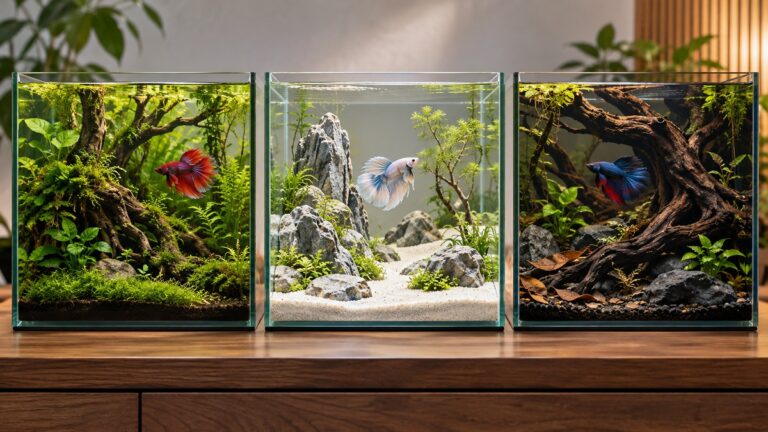
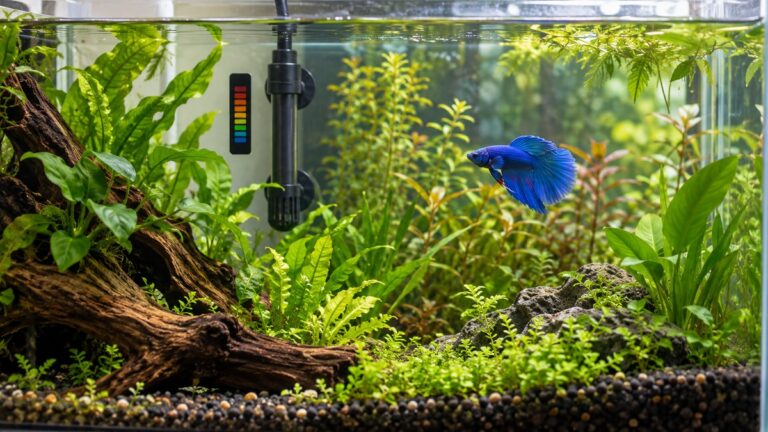
Decor matters because long fins tear easily. Bettas set up territories even when housed alone and enjoy a decorated tank, so provide soft plants and hides without sharp edges or tight openings where a fish could wedge. Rinse new decor, vacuum gently during water changes, and keep the filter flow low enough that your betta can rest and reach the surface.
In nature, air temperatures can swing from 15 C (59 F) to 40 C (100 F), but home tanks need stable warmth and clean water. Follow the heater and filter manuals for wattage, placement, and flow adjustment. This site does not give medical advice or medication doses. Wild B. splendens is listed as vulnerable by the IUCN because of pollution and habitat destruction, which is another reminder to keep home water clean and avoid releasing fish or plants.
For heating background, see Best Aquarium Heater for Betta Fish.
FAQ
Does api stress coat aquarium water conditioner make tap water safe for bettas?
The API listing says it makes tap water safe and removes chemicals from tap water that are harmful to fish. Use it whenever you add or change water, following the label dose. If your tap contains chloramines or heavy metals, confirm the exact coverage on the bottle you receive, because wording varies by version. For timing, see When to Add Water Conditioner to Fish Tank.
What is api stress coat for betta fish used for?
The listing describes a dual-action formula that treats tap water and replaces the protective coat with Aloe Vera extract. It says to use it when adding or changing water, when adding new fish, and when fish are sick or injured. It is not a medicine. For sickness or injury, consult an experienced fish keeper or an aquatic vet.
How is api stress coat how to use different in a 5-gallon tank?
The label rate is written for 10 gallons, so you must scale down. Treat the gallons of new water, not the tank label size. Measure with a syringe or marked cap. See the example above and How to Use Api Tap Water Conditioner for the general method. Always follow your bottle label.
Can I use api quick start and stress coat together?
The listings describe different product types. One treats tap water, the other type is meant to support biological filtration. Do not assume one replaces the other. Read both Item Type Names and follow each label. If you are cycling a new tank, test water and change water on schedule rather than adding extra products to fix readings.
What is the difference between api tap water conditioner 118ml, api tap water conditioner 473ml, and api tap water conditioner 16 oz?
Those numbers describe bottle size, not strength. A 118ml bottle suits one small betta tank for a short time. A 473ml bottle, which is close to 16 fluid ounces, lasts longer. The 16-Ounce Bottle listing here shows Liquid Volume as 0.48 liters, which converts to 480 ml. Choose the smallest size you can measure and store well.
Do I still need water changes if I use conditioner every week?
Yes. Conditioner prepares new water, but it does not remove uneaten food or waste already in the tank. Siphon debris, replace part of the water with treated water of similar temperature, and test on schedule. If readings stay high, increase change frequency and check feeding and filter care rather than doubling products.
Is a bowl or small cube enough if I use Stress Coat?
No. No conditioner fixes lack of space, heat instability, or missing filtration. Our site recommendation is a heated, filtered tank of 5 gallons or more for one betta. Learn tank sizing at How Many Gallons Do a Betta Fish Need and How Much Room Does a Betta Fish Need.
Bottom line
Choose the API Stress Coat 16-Ounce listing if you want the aloe-based tap treatment plus slime-coat wording in one bottle and you can measure 5 ml per 10 gallons accurately. Choose Aqueon 8 fluid ounces if you want a smaller bottle with an included dosage cap and the same 5 mL per 10 gallons style rate. Choose Fritz Complete 16 fluid ounces if you want the most concentrated stated dose here at about 2 drops per gallon and listing language about ammonia and nitrite spikes.
In short: if you do 1-gallon to 2-gallon changes and want simple measuring, pick the bottle with the clearest small-dose directions you can follow exactly. If you manage larger or multiple tanks, pick the larger or more concentrated bottle with storage you trust. In all cases, treat new water before it reaches the fish, test regularly, and check the listing for what it removes before you buy.
Sources
- Siamese fighting fish: native range, labyrinth organ, territorial behavior, pH and temperature ranges, tank space and conservation status
Bài viết liên quan: Stress Coat vs Tap Water Conditioner: Which to Use, Best Betta Water Conditioner How To Use.