Best Aquarium Lab Multi Test Kit for a Betta Tank
As an Amazon Associate we earn from qualifying purchases. Details
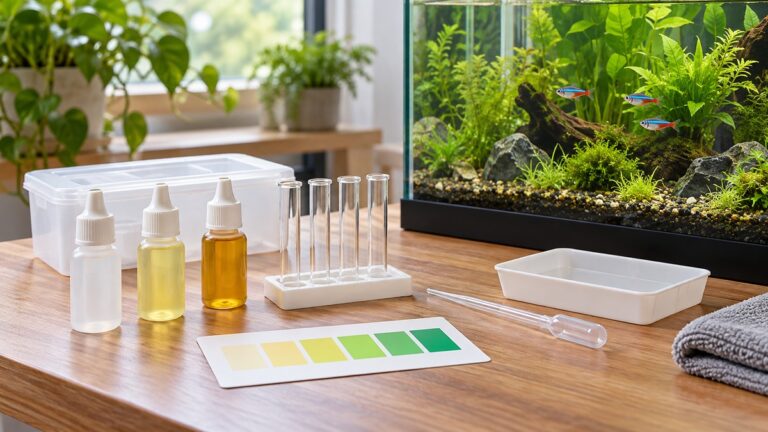
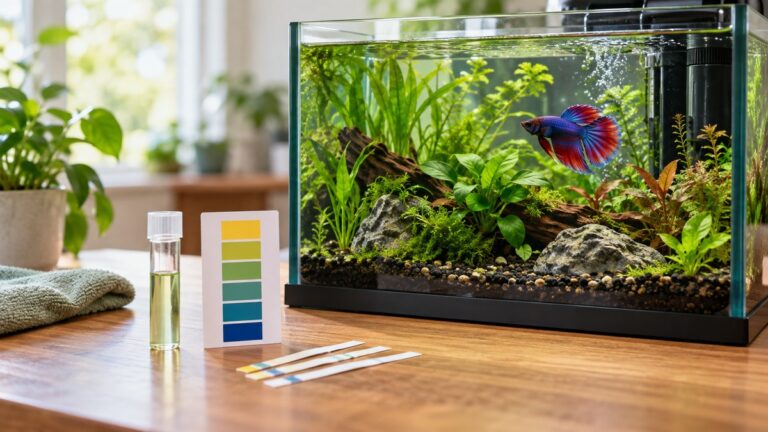
An aquarium lab multi test kit bundles several water checks into one purchase. The kits in this group usually cover ammonia, nitrite, nitrate and pH, and some add chlorine, hardness or phosphate. That makes them appealing to a new betta keeper who wants one tool instead of many. The word “lab” describes the marketing, not the method. Many betta owners start with a small tank and a short shopping list, so the question is which readings you will actually use. This guide explains what to compare on each listing, how liquid kits differ from strips, and which picks suit a betta tank.
Quick answer
Choose a multi-parameter kit only if it covers ammonia and nitrite, the two readings that matter most in a small tank, plus pH. Liquid reagent kits list the most tests per kit, and the Pawfly listing states 265 measurements. Strip kits read faster and cover more parameters per dip, but some listings give a use-by window after opening, such as three months for one 11-in-1 kit. Pick by the parameters you need, the method you will use every week, and whether the listing states the ammonia method and a thermometer.
What a lab multi test kit changes: parameters and method
A general kit is not the same as a lab multi test kit. A lab-style kit is one that gives you several numbers from one routine, and you judge the result yourself with a color chart or a meter. For a betta tank, three things matter more than the total count on the box.
Which parameters matter for a betta tank
Ammonia and nitrite matter most for a small tank. The University of Florida IFAS guide on ammonia states that ammonia is colorless and odorless even at levels toxic to fish, so testing is the only way to know it is there. The same guide states that nitrite is toxic to fish at levels as low as 0.10 mg/L. Nitrate and pH come next, because they show how the water is changing between water changes.
The same guide says a good ammonia test kit includes a TAN test, a pH test and a thermometer. The reason is that the toxic share of ammonia, called un-ionized ammonia, rises with higher pH and higher temperature. The Pawfly listing names ammonia, pH and nitrite, but it does not state that a thermometer is included. You may need a separate thermometer to read ammonia properly.
Liquid reagent or test strips
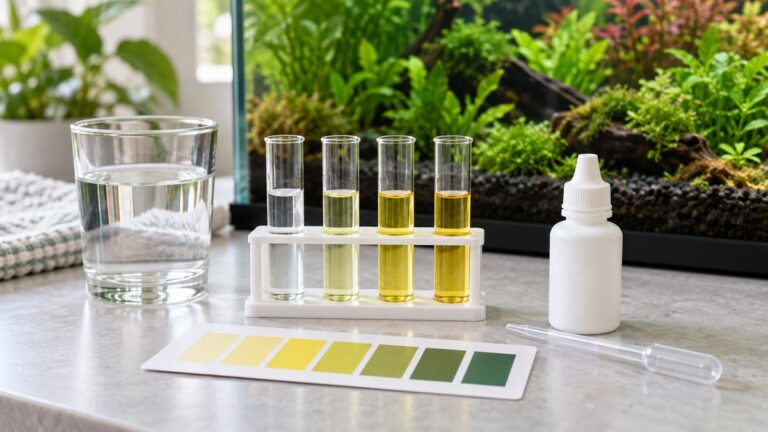
Liquid kits use drops or tubes and a color card. The Pawfly and Vaterbeing listings describe professional liquid reagents, and they state large test counts. Liquid routines take more steps, but each reading is taken from a sample you control. Strip kits use a dip and a wait. The Droplytix, HYCHEK and Tetra listings all describe a dip, a short wait and a comparison with a chart. Strips are quicker to use each week, but the listing’s color chart carries more of the reading. If you want a single-parameter kit for ammonia alone, compare the ammonia test kits for an aquarium before you decide.
Whichever method you choose, follow the timing printed on the card. Some listings state a wait of 30 seconds, and others describe a 60-second read for nitrate and nitrite. Reading too early or too late can change the color you compare.
Counting tests and storage
Test counts look impressive on a box, but they only matter if you use them. A weekly routine of four readings uses four tests a week. The Pawfly listing gives counts for each parameter: pH (100), nitrite (45), nitrate (50), ammonia (30) and phosphate (40). That breakdown is more useful than the total, because the ammonia count is the one that runs out first in a weekly routine.
Storage also matters. The SJ WAVE listing says to use its strips within three months of opening. Other listings describe sealed bottles and moisture protection, but they do not state a use-by date. Keep caps closed, store the bottle in a cool, dry place, and keep wet fingers out of the bottle.
Freshwater use and the pH range
Many kits in this group say they work for both freshwater and saltwater. Betta tanks are freshwater, so the saltwater claim does not add value for you. If your main worry is pH alone, a dedicated pH test kit for aquariums may be a simpler buy. The pH range on the listing matters more. The Siamese fighting fish overview on Wikipedia says that in the wild, water pH can range from slightly acidic (pH 6.9) to highly alkaline (pH 8.2). A kit that stops at 8.0 may not show the top of that range clearly. The Tetra and Droplytix listings both state a pH range of 6.0-8.0, while the AESCULIX listing in the same group states 6.5-8.5.
Check the range printed on the kit, not only the marketing copy. Pick a kit whose pH card covers the range you plan to keep, and write that range on the bottle so you remember it.
Products that fit this
These four multi-parameter kits suit a betta tank. Each one covers at least five readings, and each card below states what the listing says about its parameters, method and counts.
1. Pawfly 5 in 1 Aquarium Water Master Test Kit, Fish Tank Water Testing Kit (Liquid, five parameters)
Specs from the listing (checked 2026-10-11):
- Color: Blue Standard Kit Pack
- Item Weight: 10.9 ounces
- Specific Uses for Product: Helps monitor water quality and prevent invisible water problems
- Package Dimensions: 7.4 x 4.92 x 3.5 inches; 10.93 ounces
- Included Components: Aquarium Water Master Test Kit
Pros
- The listing names five parameters: pH, nitrite, nitrate, ammonia and phosphate.
- The listing states 265 measurements, with pH (100), nitrite (45), nitrate (50), ammonia (30) and phosphate (40).
- The listing says the kit works for both freshwater and marine fish tanks.
Cons
- The listing does not state that a thermometer is included, so you may need one to read ammonia properly.
- Liquid reagents take more steps than a dip-and-read strip, and the listing gives no step count.
- The listing describes its results as laboratory-quality, which is marketing wording rather than a certification.
Best for: Keepers who want several readings from one kit and are comfortable with a liquid routine each week.
Skip if: You want a quick dip-and-read routine, or you need the kit to state its ammonia method and thermometer up front.
View on Amazon (affiliate link)
2. Digital Aquarium Water Test Kit, App-Enabled 10-in-1 Fish Tank Test Kit for Freshwater & Saltwater (Digital, app-guided)
Specs from the listing (checked 2026-10-11):
- Ph Range: 6.0-8.0
- Unit Count: 10 Count
- Included Components: Mobile App, Test strips
- Model Number: 10-in-1 Aquarium Kit
- Number of Items: 10
Pros
- The listing describes an app-enabled workflow with a dip, a scan and a readout.
- The listing says it measures ammonia, nitrate, nitrite, pH, GH, KH and chlorine.
- The listing names betta tanks among the aquariums the kit is meant for.
Cons
- The included components list ten strips, a small count for a weekly routine across several parameters.
- The listing gives a pH range of 6.0-8.0, which stops short of the 8.2 upper end cited for bettas in the wild.
- The listing does not state how the app reads the color, or whether it needs a phone camera.
Best for: Keepers who want an app to read each result and do not need a large strip count.
Skip if: You want more than ten tests from one kit, or the app setup on your phone would be a barrier.
View on Amazon (affiliate link)
3. 12 in 1 Accurate Aquarium Test Kit, Fresh and Salt Water Test Strips (Twelve parameters, strips)
Specs from the listing (checked 2026-10-11):
- Specific Uses for Product: Fish Tanks, Ponds, Aquariums, Fish Bowls
- Included Components: Aquarium Test Kit, Instructions, Test Tube
- Item Weight: 5.3 ounces
- Package Dimensions: 5.28 x 3.78 x 2.28 inches; 5.29 ounces
Pros
- The listing names twelve parameters, including ammonia, phosphate, iron, copper, nitrate, nitrite, hardness, chlorine, alkalinity, carbonate and pH.
- The listing states 170 strips: 100 of the 10-in-1 type, 50 ammonia strips and 20 phosphate strips.
- The listing gives separate pH readings for fresh water and salt water.
Cons
- The count combines three strip types, so you must sort the bottles before a routine starts.
- The listing says the packaging is well sealed but does not state a use-by date after opening.
- The listing does not state a thermometer, so ammonia readings need a separate temperature check.
Best for: Keepers who want broad coverage from one set of bottles and do not need a digital readout.
Skip if: You want a small kit with only ammonia, nitrite and pH, because this one is built for many parameters at once.
View on Amazon (affiliate link)
4. Tetra EasyStrips Complete Aquarium Water Test Kit, 25 Count (Seven tests, one strip)
Specs from the listing (checked 2026-10-11):
- Item Highlight: 7 Water Quality Tests In 1 Kit, Includes 25 6-In-1 Test Strips & 25 Ammonia Test Strips, For Freshwater & Saltwater Fish Tank
- Unit Count: 1 Count
- Ph Range: 6.0-8.0
- Product Dimensions: 1.5 x 4 x 6 inches; 0.78 ounces
- Material Type: Plastic
Pros
- The listing says one strip tests ammonia, nitrates, nitrites, water hardness, chlorine, alkalinity and pH.
- The listing includes 25 six-in-one strips and 25 ammonia strips in the 25-count kit.
- The listing says the kit works in both freshwater and saltwater aquariums.
Cons
- The listing describes a 60-second wait per dip, so each routine takes longer than a glance at the bottle.
- The listing gives a pH range of 6.0-8.0 only, so it does not show the top of the wild range for bettas.
- The listing does not say which ammonia method the strips use, so ask the maker if you are treating the fish.
Best for: Keepers who want a familiar strip routine and seven readings from one dip each week.
Skip if: You need a pH reading above 8.0, because the listing gives a range of 6.0-8.0.
View on Amazon (affiliate link)
How to choose
If you want a wider list of options before you narrow the field, read the fish aquarium water test kit picks for more products in the same family.
Choose a liquid multi-parameter kit if you want the most tests per purchase and you are comfortable with a few extra steps each week. The Pawfly listing is the clearest example in this group, because it gives per-parameter counts.
Choose a digital, app-guided kit if you want the result read for you and you do not need a big strip count. The Droplytix listing fits that routine, but its ten-count is small for weekly use across several parameters.
Choose a twelve-parameter strip kit if you want broad coverage and a bottle of mixed strips, and you can sort them by type before you start. The HYCHEK listing covers the widest set of parameters in this group.
Choose a seven-test strip kit if you want a fast weekly routine and do not need readings above the listed pH range. The Tetra listing gives a clean list of tests on one strip.
If you keep a long or planted tank, or you need phosphate on a regular schedule, read the parameter list closely before you commit. Phosphate is useful only if you plan to act on the reading.
How long one bottle lasts
These numbers are an illustration only. They use the Pawfly counts for the bottle.
Step 1. Ammonia count: 30 tests divided by 1 test a week equals 30 weeks.
Step 2. Nitrite count: 45 tests divided by 1 test a week equals 45 weeks.
Step 3. Nitrate count: 50 tests divided by 1 test a week equals 50 weeks.
Step 4. pH count: 100 tests divided by 1 test a week equals 100 weeks.
Step 5. The shortest run decides the bottle: ammonia at 30 weeks, which is roughly seven months at four weeks a month.
Check: 30 weeks times 1 test a week equals 30 tests, which matches the ammonia count. If you test ammonia twice a week during a new setup, the ammonia count runs out in about fifteen weeks, so the early weeks cost more than the later ones.
The estimate shows why the parameter counts matter. The total is not the limit; the parameter with the smallest count is.
Setting up a weekly routine
Pick one day, test before any water change, and write each result on the same log sheet. Keep the bottle, the card and the thermometer in one place so you do not hunt for them when a reading looks odd.
Start with ammonia and nitrite, because those are the readings that change first when a tank is not settling. Then read nitrate and pH. Record the number on the card, not the color you think it looks like. If the card gives a range instead of a single number, write the range.
Compare each week with the week before. A single reading is less useful than a short trend. If ammonia or nitrite rises from one week to the next, the IFAS guide’s advice to test immediately, and to watch fish behavior, applies even if the week is not over.
Keep the log with the kit. Note the date, the parameter, the reading, and any change you made, such as a water change or a new fish. This is more useful than the total count on the box, and it takes less than a minute once the routine is set.
Mistakes to avoid
Buying by the total count is the first mistake. A large total can hide a small count for the one reading you use most, usually ammonia. Read the breakdown first.
Ignoring the thermometer is the second. The IFAS guide’s point about pH and temperature means an ammonia reading is harder to judge without both. If the kit does not include a thermometer, add one.
Using an ammonia method that is affected by treatments is the third. The same IFAS guide states that the Nessler method can give a falsely elevated ammonia reading after formalin use within 24 to 72 hours, and with ammonia binding products and many water conditioners. The salicylate method is not affected by those products. Several listings do not say which method they use, so ask the maker or check the manual.
Testing too rarely is the fourth. The IFAS guide recommends weekly ammonia tests in a production system and an immediate test when fish appearance or behavior changes, including reduced feeding. A home tank is not a production system, so treat that as a guide for timing rather than a rule.
Expecting a new tank to be stable at once is the fifth. The IFAS guide states that a new biofilter needs six to eight weeks to build up enough bacteria to reduce ammonia and nitrite. Early readings may swing, and that is normal for a new setup.
Treating a reading as a diagnosis is the last. A test shows a number. It does not tell you what is wrong with a fish. For disease or injury, consult an experienced fish keeper or an aquatic vet.
Skipping the card’s wait time is a quieter error. Reading a strip too early, or long after it dried, can shift the color you compare. Set a timer for the wait the card gives, and read the result under the same light each week.
FAQ
Is a multi test kit enough for a betta tank?
It can cover the main readings, but it does not replace a heater, a filter or a steady water change routine. Use the kit to check ammonia, nitrite, nitrate and pH, and keep your other care steps in place.
Do I need a thermometer with an ammonia kit?
The IFAS guide says a good ammonia kit includes a thermometer because the toxic share of ammonia depends on temperature and pH. If the kit you choose does not include one, buy a separate thermometer.
Are liquid kits more accurate than strips?
The listings do not compare accuracy directly, so do not assume one method is better. Liquid kits give more tests per purchase, while strips are quicker. Follow the timing on the card whichever method you choose.
What does a ten-count kit give me?
It gives ten tests in the listing’s count. For a weekly routine across several parameters, ten tests cover only a few weeks, so check the count against your schedule.
Does a “lab” label mean the kit is lab-grade?
No. The phrase is marketing copy. A kit’s accuracy depends on its method, its color chart and how carefully you follow the card. The listing does not state a certification.
How often should I test a betta tank?
The IFAS guide recommends weekly ammonia tests in a production system and an immediate test when behavior changes. Many keepers test weekly, then test more often after a new setup or a change in the water. Adjust the schedule to your tank and your fish.
Bottom line
Choose a multi-parameter kit only if it covers ammonia, nitrite, nitrate and pH, and check that its ammonia method and thermometer are stated. The Pawfly liquid kit is the clearest choice for a per-parameter count. Choose the Droplytix kit for an app-guided routine, the HYCHEK kit for broad coverage, and the Tetra kit for a fast seven-test strip routine. Whichever kit you buy, write its pH range on the bottle and read the ammonia count first.
Sources
- UF/IFAS guide: Ammonia in Aquatic Systems: ammonia testing, the TAN, pH and thermometer kit recommendation, nitrite toxicity, method interference and biofilter timing
- Siamese fighting fish overview: natural pH range for bettas in the wild