Best Aquarium Chlorine Test Strips for a Betta Tank
As an Amazon Associate we earn from qualifying purchases. Details
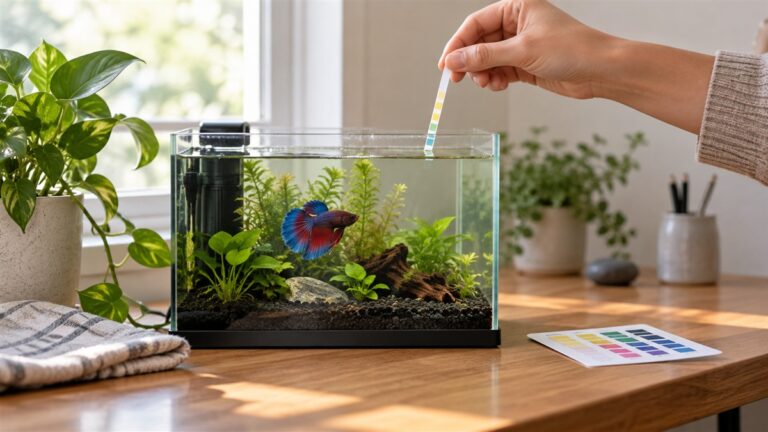
An aquarium chlorine test tells you whether chlorine is present in the water you plan to add to a tank. Most betta keepers meet this test as a line on a bottle, not as a routine. The good news is that the test is simple, and several strip kits include a chlorine pad with other readings. The harder part is reading the listing carefully, because some kits name chlorine clearly and others mention it only in a bullet. This guide shows what to check, which four strip kits name chlorine, and how to fit the test into a weekly routine.
Quick answer
Pick a strip kit whose listing names chlorine clearly, then check the pack count, the pH scale and whether the ammonia check is included. Four kits in this group name chlorine: Yiffer, DIPSTIK, FUNSWTM and Caperplus. Each one is a strip, so the steps are a dip and a wait, followed by a comparison with the printed card. Treat the chlorine reading as one step in a routine. The IFAS ammonia guide covers ammonia and nitrite, not chlorine, so for chlorine you rely on the listing and its card. Test the water you add, and keep a separate ammonia check on your schedule.
What an aquarium chlorine test measures
A chlorine test shows the chlorine reading on one pad of a strip, or on one line of a drop test. The reading is a snapshot of the water you test at that moment. It does not describe the water over the following week, and it does not tell you anything about a fish’s health.
The listings in this group use the word chlorine in different ways. The Yiffer listing says free chlorine. The DIPSTIK listing says total chlorine in its bullets. The FUNSWTM and Caperplus listings name chlorine within a longer list. Read the exact wording and decide which reading you want before you buy. A kit’s name for a reading tells you what the pad is designed to show, so do not assume two names mean the same thing.
Reading the chlorine pad
Each kit gives its own timing. The Yiffer listing describes a 30-second read for pads one to seven and a 120-second read, or 2 minutes, for the ammonia pad. The Caperplus listing says chlorine reads in 15 seconds, while nitrate and nitrite take 60 seconds, or 1 minute. The DIPSTIK listing describes a two-second dip followed by a 30-second wait. Set a timer for the time printed on your bottle, not the time you remember.
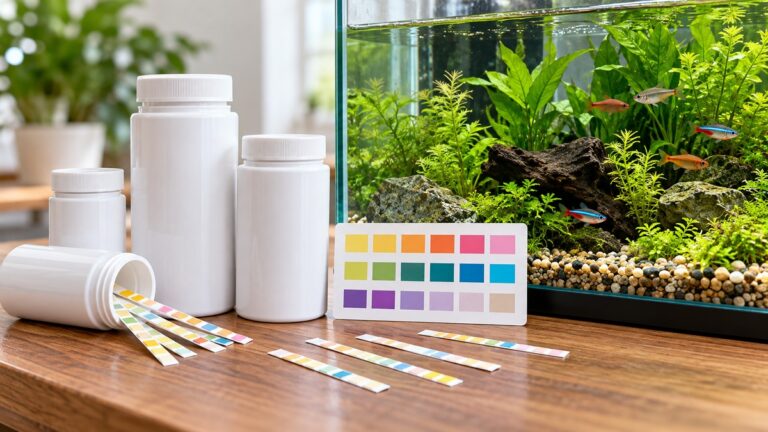
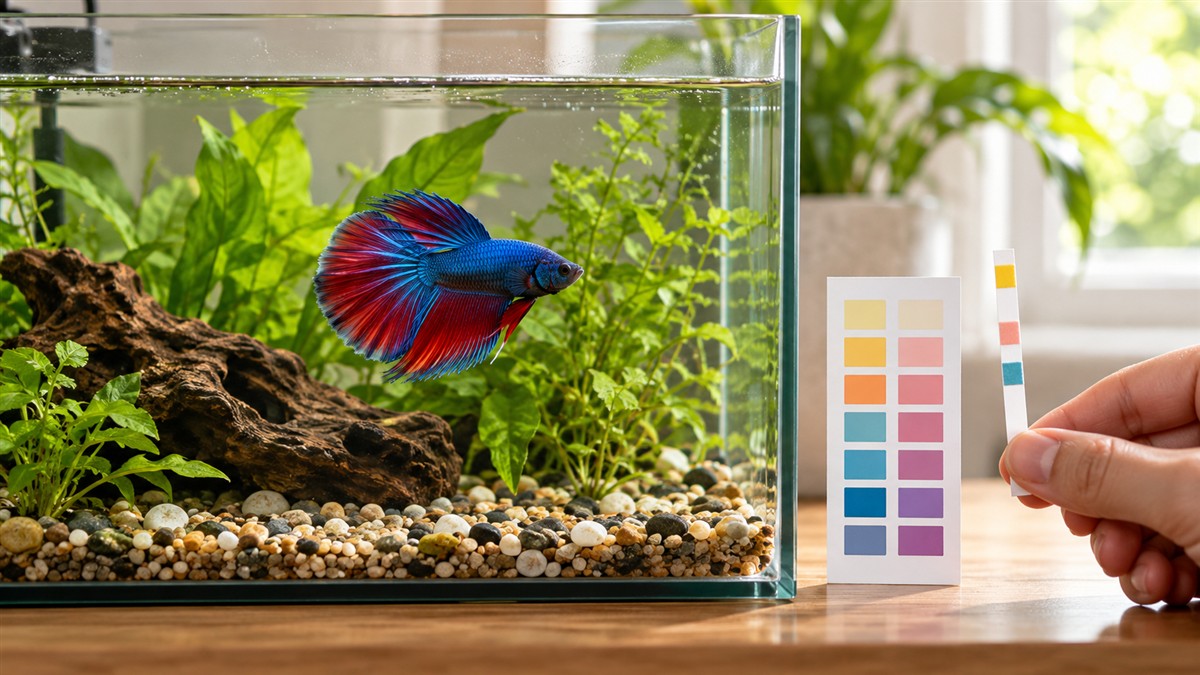
Hold the strip flat after the dip, as the instructions say, and compare the pad with the card as soon as the wait ends. Use the same light each week. A strip that has been left open or wet can read differently from a fresh one, so keep the bottle sealed between uses.
Combined strips and single-purpose tests
Most chlorine tests in this group are combined strips. One dip reads several parameters, and the bottle count is shared across every pad. That is convenient, but it also means you should check which parameters are in the set. The DIPSTIK listing names seven parameters, and it does not include ammonia. The Yiffer and FUNSWTM listings include ammonia alongside chlorine.
The IFAS ammonia guide makes a point you should keep in view. It states that ammonia is colorless and, even at levels toxic to fish, odorless, so the only way to know whether ammonia is present is to test the water. A chlorine pad does not replace an ammonia test. If the kit you choose lacks ammonia, plan a separate check on a regular schedule. A dedicated ammonia test kit for an aquarium is one way to cover it.
Testing the water you add
A chlorine test is most useful on the water you are about to add to a tank. That is the point where a reading can change what you do next. Test the water before a change, record the reading, and then decide whether the water is ready.
Many keepers test the water they add on each change, and then test the tank water on a schedule. That routine is a common rule of thumb rather than a fixed rule. The schedule you choose should match how often you change water and how often your tap or source changes.
If you use a conditioner, read its label for the stated use. Some conditioners are used during water changes, which fits this routine. Follow the printed dose, and do not treat a conditioner as a substitute for a chlorine check.
Building the test into your routine
A chlorine test works best as a fixed step, not a rescue. Put it in the same part of your water change, right after you draw the new water and before you add it to the tank. Use one bottle, one card and one log, so the reading sits next to the date, the water source and the amount you changed.
Keep the log simple. Write the date, the reading, the parameter name exactly as the kit prints it, and any conditioner you added. Over several weeks, a log shows whether a reading moves with your water source or stays flat. That pattern tells you more than a single strip does.
If a reading surprises you, do not change several things at once. Repeat the test with a fresh strip, check the timer and the light, and then decide what to do. A calm, repeatable routine is more useful to a betta keeper than a single dramatic number.
Products that fit this
These four strip kits name chlorine on the listing and suit an aquarium routine. Each card below states what the listing says about its parameters, count, timing and warranty.
1. 175-Count 8-Way Aquarium Test Strips with Ammonia-Fish Tanks&Ponds (Free chlorine, bulk pack)
Specs from the listing (checked 2026-10-13):
- Unit Count: 175 Count
- Model Number: YF-AQ8-175ct
- Item Weight: 2.8 ounces
- Item Form: Strips
- Pet Type: Fish
Pros
- The listing names free chlorine among eight parameters on each strip.
- The listing states a 175-count bulk pack in one sealed case.
- The listing says the extended handle keeps hands dry during testing.
Cons
- The bullets make an accuracy claim about lab testing, which is marketing wording rather than a certification.
- The bullets give a 30-second read for pads one to seven and 120 seconds for the ammonia pad, so a full check takes longer.
- The listing does not state a pH range for the card.
Best for: Keepers who want a large bulk pack with free chlorine and sealed storage.
Skip if: You need a quick read, because the ammonia pad alone takes 120 seconds according to the listing.
View on Amazon (affiliate link)
2. Aquarium Test Strips,7-Way Freshwater Saltwater Fish Tank Pond Test(100ct) (Seven-way with total chlorine)
Specs from the listing (checked 2026-10-13):
- Brand: DIPSTIK
- Unit Count: 100 Count
- Item Highlight: Nitrate, Nitrite, Chlorine, Hardness, Alkalinity, Carbonate, pH
- Material Type: Fiber Paper, Color Pad
- Product Dimensions: 1.81 x 1.81 x 4.4 inches; 1.76 ounces
Pros
- The listing names seven parameters, including nitrate, nitrite, hardness, pH, carbonate, alkalinity and total chlorine.
- The listing says to dip for 2 seconds and then wait 30 seconds before reading.
- The listing says the strips are not reusable, so each check uses one strip.
Cons
- The seven parameters do not include ammonia, so the kit needs a separate ammonia check.
- The listing asks you to keep wet fingers out of the bottle, which means more care at each use.
- The listing does not state a pH range.
Best for: Keepers who want a chlorine check with nitrate and nitrite, and who run ammonia checks separately.
Skip if: You need ammonia on the same strip, because this kit's seven parameters leave it out.
View on Amazon (affiliate link)
3. Aquarium Test Strips for Fish Tank: 9 in 1 Aquarium Water Test Kit for Freshwater – 150ct Fish Test (Nine-in-one, thermometer included)
Specs from the listing (checked 2026-10-13):
- Ph Range: 6.0-8.0
- Unit Count: 150 Count
- Warranty Description: 2 Year Manufacturer
- Recommended Uses For Product: Alkalinity Test, Ammonia Test, Aquarium, Chlorine Test, Copper Test, Hardness Test, Nitrate Test, Nitrite Test, ph Test
- Package Dimensions: 5.28 x 2.2 x 2.13 inches; 3.53 ounces
Pros
- The listing names nine parameters, including ammonia, pH, nitrate, chlorine, nitrite, hardness, alkalinity and copper.
- The listing says the package includes a test tube and a thermometer with the strips.
- The listing gives a two-year manufacturer warranty.
Cons
- The count field and the title disagree on the number of strips, so rely on neither figure and check the package.
- The listing gives a pH range of 6.0-8.0, which stops short of the 8.2 upper end cited for bettas in the wild.
- The listing does not state a color scale for the chlorine pad.
Best for: Keepers who want a thermometer in the box and a chlorine pad in a nine-parameter strip.
Skip if: You need a pH reading above 8.0, because the listing gives a range of 6.0-8.0.
View on Amazon (affiliate link)
4. 9-in-1 Aquarium Test Strips for Accurate Water Quality Testing (Fast chlorine read)
Specs from the listing (checked 2026-10-13):
- Brand: Caperplus
- Item Highlight: Fast Results for pH, Nitrite, Nitrate, Chlorine, Hardness Alkalinity – Easy-to-Use Water Quality Monitoring Kit for Fish Tank
- Item Weight: 1.28 ounces
- Included Components: Aquarium Test Kit
- Number of Items: 50
Pros
- The listing says chlorine reads in 15 seconds, while nitrate and nitrite take 60 seconds.
- The listing names nine parameters, including chlorine, copper, iron and alkalinity.
- The listing says the cap is designed to keep moisture out and states a 12-month warranty.
Cons
- The listing says up to 99% accuracy in its bullets, which is a marketing claim rather than a stated test standard.
- The number-of-items field shows 50, but the title does not state a count, so confirm the pack size before you buy.
- The listing does not show usable contact hours, so the support details are unclear.
Best for: Keepers who want a quick chlorine read and a stated warranty on the listing.
Skip if: You need the pack count printed in the title, because this listing does not state one there.
View on Amazon (affiliate link)
How to choose
Choose the Yiffer kit if you want a large bulk pack with free chlorine and an ammonia pad in the same strip. Its long handle and sealed case suit a routine that uses many strips over time.
Choose the DIPSTIK kit if you want a seven-parameter strip with total chlorine and you plan to run ammonia on a separate test. Keep the bottle dry and treat each strip as single use.
Choose the FUNSWTM kit if you want a nine-parameter set with a thermometer in the box. Confirm the bottle count before you buy, because the listing’s fields do not agree on the number.
Choose the Caperplus kit if you want a fast chlorine read and a stated warranty on the page. Check the pack size first, because the listing’s number-of-items field does not match the claims in its bullets.
Read the fish tank water quality test strips guide if you want a wider set of strips, and the pH test kit for aquariums guide if your main concern is pH.
Skip all four if you need a chlorine reading with a printed numeric scale on the bottle. The listings in this group describe colors on a card, not a numeric chlorine scale.
How long a bottle lasts with water changes
These numbers are an illustration only. Suppose you use a 100-strip bottle for chlorine alone.
Step 1. Tests in a year: 2 tests a month times 12 months equals 24 tests.
Step 2. Years of tests from 100 strips: 100 divided by 24 equals about 4.2 years.
Step 3. Check the result by working backward: 4.2 times 24 is about 100, which matches the bottle count.
The bottle may run out of shelf life before it runs out of strips. Check the printed date on the bottle, and do not plan on a bottle that is older than the printed window. The Caperplus listing describes a 12-month warranty, which is a different thing from a shelf life, so read both before you buy.
The estimate also shows that a chlorine-only bottle is a long-term purchase for a betta keeper who tests twice a month. A combined bottle that serves several readings will use strips faster, so plan the count across all the parameters you test.
Mistakes to avoid
Assuming every chlorine line means the same reading is the first mistake. The listings name free chlorine, total chlorine and chlorine within a list, so read the wording on the bottle.
Expecting a chlorine pad to show ammonia is the second. The DIPSTIK set does not include ammonia, and the IFAS guide says ammonia is invisible to the eye. Plan a separate ammonia test when the kit lacks one.
Reading the strip in poor light is the third. Read every strip under the same light, and keep the card close to the pad during the comparison.
Using an old or moist strip is the fourth. The DIPSTIK listing says the strips are not reusable, and it asks you to keep wet fingers out of the bottle. Keep the cap tight and the bottle in a cool, dry place.
Treating a combined bottle as unlimited is the fifth. A bottle shared across nine readings runs down faster than a chlorine-only count suggests.
Using a strip result as a diagnosis is the last. A reading shows the water at that moment. For a sick fish, consult an experienced fish keeper or an aquatic vet.
Logging the reading without the parameter name is a small error with a big cost later. Two kits can use similar words for different pads, so write the name exactly as the bottle prints it. A log that says only “chlorine” cannot be compared with a later bottle that uses a different name.
FAQ
Do I need an aquarium chlorine test for a betta tank?
Many keepers test the water they add, so a chlorine check is a useful habit. It does not replace ammonia testing, regular water changes or a working filter.
Which of the four kits is the best choice?
No single kit is best for every keeper. Pick by the chlorine wording you want, the parameters you need in the same strip and the pack size you can use before the bottle expires.
Does the IFAS guide cover chlorine?
The IFAS guide covers ammonia and nitrite, and it recommends weekly ammonia testing in a production system. It does not cover chlorine, so for chlorine you rely on the listing and the color card.
Can a strip kit read chlorine and ammonia together?
Some kits do. The Yiffer and FUNSWTM listings name ammonia alongside chlorine. The DIPSTIK listing does not include ammonia. Check the parameter list before you rely on one bottle for both readings.
How long should I wait before reading a strip?
Follow the time printed on your bottle. The listings give different times for different pads, such as 15 seconds for one reading and 60 seconds for another.
Should I test the tap water or the tank water?
Test the water you plan to add, because that is where a reading can change your next step. Testing the tank water is also useful, but it answers a different question. Use both checks if your routine allows it, and keep the two readings in separate columns of your log.
What does a chlorine pad not tell me?
A chlorine pad does not tell you about ammonia, nitrite or nitrate, and it does not tell you how your fish are doing. It also does not explain the source of a reading. Use the chlorine result as one input, alongside the other checks in your routine.
What if the reading looks wrong?
Check the bottle’s date, the wait time and the light you read under. Repeat the test with a fresh strip. If a fish is unwell, consult an experienced fish keeper or an aquatic vet rather than relying on one reading.
Bottom line
Choose a strip kit whose listing names chlorine clearly, and match the wording to the reading you want. The Yiffer, DIPSTIK, FUNSWTM and Caperplus kits all name chlorine. Keep a separate ammonia check on your schedule, read each strip at the printed time, and check the pack count before you buy.
Sources
- UF/IFAS guide: Ammonia in Aquatic Systems: ammonia is colorless and odorless at toxic levels, so testing is the only way to know it is present, and weekly ammonia tests in a production system