Best Aquarium Hardness Test: 9 Kits Compared by Count and Parameters
As an Amazon Associate we earn from qualifying purchases. Details
An aquarium hardness test tells you a hardness reading for the tank water, using a strip or a kit that lists hardness as a parameter. This guide compares nine test kits and strips whose listings name hardness among their parameters. Two liquid kits in the same search set cover other parameters but not hardness, so they are left out. For a betta tank, you will test hardness with the same kit you use for ammonia, nitrite, nitrate and pH, so the kit’s full parameter list matters as much as the hardness pad.
Quick answer
If you only need a hardness reading, choose a strip kit whose listing names hardness on its own line. If you also want ammonia, nitrite, nitrate and pH in the same purchase, choose a kit that lists those parameters with hardness. Pick the strip count by how often you plan to test. Several listings say to test at least twice per week, so a larger pack suits a frequent tester. Read the exact labels on each listing, because several of them group hardness with alkalinity, carbonate and pH, and the label is what tells you what the kit reads.
What matters for an aquarium hardness test
Hardness has to be named in the listing
Some kits name hardness directly. Others group it with alkalinity or carbonate in one label, which can make it hard to see whether the hardness pad is included. Read the parameter list line by line before you buy. If the word hardness is missing, the kit is not a hardness test, whatever the title says.
Strip format or liquid
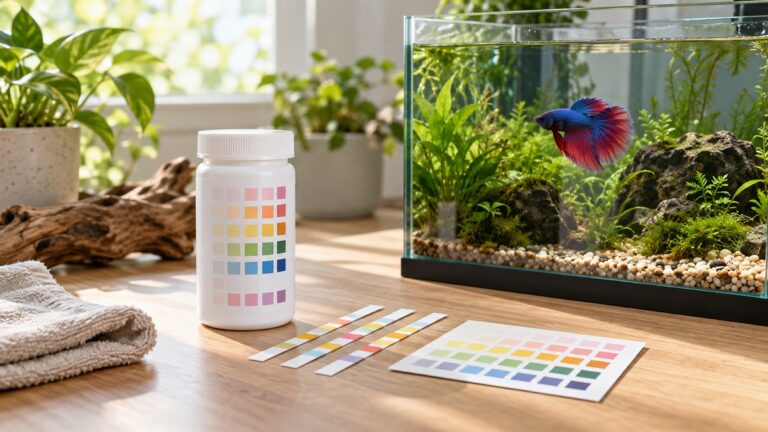
Strip kits give a fast dip-and-compare read. One listing describes a two-second dip, then a wait of 30 seconds for the color pad to change. Strips are not reusable, so each test uses one strip. Liquid kits need separate reagents and a color chart. The liquid kits in this search set list ammonia, nitrite, nitrate, pH and phosphate, and they do not name hardness.
Strip count and shelf life
Counts in this set run from 50 strips to 175 strips. A bigger count lowers the cost per test but needs more storage. One listing advises using the strips within 3 months of opening. Other listings describe a sealed bottle or a moisture-proof case, but they do not give a shelf life after opening, so check each listing before you buy a big pack.
Storage is part of the routine. One listing says to store the strips in a cool, dry place and to keep wet fingers out of the bottle. Write the open date on the bottle with a marker, so you can track the three month window without a calendar.
Reading the color
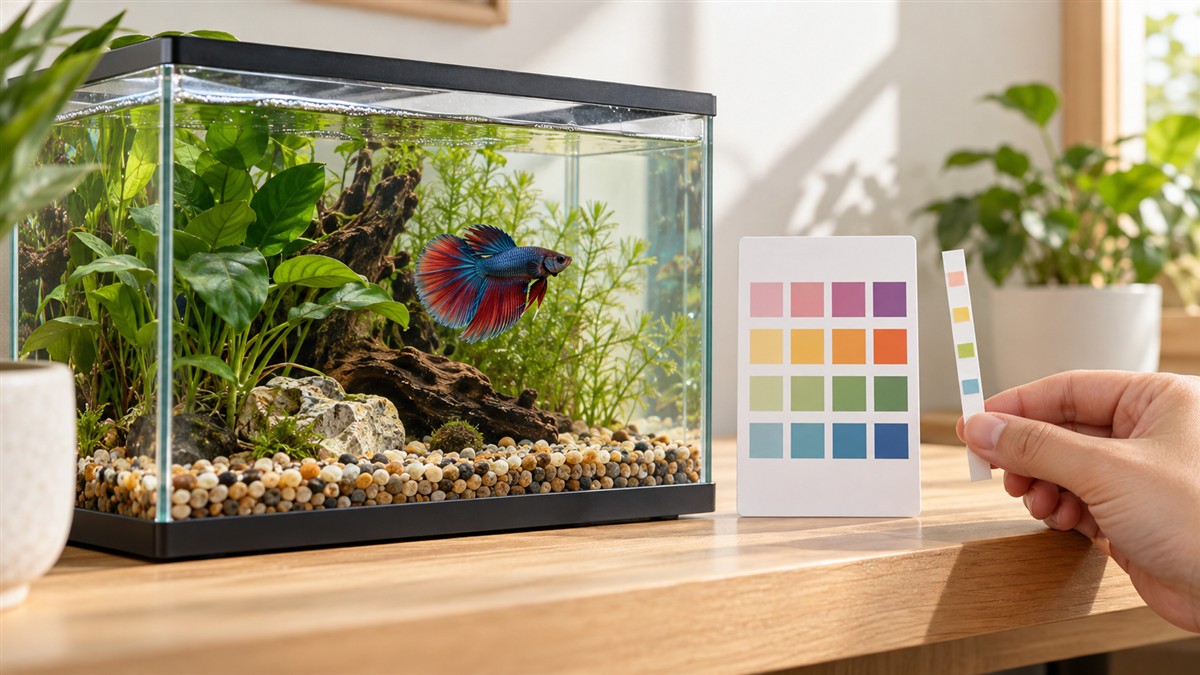
Several listings ask you to keep your hands dry, read under natural light and keep wet fingers out of the bottle. A dim room or a damp hand can change how a pad looks. Compare the pad with the color chart on the bottle or the card, and give the pad the full wait time the listing states. If you want a record, photograph the pad beside the chart in the same light each time, so the next test compares fairly with the last one.
Picks
The cards below show each kit’s stated parameters, strip count, pros, cons and a skip note. The order does not rank them.
1. AAwipes 8-in-1 Aquarium Test Kit for Fish Tanks – Quick & Accurate Water Testing Strips (Broad strip set with hardness)
Specs from the listing (checked 2026-10-11):
- Number of Items: 50
- Specific Uses for Product: Indoor
- Package Dimensions: 5.39 x 2.13 x 2.09 inches; 2.4 ounces
Pros
- The listing names hardness with alkalinity and chlorine in its 8-in-1 description
- The package holds 50 strips in a sealed bottle
- The listing says the strips work for freshwater and saltwater
Cons
- The kit combines hardness with alkalinity and chlorine, so the hardness pad needs a careful read
- The listing gives 50 strips and no shelf life after opening
Best for: A single tank that needs a broad strip set with hardness and a moderate count.
Skip if: You need a hardness label of its own, or you test more than 50 times a year.
View on Amazon (affiliate link)
2. Digital Aquarium Water Test Kit, App-Enabled 10-in-1 Fish Tank Test Kit for Freshwater & Saltwater (App-linked digital kit)
Specs from the listing (checked 2026-10-13):
- Unit Count: 10 Count
- Included Components: Mobile App, Test strips
- Ph Range: 6.0-8.0
Pros
- The listing names GH and KH, which are hardness labels
- The kit includes a mobile app and test strips
- The listing states a pH range of 6.0 to 8.0
Cons
- The listing names an app but gives no setup or data details
- The count is 10 in the unit field, which does not show the number of strips
Best for: Owners who want an app-linked reading and GH and KH labels together.
Skip if: You want a strip count or a shelf life stated in the listing.
View on Amazon (affiliate link)
3. 11 in 1 – Aquarium Test Strips | 950 Tests – 150 Strips | Fish Tank Aquariums Water Test Kit (Large pack with a total hardness label)
Specs from the listing (checked 2026-10-13):
- Unit Count: 150 Count
- Recommended Uses For Product: Ph, Carbonate, Total Alkalinity, Free Chlorine, Total Hardness, Nitrite, Nitrate, Copper, Iron
- Included Components: 100 Test Strips (50 in Bag, 50 in Bottle), Color Chart, eBook & Testing Tubes
- Warranty Description: Shelf life
Pros
- The listing names total hardness as a separate parameter
- The kit includes 100 strips split between a bag and a bottle, plus a thermometer
- The listing names a color chart and an eBook
Cons
- The listing says to use the strips within 3 months after opening
- The unit count says 150 while the package lists 100 strips, so check the pack before you buy
Best for: Owners who want total hardness as its own label and a large count.
Skip if: You need a single sealed pack and no split storage.
View on Amazon (affiliate link)
4. 175-Count 8-Way Aquarium Test Strips with Ammonia-Fish Tanks&Ponds (Pack with 175 strips)
Specs from the listing (checked 2026-10-13):
- Unit Count: 175 Count
- Item Highlight: Accurate Test Ammonia,pH, Total Alkalinity, Carbonate, Hardness, Free Chlorine, Nitrate and Nitrite
- Included Components: 175 8-way Aquarium Test Strips with Ammonia
Pros
- The largest count in this set, at 175 strips
- The listing names a long-handle design that keeps hands dry
- The case is described as airtight and moisture-proof
Cons
- Hardness sits inside a long label with alkalinity and carbonate, so the pad is less easy to check
- The listing claims lab-tested accuracy with no source named
Best for: Frequent testers who need many strips and read the label carefully.
Skip if: You need hardness on its own label or you test only a few times a year.
View on Amazon (affiliate link)
5. Palinoia 8-in-1 Aquarium Water Test Strips, 60 Count (Eight-way strips with a 60 count)
Specs from the listing (checked 2026-10-13):
- Number of Items: 60
- Included Components: 60 Aquarium Water Test Strips (50 + 10 Bonus), Color Chart, Instructions
- Specific Uses for Product: Active, Indoor, Outdoor
Pros
- The listing names hardness with nitrite, nitrate and chlorine in one bullet
- The pack includes 60 strips, 50 plus 10 bonus
- The listing names freshwater and saltwater use
Cons
- The 60 strip count is the smallest among the kits that name hardness
- The listing names salinity, which is a separate reading the hardness pad does not give
Best for: Occasional testers who want salinity as an extra label.
Skip if: You test on a weekly schedule and want a bigger pack.
View on Amazon (affiliate link)
6. Aquarium Test Strips,7-Way Freshwater Saltwater Fish Tank Pond Test(100ct) (Strip kit with a clear hardness label)
Specs from the listing (checked 2026-10-13):
- Unit Count: 100 Count
- Item Highlight: Nitrate, Nitrite, Chlorine, Hardness, Alkalinity, Carbonate, pH
- Model Number: DIP-SZS
Pros
- The item highlight names hardness on its own in the parameter line
- The listing gives a 30 second wait for the color pad
- The listing says the strips are not reusable
Cons
- The listing gives no shelf life after opening
- The listing tells you to keep hands dry and read under natural light
Best for: Owners who want a clear hardness label and a mid-size pack of 100 strips.
Skip if: You want a shelf life or a thermometer in the box.
View on Amazon (affiliate link)
7. Aquarium Test Strips for Fish Tank: 9 in 1 Aquarium Water Test Kit for Freshwater – 150ct Fish Test (Strip kit with a hardness test use)
Specs from the listing (checked 2026-10-13):
- Unit Count: 150 Count
- Included Components: 150strips,test tube, thermometer
- Warranty Description: 2 Year Manufacturer
- Recommended Uses For Product: Alkalinity Test, Ammonia Test, Aquarium, Chlorine Test, Copper Test, Hardness Test, Nitrate Test, Nitrite Test, ph Test
Pros
- The recommended uses name a hardness test and a chlorine test
- The package includes 150 strips, a test tube and a thermometer
- The listing gives a two year manufacturer warranty
Cons
- The number of items field reads 100 while the strips field reads 150, so check the pack
- The listing names copper and alkalinity alongside hardness, which adds labels to read
Best for: Owners who want 150 strips and a thermometer with a hardness test.
Skip if: You need the count stated consistently across all fields.
View on Amazon (affiliate link)
8. 9-in-1 Aquarium Test Strips for Accurate Water Quality Testing (Nine-in-one strips with a hardness label)
Specs from the listing (checked 2026-10-13):
- Unit Count: 1 Count
- Item Highlight: Fast Results for pH, Nitrite, Nitrate, Chlorine, Hardness Alkalinity – Easy-to-Use Water Quality Monitoring Kit for Fish Tank
- Number of Items: 50
- Item Weight: 1.28 ounces
Pros
- The listing names total hardness among nine parameters
- The listing gives a result time of 15 seconds for hardness and chlorine
- The listing says the strips suit freshwater and saltwater tanks
Cons
- The unit count reads 1 and the item count reads 50, so the pack size is unclear
- The listing states up to 99 percent accuracy with no test method named
Best for: Owners who want a nine-in-one set with a quick hardness read.
Skip if: You need a clear pack size before you buy.
View on Amazon (affiliate link)
9. EASYTEST 8-Way Aquarium Test Strips with Ammonia, 100PCS Fish Tank Test Kit (Eight-way strips with hardness and alkalinity)
Specs from the listing (checked 2026-10-13):
- Unit Count: 1 Count
- Recommended Uses For Product: Ammonia Test, Aquarium, Chlorine Test, Nitrate Test, Nitrite Test, Water Hardness Test, ph Test
- Number of Items: 100
- Item Highlight: Aquarium Water Test Kit for Fish Tank, Pond | Test Ammonia, pH, Hardness, Alkalinity, Chlorine, Nitrate, Nitrite, Carbonate
Pros
- The item highlight names hardness and alkalinity together with ammonia and pH
- The package holds 100 strips
- The listing says the strips work in freshwater, saltwater and planted tanks
Cons
- The listing says to cut off the ammonia pad for an accurate ammonia test, which adds a step
Best for: Owners who want an eight-way set with a 100 strip count.
Skip if: You do not want to cut a pad before you test ammonia.
View on Amazon (affiliate link)
How to choose
Use these rules in order.
First, choose a kit that names hardness in its own parameter line. A kit whose hardness appears only inside a long list of pads, with no label of its own, is harder to check against the color chart.
Second, choose by the parameters you already need. If you test ammonia, nitrite, nitrate and pH as well, choose the kit that lists all of them, so you do not buy two products.
Third, choose a strip count that matches your test schedule. Count the tests you plan in a year, then add a margin. The worked example below shows the arithmetic.
Fourth, choose a sealed case or a moisture-proof bottle if you live somewhere humid. Several listings describe one, and it helps keep the strips usable between tests.
Fifth, skip a kit whose listing mixes unrelated claims with the parameter list, such as a nitrate claim in a nitrite-only listing. Ask the seller which parameters the kit actually reads, or choose a listing that is clear.
Pick notes
Strip kit with a full parameter list
This kit lists alkalinity, hardness and chlorine together, with an 8-way pad set. It includes 50 strips. Choose it for a single tank if you want a broad strip set and a moderate count.
App-enabled digital kit
This kit lists GH and KH with ammonia, nitrate, nitrite and pH, and names an app for reading the results. It is the only app-linked option here. Check the app requirements on the listing before you buy, because the listing names the app but gives no other setup details.
Large pack for a frequent tester
This pack names total hardness as its own label, next to alkalinity and carbonate, and its unit field reads 150. Choose it if you test often and can confirm the pack size. The listing advises using the strips within 3 months after opening.
Pack with a 175 count
This pack names hardness inside a long parameter label, and its count is the largest in the set. It also names a sealed case. Choose it for frequent testing and only after you confirm that the hardness pad is included.
Nine-in-one kit with a quick hardness read
This kit lists nine parameters, including total hardness, and says hardness reads in about 15 seconds. Its unit fields disagree, reading 1 in one place and 50 in another, so confirm the pack size before buying. Choose it if you want a quick read and a 12 month warranty.
Strip kit with a short parameter label
This kit lists hardness on its own in the parameter line, with a 100 strip count. Its listing says to keep hands dry and to read under natural light. Choose it if you want a clear hardness label and a mid-size pack.
Strip kit with a hardness test label
This kit names a hardness test in its recommended uses, with a 150 strip count. It also lists a copper test and a thermometer. The listing gives a two year warranty. Choose it if you want a larger count and a thermometer in the box.
Kit with 8-way parameters and 60 strips
This 8-in-1 kit lists hardness with nitrite, nitrate, chlorine and salinity in one bullet. It contains 60 strips, which is the smallest count among the kits that name hardness. Choose it if you test occasionally and want salinity as an extra label.
Kit with 100 strips and an 8-way label
This kit lists ammonia, pH, hardness and alkalinity in one label, with 100 strips in the package. Its listing says that it works in freshwater and saltwater tanks. Choose it if you test freshwater and want one set that covers the common parameters.
The listing for one kit says to test at least twice per week, so your schedule could be 2 tests per week. 2 times 52 = 104 tests in a year. A 100 strip pack gives 100 minus 104 = minus 4, so it falls 4 tests short. A 150 strip pack gives 150 minus 104 = 46 spare strips. Choose the bigger pack if you follow the twice-weekly schedule, or choose the 100 pack if you test once a week, because 100 minus 52 = 48 spare strips. Write the count on the calendar, and track the open date of the pack.
Mistakes to avoid
Buying a kit by its title is the first mistake. Titles say nine in one or eight in one, but the parameter line is what matters. Check that hardness is listed.
Ignoring the open date is the second. One listing advises use within 3 months of opening, so a pack bought in bulk can go past that window.
Testing with wet hands is the third. Several listings warn about it, and a wet strip can smear the color.
Reading the pad too early or too late is the fourth. Give the pad the full wait time the listing names, then compare under good light.
Trusting an unchecked pack size is the fifth. Two listings in this set show a unit count that does not match the strips named in the package, so count the strips when the pack arrives and keep the count on file.
Assuming all parameters are equal is the last. A kit can read one parameter well and be less clear on another. Check the color chart for every label you rely on.
FAQ
Do I need a hardness test for a betta tank?
Your tank will be easier to check if you test the parameters you use every week. Several kits in this set cover hardness along with the common water-quality parameters. Choose the kit that matches your routine, and read the exact labels before you buy.
Is GH the same as KH?
The listings use GH, KH, total hardness and alkalinity as separate labels. This guide does not define them from a source, so check the color chart and the maker’s instructions for the meaning of each label.
How often should I test hardness?
One listing says to test at least twice per week or as needed. Other kits give no schedule. Pick a routine you will keep, and record the results so you can see changes over time.
Can one kit test everything a tank needs?
No listing in this set names every parameter a tank could need. Check which labels you need, then choose a kit that names them. Several kits cover five to eleven labels, and that is still not every test you might want.
Does a good ammonia kit need other tests?
A UF/IFAS guide says a good ammonia test kit includes a TAN test, a pH test and a thermometer, because the toxic share of ammonia depends on pH and temperature. For more on ammonia kits, see the best ammonia test kit for an aquarium.
How do I store the kit between tests?
Keep the cap closed, keep the bottle dry and store it in a cool, dry place away from the tank and its splashes. Dry your hands before you open the bottle, and do not leave the lid off while you run other tests. Those steps follow the storage advice on the listings and keep the strips usable for longer.
Should I test tap water as well?
Testing the water you add can show what goes into the tank before it reaches the fish. Use the same kit and the same method for both tests, so the readings compare. Write both results in a notebook with the date, so a change is easy to see.
Are these strips the same as a liquid kit?
No. Strips give a fast dip-and-compare read. Liquid kits use reagents and a larger chart. The liquid kits in this search set list different parameters, so compare the parameter lists before you choose.
What if the strip colors do not match the chart?
Recheck the dip time, the wait time and the light. If the color still does not match, retest with a new strip. Keep a record of the result and compare it with the next test.
Bottom line
Pick the kit that names hardness on its own line, and that lists the other parameters you already test. Choose a strip count that covers your schedule with room to spare, and check the open date. Read the color under good light and give the pad the full wait time. If a listing mixes claims or gives no parameter label you can check, choose a clearer listing.
For a related pH option, see the best aquarium water pH test kit. For a broader water kit, see the best fish aquarium water test kit.
Sources
- UF/IFAS, Ammonia in Aquatic Systems (FA031): a good ammonia test kit includes a TAN test, a pH test and a thermometer, because the toxic share depends on pH and temperature.