Why Is My Betta Tank Cloudy? Causes and Checks
As an Amazon Associate we earn from qualifying purchases.
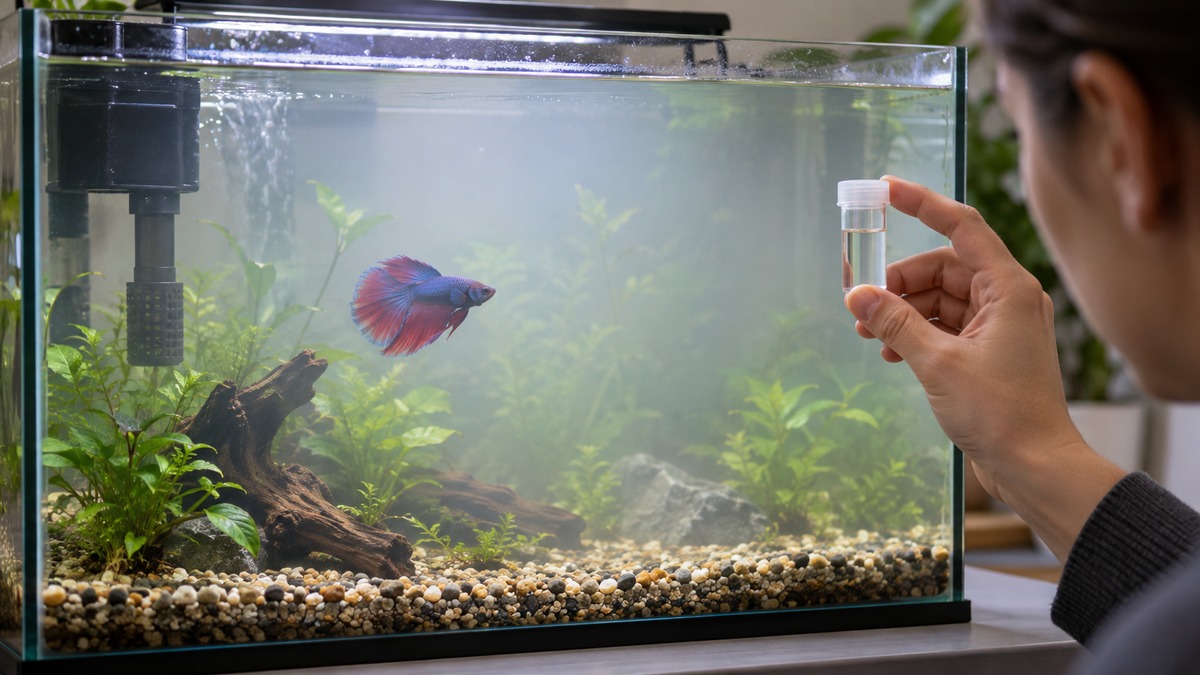
Why is my betta tank cloudy? The University of Florida IFAS sources point to a few things that build up in the water: uneaten food, debris on the bottom, ammonia from waste, and a filter whose bacteria have not yet matured. Each one can make water look hazy, and each one is something a keeper can check. Cloudiness is a symptom to investigate, not a diagnosis, and the sources do not identify one single cause for every hazy tank.
Quick answer
- Check for uneaten food and debris first, since the UF/IFAS sources link overfeeding and waste to ammonia (FA031 and FA212).
- If the tank is new, expect a slow start. A new biofilter takes six to eight weeks to build up enough bacteria (FA031).
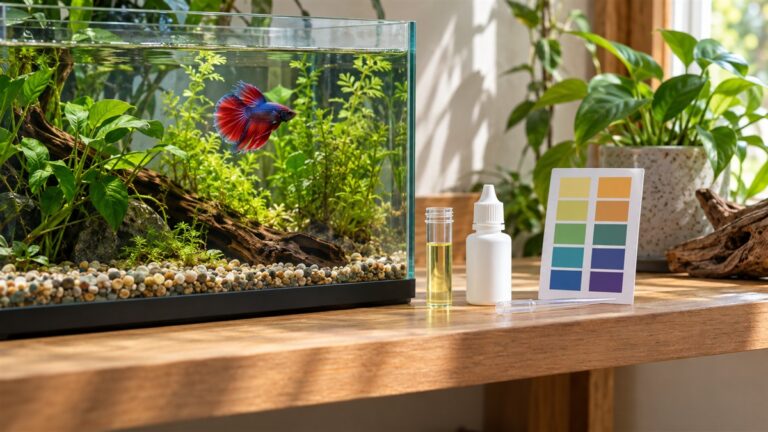
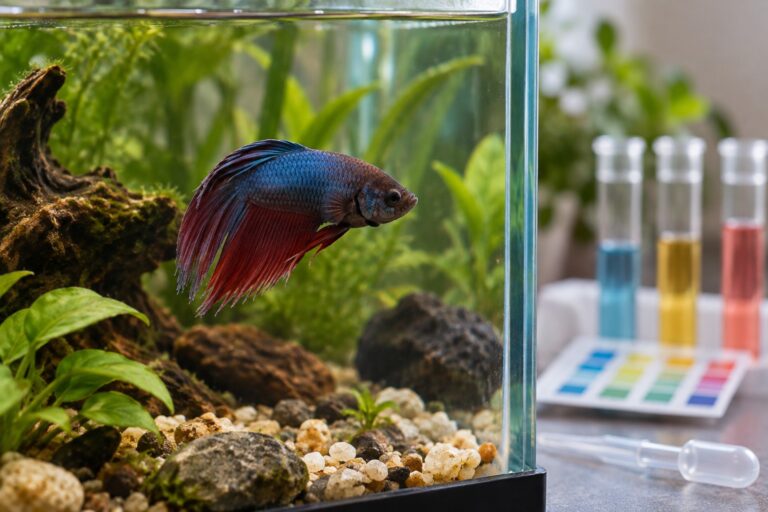
- Test ammonia. The sources say the only way to know whether ammonia is present is to test for it (FA031).
- If the water is cloudy and a fish seems unwell, consult an experienced fish keeper or an aquatic veterinarian.
Check the feeding first
Food is the most common input that changes water quality in a small tank. The UF/IFAS ammonia publication says plainly: “Overfeeding is a major cause of high ammonia concentrations.” It also says that “The more feed a fish is fed, the more ammonia the fish will produce.” Food that drifts or sinks and is not eaten decays in the tank. The same publication notes that fish may not eat during periods of ammonia stress, and that the uneaten feed will only make the situation worse.
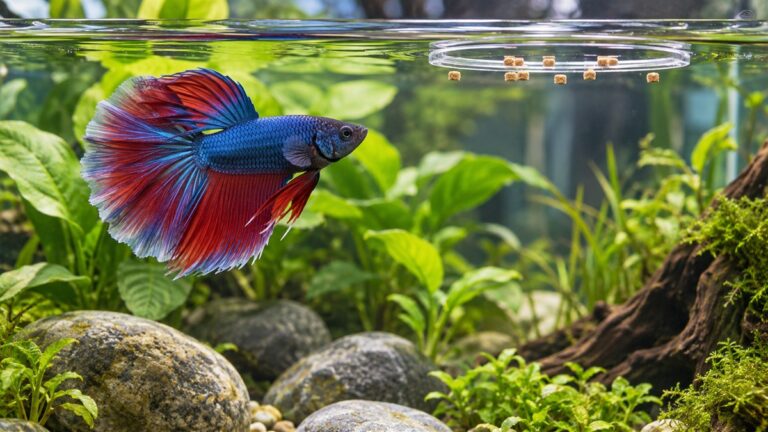
So the first check is simple. After feeding, look at the bottom and at the surface for food that was not eaten. If it is there, the portion is probably too large for the fish. The sources do not give a number of pellets or a feeding frequency for a betta, so the amount has to be judged from what the fish actually finishes. This is general guidance, not a figure from a source.
Look at debris and sanitation
Waste that stays in the tank is a second cause to rule out. The UF/IFAS circular on stress and fish disease says: “Organic debris that accumulates on the bottom of tanks or vats is an excellent medium for reproduction of fungal, bacterial, and protozoal agents.” The circular recommends prompt removal of this material, because it “will help decrease the number of agents the fish is exposed to.”
A layer of debris on gravel or sand, decaying plant matter, and leftover food in corners are all things to clear during a water change. Plants and decor may hold waste too, so clean them gently rather than with harsh products. The sources do not say how much debris is too much for a betta tank.
Understand the new tank effect
A tank that has just been set up is one of the most common situations where water looks hazy and then changes over time. The ammonia publication explains the mechanism. Fish waste is converted by bacteria first to nitrite and then to nitrate, and those bacteria need a biofilter to live in. The publication says: “A new biofilter requires six to eight weeks to build up sufficient bacteria to effectively reduce ammonia and nitrite levels.”
That timeline means a new tank may have high ammonia while the filter is still maturing, even if the water is clear. It also means that replacing or deep cleaning the filter media can set the process back, because the bacteria live on the media. The sources do not state how much media can be cleaned at once without losing these bacteria, so a cautious approach is the safe default: rinse media gently rather than replacing all of it at once.
Check the filter and flow
A filter that is too strong can stir up fine debris and keep it suspended, which makes the water look murky. The UF/IFAS betta publication says: “Bettas prefer calm water as shown by research using flow as a stressor, so heavy filtration may actually be harmful to a betta’s health and welfare.” If the filter churns the surface or keeps particles in the water column, check whether its flow can be reduced. A guide to low-flow filters for betta tanks covers that choice.
The filter also has to keep up with the waste. The ammonia publication notes that nitrifying bacteria need oxygen and alkalinity to work, and that when oxygen is low they can stop functioning, so ammonia and nitrite levels increase. The UF/IFAS circular gives a dissolved oxygen figure of “at least 5 mg/L” for cultured fish, which is a production figure rather than a betta target, but it shows that oxygen matters for the bacteria as well as the fish.
Test ammonia before changing anything else
Because ammonia is “colorless and odorless at levels toxic to fish,” the water can look clear while ammonia is still a problem, and it can look cloudy without a high reading. The ammonia publication says that at low concentrations ammonia “causes stress and damages gills and other tissues.” It also says that fish exposed to low levels over time are more susceptible to bacterial infections. A test result is the only way to check, and this site has a guide to ammonia test kits for aquariums.
If ammonia is high, the ammonia publication says the first step is to reduce or stop feeding for a short period, and that a “25% to 50% water change will help remove some ammonia” when the incoming water does not contain ammonia. It also says that approach is only feasible in tanks or very small ponds. Water change timing and the tap water source should be checked before a large change is made. The sources do not say how long a betta can go without feeding, so keep any pause short and check the ammonia again.
How we chose
The sources were chosen because they are university extension publications on betta husbandry, ammonia in aquatic systems, and stress and sanitation in fish. Retail pages were not used, and this article makes no product price, rating or review claim. Each source was opened on 2026-10-24 with curl and returned HTTP 200. The quotations were checked against the text of those pages. Causes are listed only where a source names them, and the general checks are labeled as general guidance.
What we could not verify
The sources opened for this article do not give a single explanation for every cloudy betta tank. They do not identify the organisms behind a specific milky bloom, and they do not give a time for a tank to clear. They do not give a feeding amount, a debris schedule, or a safe ammonia threshold for a betta, and they do not discuss clarifiers. The UF/IFAS betta publication describes small containers and bowls as common betta housing, but this site does not recommend bowls, and that description is not an endorsement.
What the sources do not say
The sources do not describe the signs of a betta illness, so this article does not diagnose one. If a fish is lethargic, stops eating, or shows any change in color or breathing, do not rely on water appearance alone. Test the water and consult an experienced fish keeper or an aquatic veterinarian. Do not add medication or treatment products based on a guess about the cloudiness.
Frequently asked questions
Is a cloudy tank always dangerous for my betta?
Not always, and not always safe either. Cloudiness is a sign that something is changing in the water, but the sources do not say that every cloudy tank is harmful. The reliable check is an ammonia test, because ammonia can be present without any visible change in the water.
Why did my tank turn cloudy after I added the fish?
The sources do not give one cause for this pattern. They do explain that uneaten feed and waste add to ammonia, and that a new biofilter needs six to eight weeks to build up. Check feeding, debris and ammonia before changing other things.
Should I replace the filter media to clear the water?
The sources do not recommend replacing filter media for clarity. The ammonia publication explains that the bacteria that process ammonia live in the biofilter, so removing it removes the bacteria’s habitat as well as the bacteria. Rinse media gently if it is clogged, and check ammonia afterward.
Can a water change make the cloudiness worse?
A large change on a tank that is still maturing can cause problems if the new water contains ammonia, and the ammonia publication says a water change helps only when the incoming water does not contain ammonia. Test the incoming water and treat it according to the conditioner label before adding it.
When should I call a vet about a cloudy tank?
Call an aquatic veterinarian if the fish are unwell, if ammonia stays high after a water change, or if you cannot identify the cause. The sources opened for this article do not give treatment doses, and this article does not recommend any medication.
Sources
- University of Florida IFAS Extension, FA212: Evolution, Culture, and Care for Betta splendens, https://edis.ifas.ufl.edu/publication/FA212 (opened 2026-10-24)
- University of Florida IFAS Extension, FA031: Ammonia in Aquatic Systems, https://edis.ifas.ufl.edu/publication/FA031 (opened 2026-10-24)
- University of Florida IFAS Extension, Circular 919/FA005: Stress, Its Role in Fish Disease, https://edis.ifas.ufl.edu/publication/FA005 (opened 2026-10-24)