Can Bettas Eat Tetra Flakes?
As an Amazon Associate we earn from qualifying purchases.
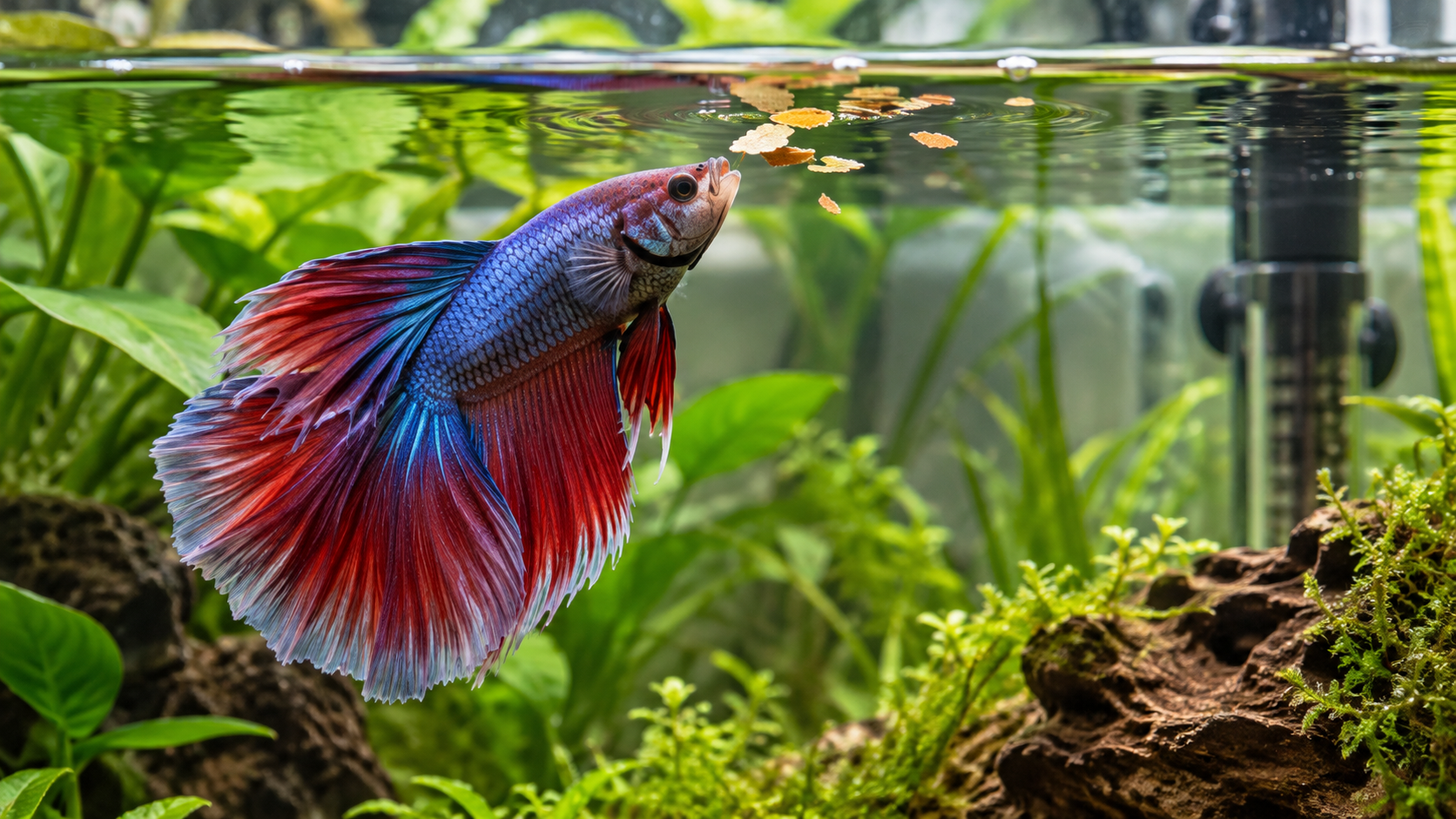
Can bettas eat tetra flakes? The sources checked for this guide do not name tetra flakes, so they cannot confirm them as a suitable betta food. They do say that commercial dried foods are formulated for the fish they are made for, and that a fish’s diet should match its species. A betta owner should read the label, check whether the food is labeled for bettas, and use a betta food as the main diet.
Quick answer
- The sources checked do not mention tetra flakes and do not confirm them as a betta food.
- Merck says commercial dried foods are “usually formulated to contain the proper mix of nutrients for your fish when fed properly.”
- FishBase estimates a trophic level of 3.3 for betta, based on food items, so the betta diet is a species-specific question.
- Choose a betta-labeled food for the main diet and treat any other flake as a variety item after reading its label.
What the sources say about a betta’s diet
FishBase lists the betta, Betta splendens, at a trophic level of 3.3 with a note that the figure is “based on food items.” That is an estimate of where the fish sits in the food web, and it places the betta above the goldfish, which FishBase lists at 2.0. The FishBase summary does not give a list of foods or the share of each food in the diet, so a betta owner cannot read a flake recipe from it.
FishBase also gives the betta’s habitat conditions, including a tropical range of “24°C – 30°C” and a pH range of “6.0 – 8.0.” Those are habitat figures, not feeding instructions. They are useful context for a home tank, but they do not say which flake to buy.
Why the species matters for any flake
Merck says the first step is to know the diet a fish needs: “You need to know the type of diet your fish require, as well as where your fish naturally feed in the water column, such as at the surface, in the middle, or at the bottom.” That is a general statement about all fish, and it applies to bettas. A flake that suits one species may not suit another, and the label should say which fish it is for.
Merck adds that “A wide variety of processed and natural foods are available to meet the needs of nearly any fish.” The phrase “nearly any fish” does not mean any food is right for every fish. The species on the label still matters, and a tetra flake should be checked against the betta’s needs rather than assumed to fit.
Reading the label on a flake
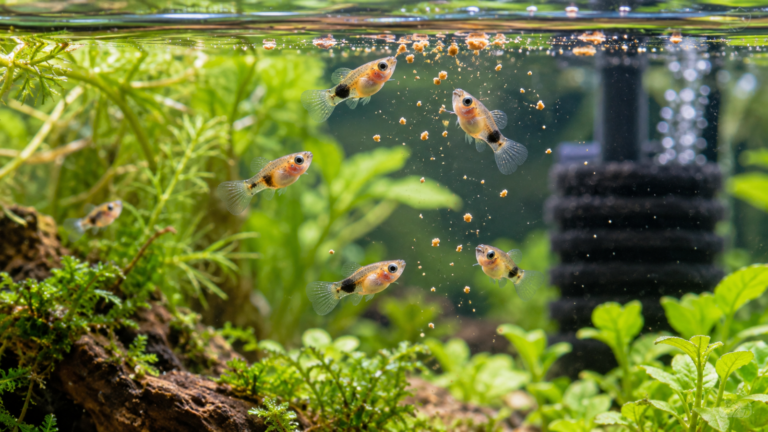
Three things on a label are worth checking. First, the intended fish. A food labeled for tropical community fish is a different product from one labeled for bettas, and the sources checked do not say how the two compare. Second, the form. Merck notes that “fish that prefer to feed at the bottom should not be fed flakes that float on the surface.” Bettas are often seen at the surface, but the sources checked do not state where bettas feed in a home aquarium, so watch the fish during feeding.
Third, the storage date. Merck says “Food should not be stored for excessive periods of time,” and that “dried foods should be kept on hand for no more than 2 months.” An opened tub of flakes that has been in the cupboard for a long time is not a reliable choice, whatever the brand.
Using flakes as part of a varied diet
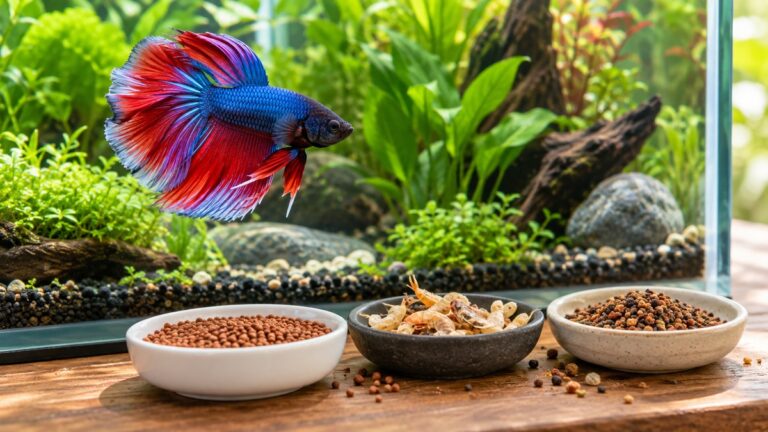
Merck describes the right structure for most aquarium fish: “A variety of foods should be fed, with one primary dietary source supplemented with other foods that provide necessary nutrients.” For a betta, that means picking one main food made for bettas, then adding other foods in small amounts. A flake meant for a different fish can be one supplement if the owner has checked the label, but the sources do not support it as the main diet.
Merck also warns about live foods. They are “generally a good source of protein and fat,” but they “can lack sufficient amounts of other elements and may not provide a complete diet.” Live food can also “sometimes introduce parasites or diseases into the fish’s environment.” A betta owner should not replace the main diet with live foods.
How much to feed and what to watch
Overfeeding is the most common mistake. Merck says “Overfeeding can lead to health problems as well as a dirty tank.” It also says “Feeding methods and rates vary with species, age, system, and water temperature.” The sources do not give a betta portion size, so the owner should start with a small amount and remove any leftover food, following Merck’s routine rule to “Feed fish and remove any uneaten food.”
Signs that the diet is not working include “Not eating,” which Merck lists among common signs of illness in fish. Lethargy, “Loss of color” and “Weight loss” are also listed. A betta that refuses food after a change of flakes, or that looks unwell, should be seen by an experienced fish keeper or an aquatic vet. Merck says more complicated problems need veterinary treatment, so do not try to fix an illness through a food change alone.
The guide on best betta food covers betta-labeled options in more detail. The guide on tropical fish flakes for betta covers a closely related question about flakes sold for a wider group of fish.
How we chose
This guide is based on four sources opened on 2026-10-24: two Merck Veterinary Manual fish care pages on diet and home setup, and two FishBase species summaries. No retail listings, prices or product ratings were used. The advice on flakes comes from what those pages say about formulated foods, labels, feeding habits and signs of illness.
What we could not verify
No tetra flake label was opened, so the ingredients, protein level, pellet or flake size and intended species of any tetra product are not known. The sources also do not give a betta feeding schedule or a list of foods that bettas eat in the wild.
What the sources do not say
The sources do not say whether tetra flakes are safe for bettas, how much betta owners should feed, or which flake brand is best. FishBase gives a trophic estimate but not a diet list. Any firm answer for a specific product needs the product label and the advice of an experienced fish keeper or an aquatic vet.
Frequently asked questions
Are tetra flakes a good main food for a betta?
The sources checked do not confirm tetra flakes as a main betta diet. Merck recommends one primary food, supplemented by others, so a betta-labeled food is the better main choice.
Why does the betta species matter for flake choice?
Merck says the diet a fish needs depends on its type and where it feeds in the water column. FishBase places the betta at a trophic level of 3.3, based on food items, which shows the species has its own diet profile.
What should I check on a flake label?
Check the intended fish, the form (floating or sinking), and the storage date. Merck says dried foods should be kept on hand for no more than 2 months.
How much flake should a betta get?
The sources do not give a betta portion size. Merck says feeding rates vary with species, age, system and water temperature, and advises removing uneaten food.
When should I see a vet about a betta that stops eating?
Merck lists “Not eating” among common signs of illness in fish. A betta that keeps refusing food, or shows lethargy or loss of color, should be seen by an experienced fish keeper or an aquatic vet.
Sources
- Merck Veterinary Manual, “Providing a Home for Fish,” https://www.merckvetmanual.com/all-other-pets/fish/providing-a-home-for-fish (opened 2026-10-24)
- Merck Veterinary Manual, “Routine Health Care of Fish,” https://www.merckvetmanual.com/all-other-pets/fish/routine-health-care-of-fish (opened 2026-10-24)
- FishBase, Betta splendens species summary, https://www.fishbase.se/summary/Betta-splendens.html (opened 2026-10-24)
- FishBase, Carassius auratus species summary, https://www.fishbase.se/summary/Carassius-auratus.html (opened 2026-10-24)