Aquarium Heater Size Chart: Wattage for Small Tanks
As an Amazon Associate we earn from qualifying purchases.
An aquarium heater size chart starts from one rule of thumb: about 5 watts per gallon, assuming you want the water roughly 10 degrees Fahrenheit above room temperature and the tank has a lid. A 29-gallon tank under those conditions needs about 100 watts. Small tanks of 6 gallons or less usually take a heater of 25 watts or less, depending on how cold the room gets. The chart below turns that rule into a quick lookup, then explains when to go higher or lower.
Quick answer
- Rule of thumb: about 5 watts per gallon for a 10 degree rise with a lid.
- Nano tanks of 6 gallons or less: 25 watts or less, depending on room temperature.
- If the water must rise about 15 degrees above the room, one care guide suggests adding a second heater.
- For a tank that needs 200 watts, use two 100-watt heaters instead of one 200-watt unit.
The size chart
The wattage column below is simple arithmetic from the 5 watts per gallon rule. It is a starting point for a lidded tank in a room that is about 10 degrees cooler than the target water temperature. It is not a rating for any particular heater model.
| Tank size | Rule-of-thumb wattage (5 W per gallon) | Note |
|---|---|---|
| 2.5 gallons | about 12.5 W | Nano range: 25 W or less |
| 5 gallons | about 25 W | Nano range: 25 W or less |
| 6 gallons | about 30 W | Guide says 25 W or less for tanks of 6 gallons and under, depending on room |
| 10 gallons | about 50 W | Rule applied directly |
| 20 gallons | about 100 W | Rule applied directly |
| 29 gallons | about 145 W | The guide’s own example rounds this to about 100 W, so treat the rule as approximate |
| 40 gallons | about 200 W | Consider two 100 W heaters |
Notice that the 29-gallon figure from the arithmetic and the guide’s own example do not match exactly. That is a sign the 5 watts per gallon rule is a rough guide, and that the real answer depends on the room, the lid and the target temperature. Use the chart to pick a heater size band, not an exact number.
What the rule assumes
The rule makes two assumptions. First, you need to heat the water up to 10 degrees above room temperature. Second, you use a lid to limit evaporative cooling. Change either one and the answer changes. A colder room, a tank with no lid, or a higher target temperature all push you toward more wattage. If the room is cold enough that the water must rise 15 degrees, one guide suggests adding a second heater.
Do you need a heater at all?
Most tropical freshwater fish do best around 78-80 degrees Fahrenheit. If your home is usually cooler than that, you need a heater. Some fish can do without one, and the guide names goldfish, Japanese ricefish and white cloud mountain minnows. Others prefer warmer water: discus, ram cichlids and certain Apistogramma prefer about 85 degrees and require a heater.
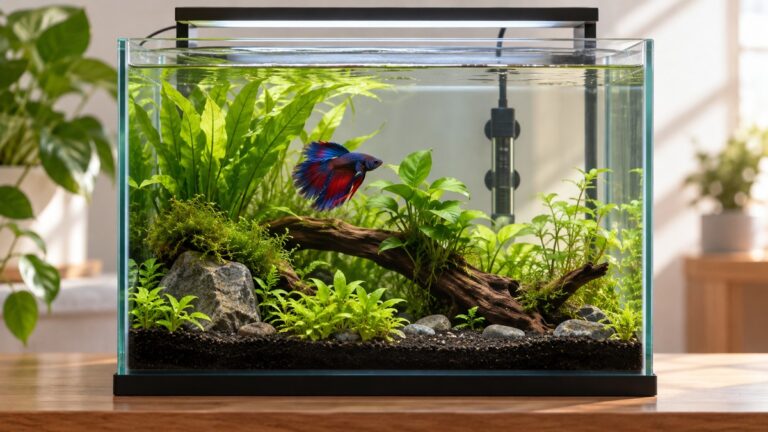
For a betta, which is a tropical fish, a heater is the normal choice in most homes. For a related species question, see do rasboras need a heater, which covers what the sources say about another small fish.
Where the tank sits changes the number
Room location matters. Sunny rooms, basements and spots near air conditioners all affect the water temperature, and a tank sitting on the bottom of a rack runs cooler than one on top because heat rises. Other equipment adds heat too. A 30-watt Fluval FX4 canister filter, for example, slightly warms the water as it flows through. If your filter or light adds heat, you may be able to go a little lower in the band, but confirm with a thermometer rather than assuming.
Why two smaller heaters can beat one big one
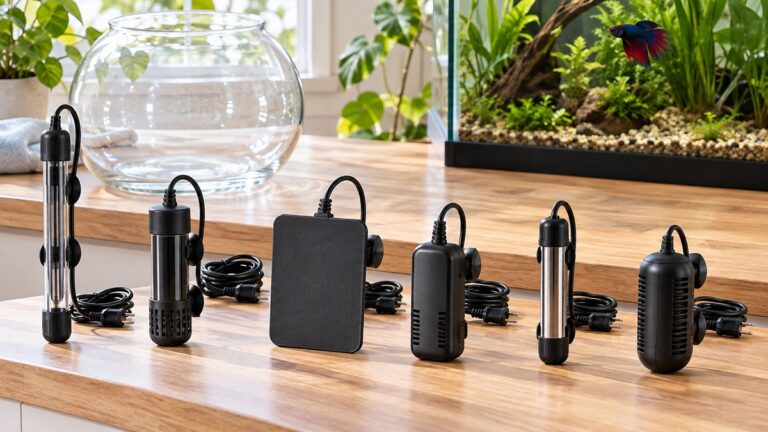
For a tank that needs 200 watts, the guide recommends two 100-watt heaters instead of a single 200-watt heater. There are two reasons. A single overheating heater is less likely to overheat the whole tank, because the combined output is split. And if one heater fails, the other can keep the water from getting too cold while you replace it. For small betta tanks this does not usually apply, because a single low-wattage heater is enough, but it matters once you move up to larger aquariums.
Placement and setup
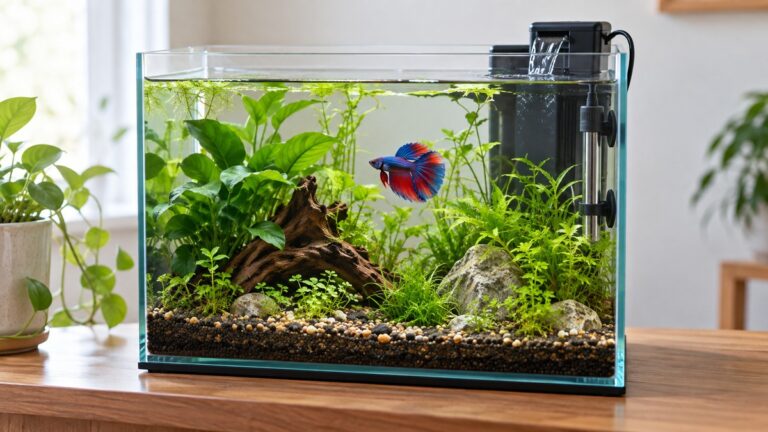
- Position the heater near the filter outlet or pump, where flowing water spreads the warmth.
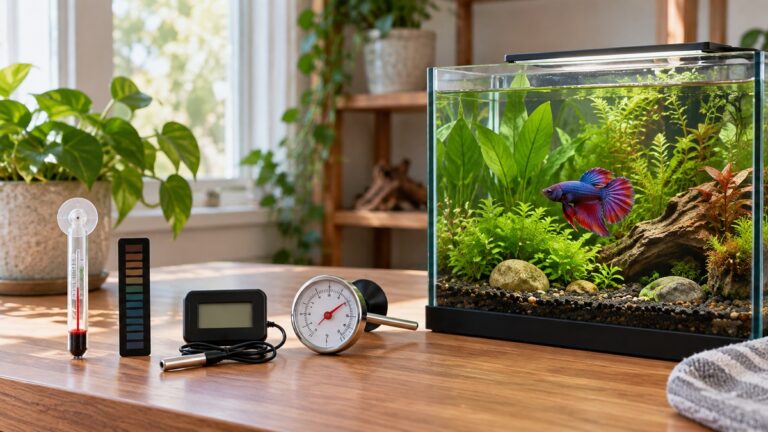
- Put a thermometer in the corner opposite the heater to confirm the heat reaches the far side.
- Some heaters must stay vertical, while others can lie horizontally. Check the instructions for yours.
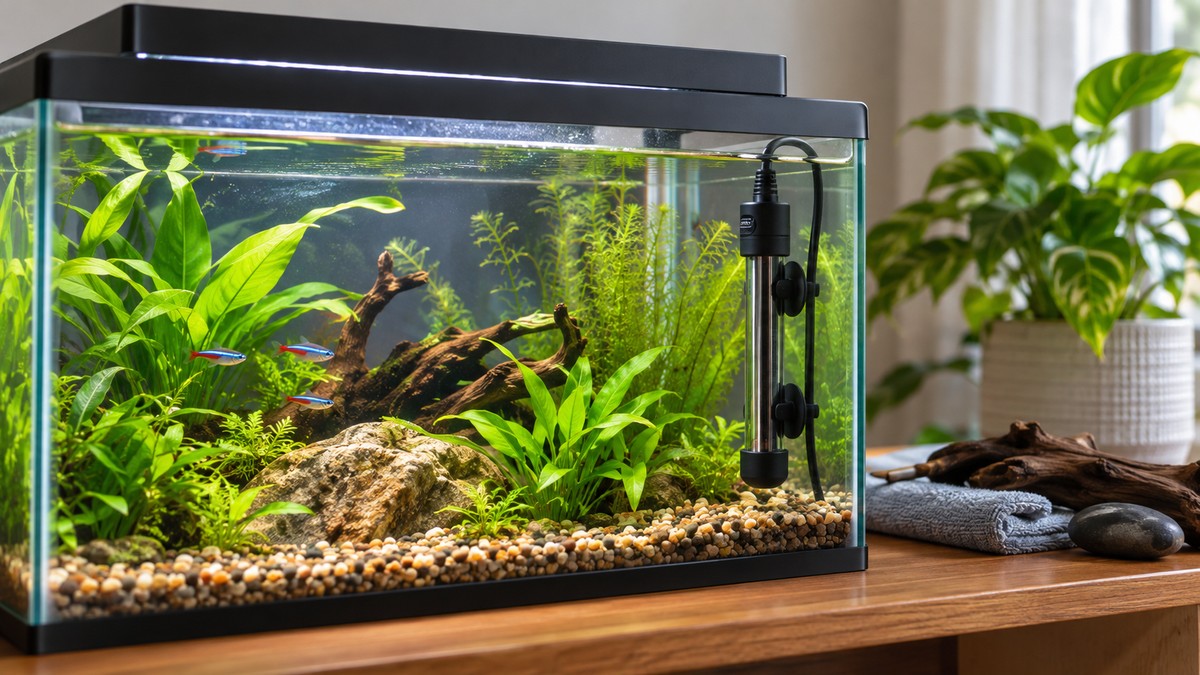
- Mount long tube-shaped heaters at a 45-degree angle for better heat distribution.
- Hide the heater behind plants or decor, or put it in a sump if you have one.
Safety habits
Heaters have internal thermostats that shut off the heat at a set temperature, keeping the water within a few degrees of the setting, so they can run around the clock. A few habits prevent most damage:
- Let a new heater acclimate to the tank water for 20 to 30 minutes before plugging it in, to prevent temperature-shock breakage.
- Keep the heater submerged whenever it is on. Many heaters have a minimum water line marker, and running one dry can cause burnout or cracking.
- Unplug the heater or switch off its power strip during water changes.
- After removing a heater, wait at least 30 minutes for it to cool before handling it.
- Buy a reputable brand and avoid used heaters, since their history is unknown.
Maintenance is minimal. Gently scrubbing off algae with a toothbrush is the main task. If something about electrical safety in your setup worries you, ask a qualified electrician.
Heater listings on this site
This post is about sizing, not product picks, so no individual heaters are scored here. If you want to see how specific listings present their wattage, our Hagen Marina Betta heater page, the Hitauing heater review and the hygger vs DaToo heater comparison each cover a different option. Compare the wattage on those pages with the band from the chart above.
Common sizing mistakes
- Buying by tank size alone and ignoring how cold the room gets.
- Skipping the lid, then wondering why a correctly sized heater cannot keep up.
- Using one large heater in a big tank when two smaller ones would give a backup.
- Placing the heater in a dead corner with no flow.
- Forgetting to check the far side of the tank with a thermometer.
- Running a heater when the water level has dropped below its minimum line.
FAQ
How many watts per gallon do I need?
About 5 watts per gallon is the common rule, assuming the water should be about 10 degrees above room temperature and the tank has a lid.
What size heater for a 5-gallon betta tank?
By the rule, about 25 watts. The same guide says nano tanks of 6 gallons or less usually take 25 watts or less, depending on room temperature.
Is a bigger heater always better?
No. The guide’s advice for large tanks is to split the load between two heaters so a single failure is less risky. A heater far larger than the band suggests gives no benefit in that advice.
Can a heater run all day?
Yes. The built-in thermostat shuts off the heat at the set temperature, so heaters are made to run continuously.
Where should I place the thermometer?
In the corner opposite the heater, so you can see whether the warmth reaches the far side of the tank.
Do all fish need a heater?
No. Goldfish, Japanese ricefish and white cloud mountain minnows can do without one, while discus, ram cichlids and certain Apistogramma need warmer water.
Bottom line
Take your gallons, multiply by 5, then adjust up for a cold room or a missing lid and down for a nano tank. Split big loads between two heaters, keep them submerged, and check the far corner with a thermometer.