Can Cory Catfish Eat Betta Food? What to Know
As an Amazon Associate we earn from qualifying purchases.
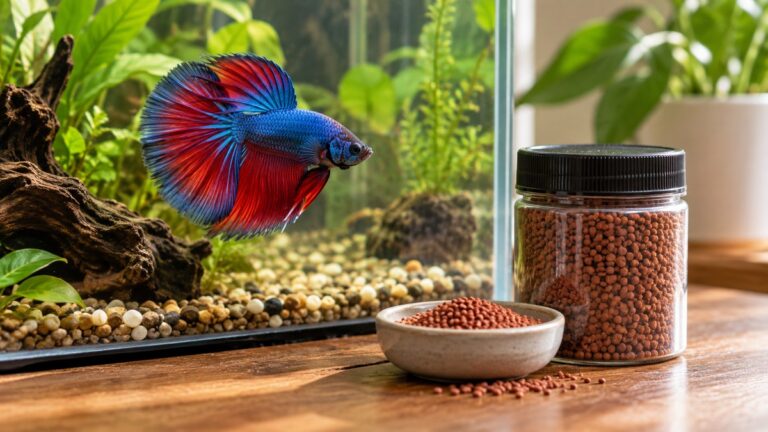
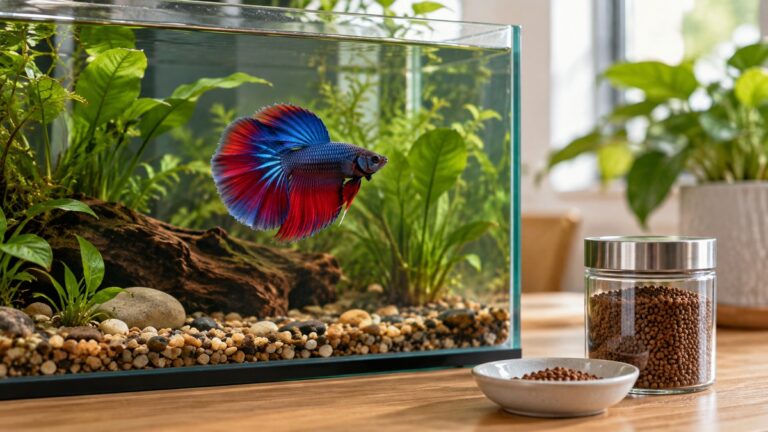
Can cory catfish eat betta food? A cory will pick at a betta pellet if one drops to the bottom, but betta food is a poor match for a bottom-feeding catfish and should not be its main diet. Betta foods are made for a surface-feeding fish, while corydoras forage along the substrate. This guide explains the difference, what the sources say corys eat, and a simple way to feed both fish in one tank without either one going short.
Quick answer
- Corys can swallow a stray betta pellet, but betta food is not designed for them and is not a full diet.
- Corydoras are mostly bottom feeders and do best with sinking pellets plus live or frozen foods.
- Feed a sinking food for the corys and a betta food for the betta, and watch that both fish actually get to eat.
- If a fish stops eating or looks unwell, ask an aquatic vet.
What corydoras eat in nature
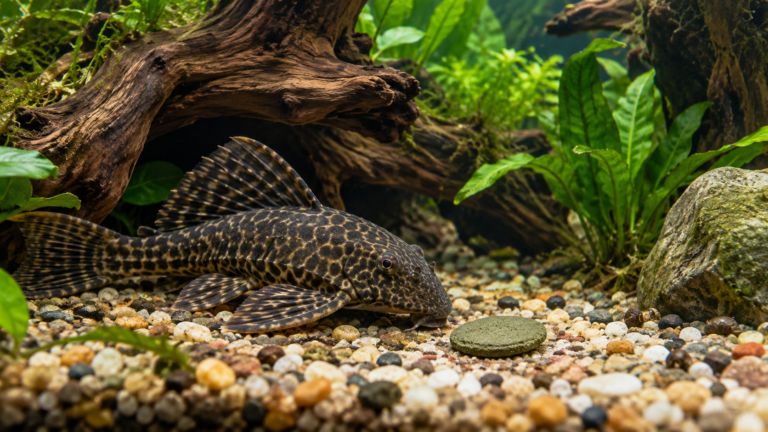
According to the Corydoras overview on Wikipedia, the main food of these catfish is bottom-dwelling insects, insect larvae and various worms, plus some vegetable matter. They will also eat flesh from dead fish. They search the bottom with their sensory barbels and suck up food, often burying the snout deep in sand or gravel while they do it.
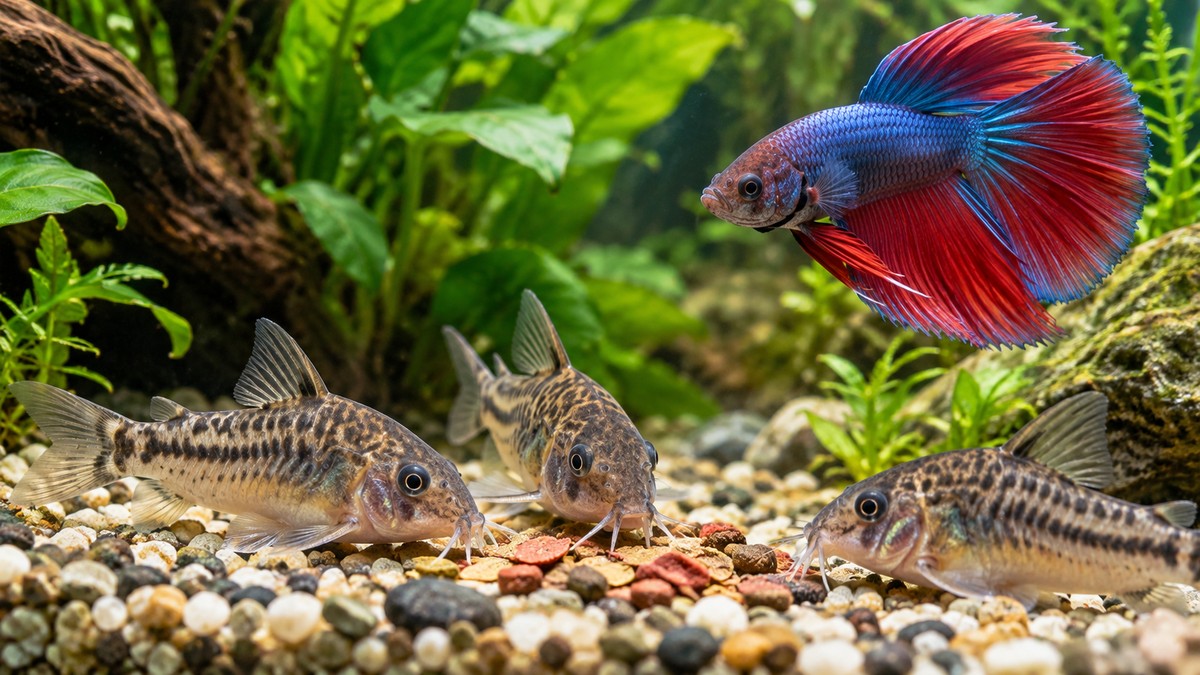
That feeding style is the key to the whole question. A cory is built to work the bottom of the tank, sifting through the substrate for small bits of food. A betta is built to take food from the surface. Their mouths, their habits and the food they look for are different, and a good feeding plan respects both.
What this means for betta food
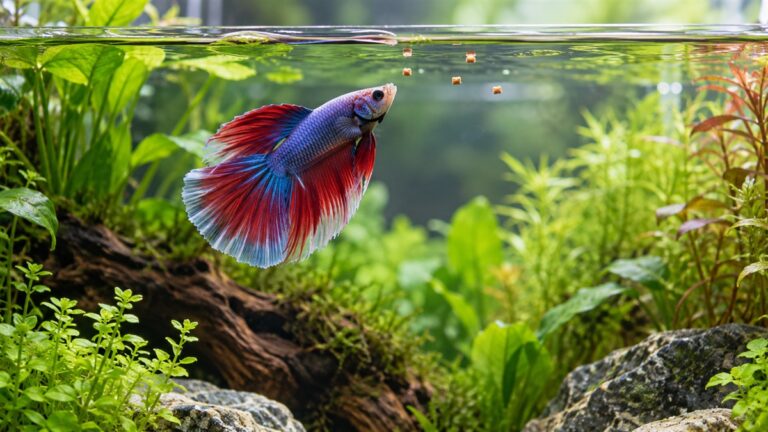
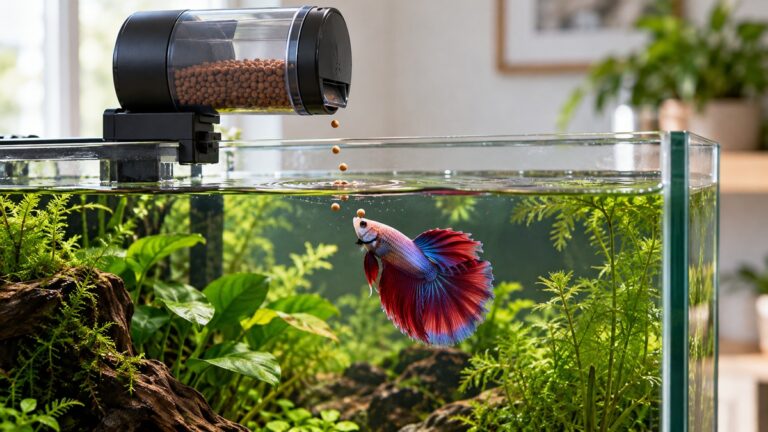
Most betta foods are small floating or slow-sinking pellets and flakes meant to be taken at the top of the tank. A hungry betta usually grabs them before they ever reach the bottom. Whatever sinks past the betta lands where the corys are, and a cory will often eat it. That is why the question comes up in the first place: corys clean up leftovers, and betta pellets look like leftovers.
Eating something and being fed properly are two different things, though. Betta food is aimed at one species. If it is the only thing a cory gets, the fish is relying on scraps instead of a food chosen for bottom feeders. The Wikipedia overview points to sinking pellets plus live or frozen foods as the aquarium diet for corydoras, which is a clear step away from a plain betta pellet.
Floating food versus sinking food
The practical difference is where the food ends up. Flakes and floating pellets stay near the surface, where a betta feeds. The overview notes that flakes can be taken by faster fish higher in the tank, which is exactly how a betta behaves. A cory that stays on the bottom may see none of that food. Sinking pellets reach the substrate, where the cory works.
Why leftovers are not a plan
Relying on leftovers also invites overfeeding. If you add extra betta food hoping some reaches the corys, the surplus rots on the bottom. Our guide on overfeeding a betta fish covers why extra food is a problem in a small tank. Feed the betta what it will eat in a short time, and feed the corys separately with a sinking food.
How to feed bettas and corys together
- Feed the betta first. Drop in the betta portion and let the fish eat at the surface.
- Add a sinking food for the corys. Place sinking pellets near where the corys rest, ideally after the betta has eaten, so the betta does not take the corys’ share.
- Offer variety. The Wikipedia overview names live or frozen foods as part of the aquarium diet for corydoras. Offer them from time to time instead of one pellet every day.
- Remove uneaten food. Anything left after the feeding window should come out so it does not foul the water.
Some bettas are bold and chase anything that falls. If yours guards the bottom or chases the catfish, feeding at two ends of the tank can help. If the aggression continues, the fish may not be a good match, and a separate tank is the safe choice.
Do corys need company?
Yes. The overview says most species prefer groups, and aquarists are advised to keep them in shoals of four to six or more. A lone cory is more likely to be stressed, and a group is easier to feed because the fish forage together. That also means a small betta tank may not suit corys at all. Count the fish before you buy food: the total group has to fit the tank you actually have.
Water conditions that affect feeding
The same source gives an aquarium range of 72 to 78 °F for corydoras, and notes they do poorly in high nitrate levels, which can lead to barbel infections. A betta also wants warm water, so the two fish overlap on temperature. Because corys dig through the bottom, leftover food in the substrate is a water-quality problem you do not want. Clean feeding habits matter as much as the food itself.
The overview also says corydoras gulp air at the surface, which is normal, but that excessive surfacing can signal poor water quality. If you see that after adding food, check your water and reduce the feeding amount. For related questions on other tank mates, see can guppies eat betta food and can goldfish eat betta food.
What not to do
- Do not use betta pellets as the only food for corydoras.
- Do not overfeed to make sure the bottom fish get some.
- Do not keep a single cory just because it is cheap to feed from leftovers.
- Do not guess when a fish looks sick. Ask a vet who treats fish.
FAQ
Can cory catfish live on betta pellets alone?
That is not a good plan. The sources describe corydoras as bottom feeders that eat insects, larvae, worms and some plant matter, and recommend sinking pellets plus live or frozen foods in an aquarium. Betta pellets are made for a different fish.
Will my cory eat betta flakes?
It may pick at flakes that reach the bottom. Flakes mostly stay up high, so they tend to be taken by the betta first and never reach the cory.
Is it harmful if a cory eats a betta pellet by accident?
One stray pellet is not the issue; the concern is making betta food the whole diet. If a fish seems unwell after eating, ask an aquatic vet.
How do I get food to the corys without the betta stealing it?
Feed the betta first, then add sinking pellets near the catfish. Feeding in two spots can also help if the betta follows the food down.
Do corydoras eat other fishes’ leftovers?
They forage the bottom, and the Wikipedia overview says they will eat flesh from dead fish. That does not mean they should be your cleanup crew, because leftover food still harms water quality.
How many corys should I keep together?
The overview advises shoals of four to six or more. Make sure the tank is large enough before adding a group.
Bottom line
Feed each fish the food made for how it eats: a betta food for the betta at the surface, and a sinking food plus live or frozen items for the corys on the bottom. Betta pellets are a stray snack for a cory, never its main meal.