Are Cichlids Carnivores? What the Diet Data Shows
As an Amazon Associate we earn from qualifying purchases.
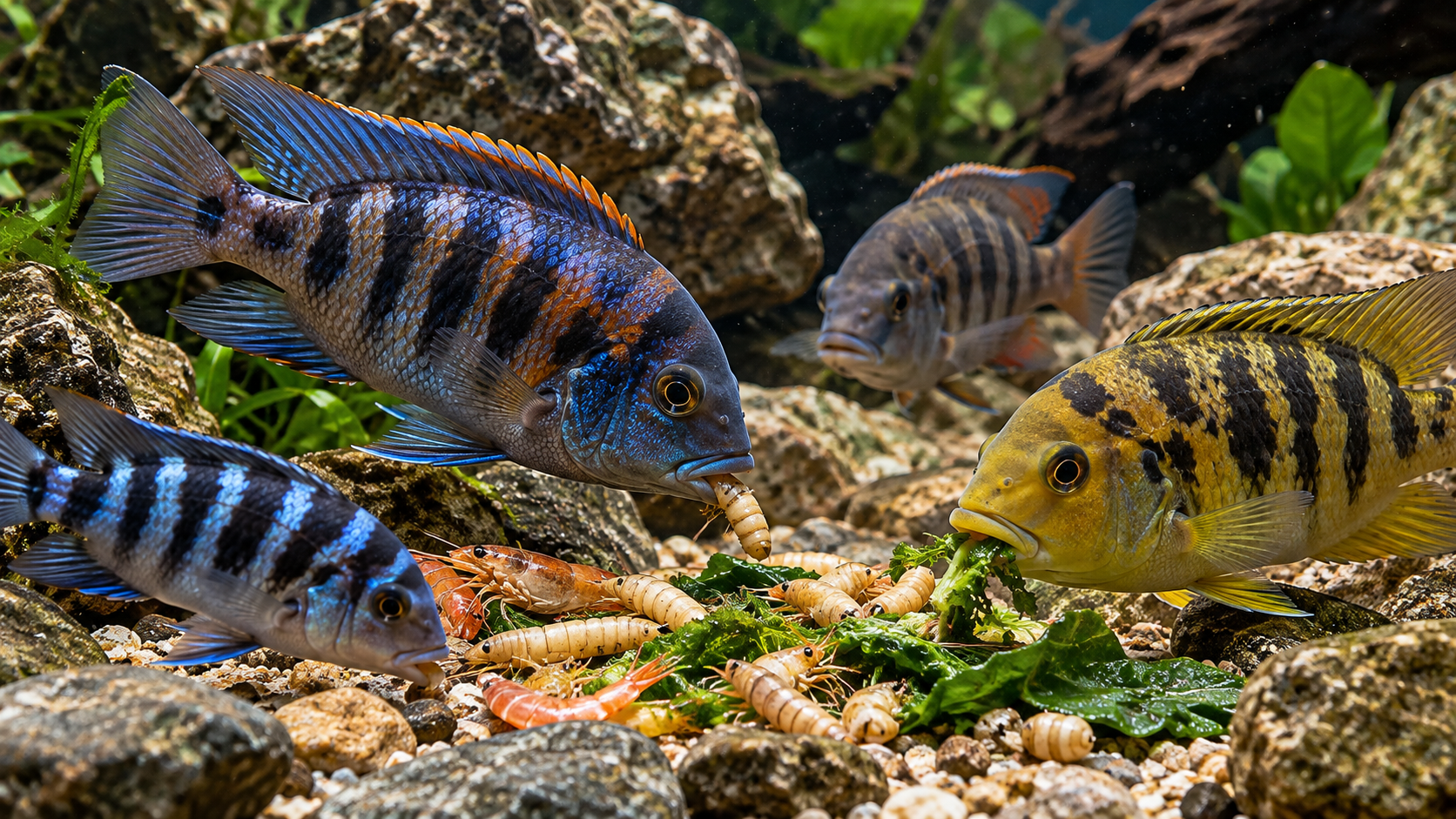
Are cichlids carnivores? Not as a blanket rule. The sources we opened do not support a single label for the whole cichlid family. The one cichlid species page we could reach, for the convict cichlid, lists worms, crustaceans, insects, fish and plant matter. That is a mixed diet with both animal and plant foods. A cichlid’s diet depends on its species, so the label carnivore should be checked against the species page for the fish you keep.
Quick answer
- The convict cichlid page lists “Feed on worms, crustaceans, insects, fish and plant matter,” which is mixed, not strictly carnivorous.
- The sources do not give a diet for the whole cichlid family. The family-level FishBase page did not load when we checked.
- Merck describes vegetables as a supplement that provides B and C vitamins, and gives feeding amounts by body weight.
- Overfeeding is the feeding risk the sources name most directly.
What the convict cichlid page lists
The FishBase page that we reached through the Cichlasoma nigrofasciatum address resolves to the species Amatitlania nigrofasciata, the convict cichlid. The page gives the habitat as “Freshwater; benthopelagic.” For diet, it reads “Feed on worms, crustaceans, insects, fish and plant matter.” For keeping, it says “in pairs; minimum aquarium size 80 cm.”
The word “fish” in that diet line means the convict cichlid does eat other fish in the wild, according to FishBase. That is a natural diet fact, not a feeding instruction. The page does not say how often or in what amount the fish should be fed, and it does not describe any cichlid used as a feeder.
How the diets compare across the species pages
The cichlid page is one of five FishBase species pages we opened. The list below copies each diet line as printed. It is not a ranking.
- Convict cichlid (Amatitlania nigrofasciata): “Feed on worms, crustaceans, insects, fish and plant matter.”
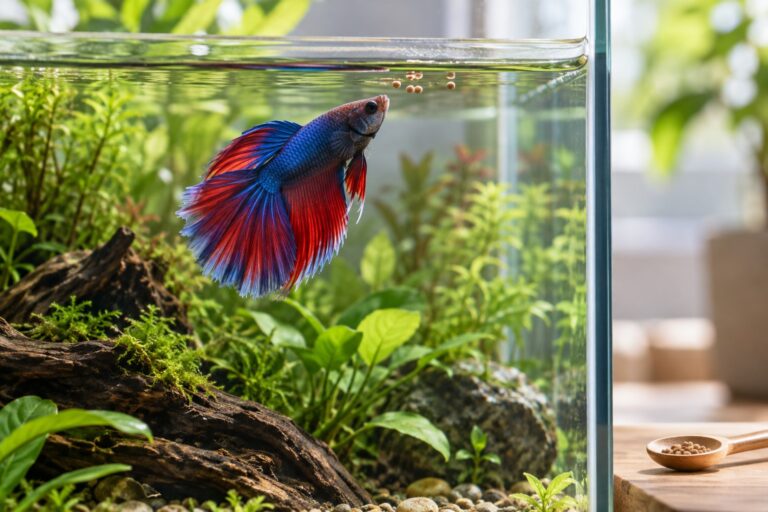
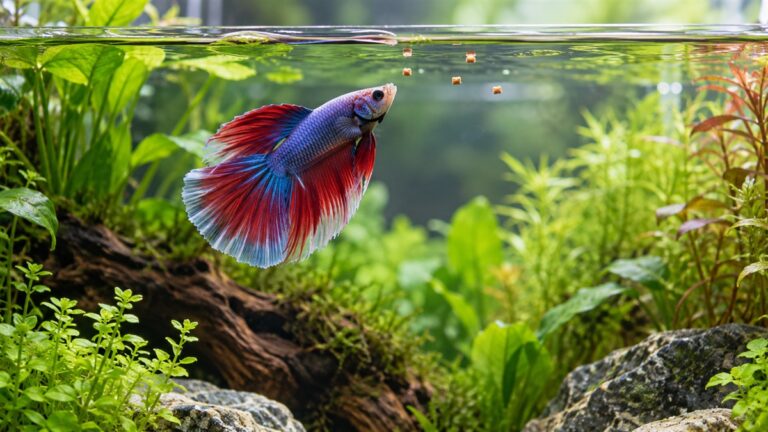
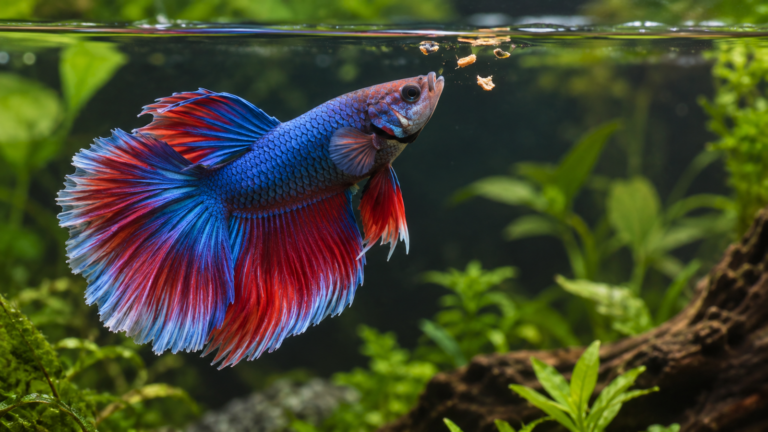
- Betta splendens: “Feed on zooplankton, mosquito and other insect larvae.”
- Neon tetra (Paracheirodon innesi): “Adults feed on worms, small insects, crustaceans and plant matter.”
- Glowlight tetra (Hemigrammus erythrozonus): “Feeds on worms, small crustaceans and plants.”
- Peppered corydoras (Corydoras paleatus): “Feeds on worms, crustaceans, insects and plant matter.”
Read across the list, none of these pages describes a strictly animal diet, and none describes a strictly plant diet. Each one lists animal food, and four of the five list plant matter as well. This is a comparison of the lines as printed. It is not a measurement of what the fish eat in a home tank.
Why the word carnivore is risky here
Carnivore is a broad label. The FishBase lines for the cichlid above describe a mix of worms, crustaceans, insects, fish and plant matter, so a label of carnivore would leave out the plant part. Several cichlid species are kept in aquariums, and the sources we opened describe only one of them. A sentence about “cichlids” as a group would go beyond the evidence.
The safer approach is to check the species page for the fish you have. If a species page is not available, say so and feed a varied diet based on the general guidance below, rather than assuming a label.
Feeding amounts and vegetables
The Merck Veterinary Manual gives feeding amounts that apply across many fish. It says that “maintenance diets are fed at a rate of 1% to 2% of body weight per day, and growth diets at 3% to 5% of body weight per day.” It warns that “Overfeeding can lead to health problems as well as a dirty tank.”
On plant food, Merck says that “Feeding vegetables a few times a week as a supplement provides an excellent source of B and C vitamins.” That sentence supports including plant matter in a varied diet. It does not name cichlids, so treat it as general fish-keeping guidance.
A mixed diet from the listed food groups fits the diet lines above. Choose a base food for the species you keep, add a plant component, and keep portions small. The sources do not give a fixed brand or product for cichlids, and this post does not recommend one.
Water and tank points that affect feeding
Merck links overfeeding to a dirty tank, which is one reason to match portions to the fish’s body weight and to the guideline above. The page also says that “Most city water is treated with chlorine or a combination of chlorine and ammonia (known as chloramine), both of which are toxic to fish and to the necessary bacteria that grow in your aquarium.” Treat every new batch of tap water before it goes in, using a dechlorinator as Merck describes.
Merck also says that “Fish need a day/night cycle for optimal health.” The sources we opened do not give a feeding time for any cichlid.
A feeding checklist
- Look up the diet line for your exact species before you choose food.
- Offer a mix of animal and plant matter when the species page lists both.
- Follow the Merck maintenance guideline of 1% to 2% of body weight per day, and remove food the fish do not eat.
- Do not feed a cichlid as a meat-only diet based on the word carnivore.
- If a fish stops eating or looks unwell, contact an experienced fish keeper or an aquatic vet. This post does not give treatment advice.
For a betta’s feeding basics, see how many pellets to feed a betta. For a betta flakes-or-pellets comparison, see best betta flakes or pellets.
How we chose
We chose sources that give species-level diet data. We opened the FishBase species pages for the convict cichlid, betta, neon tetra, glowlight tetra and peppered corydoras, and the Merck Veterinary Manual page on providing a home for fish. All were opened with curl on 2026-10-24. The FishBase family page for Cichlidae returned a 404 when we checked, so no family-level diet is used. Retail product pages were not used.
What we could not verify
The keyword asks about cichlids as a group. The sources we opened cover one cichlid species, so the answer for the rest of the family is not established by them.
What the sources do not say
- The diet of cichlid species other than the convict cichlid.
- Whether a cichlid needs animal protein in a specific amount, or how much plant matter it should eat.
- Feeding times, food sizes or brand choices for any cichlid.
- Any disease link to diet. Ask an experienced fish keeper or an aquatic vet if a fish looks unwell.
Frequently asked questions
Are all cichlids carnivores?
The sources we opened do not support that. The convict cichlid page lists worms, crustaceans, insects, fish and plant matter. For other cichlids, the sources do not give a diet, so the answer for those fish is not established by the pages we opened.
Can a convict cichlid eat plants?
The FishBase diet line for the convict cichlid includes “plant matter.” That shows the species is listed as eating plant food in the wild. The page does not say how much plant food to offer in a home tank, so use a varied diet and the Merck portion guideline.
How much should I feed a cichlid?
Merck gives a maintenance guideline of 1% to 2% of body weight per day, and a growth guideline of 3% to 5% of body weight per day. The sources do not say which applies to a given cichlid, so check the species you keep and watch what the fish eats.
Is overfeeding a real risk?
Yes, according to the Merck page. It says that “Overfeeding can lead to health problems as well as a dirty tank.” Remove uneaten food and match portions to the fish’s size.
Does the diet change how I should set up the tank?
The sources do not link diet to a specific tank setup for cichlids. They do say that waste must be handled, and that filtration is important to “remove waste and particulate matter.” Plan the tank around the fish’s size and the waste load from feeding.
Sources
- FishBase, Amatitlania nigrofasciata (convict cichlid) species page, reached via https://www.fishbase.se/summary/Cichlasoma-nigrofasciatum.html (opened 2026-10-24)
- FishBase, Betta splendens species page, https://www.fishbase.se/summary/Betta-splendens.html (opened 2026-10-24)
- FishBase, Paracheirodon innesi (neon tetra) species page, https://www.fishbase.se/summary/Paracheirodon-innesi.html (opened 2026-10-24)
- Merck Veterinary Manual, Fish: Providing a Home for Fish, https://www.merckvetmanual.com/all-other-pets/fish/providing-a-home-for-fish (opened 2026-10-24)