Best Betta Need Filter: Gentle Options for a Betta Tank
As an Amazon Associate we earn from qualifying purchases. Details
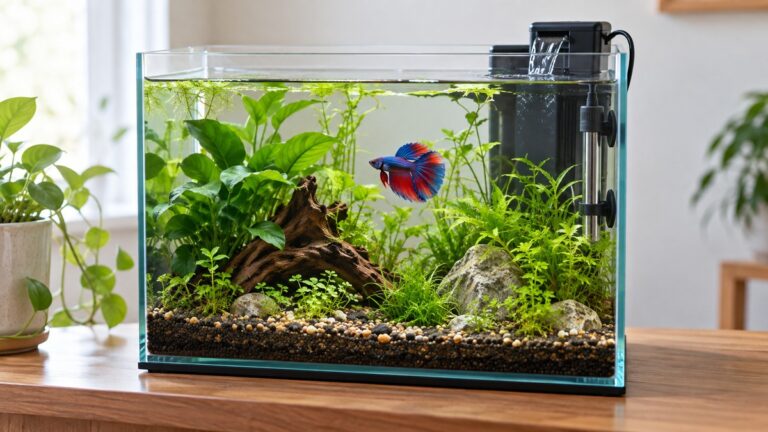
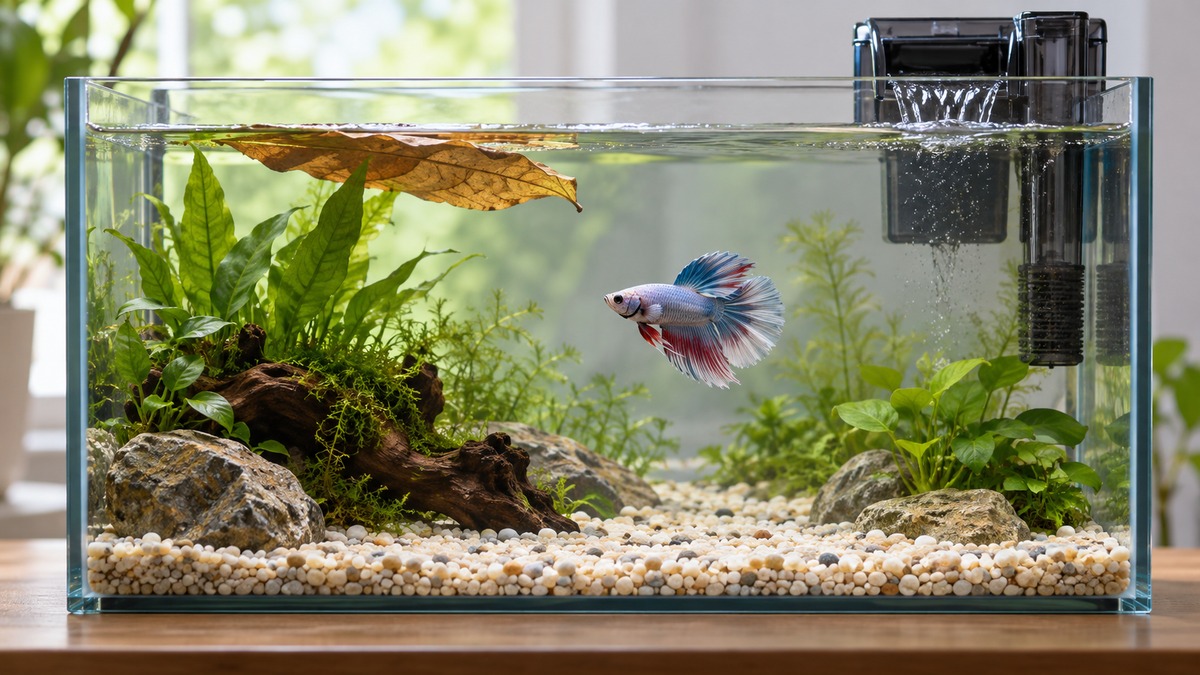
Does a betta need a filter? That question sits behind most searches for a betta need filter, and the honest answer is that a filter is a tool, not a rule. Bettas can breathe air at the surface and tolerate low oxygen better than many fish, but tolerance is not the same as clean water. This guide explains when a gentle filter makes care easier, which flow features matter for a betta, and which listed filters suit small betta tanks. Water quality is the real goal, so the decision should follow your routine rather than a shopping list. The picks below are filters whose listings describe betta use, along with their tank sizes and flow notes.
Quick answer
Whether a betta needs a filter depends on your routine, not on the tank alone. It depends on how big the tank is, how often you change water, and whether you test the water. UF/IFAS notes that water changes reduce ammonia toxicity in the short term, while a properly designed and sized biofilter is the better long-term tool. Choose a gentle filter if you want steady water between changes. Choose one with adjustable flow when the listing states it. Skip a filter only if you can commit to regular testing and water changes. Check the listing for tank size, power source and included parts before you buy.
What decides whether your betta needs a filter
A filter does two jobs. It moves water through media that can host beneficial bacteria, and it traps debris. The biological job matters most for waste, and it takes time to start. UF/IFAS describes a new biofilter that needs six to eight weeks to build up enough bacteria to reduce ammonia and nitrite, so a new filter is not an instant fix.
Five criteria change the answer for this keyword:
- Tank size. Several listings give a range, such as 3-10 gallon or 10 to 20 gallon. The range matters more than the headline figure. A listing does not always say whether its gallon figure is total or usable water, so treat that figure as a ceiling, not a target.
- Flow control. A betta should not be pushed around by strong current. Look for an adjustable flow or an air-driven design. Where a listing does not state adjustable flow, assume the flow is fixed and read the listing again before you buy.
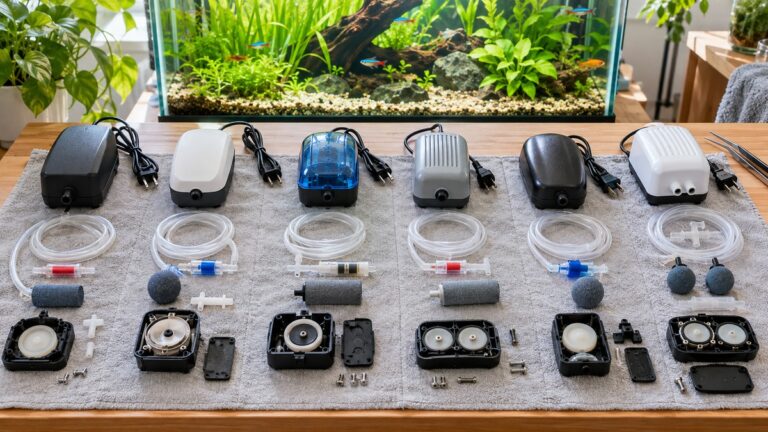
- Power source. Some filters run on electricity and others on air. Air-driven sponge filters need a pump, and the pump is sometimes not in the box.
- Water change routine. A filter does not replace water changes. Water changes remain the simplest way to hold ammonia down while the biofilter matures.
- Testing. Ammonia is colorless and, even at levels toxic to fish, odorless. You cannot tell it is present by looking at the water or smelling it, so a test kit is the only reliable check.
Filter types in plain words
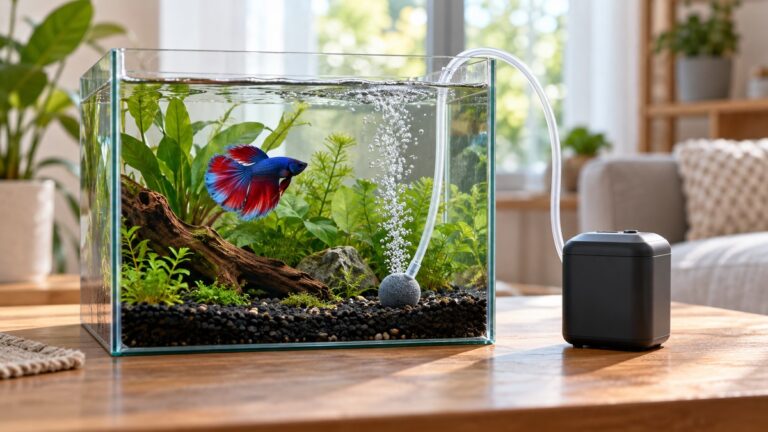
Sponge filters push water through a foam block, and the bacteria that grow on the sponge do most of the biological work. Some sponge filters are driven by a small electric pump, and others are driven by air from a separate pump. The listings in this roundup describe both kinds, so read the power line before you order.
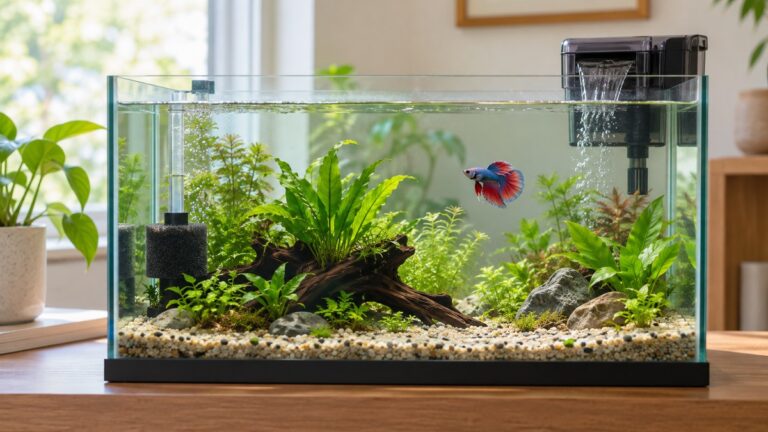
Hang-on filters sit on the rim of the tank and draw water up through a cartridge or sponge. Several listings describe a hang-on design for small tanks, and the main differences are the flow dial, the outlet shape and the size range. A hang-on filter is easier to clean than an internal one, but its outlet sits at the surface, so the flow feature matters more.
Internal filters sit inside the tank. They are compact, which suits a nano setup, but the listing’s flow notes and sponge size decide whether the current stays gentle enough for a betta.
The filters in this roundup
1. Quiet Aquarium Filter for Betta, Slim HOB Fish Tank Filter for 3-10 Gal Planted Aquariums (Adjustable flow, 3-10 gallon tanks)
Specs from the listing (checked 2026-10-11):
- Item model number: PA101-1
- Package Dimensions: 4.45 x 3.07 x 2.91 inches; 5.47 ounces
Pros
- The listing states an adjustable flow rate, which matters most for a betta
- The listing describes a pre-filter sponge that keeps young fish and shrimp out of the intake
- The listing says it suits a 3-10 gallon small fish tank
Cons
- The title gives 250L/H, but the listing does not say how far the adjustment changes that figure
- The listing lists 3-10 gallons as its range, so larger tanks fall outside it
Best for: A small tank where you want to adjust the current yourself
Skip if: Skip it if your tank is larger than 10 gallons.
View on Amazon (affiliate link)
2. SLOCME Mini Waterfall Aquarium Filter, Adjustable Flow Hang-on-Back Filter for 1-10 Gallon Fish (Flow knob, 1-10 gallon tanks)
Specs from the listing (checked 2026-10-11):
- Capacity: 10 gallons
- Special Feature: Adjustable Flow Control
Pros
- The listing says adjustable flow control on a built-in knob
- The listing gives 1-10 gallon fish tanks as its use range in the title
- The listing says the removable sponge can be rinsed and reused
Cons
- The listing gives 10 gallons as capacity and does not say whether that is usable water
- The listing does not state a flow rate, so you must judge the current by watching the fish
Best for: A nano or small tank where you want a flow knob
Skip if: Skip it if you need a filter for a tank larger than 10 gallons.
View on Amazon (affiliate link)
3. Small Fish Tank Filter, Hang on Filter for 1-5 Gal Nano Aquarium, Ultra Quiet Power Filter (Hang-on with dial, 1-5 gallon tanks)
Specs from the listing (checked 2026-10-13):
- Size: Filter for 1-5 Gal Tank
- Warranty Description: 1 YEAR
Pros
- The listing says a dial controls the water current
- The listing includes a built-in surface skimmer for oil film, according to its bullets
- The listing says it requires no tools and hangs on the tank rim
Cons
- The listing sizes it for 1-5 gallon tanks, so 5 gallons is its upper limit
- The listing says noise can mean the water level is low, so it needs regular checks
Best for: A 5-gallon or smaller tank that needs a flow dial
Skip if: Skip it if your tank is larger than 5 gallons.
View on Amazon (affiliate link)
4. 3W Mini Fish Tank Filter, 48GPH Quiet Aquarium Internal Filter 3-in-1 Submersible Fish Tank Filter (Mini 3W filter, 1-6 gallon tanks)
Specs from the listing (checked 2026-10-11):
- Style: 3W(1-6gal)
- Warranty Description: 1 Year Warranty
Pros
- The listing describes a mild water flow and a fine intake
- The listing says the sponge is cleaned about once every 10 days
- The listing says an internal temperature control stops the motor if it overheats
Cons
- The listing gives 1-6 gallons as its range, which stops short of 10 gallons
- The listing does not state an adjustable flow setting
Best for: A very small tank or a nano setup, where you want a gentle intake
Skip if: Skip it if your tank is over 6 gallons.
View on Amazon (affiliate link)
5. Pawfly Aquarium Corner Sponge Filter Quiet Betta Fry Shrimp and Small Fish Bio Foam Filter (Air-powered sponge, 10-30 gallon tanks)
Specs from the listing (checked 2026-10-11):
- Package Dimensions: 4.92 x 3.39 x 3.31 inches; 8.15 ounces
- Item Weight: 8.1 ounces
Pros
- The listing says it is air powered and causes little disturbance
- The listing describes a multi-layer sponge for mechanical and biological filtration
- The listing says the outlet tubing is freely adjustable in height
Cons
- The listing says not to wash the sponges in tap water, so you need aquarium water to rinse them
- The listing says to replace the white sponge every 2-3 months, which is ongoing upkeep
Best for: A tank of 10 gallons or more where an air-driven sponge is the goal
Skip if: Skip it if your tank is under 10 gallons.
View on Amazon (affiliate link)
6. Aquarium Electric Sponge Filter with Submersible Water Pump Silence Motor for Shrimps,Bettas (Venturi sponge with pump, 10-20 gallon tanks)
Specs from the listing (checked 2026-10-11):
- Size: 10 to 20 Gallons
- Item Weight: 12.8 ounces
Pros
- The listing says its venturi nozzle makes the water flow smaller and slower
- The listing says it needs no separate air pump because it runs on its own submersible pump
- The listing includes a bag of ceramic media balls with the sponges
Cons
- The title says two spare sponges, but a bullet says four, so the listing contradicts itself on the spare count
Best for: A 10-to-20-gallon tank that needs a gentle, self-powered sponge
Skip if: Skip it if your tank is smaller than 10 gallons.
View on Amazon (affiliate link)
7. AQUANEAT Aquarium Bio Sponge Filter Breeding Fry Betta Shrimp Nano Fish Tank (Large up to 60Gal) (Air-driven sponge, fry and small fish)
Specs from the listing (checked 2026-10-11):
- Size: Large up to 60Gal
- Item Dimensions LxWxH: 4.72 x 4.72 x 8.27 inches
Pros
- The listing says soft sponge material that will not suck up your fish
- The listing says the air chamber makes minute bubbles that increase the oxygen solubility
- The listing describes it as producing minimal current
Cons
- The includes line names one sponge filter, so an air pump is a separate purchase
- The listing sets its tank size at 40 to 60 gallons, far above a single betta tank
Best for: Fry tanks and nano setups where almost no current is the priority
Skip if: Skip it if you need a flow control knob, because the listing does not mention one.
View on Amazon (affiliate link)
8. HITOP 2 Pack Aquarium Bio Sponge Filter: Diameter 2.5in Mini Air-Powered Fish Tank Filter, Quiet (Air-driven mini sponge, 1-15 gallon tanks)
Specs from the listing (checked 2026-10-13):
- Style: Mini 2.5in-2pack
- Directions: This sponge filter needs to be connected to an air pump to use. This package does not include air pump.
Pros
- The listing says it is quiet because air powers it
- The listing says it has a weighted base that holds it in place
- The listing describes a round sponge that adds to the surface of filtration
Cons
- The listing says it cannot be used alone and that the air pump is not included
- The listing does not state whether its air flow can be adjusted
Best for: A small or breeding tank that already has an air pump
Skip if: Skip it if you have no air pump, or if your tank is larger than 15 gallons.
View on Amazon (affiliate link)
How to choose
Use these rules to narrow the list before you read the cards.
Choose a sponge filter if you want biological filtration with very little current. The sponge filter listings describe soft sponges and gentle outflow. Many of them also need a pump or an air supply, so check the power source first.
Choose an adjustable hang-on filter if your tank is small and you want to tune the current yourself. Adjustable control addresses the betta’s need for gentle flow more directly than any headline feature does. For a wider look at low-flow choices, see the best low flow filter for betta guide.
Choose by the listed tank size, not by the biggest number in a title. Titles often carry a larger number than the size line, so read the size line in the listing before you commit. The listings do not give one flow standard that suits every betta, so compare how each filter is described rather than a headline figure.
This guide uses 5 gallons as the minimum for a single betta. That is a site rule for these guides, not a finding from a study, and it sets the bottom edge for every choice here. Do not use a bowl or a vase with a filter, because this guide does not recommend bowls for a home.
A filter does not heat the water, so pair any choice with a heater. The best aquarium heater for betta fish guide covers that side of the setup.
Worked example: matching a filter to a 20 gallon range
One sponge filter is described for 10 to 20 gallon tanks. Its upper figure is 10 gallons above your tank, because 20 minus 10 equals 10. Another hang-on filter is described for 3-10 gallon tanks, so your tank sits at its upper edge. A third is described for 1-6 gallon tanks, which stops short of 10 gallons, so it does not fit this estimate. The same reasoning works for any tank: match the range first, then check the flow feature. For a broader sizing view, read the filter guide for 10 gallon betta tanks.
Setting up the filter
Read the setup line in each listing before you plug anything in. One listing says to attach the intake tube, fill the filter chamber with water, and then plug it in. Another gives the same order after a power loss: fill the chamber first, then plug it in. Follow that order exactly as written, because the listing gives it for a reason.
Place the outlet so the current does not sweep the surface where your betta rests. If the outlet tubing adjusts in height, as one air-driven sponge listing describes, use that to aim the flow. Adjust the flow setting only after the filter has run for a while, so you can see how the water moves.
Set the filter up in the tank before you add the betta. Watch the first few hours, then check the betta’s position in the water. A betta that keeps fighting the current or hides more than usual needs a change in the flow, the outlet position or the filter itself.
Keeping the filter running well
Maintenance intervals come from the listings, so use them as written. One listing says to rinse its sponges every 2 to 4 weeks, using aquarium water only, and to replace the white sponge every 2-3 months. Another says to clean its sponge about every 10 days and to replace the biological media every six months to a year. These are different intervals for different designs, so do not copy one schedule onto another filter.
Rinse sponges in water taken from the tank you are cleaning. Tap water can strip the bacteria that the sponge is meant to hold, and several listings warn against it. Keep a short note of each cleaning date, so you can match a change in water quality to the filter’s maintenance.
Signs the filter is wrong for your betta
Watch for a few signs in the first days. Strong current that pushes the betta away from its favorite spot suggests the flow is too high. An adjustable filter can fix that, and a fixed-flow filter may need a different size or a different design.
If a filter is noisy, the hang-on listing says low water is a common cause, so check the level before you assume a fault. Refill to the level the listing describes, then listen again.
If the betta’s behavior changes, including reduced feeding, test the water right away. UF/IFAS advises immediate testing when fish appearance or behavior changes, and the filter should not be the first thing you blame.
Common mistakes
Buying on the title alone. A long title can mix a size range with a larger headline number, so read the size line first.
Treating a listed capacity as usable water. The listing does not always say which one it means, and a total figure can overstate the water a betta actually has.
Washing a sponge in tap water. One listing says to rinse its sponge in aquarium water and to avoid soaking or washing it in tap water. That habit suits any sponge you own.
Expecting a new filter to work at once. The biofilter needs weeks to mature, so keep testing and changing water during that time.
Forgetting the air pump. An air-driven filter does nothing without air. Read the included-components line before you order.
Skipping the heater. Bettas need stable warm water, and a filter does not supply heat. Check the heater before you judge the filter.
If your betta shows signs of illness, consult an experienced fish keeper or an aquatic vet. Do not add medication based on a filter guide.
FAQ
Does a betta need a filter in a small tank?
Many keepers run small tanks without one, but that choice depends on testing and water changes. A gentle filter makes the routine easier for most owners. Keep the tank heated either way.
Is a sponge filter gentle enough for a betta?
Sponge filters are often a gentle option because water moves through a sponge. Check the listing for its power source and whether it needs an air pump. If the listing does not state adjustable flow, assume the flow is fixed.
What kind of flow is safe for a betta?
The listings here do not give one flow standard for every betta. Look for low, steady flow that does not push the fish around, and watch your betta’s behavior after setup. Adjust the flow if the filter allows it.
Do air-driven filters need a separate pump?
Usually yes. Air-driven sponge filters need air from a pump, and some listings say the pump is not included. Read the included-components line before you buy.
How long before a new filter works well?
UF/IFAS describes six to eight weeks for a new biofilter to build up enough bacteria to reduce ammonia and nitrite. Keep testing during that period.
Can a filter replace water changes?
No. UF/IFAS says water changes reduce ammonia toxicity in the short term, and a properly sized biofilter is the better long-term tool. Keep doing both.
How often should I test the water?
UF/IFAS advises testing ammonia once a week in a production system, and immediately when fish appearance or behavior changes, including reduced feeding. Use that rhythm as a starting point for a home tank, and ask an experienced fish keeper about your setup.
Who should skip a filter
Some keepers do not need a filter at all. If your tank is small, you change water on a fixed schedule, and you test the water regularly, you may decide a filter adds more upkeep than it saves. Be honest about the routine before you buy. A filter that you clean irregularly can do more harm than a plain tank with good water changes.
Skip a filter that is too strong for your tank size, even if it is popular. A filter that is too large for the water volume creates current you cannot easily reduce.
Bottom line
Choose a gentle filter if you want steady water between changes and your tank is at least 5 gallons. Choose adjustable flow when the listing states it, and choose an air-driven option only if you can supply air. Skip a filter only if you will test and change water on a set schedule. Pair the choice with a heater, and let the listing’s size line make the final call.
Sources
- UF/IFAS, Ammonia in Aquatic Systems (FA31): biofilter timing, ammonia testing, water changes and when to test
- Siamese fighting fish, Wikipedia: labyrinth organ and surface air breathing