Best Salinity Tester for Aquarium: Five Listed Options Compared
As an Amazon Associate we earn from qualifying purchases. Details
A salinity tester for aquarium use answers one question: how much salt is in the water. That reading matters for saltwater and brackish tanks, where the salt level is the number you need to track. A betta is a freshwater fish, so a salinity meter is not part of a standard betta setup. This guide compares five listed salinity testers, including refractometers, a digital pen and a multi-parameter monitor. It explains what each listing says about calibration, power and range, so you can match the tool to your tank rather than buying the one with the longest feature list.
Quick answer
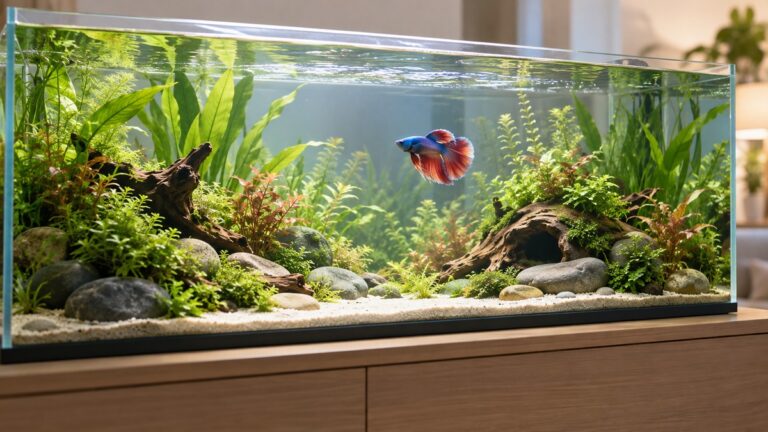
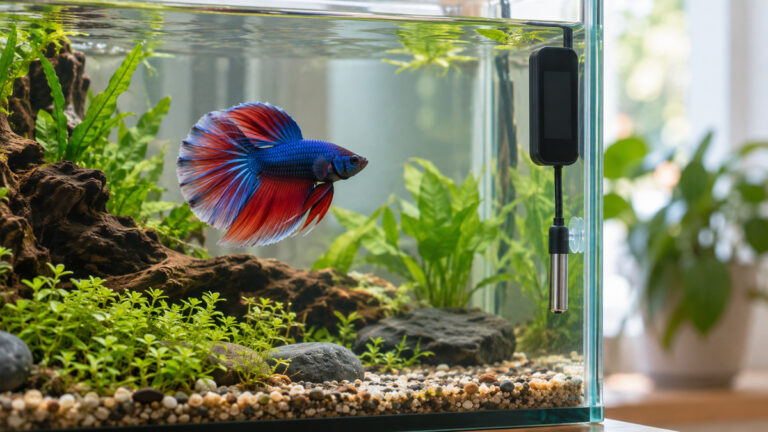
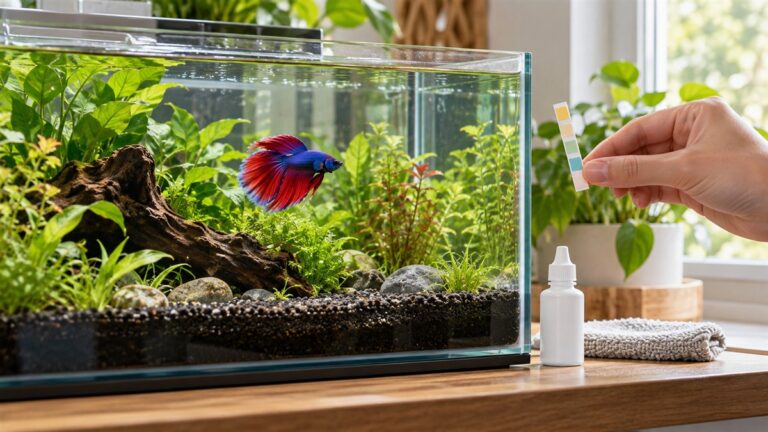
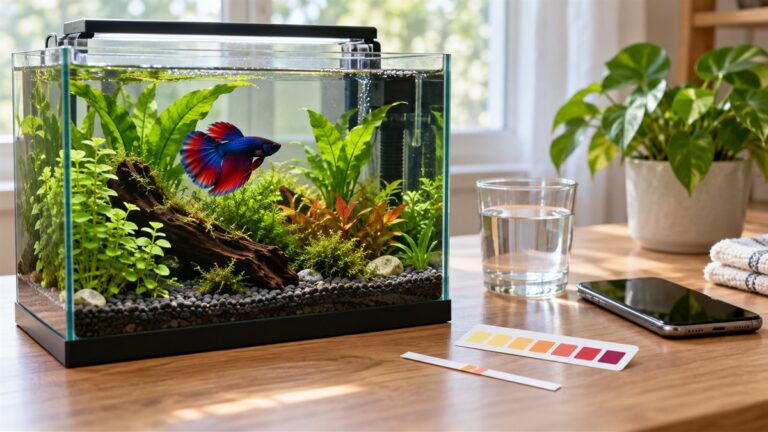
For a standard freshwater betta tank, you do not need a salinity tester. Wikipedia describes the Siamese fighting fish as a freshwater species native to Mainland Southeast Asia, so the salinity question belongs to saltwater or brackish tanks. For those tanks, choose a refractometer if you want a traditional optical reading. Choose a digital pen if you want a quick handheld check. Choose a monitor if you want continuous readings and alerts on your phone. Check the listing for its range, its calibration method and its power source before you buy.
What decides the right salinity tester
Five criteria change the answer for this keyword:
- Tank type. Saltwater and brackish tanks need a salinity reading. A freshwater betta tank usually does not, and a meter bought for it will sit unused.
- Measurement method. A refractometer reads light passing through a sample. A digital pen or probe reads an electrical signal. Each method has its own calibration habit, so match the method to how often you plan to check.
- Calibration. Some listings name a calibration method and others do not. One listing describes calibrating with distilled water. Another includes three pH calibration powders. The refractometer listing in this roundup does not describe a calibration step, so ask the seller or read the manual before you buy.
- Power and upkeep. Batteries are a common trap. One listing says two AAA batteries are not included, and a monitor needs a Wi-Fi connection and an app to show its data.
- Scope. A multi-parameter tool can measure many things, but its range may be written for pools or hot tubs first. Read the listing’s use list before you assume it suits a reef or marine tank.
The testers in this roundup
1. Kactoily Smart Aquarium Monitor All in One pH/ORP/Salt/S.G/TDS/EC/Temp 24h Online Freshwater (Multi-parameter WiFi monitor)
Specs from the listing (checked 2026-10-13):
- Model Number: KY-YGWIFI-07US
- Package Dimensions: 9.21 x 6.02 x 2.24 inches; 1.34 pounds
Pros
- The listing says it measures pH, TDS, EC, ORP, specific gravity, salinity and temperature in one unit
- The listing says you can set alert ranges and receive notices by app, phone or text
- The listing includes pH calibration powders for three-point calibration
Cons
- The listing says the EC calibration solution is not included and must be bought separately
- The listing says to place the probe where flow is steady, away from protein separators
Best for: A saltwater or freshwater owner who wants continuous readings and alerts
Skip if: Skip it if you need a single handheld reading, or if you do not want to set up an app.
View on Amazon (affiliate link)
2. Salt Tester for Saltwater Pool, 8 in 1 Multi-Parameter Water Analysis,pH (Pool and aquarium multi-meter)
Specs from the listing (checked 2026-10-13):
- Item model number: X81
- Package Dimensions: 8.54 x 2.6 x 1.85 inches
Pros
- The listing says it measures salinity alongside pH, TDS, EC, ORP and specific gravity
- The listing describes a backlit LCD that shows numerical readings
- The listing says automatic temperature compensation adjusts readings for water temperature
Cons
- The listing is written for pools and hot tubs first, and aquarium use is one line among many
- The listing gives no aquarium-specific salinity range to check your tank against
Best for: Someone who wants one handheld meter for pool and aquarium water
Skip if: Skip it if you need a tool built for reef or marine aquarium work.
View on Amazon (affiliate link)
3. Agriculture Solutions Salinity Refractometer for Seawater and Marine Fishkeeping Aquarium 0-100 PPT (Traditional refractometer, marine tanks)
Specs from the listing (checked 2026-10-13):
- Model Number: WL0020-ATC
- Item Weight: 8.8 ounces
Pros
- The listing says it reads specific gravity and parts per thousand on two scales
- The listing says automatic temperature compensation is built in
- The listing says it comes with a hard case, a dropper and a cleaning cloth
Cons
- The listing does not describe a calibration step, so confirm the method before you rely on it
- The listing is written for seawater and marine fishkeeping, so freshwater use is outside its main purpose
Best for: Marine fishkeepers who want a traditional salinity reading
Skip if: Skip it if you keep only freshwater fish.
View on Amazon (affiliate link)
4. Digital Seawater Refractometer for Aquarium Salinity Testing, IP67 Waterproof Salinity Meter (Digital refractometer with backlight)
Specs from the listing (checked 2026-10-13):
- Item Weight: 2.88 ounces
- Item model number: MST-202
Pros
- The listing gives four measurements: salinity, chlorinity, specific gravity and refractive index
- The listing says it supports calibration with distilled water
- The listing describes an IP67 waterproof body with a backlit screen
Cons
- The listing says its two AAA batteries are not included
- The listing focuses on reef and seawater use, which is less useful for a freshwater tank
Best for: Reef or marine keepers who want a digital salinity reading with a backlit screen
Skip if: Skip it if you have no spare batteries on hand.
View on Amazon (affiliate link)
5. Digital Salinity Meter 3-in-1 Saltwater Tester – Specific Gravity, Salinity & Temperature Pen (Pocket pen for specific gravity)
Specs from the listing (checked 2026-10-13):
- Item model number: AG-001
- Package Dimensions: 8.86 x 4.41 x 1.65 inches; 8.78 ounces
Pros
- The listing says the backlit LCD and automatic temperature compensation give clear readings
- The listing says it turns off on its own after a period of inactivity to save battery
- The listing describes a pen-type body that fits in one hand
Cons
- The listing measures specific gravity, salinity and temperature, but not pH or ORP
- The listing gives a salinity range of 0 to 55 ppt, so check that range against your tank
Best for: A hobbyist who wants a pocket meter for specific gravity and salinity
Skip if: Skip it if you need a pH or ORP reading from the same device.
View on Amazon (affiliate link)
How to choose
Use these rules to narrow the list before you read the cards.
Choose a refractometer if you want a traditional reading that marine fishkeepers already know, and you are willing to take a sample each time you check. The refractometer listings describe automatic temperature compensation, which helps keep the reading steady when the water temperature changes. For a wider look at how salt levels relate to tank care, the best aquarium water test kit guide covers the other parameters many keepers track.
Choose a digital pen if you want a quick, handheld check and you do not need a second parameter. Pen-type meters are easy to carry between tanks, and the listed auto shut-off helps the battery last. Check that the range covers your tank, because a pen built for a broad temperature or salinity span may not give a fine reading near your target.
Choose a monitor if you want readings through the day and alerts when a value drifts. Monitors bring the most setup work: a probe to place, calibration powders to use and an app to configure. The listing says the probe should sit in a spot with steady flow, away from protein skimmers, so placement matters as much as the device.
Choose by the tank you actually run. A tool written for a pool can read salinity, but it may not describe the aquarium use you need. Read the use list in the listing, not only the headline features.
Worked example: a weekly check plan
Each check takes one reading. Two checks a week over four weeks gives eight readings, because 2 times 4 equals 8. Eight readings is enough to spot a steady drift, but it is not enough to catch a short spike between checks. If you expect swings, use a monitor or add checks on the days after a water change. The same plan works for any meter: count the checks first, then decide how much logging you need.
Calibration and care in plain words
A meter is only as useful as its calibration. The listings in this roundup describe different methods, so follow the one that comes with your device. The monitor listing includes three pH powders and two packs of ORP powder for calibration, and it notes that its EC calibration solution is not included. Keep the calibration materials with the meter, and write down the date each time you calibrate.
Rinse the probe or the refractometer prism with clean water between samples, and let it dry before you store it. A sticky film on the optics or the probe can shift a reading, so a quick clean is part of the routine.
Keep the sample at a steady temperature before you read it. Automatic temperature compensation helps, but a sample that is still warming from a fridge or a hot room can still drift. Let it settle for a few minutes, then read it.
Matching the tool to your tank
Start with the water you keep. Saltwater and brackish keepers both use a salinity reading, but the two setups may need different targets, so check the guidance you follow for your species before you set an alarm.
A marine fishkeeper who already uses a refractometer may prefer the traditional scale the listing describes. A keeper who is new to salinity may find a digital device easier to read, because the number appears on a screen rather than in a sample window. Neither choice is wrong. The right one is the one you will use every time you check.
Think about how many tanks you run. A single pen can move between tanks, while a monitor is set up for one place. If you run more than one tank, count how many probes, samples or devices you would need before you choose.
Think about your routine too. If you test on a fixed day each week, a handheld tool may be enough. If you want to know what happened overnight, a monitor with alerts is the more useful choice, provided its alert ranges match your tank.
Reading your results over time
A single reading tells you little about a trend. Write each result down with the date, the time and the device you used. Use one device for a series of readings, because two devices can disagree slightly even when both are working. If you change devices, take paired readings for a few days so you can see the offset before you trust the new one.
Note what else changed that day. A water change, a top-up with fresh water or a period of evaporation can all shift the reading. A short note helps you tell an ordinary change from a real drift. The monitor listing’s customizable settings can help with this, but only if you set the ranges to suit your tank rather than leaving them at a default.
What a salinity reading does not tell you
A salinity reading does not tell you whether ammonia or nitrite is building up. UF/IFAS notes that ammonia is colorless and, even at levels toxic to fish, odorless, so the only way to know it is present is to test for it. Nitrite is also toxic to fish at low levels. A salinity meter is not an ammonia test, and a tank that looks clean can still hold harmful ammonia. For that job, see the best ammonia test kit for aquarium guide.
The same logic applies to pH and other values. A salinity tool that reads only salt will not show you whether the water chemistry is balanced for your fish. Use a test kit for those values, such as the ones covered in the best fish aquarium water test kit guide, and treat the salinity meter as one part of the routine.
Behavior matters as much as numbers. UF/IFAS advises testing immediately when fish appearance or behavior changes, including reduced feeding. A meter reading that looks normal does not replace a close look at your fish.
Common mistakes
Buying a salinity tester for a freshwater betta tank. The tool will not help with a betta’s main needs, and the money is better spent on a heater and a test kit suited to freshwater.
Trusting a pool-focused listing without checking its range. A tool can read salinity and still lack the range or the calibration method your tank needs.
Skipping calibration. A new meter is not automatically accurate. Calibrate as the listing describes, then check again on the schedule the listing recommends.
Reading the sample in a turbulent spot. The monitor listing says to place the probe in an area with consistent flow. A surge-prone spot can give readings that jump around.
Forgetting batteries. One listing says its batteries are not included, so check the power line before you order and keep a spare set on hand.
Mixing devices in one series. Two meters can disagree, and a series that switches between them is hard to read. Keep one device for each tank and log which one you used.
Trusting a digital display without a check. A clear number on a screen still depends on calibration and a clean probe or prism. Calibrate, clean and read again before you act on a surprising result.
If readings disagree with what you see in the tank, check the calibration first, then test again. If your fish show signs of illness or stress, consult an experienced fish keeper or an aquatic vet before you change the salt level.
FAQ
Do I need a salinity tester for a betta tank?
Usually no. A betta is a freshwater fish, so a standard betta setup does not depend on salt levels. A salinity tester belongs to saltwater or brackish systems.
What is the difference between a refractometer and a digital pen?
A refractometer gives an optical reading from a small sample placed on the prism. A digital pen gives an electronic reading from a probe in the water. The listings describe different calibration habits, so read the instructions for the device you choose.
Can one device test salinity and pH together?
Some listings say yes. The monitor in this roundup covers pH, salinity and several other values, while the refractometer and pen cover salinity alone. Check whether the device reads the parameters you need, not only the headline list.
Does a new salinity tester need calibration before use?
Follow the listing. Some devices include calibration powders or a distilled-water method. The refractometer listing does not describe a calibration step in its bullets, so confirm the method before you rely on it.
Is a pool salt tester good for an aquarium?
It can read salinity, but the listing is written for pools and hot tubs first. Check the aquarium line in its description and confirm the range before you rely on it for a marine tank.
How often should I check the salinity?
Check on the schedule your fish keeper recommends, and check more often after a water change or a top-up. The worked example above shows one way to plan the checks, but your tank may need a different rhythm.
What should I do if two readings disagree?
Calibrate the device, then test again with a fresh sample. If the readings still disagree, ask an experienced fish keeper to look at the setup with you.
Does a salinity reading show whether the water is safe?
No. A salinity reading covers one value. Ammonia and nitrite need their own tests, and UF/IFAS notes that ammonia has no color or smell even when it is toxic. Pair the meter with a test kit for the other values, and watch your fish for changes in behavior or feeding.
Bottom line
For a freshwater betta tank, skip the salinity tester and put your budget toward a heater and a freshwater test kit. For saltwater or brackish tanks, choose a refractometer for a traditional reading, a digital pen for quick checks, or a monitor for continuous logging. In every case, read the listing’s range, calibration method and power line before you buy.
Sources
- Siamese fighting fish, Wikipedia: freshwater species native to Southeast Asia, which sets the scope of this guide
- UF/IFAS, Ammonia in Aquatic Systems (FA31): test water immediately when fish appearance or behavior changes