Best Aquarium Copper Test: Three Listed Strips Compared
As an Amazon Associate we earn from qualifying purchases. Details
An aquarium copper test checks for copper in your tank water, and only a few multi-parameter strips list copper among their measures. This guide compares the three listed options that name copper, and it explains what each listing says about copper, the strip count and the reading steps. It also explains where the listings are silent. None of them gives a copper range or units in its visible text, so you will need to rely on the color chart that comes with the strips and on advice from an experienced fish keeper for anything beyond a simple check.
Quick answer
If you want a copper reading, choose among the strips whose listing names copper by name. In this roundup, three listings do: one nine-parameter strip set with copper and an ammonia test, one set that lists copper and iron in its recommended uses, and one nine-in-one strip that names copper and iron among its parameters. None gives a copper range in the visible text, so the chart on the bottle is your only scale. Check the strip count, the reading timing and the storage note before you buy. If your fish look unwell, skip the strip and consult an experienced fish keeper or an aquatic vet.
What decides the right copper test
Four points change the answer for this keyword:
- The copper line. A listing that names copper in its recommended uses is more direct than one that does not. Read the exact words, because a copper line in a bullet may describe a different pad than the one you expect.
- Range and units. None of the three listings gives a copper range in its visible text. A strip that does not state units leaves you to match colors to a chart, so check the chart closely before you act on a result.
- Timing and steps. Several listings describe timed pads, and some ask for separate dips. Missing a step can change the color you see, so plan the steps before you open the bottle.
- Supply and storage. Strip counts vary, and the listings do not always say how long strips last after opening. Choose a pack size that matches how often you will test, and store it in a cool, dry place.
The copper tests in this roundup
1. Aquarium Test Strips for Fish Tank: 9 in 1 Aquarium Water Test Kit for Freshwater – 150ct Fish Test (Nine-in-one strips with copper)
Specs from the listing (checked 2026-10-13):
- Recommended Uses For Product: Alkalinity Test, Ammonia Test, Aquarium, Chlorine Test, Copper Test, Hardness Test, Nitrate Test, Nitrite Test, ph Test
- Warranty Description: 2 Year Manufacturer
Pros
- The listing names copper among its nine parameters
- The listing includes a dedicated ammonia test alongside the copper line
- The listing includes a test tube and a thermometer
Cons
- The listing gives no copper range or units in its visible text
- The listing's count is inconsistent: the title says 150 strips but the Number of Items field says 100
Best for: A keeper who wants copper and ammonia on one set of strips
Skip if: Skip it if you need a copper reading with a stated range.
View on Amazon (affiliate link)
2. 11 in 1 – Aquarium Test Strips | 950 Tests – 150 Strips | Fish Tank Aquariums Water Test Kit (Strips with copper and iron)
Specs from the listing (checked 2026-10-13):
- Recommended Uses For Product: Ph, Carbonate, Total Alkalinity, Free Chlorine, Total Hardness, Nitrite, Nitrate, Copper, Iron
- Included Components: 100 Test Strips (50 in Bag, 50 in Bottle), Color Chart, eBook & Testing Tubes
Pros
- The listing names copper and iron among its recommended uses
- The listing includes a color chart, an eBook and testing tubes
- The listing says the strips should be used within three months after opening
Cons
- The listing gives 150 strips in its title and bullets but 100 test strips in its included-components line
- The listing does not give a copper range or units, so the chart is the only scale
Best for: A keeper who tracks copper and iron together
Skip if: Skip it if you want a copper line with a stated range.
View on Amazon (affiliate link)
3. 9-in-1 Aquarium Test Strips for Accurate Water Quality Testing (Nine-in-one strips with copper and iron)
Specs from the listing (checked 2026-10-13):
- Unit Count: 1 Count
- Number of Items: 50
Pros
- The listing names copper and iron among its nine parameters
- The listing describes timed pads, so you can plan each reading step
- The listing says the bottle has a sealed cap that protects the strips from moisture
Cons
- The listing gives 15-second and 60-second reading times for different pads, so timing matters
- The listing gives no copper range or units, and its up to 99% accuracy claim is general rather than copper-specific
Best for: A keeper who wants copper, iron and the core values checked on one set
Skip if: Skip it if you need a warranty that covers the strips after opening.
View on Amazon (affiliate link)
How to choose
Use these rules to narrow the list.
Choose the strip whose listing gives the clearest copper line if copper is your main question. The nine-parameter strip set names copper alongside an ammonia test, which helps if you want both on one dip. The strip that lists copper and iron in its recommended uses is useful if you also track iron. The nine-in-one strip with copper and iron among its parameters covers the same two metals with a different count. For size, the first pick’s package is listed at 5.28 x 2.2 x 2.13 inches and weighs 3.53 ounces, while the third pick’s item weighs 1.28 ounces.
If you want a broader set of checks alongside copper, the best fish aquarium water test kit guide covers kits that track more than one value. Copper does not replace an ammonia check, so the best ammonia test kit for aquarium guide is worth reading as well.
Choose by how you plan to read results. The listings describe color charts and timed pads, not app scanning, so you will read each pad by eye against the chart. That makes light and timing more important than they would be with an app.
Choose by how often you will test. A small pack suits an occasional check. A larger pack suits a routine, but only if the strips stay usable until you need them. Several listings say strips should be used within a set time after opening, so count what you will use before you buy.
Worked example: a monthly copper check
That gives four readings, because one check each month over four months is four checks. If you test a second time after each major water change, the count rises by one reading for each change. Four readings is enough to see whether the color stays the same, but it does not show a short spike between checks. Write each reading down with the date, the strip brand and the time, so you can compare like with like.
What the listings leave out
The listings in this roundup do not give a copper range, a unit or a stated accuracy for copper specifically. The one accuracy line that appears is a general claim about the strips, not about copper. That matters because a color match is only as good as the chart and the light you use to read it.
A pH check is a separate job, and the best aquarium water pH test kit guide covers that reading on its own.
The listings also do not explain what a copper reading means for a particular fish. That is outside the listings, and it is a question for an experienced fish keeper or an aquatic vet. Do not use a strip reading as a reason to add or remove anything from a tank without that advice.
Reading the strips correctly
Dry your hands before you take a strip out of the bottle, and keep wet fingers out of the container. The listings that mention this step say it keeps the strips from clumping or staining, and that matters for a color match.
Dip the strip for the time the listing gives, then lay it flat and wait for the pads to develop. Set a timer rather than guessing, because the listings describe different times for different pads.
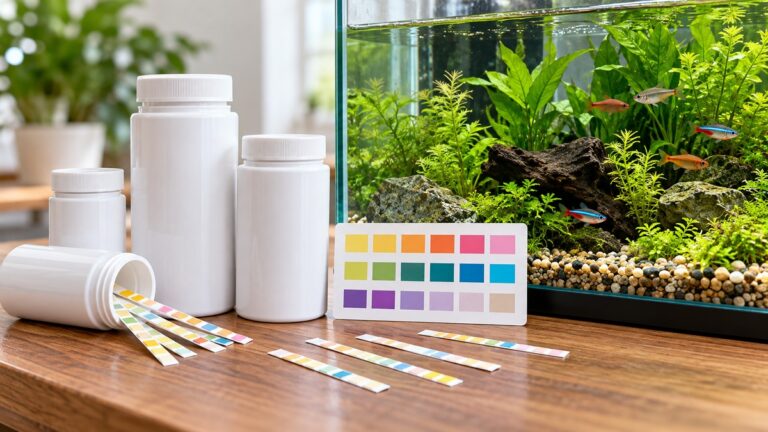
Compare the pad to the chart in the same light each time. Natural light is the setting several listings name. A color that looks one way under a warm lamp can look different in daylight, so a log is only useful if every reading is judged the same way.
Store the bottle in a cool, dry place, and close the cap after each use. The listings describe sealed caps and moisture-proof cases for this reason. Do not reuse a strip after it has been dipped.
Common mistakes
Buying a pack without checking the count. One listing gives 150 strips in its title and bullets but 100 test strips in its included-components line, so read both figures before you order.
Treating a copper strip as a full water report. The copper line is one value, and it does not tell you about ammonia, nitrite or the other measures on a different strip.
Skipping the timing steps. A pad read too early or too late can show a color that does not match the chart.
Reading in dim light. The listings ask for natural light, and a dim room makes colors hard to match.
Acting on one reading alone. A copper result is one part of a routine. Repeat the test with a fresh strip before you act on a surprising reading, and check your timing and storage first.
FAQ
What does a copper test for an aquarium check?
It checks for copper in the water, using a strip that changes color against a chart. The three listings in this roundup name copper among their measures, but none gives a copper range in its visible text.
Can one strip test copper and other values?
Yes, several strips in this roundup pair copper with other measures. Check the list on the listing, because a value that is not named there is not covered by the strip.
Do the strips need an app?
No. The listings describe color charts and timed pads. You read each pad by eye against the chart on the bottle.
How often should I test for copper?
A monthly check is a common starting point, and the worked example above shows one way to plan it. Test again after a major water change, and whenever your fish behavior changes.
Why do the strip counts differ between listings?
Counts vary by pack size and by how the seller describes the set. A title can list one number while the included-components line lists another, so check both before you order.
What should I do if a copper reading surprises me?
Repeat the test with a fresh strip, check the timing and the storage, and compare the color in the same light. If the reading still surprises you, or if your fish look unwell, consult an experienced fish keeper or an aquatic vet.
Bottom line
For copper, choose among the three listings that name copper, and read each listing’s exact wording before you buy. Check the strip count, the timing steps and the storage note, and remember that none of the listings gives a copper range in its visible text. Keep the strips in a routine with your other tests, and bring any concern about the fish to an experienced fish keeper or an aquatic vet.
Sources
- UF/IFAS, Ammonia in Aquatic Systems (FA31): test when fish appearance or behavior changes, including reduced feeding