Best GH Test for Aquarium: Five Strip Kits Compared
As an Amazon Associate we earn from qualifying purchases. Details
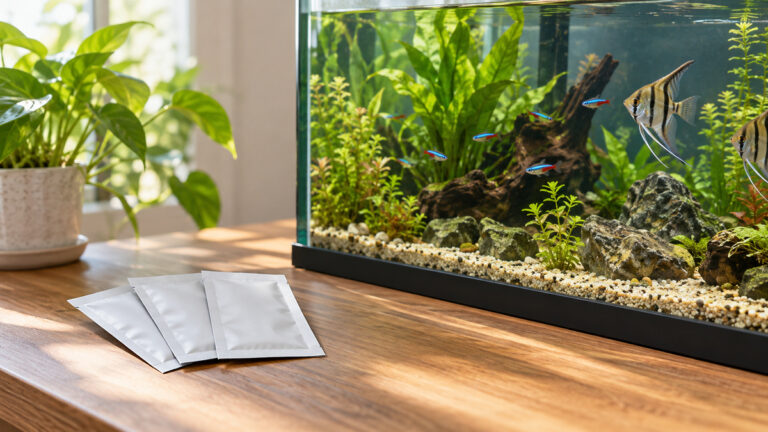
A GH test for aquarium water checks the hardness of the tank water. Many multi-test kits include a hardness check, so the label on the kit matters. This guide compares five kits whose listings name GH, total hardness or hardness. It explains how each listing describes the test, what range it gives, and what it leaves out. It is written for a betta keeper who wants a clear hardness check without guessing. You will learn why the name on the listing matters, and what to check before you order.
Quick answer
Five kits in this group name hardness. Three name GH or total hardness, and two say hardness alone in a title or a bullet. Choose a kit that names GH or total hardness if you want the listing to match the test you need. Choose a kit with a stated pH range or a stated count if those details matter to you. Check the strip count, since two listings give counts that conflict with the title. None of the five listings gives a target GH for a betta tank, so read the scale on the chart and ask an experienced fish keeper for a range before you act on a reading.
What GH means on a listing
Listings use several names for the same family of test. Some write GH. Some write total hardness. Others write hardness alone. Read the bullets and the specs for the name, since the name tells you what the listing claims to measure. A listing that says hardness without GH may still include the test you need, but the listing does not say so directly.
The sources for this guide do not define GH or give a target for it. The sources do not give a GH range for a betta tank. Treat any number you see on a chart as a reading on that kit’s scale, and check the scale in the manual before you use the number.
What to check on a GH kit listing
Five details decide whether a kit suits you. Check each before you order.
The name of the test
Look for GH or total hardness in the bullets. Three listings name GH or total hardness. The other two use hardness alone. A kit that names GH is clearer about the test. A kit that says hardness may still work, but read its chart and manual to confirm the scale.
The count, and whether it matches the title
Counts vary, and some listings disagree with their titles. One listing says 950 tests in the title but gives a unit count of 150. Another gives a count of 10 for a 10-in-1 kit, and does not say how many tests that gives. Check the count in the specs and the title, and ask the seller if they do not match. The third kit’s package is listed at 5.39 x 2.13 x 2.09 inches, so check the shelf space before you order.
The pH range and the other parameters
Some kits state a pH range, such as 6.0 to 8.0, and some do not. A kit that tests hardness alongside pH, chlorine and alkalinity gives you more context from one purchase. Look at the full list before you buy, since a kit that covers only one parameter may suit a narrow check.
The format and the app
Most kits in this group are strips. One is app-enabled, which means the result comes from a scan rather than a color match. An app kit depends on a phone and an app, and the listing does not say which systems the app supports. A strip kit depends on your color reading in good light.
Shelf life and storage
One listing says the strips should be used within three months of opening for the best accuracy. Another says the bottle is sealed against moisture. Only one listing gives a time period. Keep the cap closed and store the bottle in a cool, dry place, and note the opening date on the bottle.
The five kits in this group
1. 11 in 1 – Aquarium Test Strips | 950 Tests – 150 Strips | Fish Tank Aquariums Water Test Kit (Names total hardness (GH))
Specs from the listing (checked 2026-10-13):
- Ph Range: 6.0-8.0
- Recommended Uses For Product: Ph, Carbonate, Total Alkalinity, Free Chlorine, Total Hardness, Nitrite, Nitrate, Copper, Iron
- Unit Count: 150 Count
- Warranty Description: Shelf life
- Number of Packs: 4
Pros
- The bullets name total hardness (GH) among the parameters tested.
- The specs give a pH range of 6.0-8.0 alongside the hardness test.
- The bullets say the strips are split between a bottle and sealed bags to keep them fresh.
Cons
- The title says 950 tests, but the unit count is 150, so the count is unclear.
- The warranty field says Shelf life, which is not a warranty term.
- The item weight is not stated in the specs.
Best for: Readers who want a strip kit that names total hardness and gives a pH range.
Skip if: Skip it if the test count matters and you want it confirmed before you buy.
View on Amazon (affiliate link)
2. Digital Aquarium Water Test Kit, App-Enabled 10-in-1 Fish Tank Test Kit for Freshwater & Saltwater (App scan with GH and KH)
Specs from the listing (checked 2026-10-13):
- Ph Range: 6.0-8.0
- Unit Count: 10 Count
- Included Components: Mobile App, Test strips
- Model Number: 10-in-1 Aquarium Kit
- Brand: Droplytix
Pros
- The bullets name GH, KH, pH and chlorine on one kit.
- The specs list a pH range of 6.0-8.0.
- The bullets say results come from a scan in an app rather than a color match.
Cons
- The listing names a mobile app as an included component but does not state supported systems.
- The unit count is 10, and the listing does not say how many hardness tests that gives.
- The bullets say the kit suits reef and shrimp tanks as well as freshwater, so the scope is broad.
Best for: Readers who want an app-scanned kit that reports GH and KH alongside pH.
Skip if: Skip it if you do not want to rely on a phone app for your results.
View on Amazon (affiliate link)
3. AAwipes 8-in-1 Aquarium Test Kit for Fish Tanks – Quick & Accurate Water Testing Strips (Hardness among eight tests)
Specs from the listing (checked 2026-10-11):
- Item Weight: 2.39 ounces
- Item Package Dimensions L x W x H: 5.39 x 2.13 x 2.09 inches
- Number of Items: 50
- Color: 50 Strips
- Package Dimensions: 5.39 x 2.13 x 2.09 inches; 2.4 ounces
Pros
- The title names hardness with pH, ammonia, alkalinity and chlorine.
- The listing gives 50 strips in the pack.
- The bullets say the ammonia pad is dipped separately for 5 seconds.
Cons
- The listing says Hardness, not GH, so the scale is not named in the bullets.
- The Directions and Warranty fields contain only a slash.
- The bullets say 8-in-1 testing, but the title names five parameters.
Best for: Readers who want a hardness test on a strip pack that also covers pH and alkalinity.
Skip if: Skip it if you need the listing to name GH directly.
View on Amazon (affiliate link)
4. EASYTEST 8-Way Aquarium Test Strips with Ammonia, 100PCS Fish Tank Test Kit (Hardness among eight metrics)
Specs from the listing (checked 2026-10-13):
- Recommended Uses For Product: Ammonia Test, Aquarium, Chlorine Test, Nitrate Test, Nitrite Test, Water Hardness Test, ph Test
- Unit Count: 1 Count
- Item Highlight: Aquarium Water Test Kit for Fish Tank, Pond | Test Ammonia, pH, Hardness, Alkalinity, Chlorine, Nitrate, Nitrite, Carbonate
- Number of Items: 100
- Included Components: Aquarium Test Kit
Pros
- The bullets list eight core metrics, including hardness, pH and carbonate.
- The listing gives 100 pieces in the pack.
- The bullets say most indexes read at 15 seconds, while nitrate and nitrite read at 60 seconds.
Cons
- The listing says hardness, not GH, so the scale is not named.
- The unit count is 1, which conflicts with the 100 pieces in the number of items field.
- The bullets say to cut off the ammonia pad before the ammonia test, which adds a step to each check.
Best for: Readers who want a 100-piece strip pack with hardness, pH and carbonate on one strip.
Skip if: Skip it if you need a single unit count that matches the piece count.
View on Amazon (affiliate link)
5. 9-in-1 Aquarium Test Strips for Accurate Water Quality Testing (Total hardness with a 12-month warranty)
Specs from the listing (checked 2026-10-13):
- Item Weight: 1.28 ounces
- Model Number: CP-01
- Number of Items: 50
- Included Components: Aquarium Test Kit
- Unit Count: 1 Count
Pros
- The bullets name total hardness among nine parameters.
- The bullets give instant hardness and pH readings in 15 seconds.
- The listing gives a 12-month warranty in the bullets, and the item weight is 1.28 ounces.
Cons
- The warranty appears in a bullet only, with no warranty field in the specs.
- The unit count is 1, while the number of items field says 50.
- The bullets say customer service is available 24 hours and 7 days, and the listing gives no contact detail.
Best for: Readers who want a total hardness test with a stated warranty and a light pack.
Skip if: Skip it if you want the warranty listed in the specs, or if the unit count matters to you.
View on Amazon (affiliate link)
Side by side on the listed details
The table uses only the details printed on the five listings. Use it to compare the name of the test, the count and the format. It does not rank the kits.
| Listed detail | First kit | Second kit | Third kit | Fourth kit | Fifth kit |
|---|---|---|---|---|---|
| Name for hardness | Total Hardness (GH) | GH | Hardness | Hardness | Total Hardness |
| Format | Strip | App-enabled strip | Strip | Strip | Strip |
| Stated pH range | 6.0-8.0 | 6.0-8.0 | Not stated | Not stated | Not stated |
| Count | 150 count (title says 950 tests) | 10 count | 50 strips | 100 pieces | 50 items (unit count says 1) |
| Item weight | Not stated | Not stated | 2.39 ounces | Not stated | 1.28 ounces |
Worked example: the 50-strip count
Assume you test hardness once a week, and assume each check uses one strip. The count and the schedule are the only inputs. The example uses the 50-strip kit.
Step 1: 50 strips minus 4 strips used in the first month equals 46 strips left.
Step 2: 46 strips minus 4 strips used in the second month equals 42 strips left after two months.
Step 3: 42 strips minus 4 strips used in the third month equals 38 strips left after three months.
On this schedule the count lasts well beyond three months. If you test twice a week, the same count lasts about half as long. The schedule is a choice, not a fact about the kit. If you use a kit with a conflicting count, confirm the number before you plan the run.
Reading the result
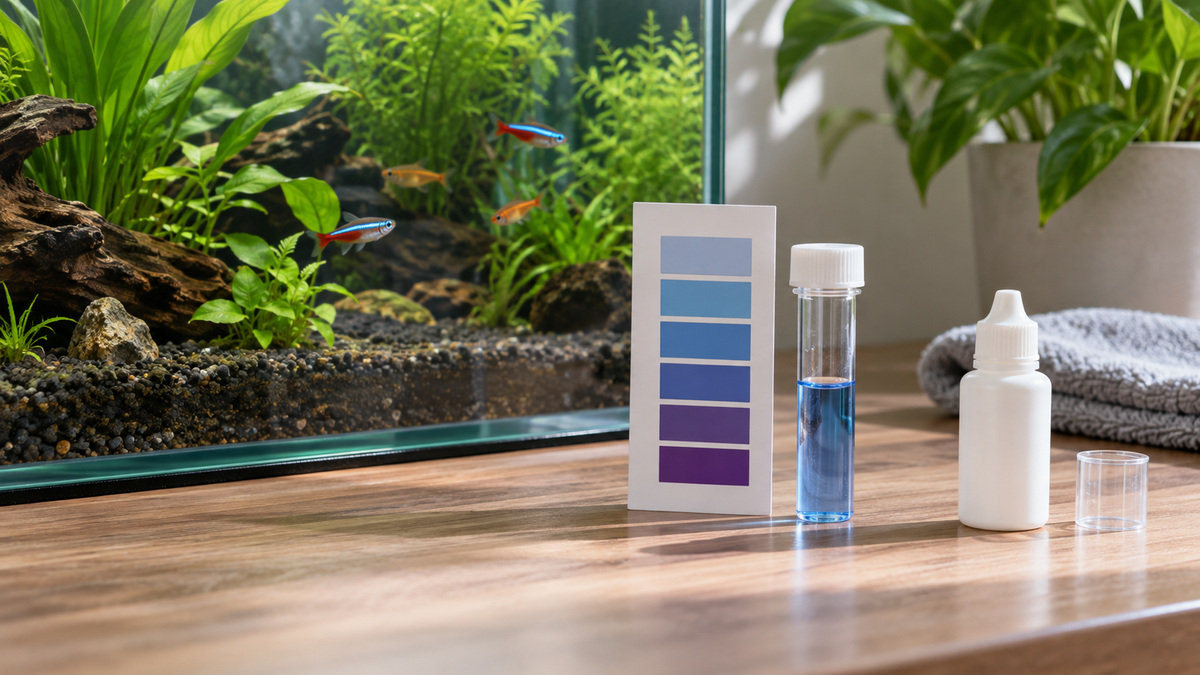
Compare the color to the chart in good light, then match it to the closest block. If the chart has no scale for hardness, do not guess. Check the manual for the scale, or ask the seller. Note the date and the reading in a simple log, so you can see a trend over several weeks.
A useful log has five columns: the date, the kit, the hardness reading, the water change you did that week, and a short note on anything the fish did. The note matters. A reading that changes after a water change tells you something about the change, and a note makes that pattern visible later. Keep the log next to the kit, and review it once a month.
A single reading that looks wrong can be a color-matching error. Retest on the next scheduled day before you change anything. Do not change the tank in a hurry over one number. If a reading worries you, or the fish shows a change in appearance or behavior, ask an experienced fish keeper or an aquatic vet.
Matching a kit to your routine
A weekly hardness check suits a kit with a clear name and a moderate count. A reader who tests several parameters on the same day may prefer a kit that covers pH and chlorine too. A reader who dislikes matching colors by eye may prefer the app-enabled kit, if the phone and app work for them.
If you want a wider set of freshwater kits to compare, the best freshwater fish tank water test kit guide covers more options. Choose a fixed day each week for the check. Write the day in your log. If the day is busy, move the whole set of checks rather than skipping hardness. A partial set makes it harder to compare readings from week to week.
How a hardness check fits a betta routine
A hardness check is one part of a routine, not the whole routine. Most of the other checks in this guide’s listings cover pH, ammonia and nitrite, so a hardness kit is easiest to use alongside those. A fixed set of checks on one day gives you one set of readings to compare. A hardness check done alone on a random day gives you a number with no context.
Plan the water changes around the checks. If you make a water change, note it in the log and run the checks at the next scheduled time. The reading after a change tells you how the tank responded, which is more useful than a single reading taken on its own. Keep the notes short, and keep the same method each week.
Think about the person who runs the test as well. If another family member helps, show them the chart and the scale before the first check. A clear chart and a shared method reduce the chance that two people read the same strip differently.
Common mistakes
- Trusting the title alone. Check the count in the specs, since the title and the unit count can disagree.
- Reading a color in poor light. Match the color in good light, against the chart that came with the kit.
- Treating hardness as a full water check. A hardness reading is one number. pH, ammonia and nitrite need their own checks.
- Assuming the scale is clear. Several listings do not state the scale, so the manual or the seller has to answer that question.
- Using a bowl. One listing names fish bowls among its uses, but this site does not recommend a bowl as a betta home.
What the listings leave out
Several details are missing from most of the five listings. Few state a scale for the hardness test. Few give a shelf life in months after opening. None gives a GH target for a betta tank. Where a detail is missing, the listing does not state it, so ask the seller or read the manual.
The missing detail that matters most is the scale. A chart without a hardness scale leaves you guessing at the boundary between two blocks. If the manual gives the scale, use it. If it does not, ask the seller before you buy.
If you want a wider set of strip options, the best fish tank water quality test strips guide covers more products. For a pH-only check, the best aquarium water pH test kit roundup is the next place to look.
FAQ
What GH should my betta tank read?
This guide cannot give a GH target for a betta tank from its sources. Ask an experienced fish keeper or an aquatic vet what range to aim for, and read the kit’s manual for the scale.
Is hardness the same as GH?
Listings use the names differently. Some say GH, some say total hardness and some say hardness. Read the bullets and the chart to see which scale the kit uses, and ask the seller if the listing does not say.
Which kit has the most tests?
The 150-count kit has the highest listed count in this group, but its title says 950 tests, which conflicts with that unit count. Confirm the count before you compare.
Does an app kit read GH for me?
One listing describes an app-enabled kit that scans the strip. The listing names hardness among its tests. It does not state which phones or systems the app supports, so check that before you buy.
How often should I test hardness?
No source in this guide gives a schedule for a home tank. The UF/IFAS ammonia guide recommends weekly testing in a production system and immediate testing when fish appearance or behavior changes. That is a production setting, so ask a fish keeper for a schedule that fits your tank.
Can a kit that covers many parameters replace a GH test?
It can cover hardness if the listing names it. Check the parameter list, and confirm the scale on the chart. A kit with many parameters still gives one reading per parameter.
Does the warranty matter?
Only one listing states a warranty period, which is a 12-month warranty in a bullet. Another lists a warranty field that says shelf life, which is not a warranty term. Check the seller’s return terms before you order.
Bottom line
Choose a GH test by the name it uses, the count it states and the scale it shows. A kit that names GH or total hardness is clearer than one that says hardness alone. Check the count against the title, read the chart in good light, and log your readings. Ask an experienced fish keeper for a range, since none of these listings gives one for a betta tank.
Sources
- UF/IFAS, Ammonia in Aquatic Systems (FA031): weekly testing in a production system and testing when fish appearance or behavior changes