Best Freshwater Aquarium pH Test Kit: Six Options Compared
As an Amazon Associate we earn from qualifying purchases. Details
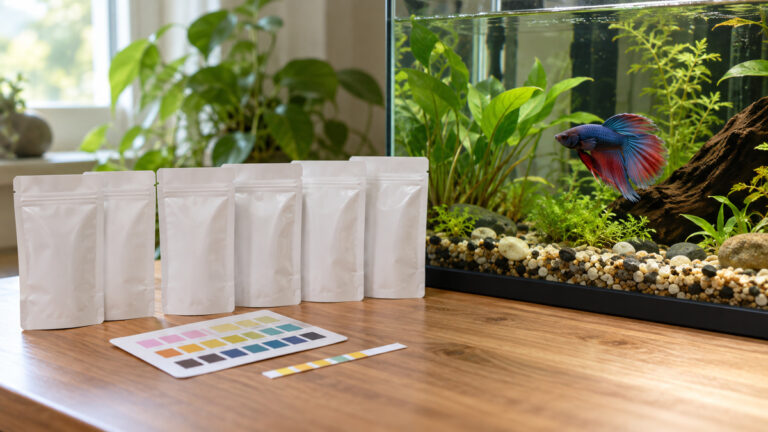
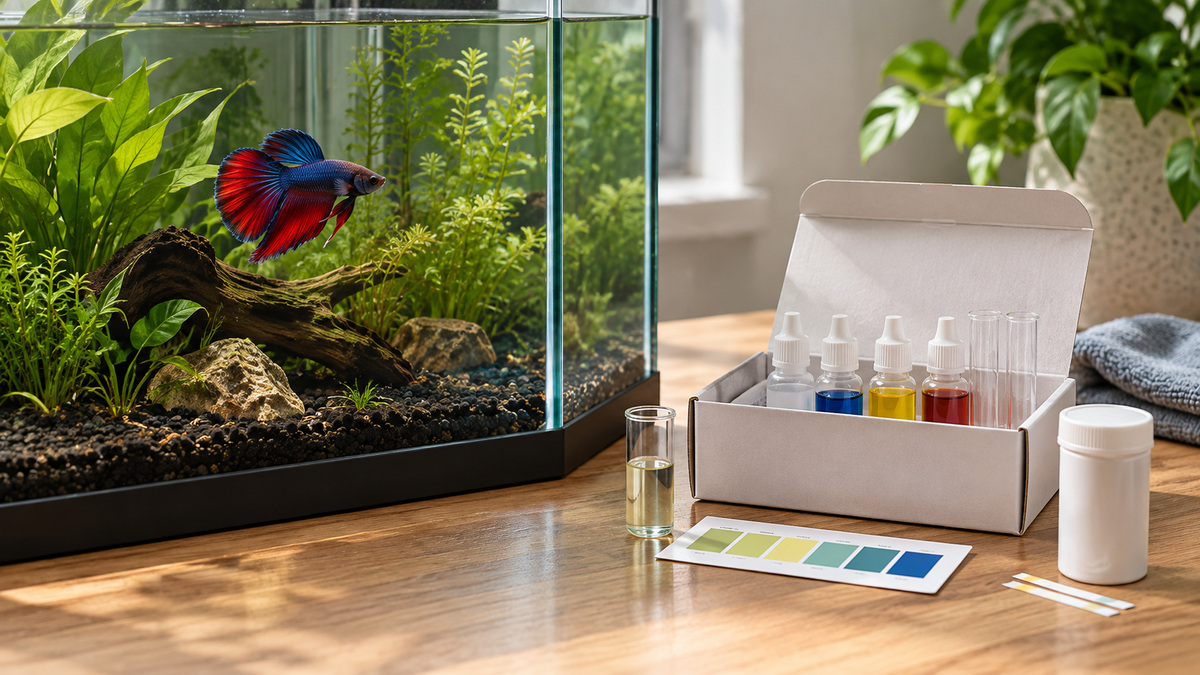
A freshwater aquarium pH test kit measures the pH of your tank water so you can see where it sits. This guide compares six kits whose listings name pH and says which fit a freshwater tank. It explains what each listing states about the pH range, the test format and the number of tests, and what it leaves out. It is written for beginners with a betta who want a clear pH reading without guessing. You will learn which details to check before you order, and why a pH number needs a second look.
Quick answer
Six kits in this group name pH and suit a freshwater tank. Choose a kit whose listing states a pH range and a format you can read, such as a strip with a color chart or a liquid kit. Choose a kit that separates fresh water from salt water if your tank is fresh and you want a clear freshwater reading. Check the strip count or test count before you buy, because several listings give conflicting numbers. The pH reading alone does not tell you whether the water is right for your fish. Pair it with the ammonia and nitrite checks covered in the ammonia guide.
Why pH needs more than one number
The pH number is one piece of the water picture. The Wikipedia entry on the species gives a natural habitat pH range from slightly acidic (pH 6.9) to highly alkaline (pH 8.2). That range is a habitat description, not a target for your tank, and it does not tell you what to aim for at home.
The UF/IFAS ammonia guide makes a related point. The toxic share of ammonia depends on pH and temperature, so a reading of ammonia needs a pH reading next to it. A good ammonia kit includes a pH test and a thermometer for that reason. That guide, Ammonia in Aquatic Systems (FA031), was written for aquaculture and hobby systems, so treat its points as background for a betta tank.
The practical lesson is simple. A pH test is more useful when you can read the scale and know the context. The best ammonia test kit for aquarium guide covers the ammonia side, and the best aquarium water pH test kit roundup covers a wider set of pH kits.
What to check on a pH kit listing
Five details decide whether a pH kit is useful to you. Check each one before you order.
The stated pH range
Some listings give a pH range such as 6.0 to 8.0, or 6.5 to 8.5. The range tells you the scale the strip or reagent is built to read. Three kits in this group state a range. Another kit gives separate fresh water and salt water pH readings but no stated range. A kit with no stated range leaves you guessing about the scale. Look for the range in the specs before you look at the bullets.
Format: strip, liquid or app
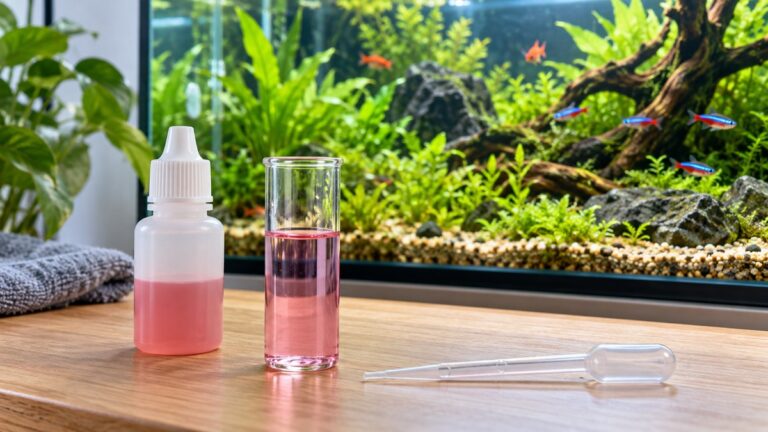
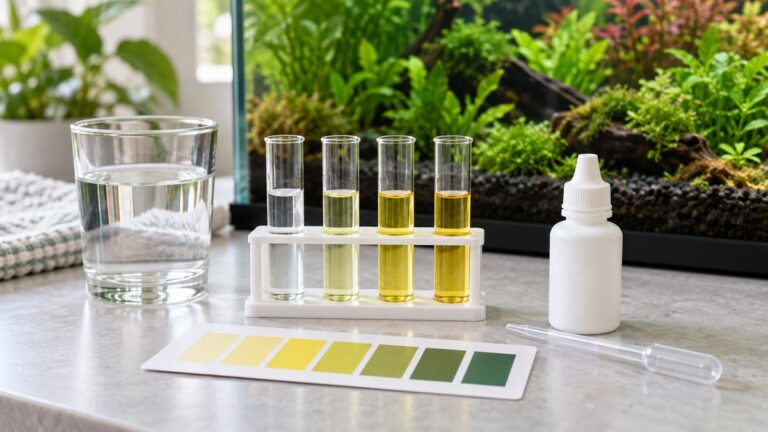
Strips are quick to use and easy to store, but they depend on a color chart. Liquid kits use reagents and a chart. An app-enabled kit replaces the chart with a scan. Each format suits a different reader. A strip with a clear chart suits a beginner who tests once a week. A liquid kit suits a reader who wants a steadier read on each test. An app kit suits a reader who does not want to match colors by eye.
Fresh water and salt water
Most kits in this group say they work for both fresh water and salt water. That is fine for a mixed set of tanks. For a freshwater betta tank, a kit that separates the two scales gives a cleaner reading. One listing names fresh water and salt water pH separately, which is a useful detail for a freshwater tank that may later change.
The test or strip count
Counts vary. Some listings give a strip count, some give a test count, and some give both. A kit with a large total may give few pH tests if the total covers several parameters. Find the pH count on the listing before you compare totals. Where the count is unclear, ask the seller.
Conflicts and blanks
Several listings have a field that contradicts the bullets, or a blank field. One lists a count that does not match the title. Another lists a battery requirement for a strip kit. Treat a conflict as a reason to ask, not as a reason to skip the reading. If a warranty or directions field is blank, check the packaging when the kit arrives.
Six pH kits in this group
1. AAwipes 8-in-1 Aquarium Test Kit for Fish Tanks – Quick & Accurate Water Testing Strips (Strip kit with pH in the title)
Specs from the listing (checked 2026-10-11):
- Item Weight: 2.39 ounces
- Item Package Dimensions L x W x H: 5.39 x 2.13 x 2.09 inches
- Number of Items: 50
- Color: 50 Strips
- Package Dimensions: 5.39 x 2.13 x 2.09 inches; 2.4 ounces
Pros
- The title says the kit tests pH, ammonia, alkalinity, hardness and chlorine.
- The bullets say the ammonia pad is dipped separately for 5 seconds.
- The listing gives 50 strips in the pack.
Cons
- The Directions and Warranty fields contain only a slash, so the listing gives no written directions field.
- The bullets say 8-in-1 testing, but the title names five parameters.
- The Specific Uses field says Indoor, which is not a test use.
Best for: Readers who want a 50-strip pack that names pH and a freshwater and saltwater use.
Skip if: Skip it if you need written directions on the listing, since the directions field is blank.
View on Amazon (affiliate link)
2. Tetra EasyStrips Complete Aquarium Water Test Kit, 25 Count (Seven tests from one strip)
Specs from the listing (checked 2026-10-11):
- Ph Range: 6.0-8.0
- Item Highlight: 7 Water Quality Tests In 1 Kit, Includes 25 6-In-1 Test Strips & 25 Ammonia Test Strips, For Freshwater & Saltwater Fish Tank
- Product Dimensions: 1.5 x 4 x 6 inches; 0.78 ounces
- Batteries: Product Specific batteries required.
- Warranty Description: See Label.
Pros
- The bullets say one strip covers seven tests, including pH.
- The specs state a pH range of 6.0-8.0.
- The bullets say the kit suits both freshwater and saltwater aquariums.
Cons
- The Batteries field says product specific batteries are required, which conflicts with a strip kit.
- The bullets say to wait 60 seconds before reading, which is a long wait for a quick check.
- The warranty field says See Label, so the listing gives no warranty period.
Best for: Readers who want one strip that checks pH with six other parameters and a stated pH range.
Skip if: Skip it if you want a kit with no conflicting battery field, or a fixed warranty term.
View on Amazon (affiliate link)
3. Digital Aquarium Water Test Kit, App-Enabled 10-in-1 Fish Tank Test Kit for Freshwater & Saltwater (App scan with GH and KH)
Specs from the listing (checked 2026-10-11):
- Ph Range: 6.0-8.0
- Unit Count: 10 Count
- Included Components: Mobile App, Test strips
- Model Number: 10-in-1 Aquarium Kit
- Brand: Droplytix
Pros
- The specs list a pH range of 6.0-8.0.
- The bullets say results come from a scan in an app, not a color chart.
- The listing names GH and KH along with pH, which helps if you test hardness.
Cons
- The listing names a mobile app as an included component but does not state supported systems.
- The unit count is 10, and the listing does not say how many tests that gives.
- The bullets say the kit works for reef and shrimp tanks as well as freshwater, so the scope is broad.
Best for: Readers who want an app-scanned strip that also reports GH and KH.
Skip if: Skip it if you do not want to use a phone app for your test results.
View on Amazon (affiliate link)
4. 9-in-1 Aquarium Test Strips, 100 Count Fish Tank Water Test Kit for Freshwater & Saltwater, Tests (Nine parameters on one strip)
Specs from the listing (checked 2026-10-11):
- Ph Range: 6.5 – 8.5
- Recommended Uses For Product: Home Water, Tap Water, Well Water, Aquarium, Swimming Pool
- Unit Count: 123 Count
- Included Components: 9-in-1 Aquarium Test Strips
- Material Type: Plastic
Pros
- The bullets name pH, KH and total alkalinity on one strip.
- The specs give a pH range of 6.5 – 8.5.
- The bullets say the bottle includes desiccant to reduce exposure to humidity.
Cons
- The unit count says 123, while the title says 100 count, so the strip number is unclear.
- The listing names tap water, well water and swimming pools as well as aquariums, so the scope is broad.
- The bullets give a wait of about 30 seconds, with no timing for each pad.
Best for: Readers who want pH, KH and alkalinity on one strip with a stated pH range.
Skip if: Skip it if the strip count matters to you and you want it confirmed before you buy.
View on Amazon (affiliate link)
5. 12 in 1 Accurate Aquarium Test Kit, Fresh and Salt Water Test Strips (Separate fresh and salt pH)
Specs from the listing (checked 2026-10-11):
- Item Weight: 5.3 ounces
- Specific Uses for Product: Fish Tanks, Ponds, Aquariums, Fish Bowls
- Included Components: Aquarium Test Kit, Instructions, Test Tube
- Model: TESTKIT-AQ01
- Package Dimensions: 5.28 x 3.78 x 2.28 inches; 5.29 ounces
Pros
- The bullets list separate pH readings for fresh water and salt water.
- The listing names 12 parameters, including pH and phosphate.
- The bullets give a 170-strip total, with 100 strips for the 10-in-1 pack.
Cons
- The specific uses field names fish bowls, which this site does not recommend as a betta home.
- The 170-strip total mixes three strip types, so you test different parameters from different strips.
- The listing gives a sealed-bottle shelf life claim but no time period.
Best for: Readers who want a separate freshwater pH scale and a kit with many parameters.
Skip if: Skip it if you plan to test only one parameter and do not want a mixed strip set.
View on Amazon (affiliate link)
6. Pawfly 5 in 1 Aquarium Water Master Test Kit, Fish Tank Water Testing Kit (Liquid reagents, 100 pH tests)
Specs from the listing (checked 2026-10-11):
- Item Weight: 10.9 ounces
- Directions: Adults 18 years and older.
- Color: Blue Standard Kit Pack
- Included Components: Aquarium Water Master Test Kit
- Package Dimensions: 7.4 x 4.92 x 3.5 inches; 10.93 ounces
Pros
- The listing gives 100 pH tests in the kit.
- The bullets say the kit uses professional liquid reagents.
- The bullets say the color chart compares the water's hue to the swatches.
Cons
- The directions field limits use to adults 18 years and older.
- At 10.9 ounces it is heavier than the strip kits in this group.
- The listing has no pH range field, so the scale is not stated in the specs.
Best for: Readers who want a large pH count and a liquid reagent format.
Skip if: Skip it if a child will run the test, or if you need a stated pH range in the specs.
View on Amazon (affiliate link)
Other strip kits in this group also name pH. This guide keeps the picks to six, so those kits are not described here.
Side by side on the listed details
The table uses only the details printed on the six listings. Use it to compare format, range and count, not to rank the kits.
| Listed detail | First kit | Second kit | Third kit | Fourth kit | Fifth kit | Sixth kit |
|---|---|---|---|---|---|---|
| Format | Strip | Strip | App-enabled strip | Strip | Strip | Liquid reagent |
| Stated pH range | Not stated | 6.0-8.0 | 6.0-8.0 | 6.5 – 8.5 | Not stated | Not stated |
| Count in listing | 50 strips | 25 of each strip type | 10 count | 123 count (title says 100) | 170 strips | 100 pH tests |
| Item weight | 2.39 ounces | 0.78 ounces | Not stated | Not stated | 5.3 ounces | 10.9 ounces |
How to choose
Use these rules to pick a kit.
- Choose a kit with a stated range if you want to see the scale before you buy.
- Choose an app kit only if you can use the app on your phone. The listing names the app as an included component but does not state supported systems.
- Choose a liquid kit if you want a larger pH count and do not mind a heavier box.
- Choose a kit that separates fresh and salt water if you want a clear freshwater reading.
- Skip any kit whose count conflicts with the title until the seller confirms the number.
If you want a wider set of strip options before you settle on one of these six, the best fish tank water quality test strips guide covers more strip products.
Worked example: strips left after three months
Assume you test your betta tank once a week for pH, and assume the kit gives 25 strips. This assumption is ours, not a figure from the listing.
Step 1: 25 strips minus 4 strips used in the first month equals 21 strips left.
Step 2: 21 strips minus 4 strips used in the second month equals 17 strips left.
Step 3: 17 strips minus 4 strips used in the third month equals 13 strips left after three months.
Read the example as a planning tool. A larger count lasts longer, but only if you test on a fixed schedule. If you test twice a week, the same 25 strips last about half as long. The schedule is a choice, not a fact about the kit.
What the listings leave out
Several details are missing across the six listings. Few give a shelf life in months after opening. Most do not say how long a reading takes beyond a rough figure. Only some state the pH scale in full. When a detail is missing, the listing does not state it, so ask the seller or read the chart that comes with the kit.
Reading the result
A pH reading has no meaning until you read it against the scale. Compare the color to the chart in good light, and match it to the closest block. The fish tank test strip color chart guide covers chart reading in more detail. If two blocks look close, note both and retest on the next scheduled day. Keep a log of the readings with the date. A single high or low reading can be a mistake in reading the color, so a repeat reading helps.
Do not change the tank in a hurry because of one number. A reading is a snapshot. If the number worries you, or the fish shows a change in appearance or behavior, ask an experienced fish keeper or an aquatic vet before you act.
Matching a kit to your routine
Think about how you will use the kit before you buy. A reader who tests a single tank once a week needs a small, simple pack. A reader with more than one tank, or one who tests several parameters on the same day, may get more value from a larger count. A reader who dislikes matching colors by eye may prefer a kit that uses a scan or a liquid reading.
Also think about who will run the test. If a family member who is under 18 will help, check the directions line before you buy. If the person who runs the test needs a clear written direction, pick a listing that gives one. Several listings in this group leave the directions field blank or unclear, so the packaging may be your only guide.
Finally, plan where the kit will live. A box that is light and small fits a shelf near the tank. A heavier box may suit a cabinet. The difference is minor, but a kit you can reach easily is more likely to be used on the same day each week.
Common mistakes
- Buying on the total count. A large total may include other parameters, so count the pH tests.
- Reading a color under poor light. Match the color in good light against the chart that came with the kit.
- Treating a pH number as a full water check. pH is one reading. Ammonia and nitrite need their own tests.
- Ignoring a conflicting count. A count that does not match the title is a reason to ask.
- Assuming a bowl is fine. The HYCHEK listing names fish bowls as a use, but this site does not recommend a bowl as a betta home.
FAQ
What pH range should my betta tank read?
This guide cannot give a target pH from its sources. The Wikipedia entry gives the natural habitat range, which is not a home target. Ask an experienced fish keeper or an aquatic vet what range to aim for, and check the kit’s chart.
Are strips or liquid kits more accurate?
The listings make accuracy claims, but they give no test results to compare. A liquid kit can give a larger count, and a strip kit can be quicker. Read the directions and the chart before you decide. Neither format removes the need to read the color carefully.
Does an app kit read pH for me?
One listing describes an app kit that scans the strip and gives a result. The listing does not state which phones or systems the app supports, so check that before you buy.
Can I use a salt-water kit for a freshwater tank?
Most listings here say they work for both fresh and salt water. For a freshwater tank, a kit that separates the two scales gives a cleaner reading. Check the chart for the scale you need.
How often should I test pH?
No source in this guide gives a pH schedule for a home tank. The UF/IFAS ammonia guide recommends weekly testing in a production system and immediate testing when fish appearance or behavior changes. That is a production setting, so ask a fish keeper for a schedule that fits your tank.
Does a pH test replace an ammonia test?
No. A pH reading does not tell you the ammonia level. The UF/IFAS guide notes that the toxic share of ammonia depends on pH and temperature, so the two readings work together. Test ammonia separately.
Which kit has the most pH tests?
The listing for the liquid kit gives 100 pH tests. Other kits give strip counts that cover several parameters, so the pH count is not always listed. Check the listing for the pH number.
Bottom line
Choose a freshwater pH kit by its stated range, its format and its clear count. A liquid kit gives a larger pH count, and a strip kit suits a weekly test. Pair the pH reading with an ammonia and nitrite check, and do not change the tank over one number. If a result worries you, ask an experienced fish keeper or an aquatic vet.
Sources
- Siamese fighting fish, Wikipedia: natural habitat pH range
- UF/IFAS, Ammonia in Aquatic Systems (FA031): pH and temperature in the toxic share of ammonia