How Many Gallons Should a Betta Fish Tank Be?
As an Amazon Associate we earn from qualifying purchases.
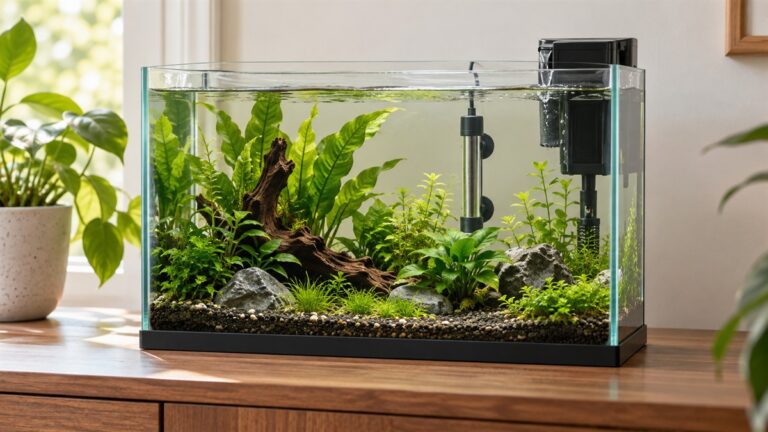
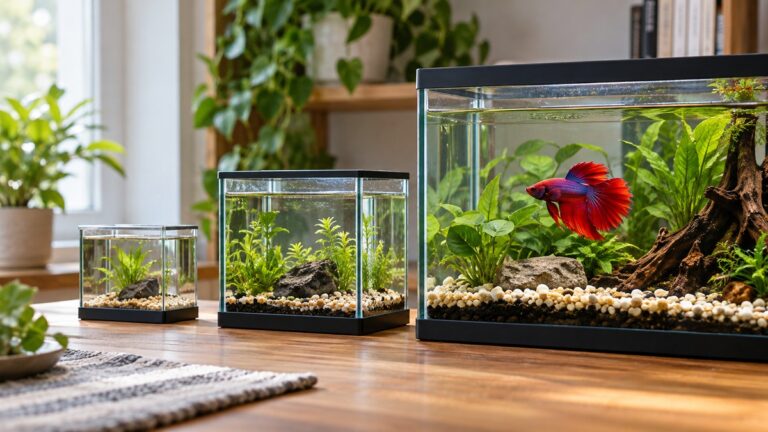
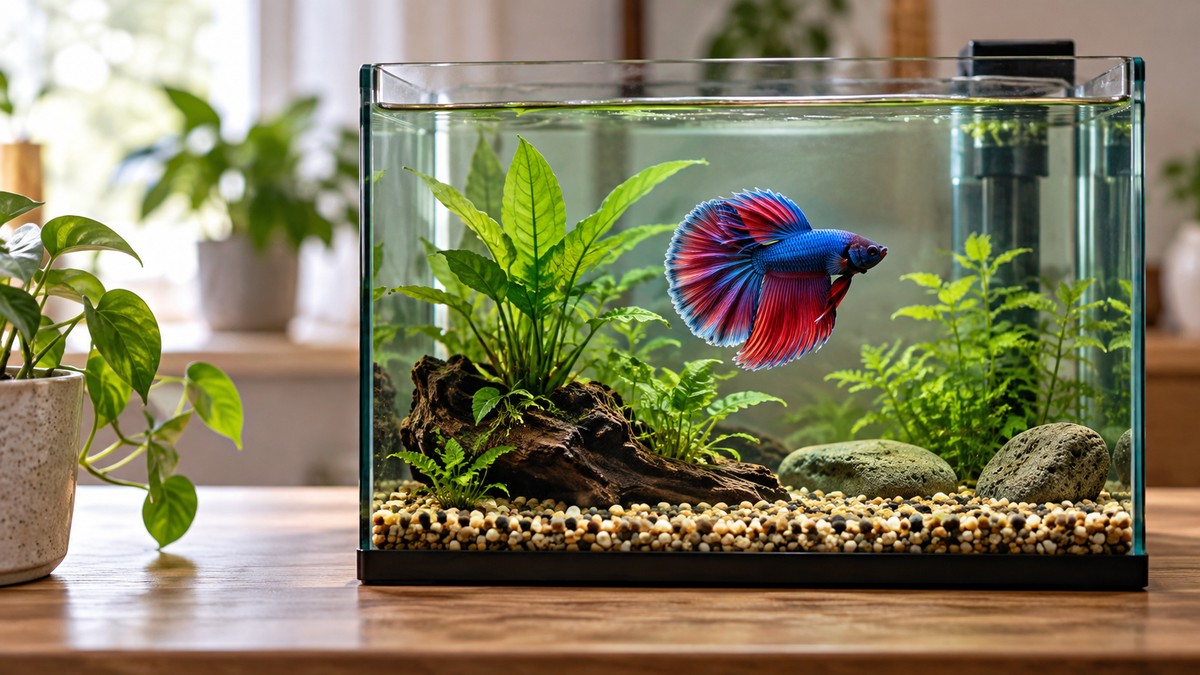
How many gallons should a betta fish have? A good starting point for a single betta is a 5-gallon tank. That is the size the Aquarium Co-Op betta setup guide recommends, and it is the smallest size that comfortably fits a heater, a gentle filter, some plants and enough water volume to stay stable between water changes. Bigger is easier to keep clean and gives the fish more room to swim; smaller can work for a short time but means more work and less margin for mistakes.
Quick answer
- Plan on 5 gallons as the starting size for one betta.
- Go larger if you want a planted tank, tankmates or fewer water changes.
- A very small container, such as a half-gallon bowl, may need daily water changes according to the guide we read, which is why we do not recommend it.
- Whatever the size, you need a heater, a gentle filter and a lid.
Why 5 gallons is the usual starting point
Water volume is not just about swimming space. It is about how fast the water changes character when something goes wrong. A betta produces waste and eats food that breaks down into ammonia, and in a small volume that ammonia builds up quickly. The Aquarium Co-Op guide makes the comparison directly: a 0.5-gallon bowl may need daily water changes, while a 5-gallon tank can often go one to two weeks between changes. Same fish, very different workload, because the larger volume dilutes the waste.
The guide also lists the other benefits of a bigger tank: more room to swim and explore, and water that stays cleaner for longer. Those are practical, not abstract. A fish that can move around a decorated tank behaves differently from one that sits in a corner of a cup, and a keeper who changes water weekly rather than daily is more likely to keep up the routine.
What a betta tank needs besides size
Gallons are only one part of the decision. A 5-gallon tank without the right equipment is still a poor home. The same guide covers the essentials.
A heater
Bettas are tropical fish. The guide says to keep the water at 78 to 82℉ and to use an appropriately sized aquarium heater. This is one reason bowls fall short: heater choices are limited at very small volumes, and room temperature in many homes is lower than that range. When you pick a heater, match its stated tank range to your tank volume. The guide adds that most heaters should wait about 30 minutes after being placed in the water before being turned on, so check the instructions for your own unit.
A gentle filter
The guide recommends a small, gentle filter such as a sponge filter or a nano hang-on-back filter, because bettas struggle in strong currents with their long fins. If a filter pushes too hard, the guide suggests hiding it behind plants or ornaments to reduce the flow. A larger tank makes it easier to find a filter placement that gives circulation without blasting the fish.
A lid
The guide says to get a lid or hood because bettas can jump out of the water. Leave enough room at the top for air; do not fill the tank right to the brim.
Plants and decoration
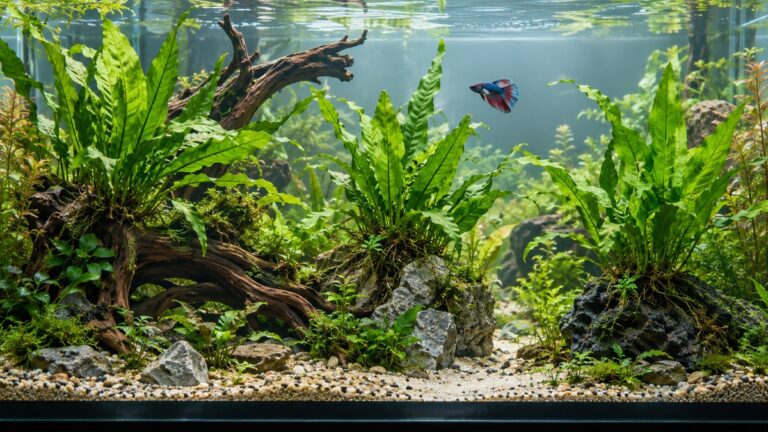
Gravel or sand works as substrate. Ornaments and artificial plants are fine if they have no sharp edges, according to the guide. Live plants are optional, and the guide names anubias, java fern and marimo moss balls as beginner choices that need no special substrate or lighting. More water volume means more room for these without crowding the swimming space.
Dechlorinated, cycled water
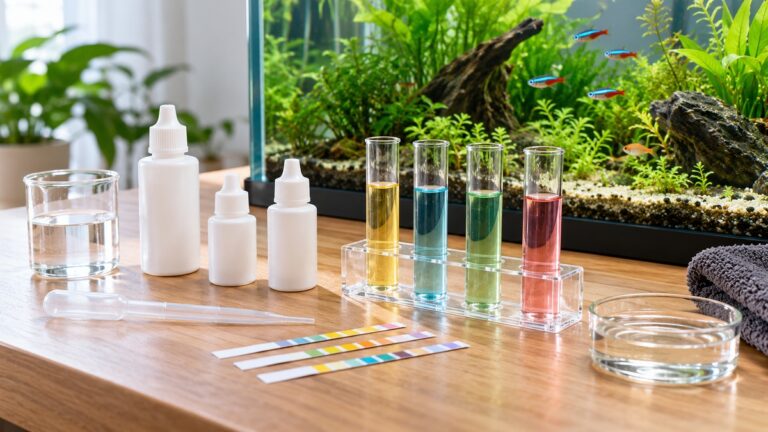
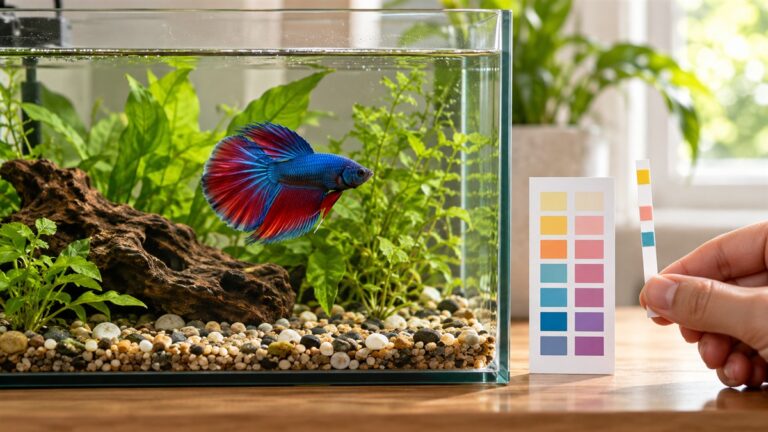
Use a dechlorinator on tap water. The guide says the tank should be cycled before the betta goes in, and that you should test the water: it suggests a water change when ammonia or nitrite reads above 0 ppm, or when nitrate goes over 40 ppm. Do not wash the tank or supplies with soap or detergent.
Smaller than 5 gallons: what changes
You will see betta tanks sold at 1 to 3 gallons, and some keepers run them successfully. We stay with the source we opened and say plainly that it recommends 5 gallons. If you choose a smaller tank anyway, expect the following.
- More frequent water changes. The guide’s bowl example shows how quickly small volumes need attention.
- Less temperature stability. A small body of water changes temperature faster than a large one, so a reliable thermometer matters more.
- Fewer equipment choices. Heaters and filters made for very small tanks are limited, and not every filter is gentle enough.
- Less room for plants and hiding places. The decor competes with swimming space.
If you are looking at a particular small kit, read its listing for the tank volume, the heater and the filter before you decide. Our review of a 1.6-gallon betta starter kit goes through what such a kit includes, and the comparison of aquarium starter kits by tank size lays out the listed sizes side by side.
Larger than 5 gallons: when it helps
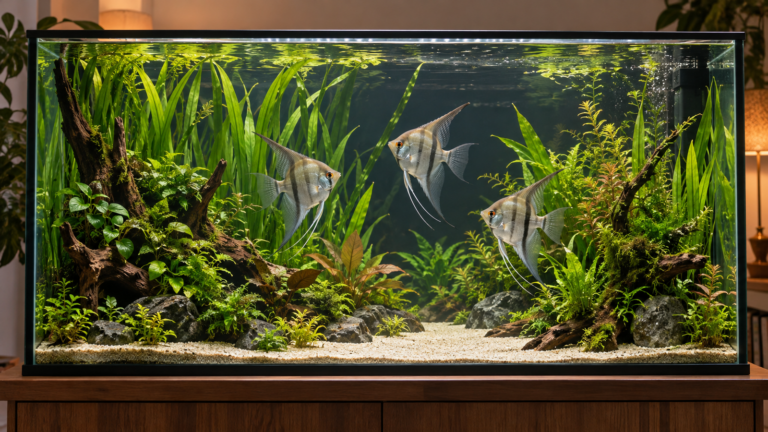
A larger tank is not wasted on a single betta. It makes the water more forgiving, gives you space to arrange plants into zones, and keeps the filter flow low in most of the tank. It is also the route to a community tank: the guide says bettas can live in a larger community tank with suitable tankmates, but it does not name species, so check a dedicated compatibility source before you add any fish. Temperament varies between individual bettas.
Do not house bettas of the same sex together. The guide lists it as a common mistake, and it says all-female groups, often called sororities, are not recommended except for very experienced keepers. Male and female bettas also need to be housed separately because of aggression toward their own kind. If you want more than one betta, plan separate tanks.
Practical points before you buy a tank
- Weight. The guide notes that filled tanks weigh close to 10 pounds per gallon, so a 5-gallon tank is around 50 pounds with water, before substrate and decor. Use a stand or surface rated for it.
- Placement. Keep the tank out of direct sunlight, which feeds algae, and away from air conditioners or heaters, which cause temperature swings.
- Bumps and leaks. Put the tank where it will not be knocked, since a leak can flood the floor.
- Light. The guide suggests an aquarium light so you can see the fish. If you add live plants later, light needs depend on the plants, and the plant-lighting guidance from the same site starts new planted tanks on short days rather than long ones.
- Time to cycle. Do not buy the fish on the same day as the tank. Fish added to an uncycled tank is another mistake the guide lists.
Our other pages on this question come at it from slightly different angles: how much space a betta should have, what size tank a betta should have, and a setup guide on how many gallons a betta needs.
Common mistakes about tank size
- Treating a betta like a houseplant. The idea that bettas thrive in tiny containers is a myth the guide specifically addresses. A fish in a very small container needs frequent water changes and has limited movement.
- Buying size and skipping equipment. A large tank with a strong filter and no heater is not better than a smaller one with the right gear.
- Adding water from the fish store. The guide lists adding fish store water to the aquarium when introducing the new betta as a mistake.
- Skipping the cycle. Water testing and cycling come before the fish, not after the first problem.
FAQ
Is a 5-gallon tank big enough for one betta?
Yes. It is the size the Aquarium Co-Op betta setup guide recommends as a starting point for a single betta, and it can often go one to two weeks between water changes according to that guide.
Can a betta live in a 1-gallon tank?
Some keepers use small tanks, but we follow the 5-gallon recommendation from the guide. A smaller volume needs more frequent water changes and gives you less margin if the heater or filter has a problem.
Does a bigger tank mean less cleaning?
It usually means fewer water changes, because waste is diluted in more water. You still need to test the water and change it when ammonia or nitrite rises above 0 ppm or nitrate goes over 40 ppm, as the guide advises.
Do I need a heater in a larger tank?
Yes. Bettas are tropical, and the guide gives 78 to 82℉ as the range. A bigger tank holds heat more steadily, but it still needs a heater unless your room is reliably in that range.
How many bettas can share a 10-gallon tank?
The guide advises keeping male and female bettas separate and does not recommend all-female groups except for very experienced keepers. Plan one betta per tank.
What if my betta seems unwell in a small tank?
We do not give medical or treatment advice. Check the water readings and temperature, and ask an aquatic vet for help if the fish looks ill.
Bottom line
Start at 5 gallons for one betta, add a heater, a gentle filter and a lid, and go larger when you want plants, tankmates or an easier maintenance routine. If you cannot fit 5 gallons, treat anything smaller as a compromise that costs you time and stability.