What Fish Can Live With Betta Fish: Safe Tank Mates
As an Amazon Associate we earn from qualifying purchases.
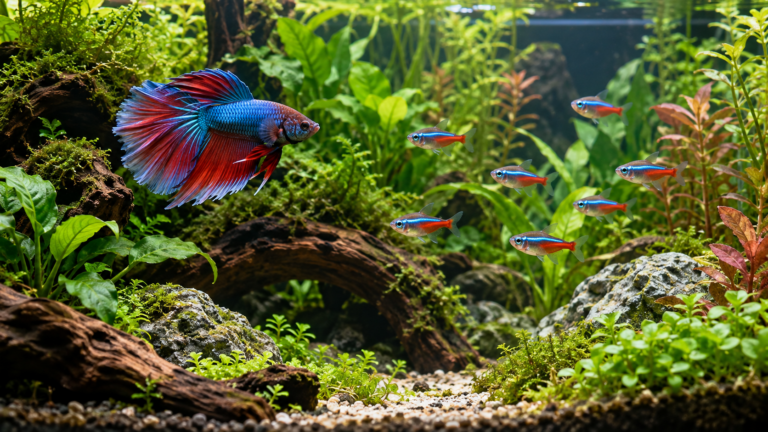
What fish can be kept with bettas? The short list is calm, small-mouthed, short-finned fish that stay out of the betta’s way: corydoras catfish, schools of calm tetras, peaceful rasboras, and non-fish tank mates such as mystery snails and dwarf freshwater shrimp. Every betta has its own temperament, so even a good match is a plan you watch rather than a guarantee. Below you will find which tank mates are commonly recommended, which to avoid, how much water a shared tank needs, and how to set the tank up so a betta and its neighbors can live side by side.
Quick answer
- Usually workable: corydoras (five or more), calm tetras in a school of six or more, peaceful rasboras in groups of seven or more, mystery snails, dwarf freshwater shrimp.
- Avoid: fin-nippers, especially species with long fins, and any other male betta.
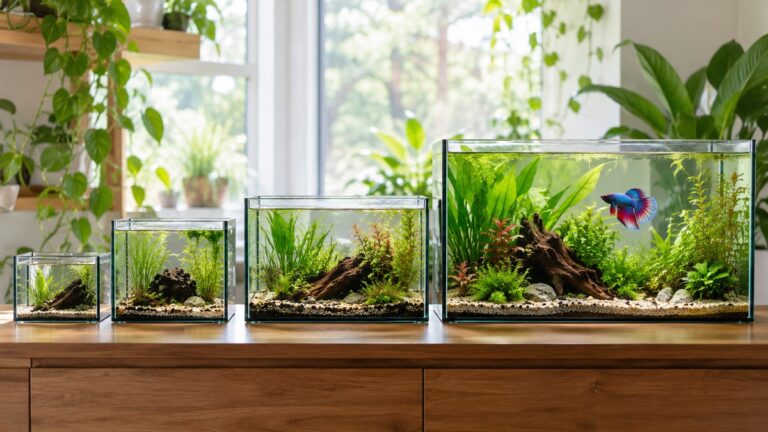
- Tank size: a lone male betta can live in 1 to 5 gallons, but a shared tank needs roughly one gallon per inch of adult fish, so community setups need far more water.
- Plan B: keep a spare tank or divider ready in case your particular betta will not tolerate company.
Why tank mates are a judgment call with bettas
A betta is a labyrinth fish with long, flowing fins and a territorial streak. In the wild-type lineage that streak is aimed mostly at other male bettas, but pet bettas also react to anything that looks like a rival or that darts into their space. That is why guides on this topic all end with the same caveat: individual temperament varies. One betta ignores a school of tetras for years; another chases everything that moves. The advice below describes the general pattern, not a promise about your fish.
The practical consequence is simple. Choose tank mates that are unlikely to trigger the betta, give the betta room and cover, and keep an eye on the first days. If the betta is relentlessly attacking or a tank mate is hiding all day and refusing food, separate them rather than waiting to see what happens.
The tank mates guides recommend most
Corydoras catfish
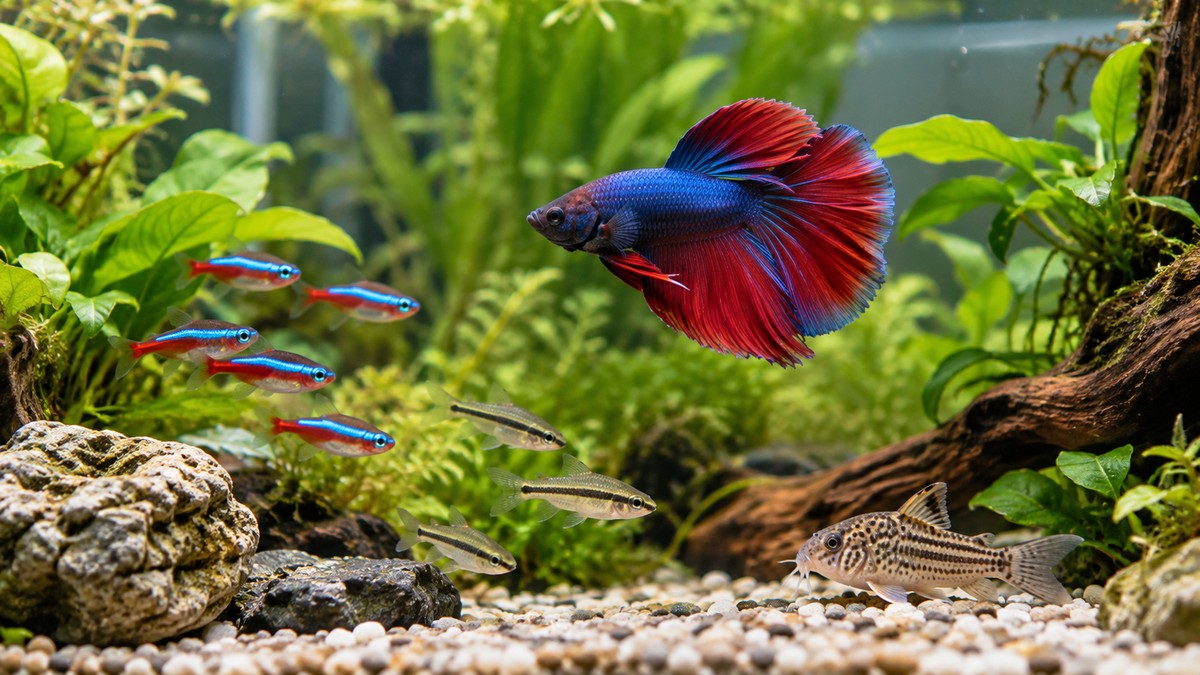
Corydoras are calm bottom feeders. They eat sinking pellets, algae wafers and leftover betta food that reaches the substrate, and they spend most of the day near the bottom while the betta patrols the upper and middle levels. That difference in level is a big part of why they get along. The guidance to follow is to keep them in a group of five or more, since they are social. A fish kept alone or in a pair is not the plan; the group size is what pushes the water volume up.
Calm tetras
Lemon, neon and glowlight tetras are named as calm choices. They are torpedo-shaped, which matters because the betta is less likely to mistake a streamlined fish for a long-finned rival. The warning that comes with them is important: kept too few or stressed, tetras may turn into little nippers. Keep a school of six or more, so the group stays busy with each other instead of picking at the betta’s fins.
Peaceful rasboras
Peaceful rasboras that stay under roughly 2 to 4 inches are another commonly named match. They like groups of seven or more and can also share a tank with dwarf freshwater shrimp. Their small, quick, schooling behavior keeps them out of the betta’s way, but, as with tetras, a larger group is calmer than a handful.
Snails and dwarf shrimp
Mystery snails are on the list of non-fish tank mates, as are dwarf freshwater shrimp. Snails take up very little space and add little waste. Shrimp are the least predictable: some bettas ignore them and others treat them as food, so plenty of plants and hiding places matter, and a larger tank gives shrimp room to get away. Live aquatic plants are also recommended as tank additions in their own right.
What to avoid
- Fin-nippers. Fish that nip, especially long-finned species, are described as a no-go. A betta’s fins are an easy target, and a stressed betta is slower to heal.
- Another male betta. Two male bettas in one tank will fight until only one remains. This is the one rule with no exceptions in the guidance.
- Fish that look like the betta. Brightly colored, long-finned fish can read as rivals. If you are weighing something unusual, ask a local fish store or a vet who treats fish before you buy it.
- Mismatched fish. If you are wondering about large, fast, or cold-water fish, see our look at whether a betta can live with goldfish for why that pairing is a poor fit.
How much tank do you need?
The same source gives two benchmarks. A single male betta can live in a 1 to 5 gallon tank, and a 10 gallon gives room for more decoration. Once you add tank mates, the rule of thumb becomes one gallon per inch of adult fish. The worked example given is one male betta of about 3 inches plus eight rasboras of about 3 inches each, which comes to a tank of 27 gallons or larger. Sizing up also applies when the betta shares space with snails or plants, because both take up room.
| Setup | What the guidance says |
|---|---|
| Single male betta | 1 to 5 gallons; 10 gallons allows extra decor |
| Betta plus a school of small fish | About one gallon per inch of adult fish |
| Betta plus eight 3-inch rasboras | 27 gallons or larger (the source’s own example) |
| Female bettas together (“sorority”) | Possible with docile tank mates; the source gives no gallon figure |
That arithmetic is why tiny desktop tanks are best for a betta alone. If you only have room for a small tank, enjoy the betta as the single centerpiece and add a snail at most.
Setting up a shared tank
- Decide the lineup before you buy. Pick the school size first (five or more corydoras, six or more tetras, seven or more rasboras) and then size the tank to the total length of fish.
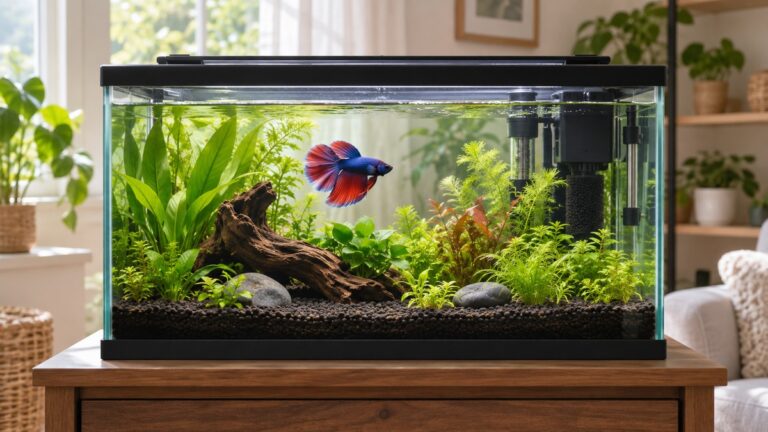
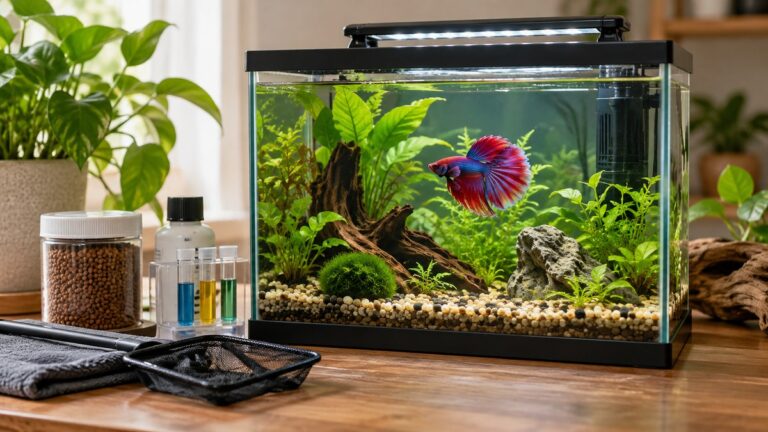
- Add decor and plants. Plastic plants, accessories and rock features break up sight lines. Live aquatic plants are recommended, and they give shrimp and shy fish cover.
- Prepare the water before the fish. A freshly set-up tank needs time to settle. If you are working out how to prepare water, read our note on bottled water for bettas before filling.
- Introduce one group at a time. Adding everything at once makes it hard to see who is causing a problem. Watch feeding and swimming behavior over the first days.
- Do not overfeed to keep the peace. More food makes more waste, and a larger tank with more fish is harder on water quality. See the signs in our guide to overfeeding a betta.
Signs the arrangement is not working
Watch for a betta that chases a particular fish every time it appears, a tank mate with ragged fins, a school that has stopped moving as a group and hides in a corner, or a bottom feeder that no longer comes out to eat. Any of these means separating the animals. Do not assume it will settle by itself. If a fish looks ill or injured, that is a question for a vet who treats fish, not something to guess at from an article.
FAQ
Can a betta live with corydoras?
Yes, corydoras are among the most commonly suggested tank mates. They are calm and stay near the bottom, but they need to be kept in a group of five or more, so the tank has to be large enough for the whole group plus the betta.
Can I keep two male bettas together?
No. Two males will fight until one is left. The guidance is unambiguous on this point, so keep one male per tank.
Can female bettas live together?
Female bettas can be kept as a group called a sorority and may mix with docile fish, but this still depends on individual temperament and on the size of the tank. A female can also visit a male’s tank for 12 to 24 hours for breeding, after which she should be removed.
Is a 5 gallon tank big enough for tank mates?
A 5 gallon tank is listed as suitable for a single male betta. With the rule of one gallon per inch of adult fish, a school of tetras or rasboras pushes the requirement well past 5 gallons. A snail may be possible; fish and shrimp need more room to get away if the betta turns aggressive.
Will my betta eat shrimp?
Some do. Dwarf freshwater shrimp are listed as possible companions, but there is no guarantee. Dense plants and hiding places help, and a bigger tank helps more.
What if my betta attacks its tank mates?
Separate them right away. Temperament varies, and a betta that will not tolerate company is simply happier alone.
Bottom line
If you want company for a betta, choose calm, short-finned groups (corydoras, calm tetras, peaceful rasboras) or non-fish options like snails, give them one gallon per inch of adult fish, add plenty of cover, and be ready to separate them. If you only have a small tank, keep the betta alone.