Best Betta Micro Pellets
As an Amazon Associate we earn from qualifying purchases. Details
“Micro” is not a standard size on a betta food label. One brand uses it in the name of a separate product line, another uses “mini,” a third says “tiny,” and only one of the listings we opened gives a pellet size in millimeters. This page sorts five betta pellet listings by what each one actually states about pellet size, shape, float or sink, ingredients and feeding directions. Everything below comes from the Amazon listings opened on 2026-10-17. We did not buy, measure or feed any of these products, so we cannot tell you how a pellet looks next to a betta’s mouth. We can tell you which listings give you a number to check and which ones leave you guessing.
Quick answer
If you want a stated pellet size, the Ocean Nutrition Fun Feeder Spirulina Micro Pellets combo is the only listing here that gives one: 0.6 to 0.9 mm. It is a sinking pellet and it ships as a bundle with baby brine shrimp, so it is a different buy from a plain betta bag. If you want floating pellets made for bettas, the Tetra TetraBetta Floating Mini Pellets (0.15 oz, pack of 2) are the smallest bag and include a sliding feeder, and the Tetra TetraBetta Plus Floating Mini Pellets (1.2 oz, pack of 2) are the larger-bag version. The Hikari Tropical Betta-BioGold Floating Pellets (0.7 oz) has the most detailed feeding directions of the five, including a size-based pellet count. The Aqueon Nutrinsect Fish-Free Betta Pellets (1.41 oz) is the pick if you want a food with no fish ingredients.
How we chose
We searched Amazon for betta micro pellets and betta pellets and kept listings that are pellets, not flakes, blocks, freeze-dried food or water treatments. A listing had to name bettas in its title or bullets, and had to say something about small, mini, tiny or micro pellets. We left out feeding rings, spoons and automatic feeders, which also show up in this search but are not food. Where the listing has a conflict, such as a title that says one thing and the bullets another, we show both. We cite no prices, star ratings or review counts because they change daily.
Comparison at a glance
| Product | Size wording in the listing | Float or sink (as listed) | Fish-based ingredients? | Pack |
|---|---|---|---|---|
| Ocean Nutrition Fun Feeder Spirulina Micro Pellets (combo) | 0.6-0.9 mm | Sinking; “medium-sinking nuggets” | Yes: krill meal, fish oil | 20 g pellets plus 20 g brine shrimp |
| Tetra TetraBetta Floating Mini Pellets | “Mini-sized” | Floating | Yes: fish meal, shrimp meal | 2 bags, 0.15 oz each |
| Tetra TetraBetta Plus Floating Mini Pellets | “Mini”; 4 to 6 pellets per serving | Floating | Ingredients shown as “See Label” | 2 packs, 1.2 oz each |
| Hikari Tropical Betta-BioGold Floating Pellets | No mm figure; directions refer to a separate Micro Pellets product for small bettas | Floating (title) | Yes: fish meal, krill meal, fish oil | 0.7 oz (20 g) |
| Aqueon Nutrinsect Fish-Free Betta Pellets | No mm figure; summary line says “tiny” | Not stated | No fishmeal, whole fish or fish oils (listing); shrimp meal and krill oil are listed | 1.41 oz |
The five products
1. Ocean Nutrition Fun Feeder Spirulina Micro Pellets and Instant Baby Brine Shrimp combo (20 g each)
Specs (from the listing, checked 2026-10-17): a bundle of two items that the listing says may ship separately: Ocean Nutrition Instant Baby Brine Shrimp (0.7 oz, 20 g, in saline solution) and San Francisco Bay Brand Fun Feeder sinking pellets (0.7 oz, 20 g). Pellet size 0.6 to 0.9 mm. The listing states 41.5 percent protein.
What the listing says: the pellets list spirulina, wheat flour, krill meal, wheat germ, soybean protein isolate, corn, brewer’s yeast, seaweed meal, tapioca and fish oil, plus Bacillus natto, Bacillus subtilis and digestive enzymes. The bullets describe them as “fit for community tanks, cichlids and bettas” and as “medium-sinking nuggets” that “soften quickly and hold their shape.” The brine shrimp jar must be refrigerated after opening and used within six weeks, per the listing.
Best for: an owner who wants a pellet with a published millimeter size and also wants to try baby brine shrimp from the same order.
Skip if: you want a floating pellet made only for bettas. The listing calls these sinking, and the combo is a general community-tank food that mentions bettas among several fish. The listing also shows no customer reviews yet.
View on Amazon (affiliate link)
2. Tetra TetraBetta Floating Mini Pellets, 0.15 oz, pack of 2
Specs (from the listing, checked 2026-10-17): model 77023; manufacturer Tetra; package 0.5 x 4 x 6.88 inches, 0.29 ounces; the size selector offers 0.15 oz in a pack of 1 or a pack of 2. Age range listed as young adult; indication listed as small breeds.
What the listing says: “mini-sized nutrient-rich floating pellets” described as “ideal for top-feeding bettas.” It includes a sliding feeder, and the feeding line reads “Feed 2 to 3 times daily, only as much as your fish can consume within several minutes.” Ingredients begin with wheat flour, fish meal, wheat gluten, potato protein and corn starch, and also list shrimp meal and algae meal.
Best for: a first small bag, or a household with one betta where a 0.15 oz bag will be used up before it ages.
Skip if: you need a size in millimeters. The listing says “mini” and nothing more precise, and the bag is small.
View on Amazon (affiliate link)
3. Tetra TetraBetta Plus Floating Mini Pellets, 1.2 oz, pack of 2
Specs (from the listing, checked 2026-10-17): model 77256; manufacturer Tetra; package 1.88 x 1.88 x 2.88 inches, 2.4 ounces; the size selector offers 1.2 oz in a pack of 1 or a pack of 2.
What the listing says: “floating pellets” described as a staple diet for betta splendens “or other top-feeding tropical fish,” with natural color enhancers and a clear-water formula. The description gives a serving as “typically 4 to 6 pellets.” The ingredient field reads “See Label,” so we cannot list ingredients from the page.
Listing conflict, shown as is: the description says to feed twice daily with one serving per feeding, while the directions field says “1-2 times day.” The directions also say to discard uneaten food after minutes. We do not pick between them. Follow the pack.
Best for: a longer supply of a floating mini pellet, with a serving count given in the description.
Skip if: you want to read ingredients before you buy. The page does not show them.
View on Amazon (affiliate link)
4. Hikari Tropical Betta-BioGold Floating Pellets, 0.7 oz (20 g)
Specs (from the listing, checked 2026-10-17): item model number 42055191104; indication “for betta fish”; package 4.8 x 2.7 x 0.6 inches, 0.88 ounces (shipping weight, not the 0.7 oz of food in the title).
What the listing says: ingredients begin with fish meal, wheat flour, soybean meal, rice bran and potato starch, and include krill meal, fish oil, spirulina, garlic, seaweed meal and astaxanthin. Red 3 is listed as an artificial color. The directions are the most detailed in this group: for bettas under 1.5 inches (nose to the base of the tail, before the fins) Hikari suggests its separate Micro Pellets product at 6 pellets twice a day; for bettas 1.5 to 1.75 inches, three Betta Bio-Gold pellets up to three times daily; then one more pellet per quarter inch of growth, never more than 5 pellets at one feeding. It also says to feed one pellet at a time and make sure each is eaten, and to remove uneaten food.
Best for: an owner who wants directions tied to the fish’s length rather than a vague “several minutes.”
Skip if: your betta is under 1.5 inches. The directions point you to a different Hikari product, not this one, and no pellet size in millimeters is given.
View on Amazon (affiliate link)
5. Aqueon Nutrinsect Fish-Free Fish Food, Betta Pellets, 1.41 oz
Specs (from the listing, checked 2026-10-17): model 100546882; manufacturer Central Garden and Pet; package 1.75 x 1.75 x 3.31 inches, 1.41 ounces; manufacturer recommended age 1 month and up. The same page offers other styles (goldfish flakes, tropical flakes and others), so confirm “Betta Pellets” is the style selected before you order.
What the listing says: a “100% fish-free formula” with no fishmeal, whole fish or fish oils, built on dried mealworms, black soldier fly larvae, bloodworms, daphnia and spirulina. The ingredient panel starts with ground peas, dried mealworms and black soldier fly larvae, and also names shrimp meal, freshwater shrimp and krill oil. The directions say to feed 2 to 3 times per day in small amounts that will be consumed within 2 minutes, and to remove uneaten food.
Listing conflict, shown as is: the bullets call it fish-free, while the ingredient panel includes shrimp meal and krill oil. Those are crustacean ingredients, not fish, and “fish-free” in the listing refers to fishmeal, whole fish and fish oils. If you avoid shellfish-derived ingredients for any reason, read the pack.
Best for: an owner who wants an insect-based pellet and a stated 2-minute feeding window.
Skip if: you need a published pellet size. The page’s summary line says “tiny,” and that is all it gives.
View on Amazon (affiliate link)
How to read “micro” on a betta food listing
A pellet that is micro to one brand is mini or tiny to another, so compare these things instead of the adjective:
- A number. Only the Ocean Nutrition combo gives millimeters in this group (0.6 to 0.9 mm). If a listing gives no number, the size words are marketing, not a measurement.
- A per-serving count. Tetra Plus says a serving is typically 4 to 6 pellets. Hikari gives 3 to 6 pellets depending on the size of the fish. A count helps you see how small the pellets are in practice.
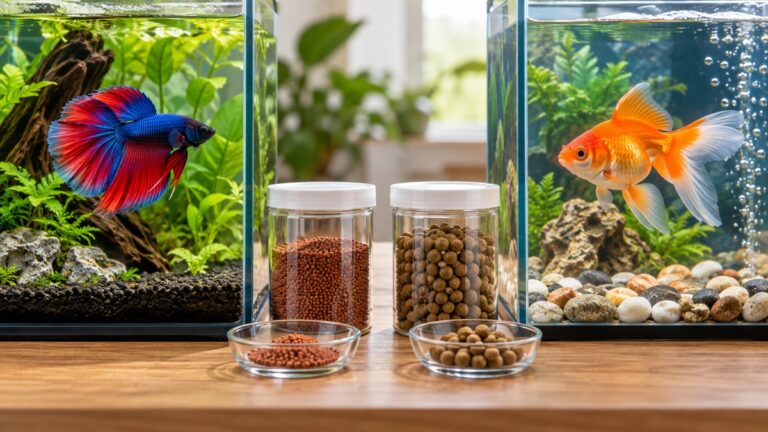
- Float or sink. Tetra and Hikari say floating. The Ocean Nutrition combo says sinking. The Nutrinsect text we read does not say.
- Whether it is a betta product or a general one. Four of the five name bettas in the title. The Ocean Nutrition listing names bettas among several fish types.
What the sources we opened say about feeding
The listings give feeding windows of “several minutes” (Tetra), 2 minutes (Aqueon) and a pellet count (Hikari). A University of Illinois College of Veterinary Medicine column by Beth Mueller, “Bettas Need More Than a Bowl” (April 15, 2019, with feeding advice attributed to Dr. Krista Keller), describes bettas as carnivores that eat insects and insect larvae and advises a “balanced pelleted or flaked food daily.” It suggests the amount the fish can eat “within 3 to 5 minutes, without any food left over,” and notes that left-over food sinks and leads to poor water quality. The UF/IFAS publication Evolution, Culture, and Care for Betta splendens (FA212, by Craig Watson, Matthew A. DiMaggio, Jeffrey E. Hill, Quenton Tuckett and Roy Yanong; no publication date shown) says hobbyists should avoid overfeeding and water fouling, and that in small or lightly filtered tanks frequent water changes keep uneaten food and ammonia from reaching harmful levels.
These sources disagree with the listings on timing: 2 minutes (Aqueon), several minutes (Tetra) and 3 to 5 minutes (Illinois). None of them gives a pellet count for a betta, so the pellet counts above are the manufacturers’ own. The sources also do not address pellet size. If you are unsure which window applies to your fish, the safe reading is the one all of them share: feed small amounts and do not leave food behind.
For example, with the Tetra Plus description of one serving (typically 4 to 6 pellets) twice a day, a betta is offered 8 to 12 pellets in a day. If pellets are still floating or sinking untouched after the first serving, the listing’s own rule (“discard any uneaten food”) means the next serving should be smaller, not the same.
Mistakes to avoid
- Buying on the word “micro.” Check for a millimeter size or a pellets-per-serving count before you decide.
- Buying the combo for a plain pellet. The Ocean Nutrition listing is a two-jar bundle that may ship separately, and the brine shrimp jar needs refrigeration after opening.
- Skipping the style selector. The Aqueon page sells several styles. Make sure “Betta Pellets” is the one in the cart.
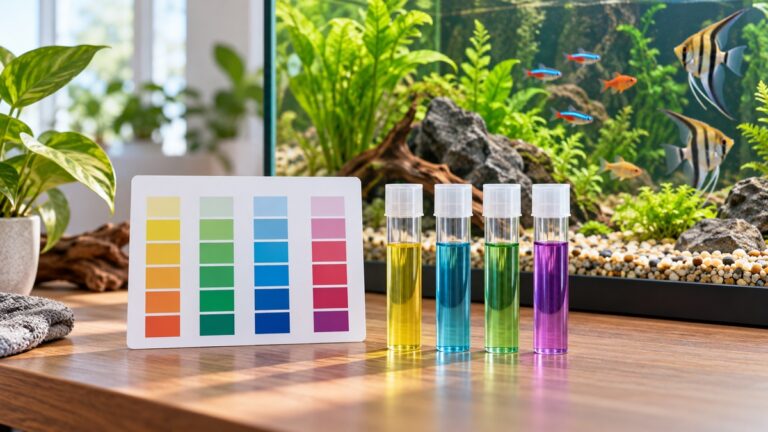
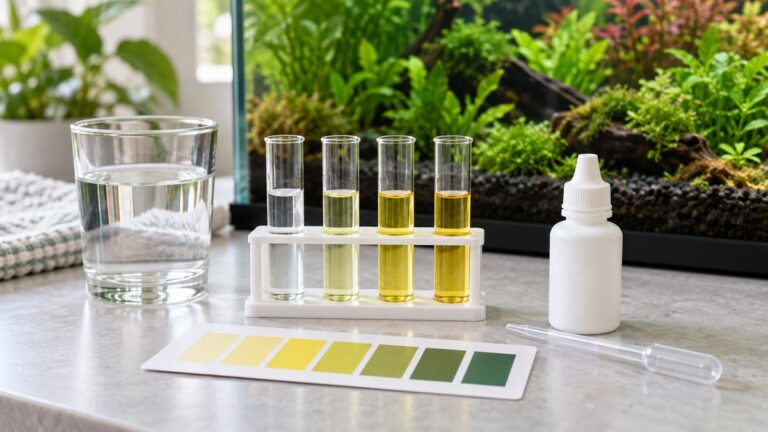
- Leaving food in the tank. Every source above says to remove or avoid leftovers. A test kit that reads ammonia shows you whether the amount is too much, and the guide to cleaning a betta tank covers removing waste.
- Ignoring the water flow. A floating pellet can be pushed around by a strong outlet; see our notes on a low-flow filter for a betta if the surface is busy.
Who should skip this
If your betta already eats its current pellets without spitting them out and you see no leftovers, the label work above is optional. If your fish refuses food altogether, a different pellet may not be the issue, and this page cannot diagnose it. The Illinois column we read does not cover refusal, so ask an aquatic veterinarian.
Frequently asked questions
Which listing gives an actual pellet size?
Only the Ocean Nutrition Fun Feeder combo: 0.6 to 0.9 mm, sinking. The Tetra, Hikari and Aqueon listings use words such as mini, floating or tiny.
Are micro pellets better than regular pellets for a betta?
The sources we opened do not compare pellet sizes, so we cannot say. The Hikari directions tie the pellet type to the fish’s length (under 1.5 inches versus 1.5 to 1.75 inches), which is the only size guidance in these listings.
How many pellets should I feed?
The listings differ. Tetra Plus says a serving is typically 4 to 6 pellets, Hikari gives 3 to 6 depending on the fish’s length, and Tetra and Aqueon give time windows instead. Use the pack you buy as the starting point and watch what is left.
Do floating pellets matter?
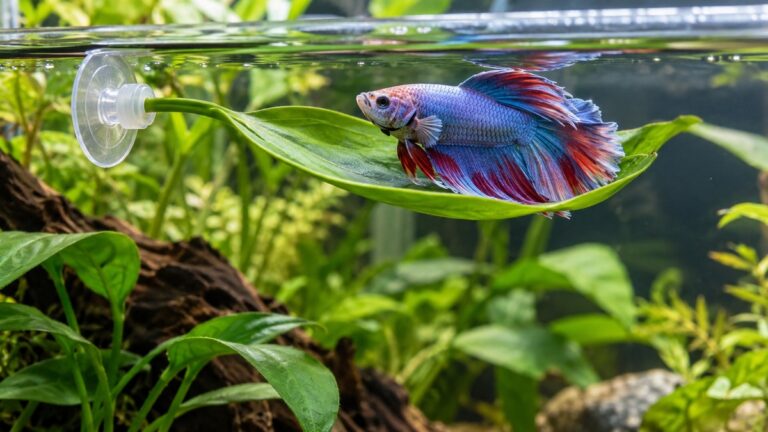
The Tetra listing calls its pellets “ideal for top-feeding bettas,” and the Hikari title says floating pellets. That is the manufacturers’ reasoning, not a finding in the university sources we opened, which do not discuss where a betta feeds. If your fish ignores a sinking pellet, a floating one is the obvious thing to try.
Is a fish-free pellet better?
We cannot say it is better. The Aqueon listing says it contains no fishmeal, whole fish or fish oils, and its panel shows insect protein, shrimp meal and krill oil. That is a difference in ingredients, not a proven difference in outcome.
Conclusion
Pick the Ocean Nutrition combo if a published 0.6 to 0.9 mm size matters to you and a sinking pellet is acceptable. Pick the Tetra 0.15 oz pack for the smallest floating bag with a feeder, or the Tetra Plus 1.2 oz pack for a longer supply. Pick Hikari if you want directions based on the fish’s length, and Aqueon Nutrinsect if you want an insect-based pellet with a 2-minute feeding window. Whatever you choose, read the pack, feed small amounts and remove what is left.