Freshwater Aquarium Water Quality Parameters
As an Amazon Associate we earn from qualifying purchases.
This is general freshwater aquarium guidance, not betta-specific. The freshwater aquarium water quality parameters that matter most are ammonia, nitrite, nitrate, pH, temperature, and chlorine or chloramine from tap water. Merck describes ammonia and nitrite as toxic to fish, nitrate as much less toxic, and pH and temperature as factors that change how harmful ammonia is. Test these before you add fish, then keep testing on a routine schedule.
Quick answer
- Test ammonia, nitrite, nitrate, pH, temperature, and chlorine or chloramine.
- Ammonia and nitrite are toxic to fish; nitrate is much less toxic.
- Treat tap water with a dechlorinator before it goes into the tank.
- Test before adding fish, then about every two weeks as part of routine maintenance.
The parameters and what they tell you
Merck states that poor water quality is the most common cause of environment-related disease in fish. Water quality should be routinely monitored for chlorine, pH, and temperature, and tested before fish are added. Each parameter below plays a different role.
- Ammonia. Ammonia is the primary chemical waste fish excrete. Merck states that prolonged ammonia exposure is highly toxic to fish.
- Nitrite. One type of bacteria consumes ammonia and produces nitrite as its waste. Merck states that nitrite is also toxic to fish in high quantities.
- Nitrate. Another type of bacteria consumes nitrite to produce nitrate. Merck states that nitrates are much less toxic, and that plants and algae can use them as food or filtration can remove them.
- pH. Merck states that the pH level of tap water varies greatly from well to well or city to city. pH also changes how toxic ammonia is, as explained below.
- Temperature. Merck states that the warmer the water becomes, the less oxygen it holds. The same page says beneficial bacteria do not function as well at lower temperatures.
- Chlorine and chloramine. Merck states that most city water is treated with chlorine or chloramine, both of which are toxic to fish and to the beneficial bacteria that grow in an aquarium.
Why pH and temperature change ammonia risk
The US EPA ammonia review separates ammonia nitrogen into two forms: the ionized form, ammonium (NH4+), and the unionized form, ammonia (NH3). An increase in pH favors the more toxic unionized form, while a decrease favors the ionized form. The same review states that the toxicity of total ammonia increases as temperature increases. It also states that ammonia is a common cause of fish kills. Concentrations are usually reported in mg/L, and the unionized fraction is derived from established formulas.
How the nitrogen cycle sets the timeline
Merck states that the beneficial bacteria that consume fish waste are common in the environment and develop on their own in four to six weeks. Commercial products may speed the process slightly, but Merck states they are not necessary for most home aquariums. Bacterial colonies grow to match the amount of waste available, which takes time. Adding too many fish at once overwhelms the bacteria, and toxins build up quickly.
Merck describes two approaches for a new aquarium. You can add fish gradually, one or possibly two at a time, or you can stock the aquarium and monitor ammonia and nitrite levels on a daily basis. Rising ammonia or nitrite can be controlled with frequent water changes. Merck also notes that gradual addition carries a risk of introducing disease if new fish are not carefully quarantined.
Tap water and treatment
Merck describes tap water as the most convenient, least expensive, and generally acceptable choice for an aquarium, although it usually needs treatment depending on its source. Dechlorinators remove both chlorine and chloramine. Merck states they are fast acting, readily available, and inexpensive, and that they should be used on any new water that goes into the aquarium.
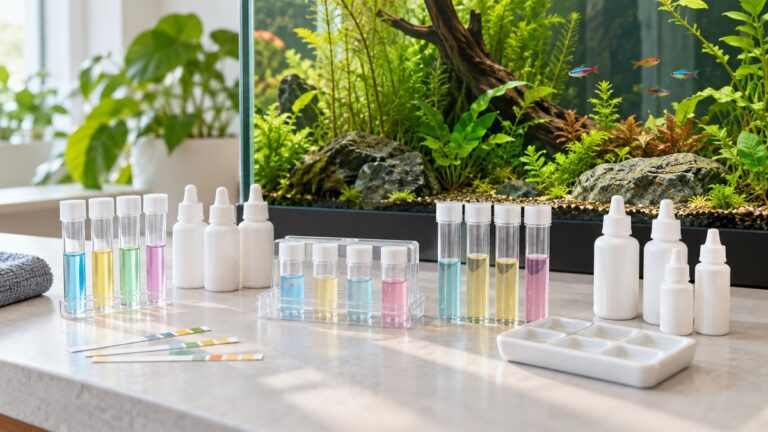
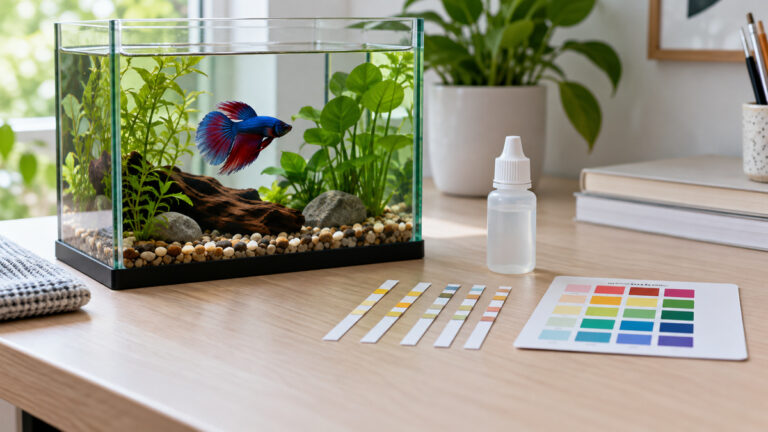
Filtered water has generally passed through activated carbon, which removes chlorine and other chemicals and minerals. Reverse-osmosis water is forced through an extremely fine membrane and a similar carbon membrane to remove even more compounds. Merck notes that tap water pH can be checked with home test kits, or a sample can be taken to a veterinarian or pet store for a fuller analysis. For more on kit choices, see our guides to ammonia test kits and pH test kits.
Stocking limits and filtration capacity
Merck gives a freshwater guideline of 1 inch of fish for every 12 square inches of surface area. The ratio should be reduced in cold water, because beneficial bacteria do not function as well at lower temperatures. Merck also states that the carrying capacity of an aquarium depends on its filtration capacity, which can be determined by testing water quality, and on the territory available to the fish.
A routine testing and maintenance schedule
The Merck routine care page lists the following schedule for a home aquarium.
- Daily: check the fish, water temperature, and equipment; feed the fish and remove uneaten food.
- Weekly: add water to replace evaporation, and remove algae from the glass.
- Every 2 weeks: change water (the amount depends on stocking level); use a water test kit to check pH, total alkalinity, ammonia, nitrate, and nitrite; check filter flow; stir the top of the substrate and remove debris.
- Every 1 to 3 months: replace the carbon in the filter, and service power filters and the air pump.
Merck also notes that small aquariums need more frequent water changes, perhaps as much as 50% per week. Any new water should be dechlorinated before it is added.
How we chose
This is general freshwater aquarium guidance, not betta-specific. We chose sources that cover water quality for pet fish in general: two Merck Veterinary Manual pages written for fish owners and a US EPA review of ammonia toxicity. We did not use retail product pages, product listings, or prices. We kept each claim to what the pages we opened actually state, and we added no numeric target ranges that those pages do not give.
What we could not verify
The pages we opened do not give the numeric ranges many hobbyists look for, such as a target pH or a safe ammonia reading for a given species. Three other Merck pages, on environmental diseases, aquatic life support system components, and water quality, returned not found, so this post does not rely on them.
What the sources do not say
- A target pH, ammonia, nitrite, or nitrate reading for any freshwater species.
- How accurate any particular test kit is, or which kit type works best.
- Specific temperature ranges for tropical or cold-water freshwater fish.
- How long a new tank takes to cycle beyond the four-to-six-week figure for bacteria to develop.
Frequently asked questions
Which water parameter should I test first?
Merck singles out ammonia, because prolonged exposure is highly toxic to fish, and it describes nitrite as toxic in high quantities. Its routine testing list includes ammonia, nitrite, nitrate, and pH, so a kit that covers those is a sensible starting point.
How often should I test aquarium water?
The Merck routine care page lists testing every two weeks as part of maintenance. When you add fish to a new aquarium, Merck says to monitor ammonia and nitrite levels on a daily basis.
Do I need to treat tap water before adding it to the tank?
Yes. Merck states that most city water is treated with chlorine or chloramine, both toxic to fish, and that dechlorinators should be used on any new water added to the aquarium.
Does pH change how dangerous ammonia is?
Yes, according to the EPA review. An increase in pH favors the more toxic unionized form of ammonia (NH3), and the review states that temperature also increases the toxicity of total ammonia.
Can commercial products speed up a new aquarium?
Merck says commercial products may speed the process slightly, but they are not necessary for most home aquariums. The bacteria develop on their own in four to six weeks.
Sources
- Merck Veterinary Manual, “Providing a Home for Fish”: https://www.merckvetmanual.com/all-other-pets/fish/providing-a-home-for-fish (opened 2026-10-24)
- Merck Veterinary Manual, “Routine Health Care of Fish”: https://www.merckvetmanual.com/all-other-pets/fish/routine-health-care-of-fish (opened 2026-10-24)
- US EPA, “Ammonia” (CADDIS Volume 2): https://www.epa.gov/caddis-vol2/caddis-volume-2-sources-stressors-responses-ammonia (opened 2026-10-24)