How to Acclimate New Aquarium Fish, Step by Step
As an Amazon Associate we earn from qualifying purchases. Details
This is general freshwater aquarium guidance, not betta-specific. Here is how to acclimate new aquarium fish: float the sealed bag on the surface of the tank for about 20 to 30 minutes so the water temperature inside the bag matches the tank. Then release the fish and keep the bag water out of the aquarium. The steps below come from veterinary guidance on fish husbandry and apply to most freshwater community species. Acclimation is only one part of bringing fish home, though. Water chemistry, quarantine and the health of the fish you buy matter just as much.
Quick answer
- Float the sealed bag in the tank for about 20 to 30 minutes so the water temperature evens out.
- Never add water from the transport bag to the aquarium.
- Release the fish with the room and tank lights off if you can, and rearrange decorations first to reduce territorial aggression.
- Quarantine new fish separately for at least 30 to 60 days when you can, because new fish can carry disease into an established tank.
Why sudden changes harm new fish
A fish that arrives from a store has been living in different water than your tank. The Merck Veterinary Manual states that adding fish directly, without a gradual equalization of temperature, can cause shock and stress. The same source says that poor water quality is the most common cause of environment-related disease in fish, so the water you add the fish to matters as much as the bag.
Ammonia is the chemical to understand first. The US EPA technical document on ammonia says that unionized ammonia is generally the form most toxic to aquatic animals. It also says that a higher pH increases the share of ammonia in the unionized form, and that toxicity increases as temperature increases. Fish excrete ammonia across their gills, and the EPA notes that unionized ammonia can readily diffuse across gill membranes. For that reason, acclimation alone does not protect a fish if the water it enters is unsafe, so the water checks described below matter as much as the bag.
Step 1: Float the bag
Place the sealed bag on the water surface and leave it there for about 20 to 30 minutes. The Merck providing-a-home page describes this as letting the temperature of the water in the bag equalize with the temperature of the water in the tank. While the bag floats, you can rearrange the decorations in the tank. That source notes that moving objects breaks up established territorial markers, which may reduce aggression toward the new arrivals.
Step 2: Release the fish and keep the bag water out
After the float, open the bag and let the fish swim out into the tank. The Merck source is direct on this point: never allow water from the transport bag to be introduced into the aquarium. Keep the fish and the bag water separate, and do not pour the bag water into the aquarium at any point in the process.
Step 3: Reduce aggression on release
Aggression toward new fish is common. The Merck page says it is especially common among freshwater cichlids and other larger freshwater species, those over about 3 inches, when space and territory are limited. Three techniques are listed. First, float the bag and rearrange decorations, as described above. Second, feed the fish already in the tank at the same time you release the new fish, which can distract aggressive residents. Third, release the new fish in the dark. When the tank light and room lights are off, most fish move into a resting state within a few minutes. Float the bag until the temperature has equalized, release the fish, then turn the lights back on after several minutes so you can feed or rearrange the decorations again.
If aggression continues, the same source says a clear plastic divider can separate the fish. If that is not practical and other options have failed, the aggressive fish or the new fish may need to be removed.
Step 4: Set up quarantine when you can
The Merck routine-health-care page states that valuable pet fish should be quarantined for at least 30 to 60 days before joining the general population. A quarantine tank can be set up for new fish or for fish that show signs of disease. Isolation also makes it easier to observe a fish and to treat it. Quarantine tanks should be fully broken down and disinfected between uses. Once quarantine starts, no new fish can be added to it, or the quarantine period must restart.
Gradual addition is also a water-quality tool. The Merck providing-a-home page explains that adding one or two fish at a time over several weeks lets the bacterial population grow to match the waste. The same page warns of the trade-off: each time new fish join an established aquarium there is a risk of introducing disease, and that risk is significant when new fish have not been carefully quarantined.
Before the fish arrive: check the tank
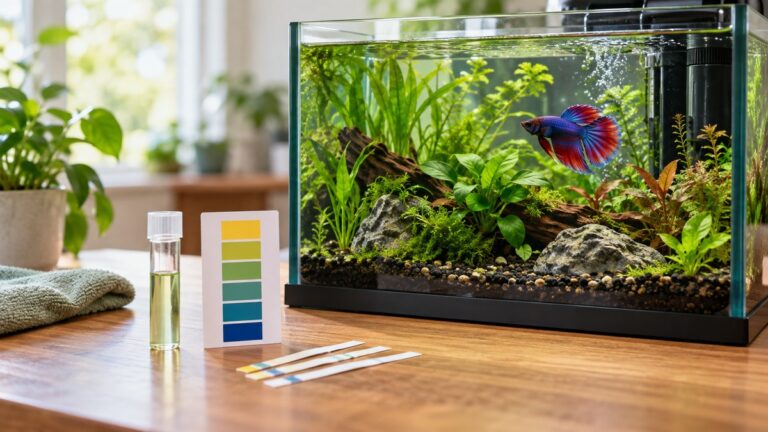
The Merck selection-of-fish page says it is very important to make sure your aquarium is properly set up and functioning for a while before you add fish. The providing-a-home page says water quality should be tested before fish are added, and names chlorine, pH, temperature and salinity as the factors to monitor. Most city tap water is treated with chlorine or chloramine, both of which the Merck source describes as toxic to fish and to the beneficial bacteria. A dechlorinator should treat any new water that goes into the aquarium.
The same page says beneficial bacteria develop on their own in about 4 to 6 weeks in a home aquarium. Adding too many fish at once overwhelms them, and toxins can build up quickly. For a new tank, the source suggests either adding fish slowly or stocking the tank and monitoring ammonia and nitrite levels every day, then using frequent water changes if those levels rise. If you are still deciding on equipment before the fish arrive, you can read about whether a heater is needed and about filter choices for a 10 gallon tank. Those posts are betta-focused, so check the general points above before applying them to other species.
Recognizing a fish that should not be added
The Merck selection page describes healthy fish as having smooth, unblemished scales, fins and skin, with intact fins, bright eyes, and normal, steady swimming. Diseased fish often swim erratically, circle or drift around the tank, or appear listless. The routine-health-care page lists general signs of illness that include lethargy, not eating, slow or rapid breathing, loss of color, spots, ulcers, loss of scales, swelling, weight loss, and floating or swimming in unusual positions.
If a fish you are considering shows any of these signs, do not add it to your tank. Ask an experienced fish keeper or an aquatic veterinarian about the fish and its treatment. This guide does not give dosing or treatment instructions, because the sources do not cover them for home aquariums.
How we chose
This is general freshwater aquarium guidance, not betta-specific. The sources were chosen because they are written by veterinary and government authorities rather than by sellers, and because their steps apply to freshwater fish in general. Retail product pages, prices, ratings and review counts were not used as sources. The Merck Veterinary Manual pages cover fish husbandry, quarantine, selection and water quality. The EPA document covers ammonia toxicity, which is the water-chemistry risk behind most acclimation problems. Every step above is attributed to the page it came from, and the sources were opened on 2026-10-24.
What we could not verify
The sources we opened do not cover every detail a fish keeper might want. The list below is the honest gap.
What the sources do not say
- The sources do not give a target temperature or a temperature range for any particular species.
- They do not give a pH or hardness target for acclimation, and the EPA document describes toxicity rather than a safe number for home aquariums.
- They do not give a different float time for different species, so the 20 to 30 minute figure is the one stated for general use.
- They do not describe medication, dosing or treatment for specific diseases in home tanks.
Frequently asked questions
How long should I float a new fish bag?
The Merck providing-a-home page describes floating the bag for about 20 to 30 minutes so the water temperature inside the bag matches the tank. It does not give a different time for each species.
Should I pour the water from the bag into my tank?
No. The Merck source says water from the transport bag should never be introduced into the aquarium.
Can I add several fish at once to a new tank?
The source recommends adding fish slowly, one or two at a time, because adding too many at once overwhelms the bacteria that process waste. It also notes that gradual addition carries a risk of introducing disease unless new fish are quarantined.
How long should a quarantine tank be used?
For valuable pet fish, the Merck routine-health-care page gives at least 30 to 60 days. Once quarantine starts, no new fish should be added, or the period must restart.
When should I contact a veterinarian about a sick fish?
Contact an experienced fish keeper or an aquatic veterinarian when a fish shows signs such as lethargy, not eating, spots, or floating in unusual positions. This guide does not give treatment or dosing instructions.
Sources
- Merck Veterinary Manual, “Providing a Home for Fish”: https://www.merckvetmanual.com/all-other-pets/fish/providing-a-home-for-fish (opened 2026-10-24)
- Merck Veterinary Manual, “Routine Health Care of Fish”: https://www.merckvetmanual.com/all-other-pets/fish/routine-health-care-of-fish (opened 2026-10-24)
- Merck Veterinary Manual, “Selection of Fish”: https://www.merckvetmanual.com/all-other-pets/fish/selection-of-fish (opened 2026-10-24)
- US EPA, CADDIS Volume 2, “Ammonia”: https://www.epa.gov/caddis-vol2/caddis-volume-2-sources-stressors-and-responses-ammonia (opened 2026-10-24)