Do Corydoras Need a Bubbler? What Sources Say
As an Amazon Associate, this site earns from qualifying purchases. This guide contains no product links.
The person typing “do corydoras need a bubbler” wants a direct answer and the reason behind it. The sources checked for this guide do not say that a bubbler is required for corydoras. They do say that corydoras can breathe air at the surface, that they live near the bottom, and that warm water holds less oxygen. Those facts point to a practical answer: a bubbler is not a rule, but oxygen and water movement are worth checking in any tank with corydoras.
Quick answer
- The sources checked do not state that corydoras need a bubbler. They do not say a bubbler is required in any tank.
- The UF/IFAS publication says “Corydoras are capable of breathing air,” which is a reason corydoras can cope with a lower-oxygen moment, but not a reason to keep oxygen low.
- Merck says “The warmer the water becomes, the less oxygen it will hold,” so warm tanks need more attention to oxygen.
- Check oxygen through the fish’s behavior and the tank’s conditions, and speak with an aquatic specialist if corydoras gather at the surface.
What corydoras do in the tank
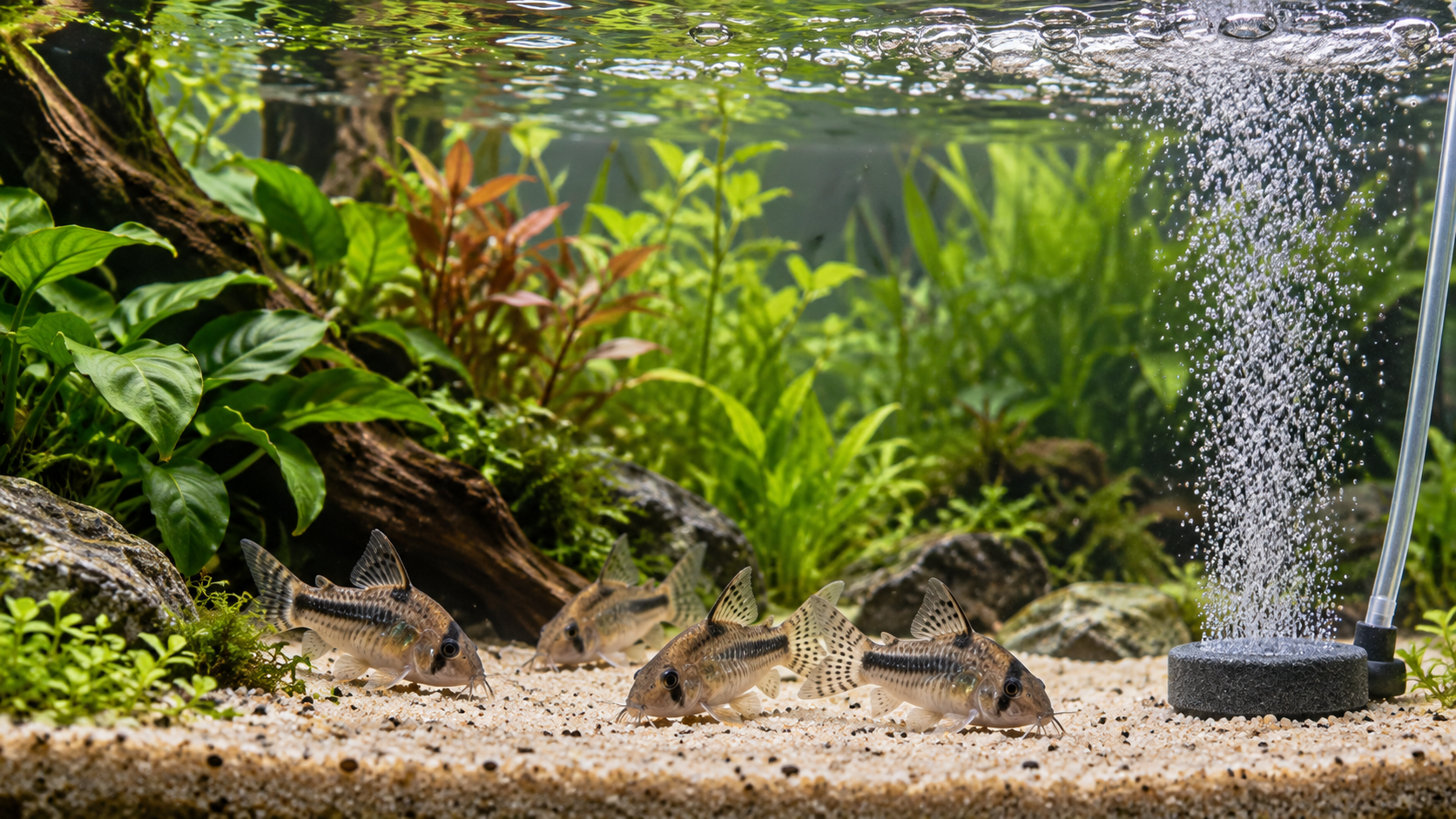
Corydoras are small South American catfish that spend most of their time on the bottom. The UF/IFAS publication on freshwater ornamental fish describes them this way: “Many important species are in the genus Corydoras (Figure 10), a very popular group. These are mostly small species (< 100 mm or 4 in).” The same publication says the fish feed on the bottom: “These catfish consume worms, insect larvae, and detritus (organic material) from the bottom.”
Corydoras also have a breathing habit that matters for the bubbler question. The UF/IFAS text says “Corydoras are capable of breathing air. A dash is made to the surface by these normally bottom-dwelling fish. At the surface, a bubble is gulped and subsequently oxygen is extracted from the air bubble in the gut.” In plain terms, the fish swim up, take a gulp of air, and return to the bottom. That is a normal behavior the source describes, not a sign of trouble by itself.
The air-gulping habit does not answer whether a bubbler is needed. The source describes what the fish can do, not what a tank must provide. A fish that can breathe air still depends on water that is in good condition, and the sources do not say how much surface movement a corydoras tank needs.
Oxygen, temperature, and the tank
Oxygen in water depends on temperature. The Merck chapter on providing a home for fish says that direct sunlight can warm the water, and “The warmer the water becomes, the less oxygen it will hold.” A tank that is warm, crowded, or heavily fed uses up oxygen faster than a cool, lightly stocked tank. The chapter does not give a corydoras-specific oxygen level.
The UF/IFAS fish health publication adds a warning about low oxygen: “Low oxygen is a frequent cause of fish mortality in ponds, especially in the summer when the water is warmer.” That example comes from ponds, not home aquariums, but the link between warm water and low oxygen is the same. Summer heat and a warm room are good times to check the tank.
Temperature itself also matters. The Merck description chapter says “Fish are cold-blooded, which means their body temperature is close to and fluctuates with the temperature of their environment.” A steady, appropriate temperature keeps the fish’s metabolism more predictable. The sources checked do not give a corydoras temperature range, so this guide does not give one.
Filtration and surface movement
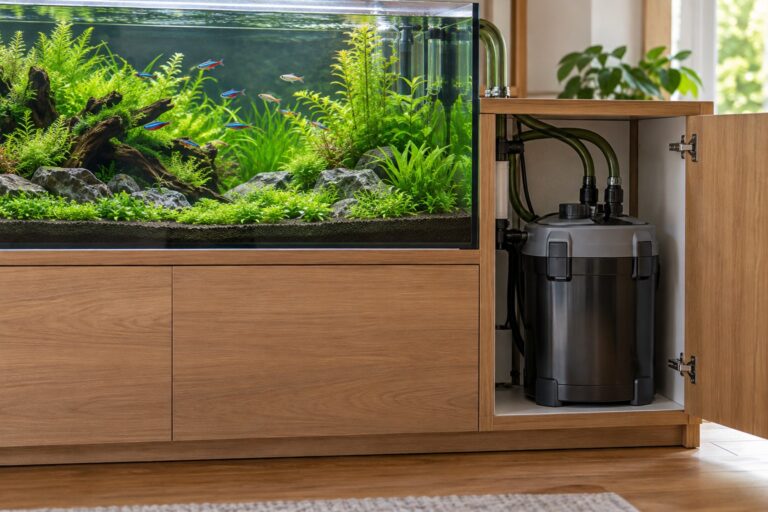
Filtration removes waste and helps keep the water clean, and clean water is part of oxygen management. The Merck chapter says “Filtration is important to remove waste and particulate matter.” Waste that rots in the substrate uses oxygen and adds ammonia, so a tank with good filtration and regular maintenance is less likely to run low on oxygen.
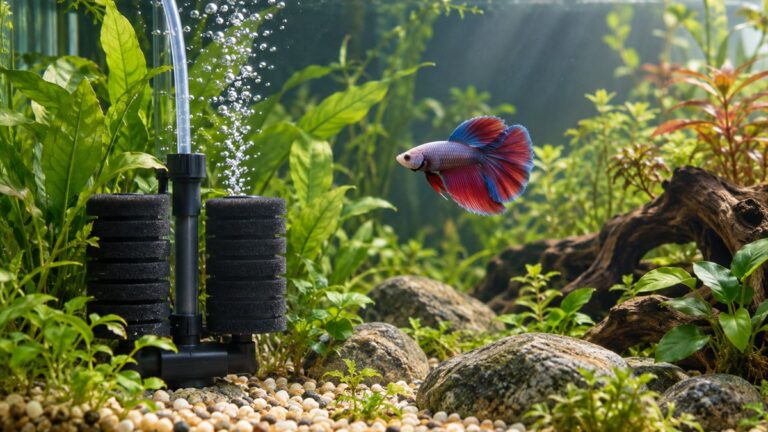
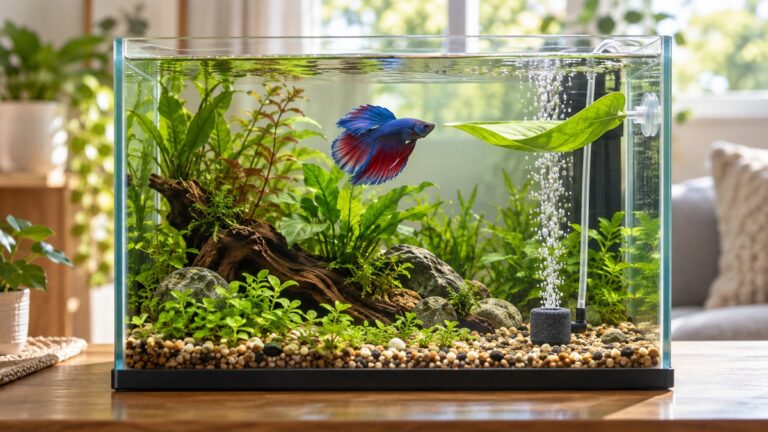
Surface movement is different from filtration. A filter outlet that breaks the surface moves water and can add some oxygen. A bubbler does the same job in a different way. The sources checked do not compare bubblers and filter outlets for corydoras, and they do not say which one a tank needs. The choice is a general one, not a rule from these sources.
For general guidance, pick the option that suits the tank. A gentle outlet is easier on bottom fish than a strong jet, and a bubbler can be set low to avoid pushing sand around. The sources do not describe these setups, so treat this as practical general advice rather than a sourced rule.
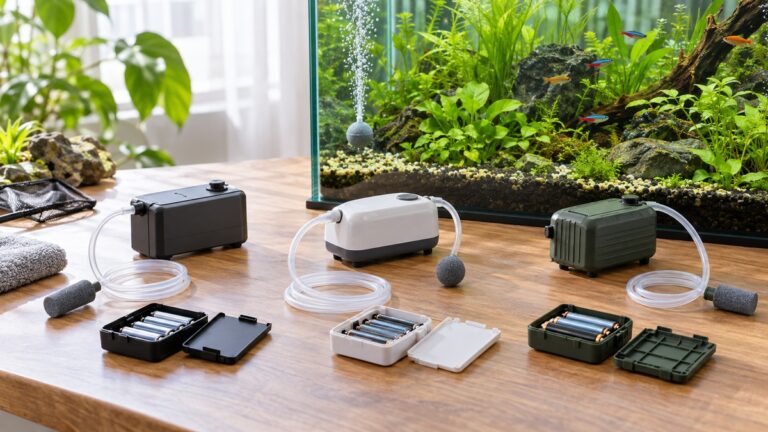
If a bubbler is added to a corydoras tank, check that the air pump and the tubing are safe to run. The sources checked do not discuss electrical safety for aquarium pumps. For electrical questions, follow the manufacturer’s instructions and the product label. A comparison of battery and mains air options is in the battery operated aerator guide.
| Situation | What the sources support | What the sources do not say |
|---|---|---|
| Corydoras gulp air at the surface | The fish can breathe air, per UF/IFAS | Whether surface gulping means the tank needs more oxygen |
| Warm tank in summer | Warm water holds less oxygen, per Merck | A safe oxygen figure for corydoras |
| Heavy waste or detritus | Filtration removes waste, per Merck | How much filtration a corydoras tank needs |
| Bubbler versus outlet | No source compares them for corydoras | Which one a tank should use |
What to check before buying equipment
Start with the tank. Look at the temperature, how many fish are in the tank, and how much food is left uneaten. Merck says that “Overfeeding can lead to health problems as well as a dirty tank,” so a clean, lightly fed tank is the first step. Next, watch the fish. Corydoras that rest near the bottom, eat, and move normally are not showing a surface problem. Corydoras that cluster at the top, gasp, or hang listlessly deserve a closer look.
The UF/IFAS fish health publication lists signs of trouble that matter here. It says “Fish that are observed hanging listlessly in shallow water, gasping at the surface, or rubbing against objects indicate something may be wrong.” A fish gulping at the surface can be normal for corydoras, but repeated surface gasping with other signs is a reason to test the water and call a specialist.
Test the water before adding equipment. The water test shows whether ammonia, nitrite, or pH is the bigger problem. A bubbler will not fix a tank with high ammonia. The sources checked say that “Poor water quality is the most common cause of environmental-related diseases in fish,” so the test comes before the purchase. A comparison of test options is in the water quality test strips guide.
General guidance outside the sources: a bubbler is one tool among several. Water changes, a clean filter, a steady temperature, and a light feeding routine often matter as much. If the tank is well run and the fish look healthy, the sources do not show that a bubbler is needed.
How we chose
The sources in this guide were chosen because they are a university extension publication and a veterinary reference, not sellers. They were opened with curl on 2026-10-24 and read as text. The question has no product angle, so no bubbler is recommended here. The points above follow the order the sources give them: the fish’s breathing habit, oxygen and temperature, filtration, then what to check before buying.
What we could not verify
The main question has no answer in the sources checked. The gaps are listed below so that the guide is not read as a verdict.
What the sources do not say
- The sources do not say that corydoras need a bubbler, and they do not say that a bubbler is harmful.
- They do not give a corydoras-specific dissolved oxygen level.
- They do not compare bubblers and filter outlets for corydoras.
- They do not give a tank size or flow rate for corydoras aeration.
Frequently asked questions
Do corydoras need a bubbler to survive?
The sources checked do not say that corydoras need a bubbler to survive. They show that corydoras can breathe air at the surface, which is a reason the fish can cope with some low-oxygen moments. That is not a substitute for a tank that is well run.
Why do corydoras swim to the top?
The UF/IFAS publication says corydoras make “A dash … to the surface,” gulp a bubble, and extract oxygen from it. That is normal behavior for the fish. Repeated gasping, or gasping with other signs of illness, is different and should be checked.
Does a bubbler help corydoras in a warm tank?
Warm water holds less oxygen, according to Merck. A bubbler or filter outlet can add surface movement, but the sources do not say that aeration alone solves a warm tank. Check the temperature and the water quality too.
Can a bubbler harm corydoras?
The sources checked do not discuss harm from bubblers in corydoras. A strong jet can push sand and disturb bottom fish, which is general guidance, so set any outlet so the bottom stays calm.
What should be checked before buying an air pump?
Test ammonia, nitrite, and pH first. The sources say poor water quality is a common cause of disease, and an air pump does not replace water tests. Read the pump label for power and safety instructions.
Sources
- UF/IFAS Extension, “Freshwater Ornamental Fish Commonly Cultured in Florida,” https://edis.ifas.ufl.edu/publication/FA054 (opened 2026-10-24)
- UF/IFAS Extension, “Introduction to Fish Health Management,” https://edis.ifas.ufl.edu/publication/fa004 (opened 2026-10-24)
- Merck Veterinary Manual, “Providing a Home for Fish,” https://www.merckvetmanual.com/all-other-pets/fish/providing-a-home-for-fish (opened 2026-10-24)
- Merck Veterinary Manual, “Disorders and Diseases of Fish,” https://www.merckvetmanual.com/all-other-pets/fish/disorders-and-diseases-of-fish (opened 2026-10-24)