Feeding Young and Small Freshwater Fish
As an Amazon Associate we earn from qualifying purchases.
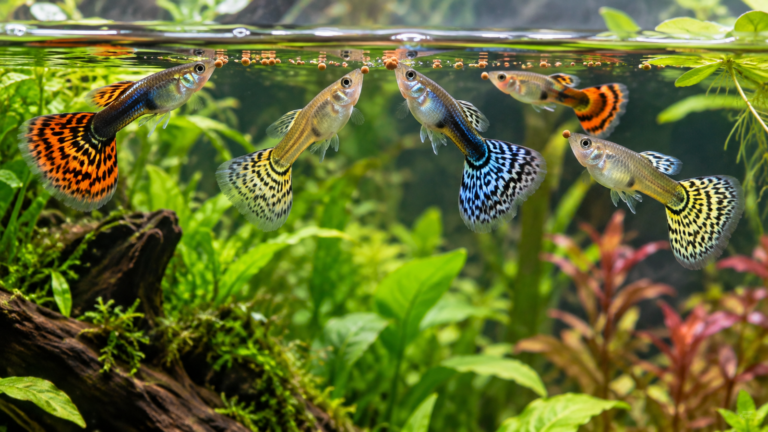
Feeding young and small freshwater fish works best with small meals, food sized to the fish’s mouth, and frequent checks of leftovers. The University of Florida nutrition guide says that “Rearing of young stock does require small meals fed more frequently.” Many young fish also need live or very fine food at first. The sources do not give a per-fish amount for any species, so this guide does not supply one.
Quick answer
- Feed small meals, more often. The nutrition guide states that “Rearing of young stock does require small meals fed more frequently.”
- Match food to mouth size. Many fish “require live food when they are hatched because their mouth parts are so small.”
- Use flakes or fine food for small fish when it fits their size. The nutrition guide says flakes have “the advantage of being soft enough for very small fish to consume.”
- Remove uneaten food. Merck’s routine care list says to “Feed fish and remove any uneaten food.”
Why young fish need different food
A young fish has a small mouth and a fast growth rate, so its food has to be small enough to eat and rich enough to grow on. The nutrition guide notes that “Foods for fry and fingerlings frequently exceed 50% crude protein.” It also says that “As growth rate decreases and fish age, protein levels in diets are decreased accordingly.” That is a general pattern, not a feeding chart for any one species, and the guide does not give a protein target for a home aquarium.
Size is the main limit. The nutrition guide explains that “For larger fish, a very small pellet may be unacceptable and the mouth gape of smaller fish may not allow consumption of a larger pellet.” The sources treat pellet size as a limit on what a fish can eat, so the size of the food has to suit the fish.
First foods for hatchlings
Newly hatched fish usually need the smallest food. The nutrition guide lists some of the smallest live feeds used in larval rearing: “Rotifers, copepods and ciliates are some of the smallest live feeds that are routinely used for larval rearing.” It adds that “Newly hatched brine shrimp are larger, but still quite small, and are commonly used in fish hatcheries.”
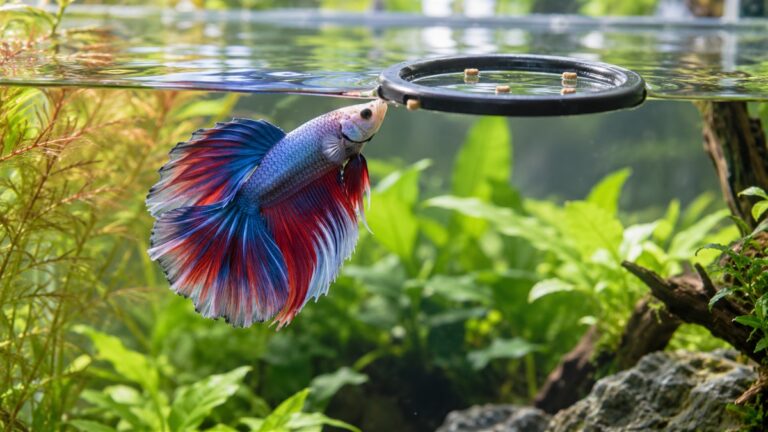
The betta source describes a similar path. The University of Florida betta guide says that larval bettas “are initially offered small live feed organisms such as brine shrimp nauplii” and that they later move to commercial feeds. The same guide notes that the first feed is chosen because it is “the appropriate size for ingestion by the fish.” Those are betta facts. They are not a confirmed feeding plan for other species.
Live food carries its own risks. Merck warns that “Wild-harvested live foods may harbor parasites or other harmful organisms that can cause disease in fish.” Merck advises that “You should purchase any live foods from a reputable source.”
Moving to flakes and small pellets
Once a fish is large enough, flakes and small pellets are easier to manage. The betta guide says the fish are “transitioned to commercially available flake or pelleted feeds as they grow.” The nutrition guide adds that flakes “have been used extensively in the ornamental fish industry for many years and have the advantage of being soft enough for very small fish to consume.”
Check the pellet against the mouth. The nutrition guide’s point is that a large pellet may not be consumed by a small fish, so choose a size the fish can take in.
Store the food well. Merck states that “Dry food should be kept in a cool, dry place and used or replaced every 2 months.” Improper storage is also named as a common cause of nutritional imbalance.
How often and how much
Frequency and amount are the two questions most owners ask. For adult betta portions, see how much and how often to feed a betta fish. The nutrition guide says that “One feeding per day is plenty for most pet animals,” and then adds that rearing young stock “does require small meals fed more frequently.” Read together, the sources set adults and young fish apart: adults can often be fed once a day, while young fish need several small meals.
No source opened today gives a number of meals per day for newborn mollies or any other species. No source gives a grams-per-fish figure either. Merck states that “Feeding methods and rates vary with species, age, system, and water temperature.” That sentence is the reason this guide does not give one number for all fish.
Leftovers are the clearest signal. The ammonia guide says that “Overfeeding is a major cause of high ammonia concentrations.” If food sits uneaten, cut the next portion. Leftover food is the first thing to remove when a fish is young or the tank is small, as the betta guide also advises.
Water quality with young fish
The betta guide warns about feeding in small volumes. It says that “avoiding overfeeding and water fouling” are “very important considerations,” and that small aquariums need “frequent water changes so that uneaten feed as well as ammonia and other dissolved wastes are not allowed to reach harmful levels.” These points apply to young fish in any small container, because the same waste problem occurs.
Test the water when a fish seems off its food. The routine care list includes “ammonia levels, nitrate and nitrite levels” among regular tests.
How we chose
This guide uses university extension pages and a veterinary reference. They describe feeding stages and food sizes, and they do not sell food. Each page was opened on 2026-10-25 by curl, and every quoted sentence was checked against the text. No retail page, product listing, or review was used for facts. No product is ranked here.
What we could not verify
The sources do not cover every species in the title. In particular, no page opened today describes the first food, portion size, or feeding frequency for newborn mollies, and no page describes fry diets for danios or gouramis. The gaps are listed below.
What the sources do not say
- Newborn mollies: no source opened gives a first food, a portion size, or a feeding interval.
- Per-fish amounts: no source gives a quantity of food per fish or per gallon.
- Feeding times: no source gives the number of hours between meals for young fish.
- Danio and gourami fry: no source opened describes their first foods.
- Pellet sizes: no source gives pellet dimensions that fit a given fry size.
- Live food schedules: how often to offer live food, and for how long, is not stated.
Frequently asked questions
What do newborn molly fish eat first?
The sources opened today do not name a first food for newborn mollies. The general sources say many newly hatched fish need very small live food, such as rotifers or brine shrimp, because their mouths are very small. Confirm the specific food with a fish keeper or fish health professional who knows mollies. Fry feeding for other livebearers is covered in what to feed platy fry, and can guppy fry eat flakes covers flakes for a related species.
How much fish food per fish should I give?
No source opened gives an amount per fish. The sources do say to feed small meals, to avoid overfeeding, and to remove uneaten food. The sources do not give a time window for eating, so adjust portions by checking whether food is left over.
How often should young fish be fed?
The nutrition guide says rearing young stock requires small meals fed more frequently. It does not give a fixed number of meals for a home aquarium.
Can young fish eat flakes?
The nutrition guide says flakes are soft enough for very small fish to consume. Whether a particular fish is ready for flakes depends on its size and mouth, which the sources do not measure for any species.
Is live food safe for fry?
Merck warns that wild-harvested live foods may carry parasites or other harmful organisms. Buy live food from a reputable source, and see a veterinarian or fish health professional if fish become unwell after feeding.
Sources
- University of Florida IFAS Extension, “Fish Nutrition” (VM114/FA096), https://edis.ifas.ufl.edu/publication/FA096, opened 2026-10-25.
- University of Florida IFAS Extension, “Evolution, Culture, and Care for Betta splendens” (FA212), https://edis.ifas.ufl.edu/publication/FA212, opened 2026-10-25.
- University of Florida IFAS Extension, “Ammonia in Aquatic Systems” (FA031), https://edis.ifas.ufl.edu/publication/FA031, opened 2026-10-25.
- Merck Veterinary Manual, “Routine Health Care of Fish,” https://www.merckvetmanual.com/all-other-pets/fish/routine-health-care-of-fish, opened 2026-10-25.
- Merck Veterinary Manual, “Disorders and Diseases of Fish,” https://www.merckvetmanual.com/all-other-pets/fish/disorders-and-diseases-of-fish, opened 2026-10-25.