Betta Behavior, Training, Enrichment and Night Vision
As an Amazon Associate we earn from qualifying purchases.
Betta behaviour training enrichment and night vision are four separate questions, and the sources we opened answer only some of them. FishBase describes the species as an “Air breather and bubble nest builder,” and notes that males fight each other. The Merck Veterinary Manual says fish need a day and night cycle and that many fish see colors. No source we opened describes a training method for bettas, and none says whether a betta can see in the dark. Enrichment appears only in general fish terms.
Quick answer
- Training: the sources we opened give no training method for bettas, so this guide does not offer one.
- Enrichment: Merck links varied food to better behavior and lower stress, and says decor that gives territory can matter for some fish. Both points are general, not about bettas.
- Other fish: the sources describe a wild betta diet of insects and zooplankton. None says bettas eat other fish.
- Night vision: Merck says many fish see colors and need a day and night cycle. It does not say how well bettas see in low light.
How we chose
This guide merges four questions: how to train a betta, betta enrichment, whether bettas eat other fish, and whether bettas can see in the dark. We chose sources that are not retail pages: the FishBase species summary for Betta splendens, two sections of the Merck Veterinary Manual’s fish guide, and a University of Florida IFAS publication on ornamental fish culture. We used only statements that appear in those pages when we opened them on 2026-10-25. We did not use product listings, forum posts, prices or reviews. Where a source speaks about fish in general or about another species, the text says so.
How to train a betta fish
The sources we opened do not describe how to train a betta. The closest FishBase statement is a note that the species has been “Used in behavioral studies.” The page does not say which studies, what they tested, or what they found, and it does not describe a training method. Without a source for a method, this guide does not suggest particular cues, rewards or routines.
Merck’s general advice on feeding relates to behavior indirectly. It says: “Quality foods and variety also improve coloration and behavior and reduce stress levels.” That is a statement about fish in general, not a training guide. Readers who want training steps need a source written for bettas that names its method and its evidence.
Betta fish enrichment
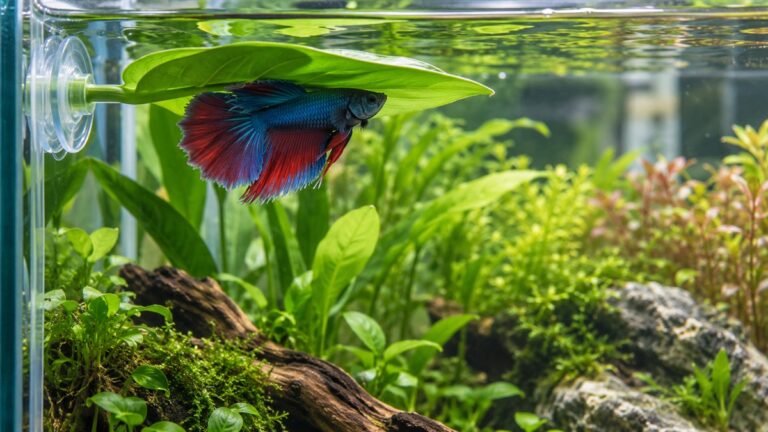
The sources give general enrichment principles, not a list of betta toys or features. Merck’s section on decor says that decorative objects “are not only aesthetically pleasing but also help ‘divide’ the aquarium and allow fish to have their own territory.” The same passage says this “can be very important for certain fish, such as freshwater cichlids and many saltwater reef fish.” Bettas are not named there.
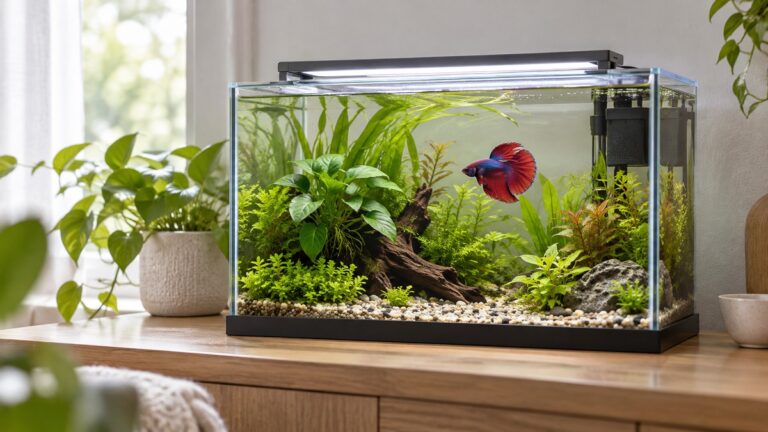
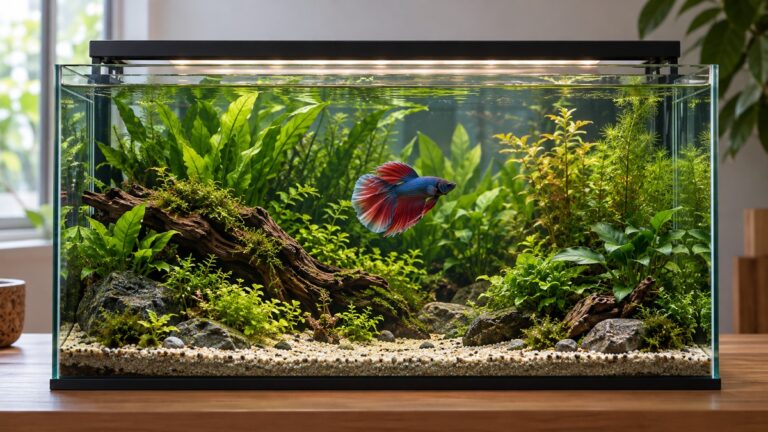
FishBase gives habitat detail that may inform a setup. The species is recorded as occurring “in standing waters of floodplains, canals, rice paddies.” FishBase also says the male “Builds bubble-nest which is guarded by male,” which means a male betta has a nesting behavior. The sources do not say how to build an enrichment plan around these behaviors. For a decor example, see best betta rock cave, though that guide is separate from the sources here.
Do betta fish eat other fish
The sources we opened do not say that bettas eat other fish. FishBase lists the species’ natural food as small animals: it says the species “Feed on zooplankton, mosquito and other insect larvae.” UF/IFAS publication FA054 describes labyrinth fish, the group bettas belong to, in similar terms: “The natural diet of labyrinth fish usually consists of insects and crustaceans, although for some species, such as the kissing gourami, algae or other plant material are a significant part of their diet in the wild.”
FA054 does mention fish-eating in other families. It says of cichlids: “Still others are fast predators of other fish.” That describes cichlids, not bettas, and the text does not extend it to labyrinth fish. Merck’s section on adding new fish says that residents “sometimes respond aggressively, chasing or attacking the new fish,” but it describes aggression among fish in a shared tank, not predation. For a question about aggression toward tank mates, see are female bettas aggressive to other fish.
Can betta fish see in the dark
The sources do not answer this directly for bettas. Merck’s description of fish senses says: “Many fish have excellent vision and can see colors.” That sentence is about many fish, not bettas, and it does not describe night vision. Merck also gives a light rule for fish in general: “Fish need a day/night cycle for optimal health. Leaving the lights on 24 hours a day, 7 days a week stresses fish, leaving them more susceptible to disease.”
Merck adds a related observation about when fish settle. In its guide to adding new fish, it says that when the tank light and room lights are turned off, most fish go into a rest mode within a few minutes. That is a general description of fish, not a test of betta vision. Nothing in the sources says whether a betta can find food or move safely in low light. For a separate question about lights at night, see betta fish light at night.
What we could not verify
The sources cover fish in general and only touch bettas for habitat, diet and male aggression. The list below states, for each topic, what the sources we opened do not say.
What the sources do not say
- Training: no source we opened describes a training method, cue, reward or routine for bettas.
- Enrichment: no source we opened lists betta toys, mirrors, floating structures or other enrichment items, or says which ones are safe.
- Other fish: no source we opened says bettas eat other fish, or that they do not.
- Night vision: no source we opened says how well bettas see in dim light or complete darkness.
- Behavior studies: FishBase says the species was used in behavioral studies, but the page does not give the studies’ methods or results.
- Tank size for enrichment: none of the sources we opened gives a minimum tank volume for a betta.
Frequently asked questions
Can you train a betta fish to do tricks?
The sources we opened do not describe any betta training method, so they cannot confirm whether tricks are possible. FishBase notes that the species has been used in behavioral studies, but gives no training details.
What counts as enrichment for a betta?
The sources offer general principles: Merck links variety in food to better behavior and lower stress, and says decor that gives territory can matter for some fish. None of the sources names a specific betta enrichment item.
Do betta fish eat other fish?
The sources we opened do not say that bettas eat other fish. FishBase and UF/IFAS describe a natural diet of insects, larvae, zooplankton and crustaceans. Aggression toward tank mates is a separate question that the sources describe only in general terms.
Can betta fish see in the dark?
The sources do not say. Merck says many fish see colors, which is not a betta-specific finding, and it says fish need a day and night cycle. Whether a betta sees well in dim light is not addressed by any source we opened.
Do betta fish need a light at night?
Merck says fish need a day and night cycle, and that leaving lights on around the clock stresses fish. The source is about fish in general. It does not say whether a betta needs any light at night.
Sources
- FishBase, Betta splendens (Siamese fighting fish) species summary, https://www.fishbase.se/summary/Betta-splendens.html (opened 2026-10-25)
- Merck Veterinary Manual, “Providing a Home for Fish,” https://www.merckvetmanual.com/all-other-pets/fish/providing-a-home-for-fish (opened 2026-10-25)
- Merck Veterinary Manual, “Description and Physical Characteristics of Fish,” https://www.merckvetmanual.com/all-other-pets/fish/description-and-physical-characteristics-of-fish (opened 2026-10-25)
- UF/IFAS EDIS, FA054 “Freshwater Ornamental Fish Commonly Cultured in Florida,” https://edis.ifas.ufl.edu/publication/FA054 (opened 2026-10-25)