Caring for Betta Fish: A Beginner Setup Guide
As an Amazon Associate we earn from qualifying purchases.
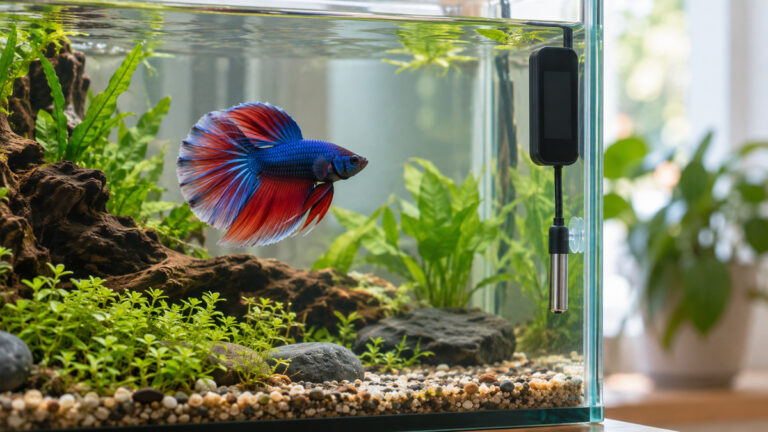
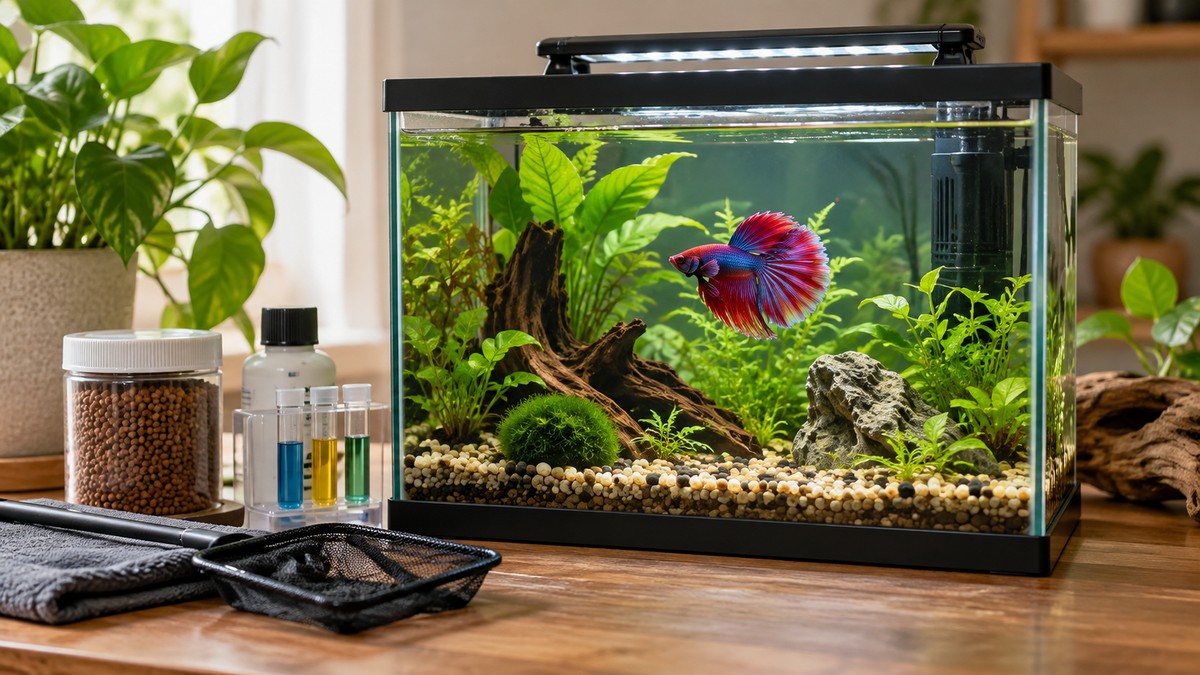
Caring for betta fish begins with the setup: a tank big enough for one fish, easy access to the surface for air, plants or caves for cover, and a steady light schedule. This guide covers those basics from a public source on the species and then looks at four small aquarium lights from their Amazon listings. It does not give medical advice. For any sign of illness, ask a vet.
Quick answer
- Keep one male betta per tank, since males are territorial and fights can kill.
- Give the fish access to the surface, because it breathes air as well as water.
- Add plants or rock alcoves for cover.
- Use a light you can put on a timer, and ask a vet about anything that looks like illness.
What the species is
The betta, also called the Siamese fighting fish, comes from mainland Southeast Asia, including Cambodia, Laos, Myanmar, Malaysia, Thailand and Vietnam. According to the Wikipedia article on the species, it lives in shallow, vegetated waters such as marshes, floodplains and paddy fields. That is the root of most care advice: the fish expects shallow, planted water and open access to air. The same article describes the fish as carnivorous, eating zooplankton, small crustaceans, insect larvae and fallen insects in the wild, and says it cannot live on plants alone. Details such as the right brand or amount of food are not in that source, so use the food label or ask a vet.
Tank size and tank mates
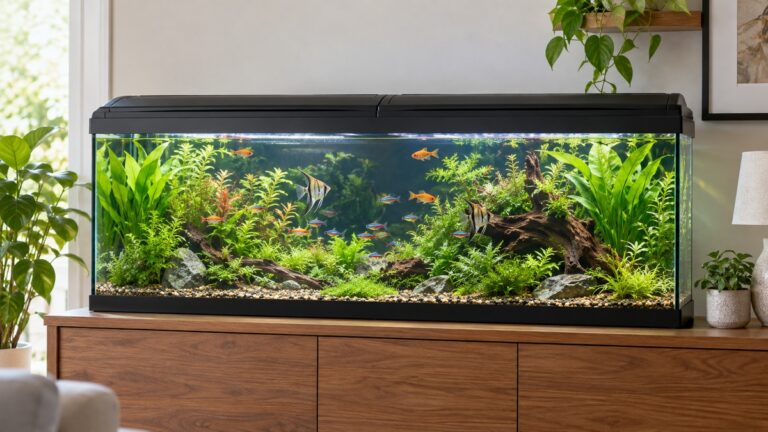
The article says to keep at least 45 litres, about 10 gallons, if you house bettas with other fish. It also says males are highly territorial and usually must be kept apart, and that females can also be territorial in confined spaces. Even a single betta still looks for territory, so a decorated tank with plants or rock alcoves is beneficial. For a solitary fish, small tanks are common, but the source does not state a minimum for a single fish, so we do not claim one here. For more on the layout, see our guide to introducing a betta to a new tank. If you are wondering about females and other fish, read are female bettas aggressive to other fish.
Surface access and the labyrinth organ
The Wikipedia article explains that bettas have a lung-like labyrinth organ that lets them breathe atmospheric air, so they need access to the surface. In practice that means a lid that leaves some air space above the water, no thick film of floating material over the whole surface and no decoration that blocks the top. A leaf hammock close to the waterline gives the fish a place to rest near the air. The same article says the organ develops at about three to six weeks of age, which is why very young fish are a separate topic from adult care.
Cover and decor
Plants and caves give the fish places to hide and rest. Soft plants and smooth caves are better than anything with hard edges. If your betta hides a lot after a move, see why a betta hides so much and our what betta fish like in their tank. A new fish often needs a few days in a quiet spot before it explores.
Light: how to set it up
Light affects plants and the look of the tank, and a regular on-off pattern is easier on a household than leaving a lamp on. We cover this in more detail in whether to leave the light on at night and in the light timer guide. The source for this post does not give a number of light hours, so we do not set one here. The four lights below are small full-spectrum or clip-on LED options. Their listings say what each includes, and those details are all that is used.
The pack flags that all four listings lack the word caring in the title. That is expected, since they are lights; they are here as setup equipment and not as a care guarantee.
Hiro Aquatics full spectrum LED with bamboo board
The listing describes a 5 watt full spectrum LED lamp on a bamboo board measuring 8.5 x 9 inches, meant to fit nano aquariums, betta tanks and potted plants. It says the lamp swivels 360 degrees, that each lamp bead has a lens to widen the illumination, and that the board is waterproof and insulated. The spec table lists 13.5 x 13.5 x 13 inches and 2 pounds. It fits a small tank where you want a stand-on board and a plant light.
AREPK full spectrum LED with timer, for under 3 gallons
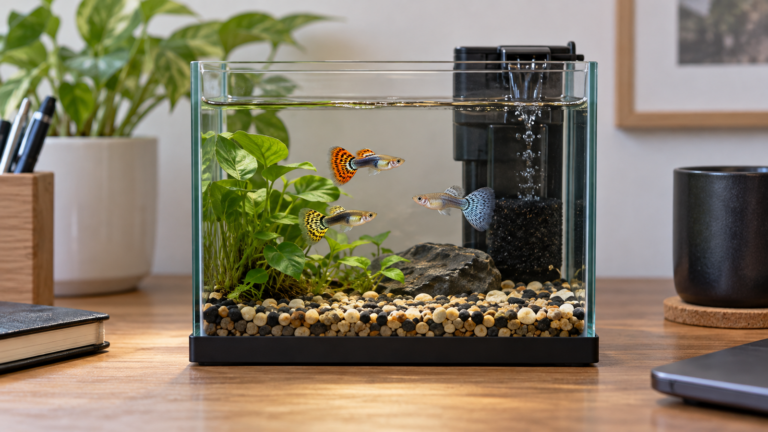
This is the 5 watt version, and the listing names tanks under 3 gallons. It says the color temperature is 6000K, that it has a bamboo board and a flexible gooseneck that turns 360 degrees, and that it runs from a USB port with a 50 inch cord. The title advertises a timer with auto on and off. Dimensions are listed as 9 x 8.6 x 15.7 inches and 0.89 kg. For a tiny tank this is the one that lines up with the listing wording.
AREPK full spectrum LED with timer, for under 7 gallons
The 9 watt version for tanks under 7 gallons, with the same 6000K color, bamboo board, gooseneck and 50 inch USB cord described for the smaller model. The listed dimensions are 13 x 13.3 x 21.5 inches. Take this one if your tank is a few gallons larger than a standard betta kit.
Clip-on USB full spectrum light with dimmer
A clip-on lamp with an 8 watt rating, 48 LED beads, 3 lighting modes and 10 brightness levels. The listing says the enclosure is solid metal with a swivel gooseneck. It does not state a tank size, so check the page for the clip opening against your tank rim. The clip design suits a tank where there is no room for a stand.
A simple beginner routine
- Set up the tank with cover before the fish arrives: a cave, a soft plant and a resting leaf.
- Place the light where it covers the plants, and put it on a timer.
- Check that the fish can reach the surface.
- Watch behavior each day. Hiding after a move is common, but a fish that looks unwell needs a vet, not a product.
- Keep one male per tank.
What the sources do not cover: water temperature range, filter flow, feeding amounts, and treatments. The Wikipedia article gives the natural water pH as roughly 6.9 to 8.2 and does not state a care temperature. For those details, ask a vet or a species-specific guide. A health note: if you see swelling or odd scales, our dropsy description explains what readers look for, and a vet is the person to ask about treatment.
FAQ
Can I keep two bettas together?
The source says males are highly territorial and fights can kill one or both fish, and that females can be territorial in confined spaces too. Do not house them together without advice from a vet or experienced keeper.
Do bettas need air?
Yes, they breathe atmospheric air through the labyrinth organ, so the surface must be reachable.
What do bettas eat?
In the wild they eat zooplankton, small crustaceans and insects, and cannot live on plants alone. For a brand and amount, follow the food label or ask a vet.
How big should the tank be?
The source gives about 10 gallons if you keep bettas with other fish, and does not give a figure for a single fish.
Do I need a light?
Plants need light and it helps you see the fish. The listings above give wattage and tank sizes; the right schedule is covered in our light timer post.
Bottom line
Keep one fish per tank, leave the surface open, add soft cover, and put the light on a timer. For health questions, a vet is the right source.