Can You Use Distilled Water for Betta Fish? Facts
As an Amazon Associate we earn from qualifying purchases.
Can you use distilled water for betta fish? Not on its own as a simple swap for tap water. Distilled water has no minerals, and a source we cite below lists that as its main drawback; its pH is a neutral 7, which sits inside the 6 to 7.5 range given for bettas. Keepers who choose it add a remineralizer to put trace minerals back. This article lays out what distilled water does and does not offer, how it compares with treated tap, reverse osmosis and bottled water, and where to ask a professional.
Quick answer
- Distilled water contains no minerals, so using it plain leaves out trace minerals the source says fish need.
- Its neutral pH of 7 falls within the betta range of 6 to 7.5 given by the same source.
- Tap water treated with a conditioner is described as generally fine for bettas.
- For anything about your own fish’s health, ask a vet or an aquarium professional.
What distilled water is
Distilled water has been boiled into steam and condensed again, which leaves the dissolved solids behind. That is why it is described as mineral-free. For a person making coffee or filling an iron, that purity is a plus. For a fish tank, the same purity is the issue: water with nothing dissolved in it offers the fish no trace elements and gives the tank no buffer. The Fishkeeping Academy guide on what water to use for bettas calls distilled water a great option with some drawbacks, and the drawback it names is the missing minerals.
Why minerals and pH matter to the choice
The same guide explains that trace minerals such as calcium and magnesium support fish health, but that too many minerals from hard water can be harmful. It also says minerals can neutralize acidity and help keep pH stable, and that sudden pH changes stress bettas. Its target range for bettas is pH 6 to 7.5, and it notes that bettas prefer soft water with lower mineral content.
Put those statements together and you can see why distilled water is neither a villain nor a free pass. Soft, low-mineral water suits bettas, and distilled water is as soft as water gets, with a neutral pH. But with nothing in it to buffer pH and nothing to supply trace minerals, it is not complete on its own. The guide’s author says distilled water is his favorite choice and that he adds a remineralizer to restore trace minerals. That is one keeper’s method, not a rule, and the guide does not give a dosing amount, so follow the directions on any remineralizer you buy.
What we cannot tell you
The sources do not cover how much remineralizer to add, which brand to use, how to measure the result, or how any of this affects a specific fish that is already unwell. Those questions depend on your tank, your local water and your fish, so a local aquarium shop or a vet is the right place to take them.
The main water options compared
| Water type | Minerals | What the source says |
|---|---|---|
| Tap water with conditioner | Depends on your supply; may include minerals and heavy metals | Generally fine for bettas; conditioner removes chlorine and chloramines |
| Distilled water | None | Neutral pH of 7; no minerals is the drawback; remineralizer suggested |
| Reverse osmosis (RO) | Removed | Minerals should be added back over time; higher upfront cost for the filter |
| Bottled spring water | Typically high in natural trace minerals | pH can be more stable; use still, not sparkling |
| Bottled mineral water | Varies | Should have no added chemicals; label should list source, minerals and pH |
Tap water: the everyday baseline
The guide says tap water is generally fine for bettas, with one condition: it contains chlorine and chloramines, which you remove with a water conditioner. It adds that tap water may also carry minerals and heavy metals depending on the source, and it recommends a general conditioner for most keepers because it removes chlorine and chloramines and can add minerals and beneficial bacteria. We cannot say which conditioner suits your tank, because brand data is outside the sources here. If you are weighing a specific product, our piece on using AquaSafe for bettas walks through one common conditioner.
Reverse osmosis water
RO water has its minerals removed by filtration, so the guide suggests adding minerals back over time. It says the RO filter costs more upfront but can save money compared with buying bottled water or repeatedly treating tap water. If you already own an RO unit, the same remineralizing logic applies as with distilled water.
Bottled water
Bottled spring water is described as typically high in natural trace minerals, with a pH that can be more stable. Mineral water should contain no added chemicals, and the label should list its source, mineral content and pH. The guide specifies still water, not sparkling, because carbonation can rapidly deplete dissolved oxygen. For a longer look at bottled options, read can I use bottled water for betta fish.
A practical way to decide
- Find out what your tap water is. If it is safe for people to drink and you treat it with a conditioner, you already have the guide’s baseline option.
- Decide whether you want to manage minerals. Distilled and RO water give you a blank slate. That can be useful if your tap water is very hard, but it adds a step and an ongoing product to buy.
- Keep changes gradual. The guide notes that sudden pH changes stress bettas, so avoid swapping water types abruptly.
- Ask about your own fish. If your betta looks unwell after a water change, a vet is the person to ask. This article cannot diagnose anything.
Mistakes to avoid
- Filling a tank with plain distilled water and nothing else. The source names the missing minerals as the drawback.
- Assuming neutral pH means complete water. A pH of 7 is in range, but pH alone does not tell you about mineral content.
- Using sparkling bottled water. The guide warns that carbonation can deplete dissolved oxygen.
- Skipping the conditioner on tap water. Chlorine and chloramines are the reason it is needed.
- Changing everything at once. Gradual change is gentler than a sudden swing.
FAQ
Is distilled water safe for bettas?
The source we cite calls it a great option with a drawback: no minerals. Many keepers who use it add a remineralizer. Whether it is right for your fish is a question for a vet or an experienced aquarium shop.
What pH does distilled water have?
The guide gives a neutral pH of 7, which falls within the 6 to 7.5 range it gives for bettas.
Do bettas prefer soft or hard water?
The guide says bettas prefer soft water with lower mineral content, while warning that minerals support health in moderation and excess minerals from hard water can be harmful.
Is tap water better than distilled?
Tap water treated with a conditioner is described as generally fine, and it carries some minerals. Distilled is cleaner but empty of minerals. Neither is universally better; it depends on your tap supply.
Can I use bottled spring water?
The guide says spring water is typically high in natural trace minerals and can have a more stable pH. Use still water and check the label.
How do I know my water is right?
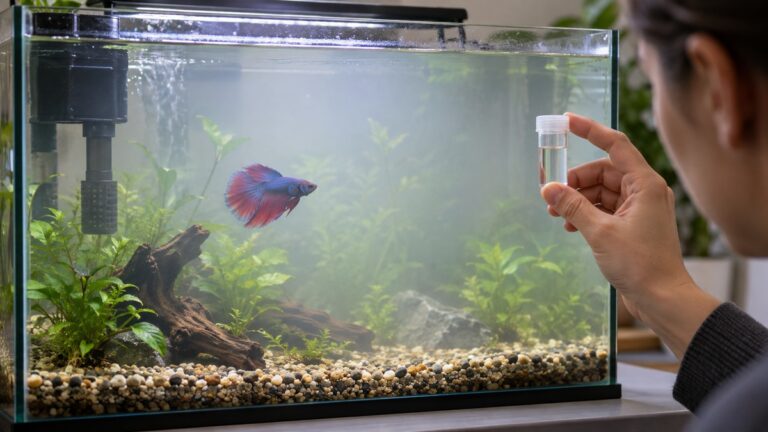
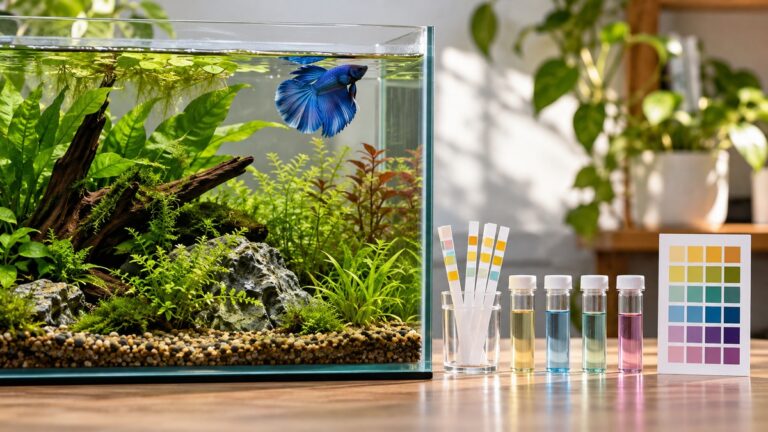
Testing is how hobbyists check. Our guide to a freshwater fish tank water test kit explains what to look for, and anything that worries you belongs with a vet.
Bottom line
Treat distilled water as an empty canvas, not a finished recipe: neutral pH, no minerals, and a remineralizer if you choose it. If you want the lowest-effort route, conditioned tap water is the baseline the guide calls generally fine.