Can Betta Fish Live in Filtered Water? Water Guide
As an Amazon Associate we earn from qualifying purchases.
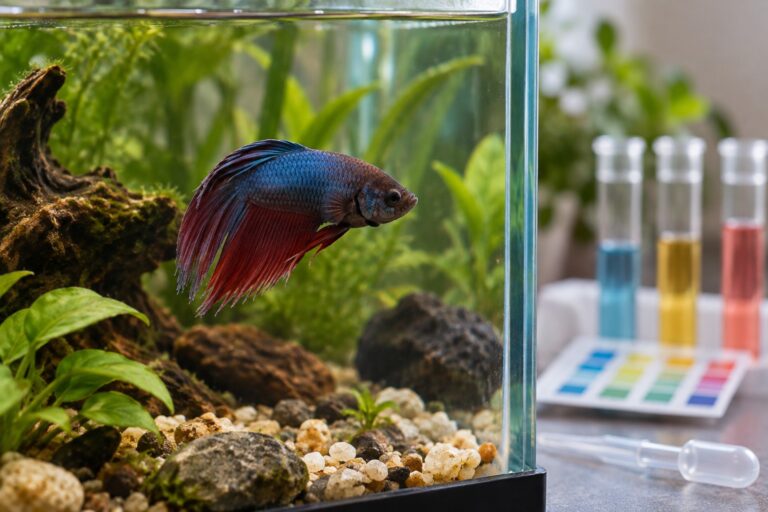
Can betta fish live in filtered water? Yes, if “filtered” means water that is cleaned by a tank filter, and no on its own if it means water that went through a kitchen pitcher or bottle filter and was then put straight in the tank. The two meanings are very different. A tank filter removes waste and hosts the bacteria that make fish waste less toxic. A pitcher filter changes what comes out of your tap, but our sources do not say it makes water safe for a betta. This guide separates the two and explains what a betta tank actually needs.
Quick answer
- Filtration in the tank is helpful: it traps debris and supports the bacteria that break down ammonia.
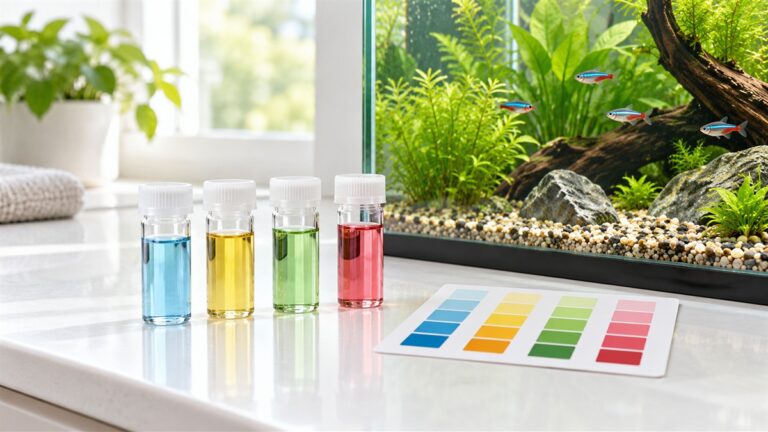
- Tap water must be treated before use because of chlorine or chloramine; conditioners are available.
- Our sources do not say that a household pitcher or faucet filter replaces a water conditioner, so do not assume it does.
- A filter does not replace water changes, because nitrate builds up over time.
Two meanings of “filtered water”
Water cleaned inside the tank
Aquarium filtration is a common method used for maintaining healthy tanks. Fish waste, uneaten food and decaying plants contaminate the water, and a tank is a small closed volume that is often densely stocked, so filtration is needed to support life. A filter does three jobs, and many do more than one.
- Mechanical: water passes through sieve-like media that trap particles such as uneaten food and debris.
- Chemical: removes dissolved waste, most commonly with activated carbon. Healthy plants also absorb some dissolved waste.
- Biological: bacteria colonize porous media with large surface areas. Most filters do some biological filtration, even those meant to be mechanical.
Biological filtration is the part that matters most for a betta. Fish excrete ammonia, which is toxic. Bacteria convert it to nitrite, which is highly toxic, and then to nitrate, which is much less toxic. Accumulated ammonia is the largest cause of fish deaths in new, poorly maintained or overloaded aquaria.
Water filtered before it goes in the tank
This means a pitcher, a faucet attachment, or a bottled product labeled as filtered. Our sources only say that tap water must be treated before use because of chlorine or chloramine, and that conditioners are available. They say nothing about whether a pitcher filter removes both. If you want to read more on this, see our posts on tap water for bettas and bottled water for betta fish. Water must also be at a steady temperature, since sudden changes can cause shock and disease.
What a betta needs from the water
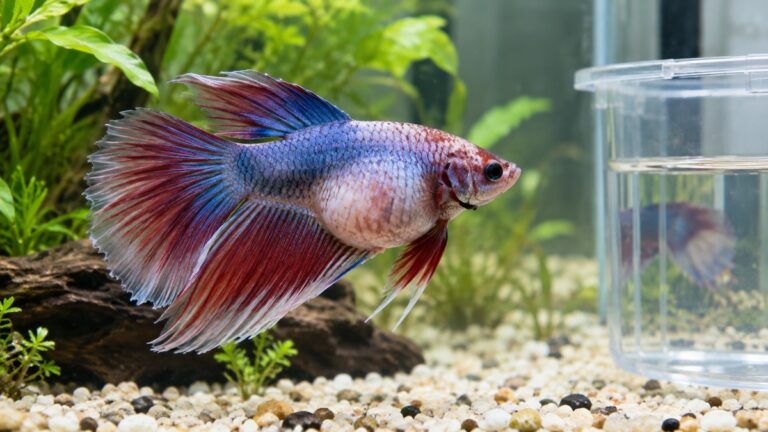
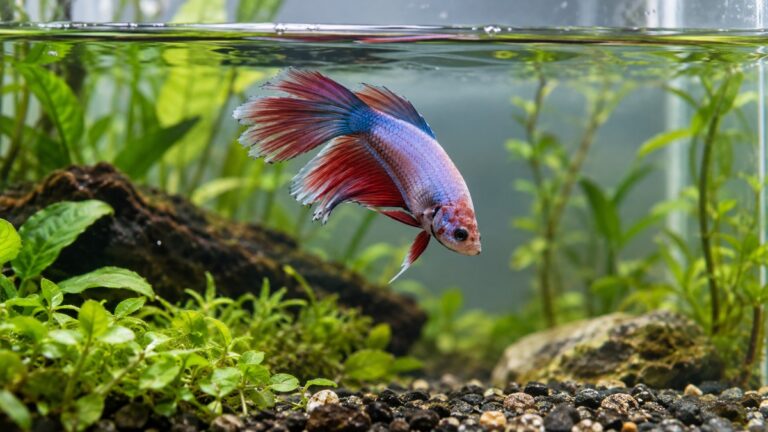
Bettas are native to mainland Southeast Asia and live in shallow, vegetated water such as marshes, floodplains and paddy fields. Their natural water ranges from slightly acidic (pH 6.9) to alkaline (pH 8.2), and oxygen can be low. They have a labyrinth organ that lets them breathe air at the surface, which helps them tolerate low oxygen and poor water quality. That tolerance is why they survive in poor conditions, but surviving is not the same as doing well. A betta in a bowl or vase is described by the reference as harmed in health, life expectancy and behavior.
The same reference says tropical aquaria commonly run near 25 degrees C (77 degrees F) and that temperature consistency matters more than the exact range. It does not give an official betta temperature, so check a dedicated care source, such as our post on what temperature betta fish like.
Why a tank filter helps a betta
- It removes solids. Uneaten food and debris trapped in the media do not decay back into the water.
- It grows beneficial bacteria. The largest bacterial populations live in the filter, and they turn ammonia into nitrite and then nitrate.
- It moves water. This keeps the surface from stagnating, although betta can use air from the surface.
Colonies take several weeks to establish. If you add fish too quickly to an immature tank, you can get new tank syndrome. One suggested approach is a fishless cycle, a silent cycle using fast-growing plants, or adding fish slowly over 6 to 8 weeks. Signs of ammonia stress include lethargy, loss of appetite, red or inflamed gills and fins, and gasping at the surface. If you see these, ask a fish vet and do a partial water change.
Flow matters for a small tank
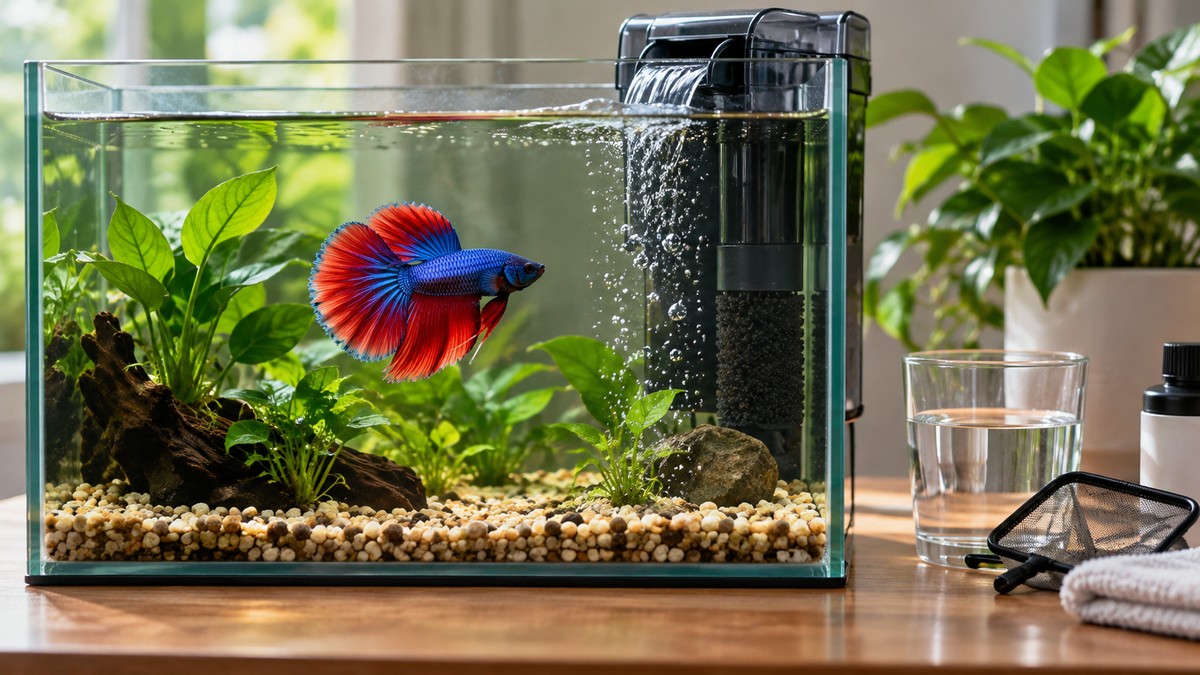
Power and canister filters can produce excessive flow in small tanks, and sponge filters are considered ideal for small tanks. A sponge filter works by airlift: rising air bubbles in a tube pull water through open-cell foam. It suits small, lightly stocked tanks. Betta have long fins, so gentle flow is a sensible goal. If the current in your tank is too strong, read aquarium filter current too strong. If you are choosing a new unit, see betta aquarium filter picks compared by flow.
A filter is not a substitute for water changes
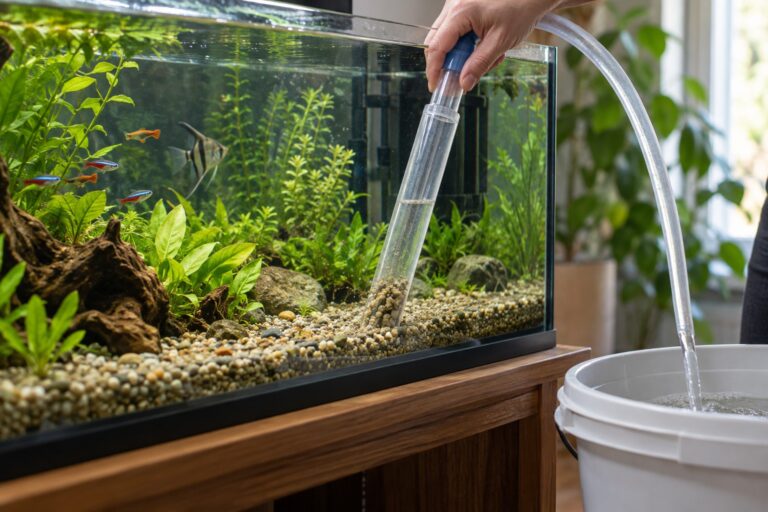
In an aquarium the nitrogen cycle effectively ends at nitrate, which builds up over time. Regular partial water changes remove it and replace it with clean water. Basic maintenance should generally be done weekly according to the fishkeeping reference. Because most bacteria live in the filter, cleaning it too thoroughly can upset the balance, and the suggestion there is to clean only half the media at a time.
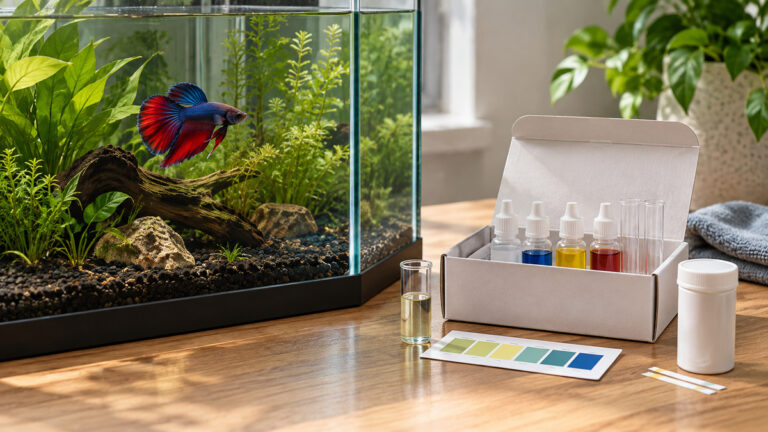
When you add new water, treat it. Tap water contains chlorine or chloramine, and a conditioner handles that. Use water close to the tank temperature so the change does not shock the fish.
Common mistakes
- Assuming pitcher-filtered water needs no conditioner. Our sources do not support that.
- Skipping the filter because betta can breathe air. The air-breathing organ does not remove ammonia from the water.
- Choosing a strong filter for a small tank and leaving the flow unchecked.
- Cleaning all the filter media at once and wiping out the bacteria.
- Stocking a new tank before the bacteria are established.
- Changing all the water at once with water at a different temperature.
FAQ
Can betta fish live in filtered water from a tank filter?
Yes. A tank filter is a common and helpful part of a healthy aquarium, and it supports the bacteria that convert ammonia.
Is pitcher-filtered tap water safe for a betta?
Our sources say tap water must be treated for chlorine or chloramine and that conditioners are available. They do not say that pitcher filters do the same job, so we cannot say yes.
Does a betta need a filter if it can breathe air?
The labyrinth organ lets a betta take in air, but it does not clean the water. Waste still builds up as ammonia, which a filter and water changes help manage.
What kind of filter suits a small betta tank?
Sponge filters are considered ideal for small tanks, and power or canister filters can produce excessive flow in small tanks.
How often should I change water?
Basic maintenance should generally be done weekly according to the reference. Nitrate builds up between changes.
Can a betta live in cold filtered water?
Filtering does not change temperature. See can betta fish live in cold water for what the sources say.
Bottom line
A betta can live in water cleaned by a tank filter, and a filter is worth having. Treat any new water for chlorine or chloramine, keep temperature steady, change part of the water weekly, and do not treat a household pitcher as a replacement for conditioner.