Can You Use Regular Tap Water for Betta Fish?
As an Amazon Associate we earn from qualifying purchases.
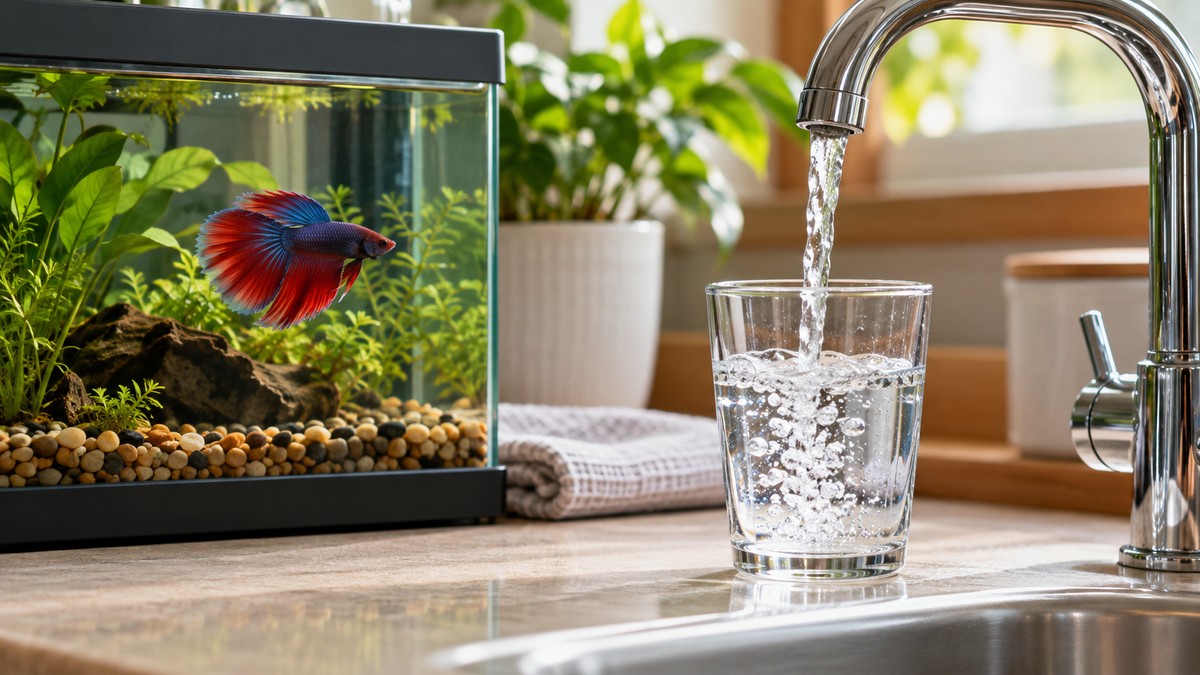
Can you use regular tap water for betta fish? The sources we read say the water itself is not the problem, but what is added to it is: tap water is commonly disinfected with chlorine or chloramine, chlorine can kill fish and can damage the biological filter, and the usual answer is to dechlorinate tap water before it goes into an aquarium. This explainer sets out what the sources say about why water is treated, what a dechlorinator does and what to ask your water supplier about, without any medical advice.
Quick answer
- Regular tap water is usually treated with a disinfectant, and that disinfectant is what needs dealing with.
- A source on water chlorination says chlorine can kill fish and damage an aquarium’s biological filter, so tap water should be dechlorinated first.
- Chlorine leaves water fairly quickly, but chloramine is more stable, so standing water may not remove it.
- Use a dechlorinator and check with your local supplier which disinfectant it uses.
Why tap water is treated
Water suppliers add disinfectant to kill organisms that cause disease. A reference on water chlorination explains that chlorine kills bacteria, viruses and protozoans, which helps prevent waterborne diseases, and describes it as a highly efficient disinfectant. That is good for people and, as a side effect, a problem for a fish tank.
The reason is simple: the property that makes chlorine useful is that it harms living things. The same source says chlorine can kill fish in the same way that it kills microorganisms, and that it can also damage an aquarium’s biological filter. The biological filter is the community of helpful bacteria on the filter media, so chlorine in new water is a risk to both the fish and the filter.
Chlorine and chloramine are not the same
Some suppliers use chloramine instead of, or as well as, chlorine. A reference on chloramine says it does not dissipate as rapidly as elemental chlorine, is more stable against light than hypochlorites and is less aggressive than chlorine. Those are reasons a supplier might choose it.
For a fish keeper, the point is that the idea of leaving water out overnight to let chlorine escape may not work for chloramine. The water chlorination source says chlorine leaves the water system fairly quickly because it is volatile. The chloramine source says chloramine does not dissipate as quickly. We should be clear that the second page does not say anything about fish or standing water. That conclusion is an inference from the stability statement, so treat it as a reason to use a dechlorinator and to ask your supplier, not as a tested rule.
What a dechlorinator does
A dechlorinator is a water conditioner that uses reducing agents to convert chlorine species into harmless chloride. The water chlorination reference names sodium thiosulfate and two sulfonate compounds as commercial examples, and notes that dechlorinators can remove chloramine as well. It also recommends dechlorinating tap water before using it in an aquarium.
In practice that means adding a conditioner to the new water before it reaches the tank, following the dose on the label. We do not give doses here because they differ by product. Our guide to using AquaSafe for bettas looks at one such product, and the guide on whether betta fish can live in tap water goes into more of what the sources say.
Does activated carbon help?
The activated carbon reference treats the chlorine-removal efficiency of a carbon as a measured property, so carbon has some role in dechlorination in other settings. It does not give a home-aquarium procedure, and the water chlorination source does not list carbon as a dechlorinator. If you rely on a filter cartridge alone, you are leaning on an unmeasured assumption. Our explainer on how bettas breathe air is a different topic, but it shows why a betta’s water surface matters too.
Steps for using tap water
- Find out from your water supplier whether it uses chlorine, chloramine or both.
- Use a dechlorinator that states it handles what your supplier uses.
- Add the conditioner to the new water before it goes into the tank, following the label.
- Do not assume that leaving water to stand will remove chloramine.
- If a fish looks unwell after a water change, ask an aquatic vet.
What the sources do not cover
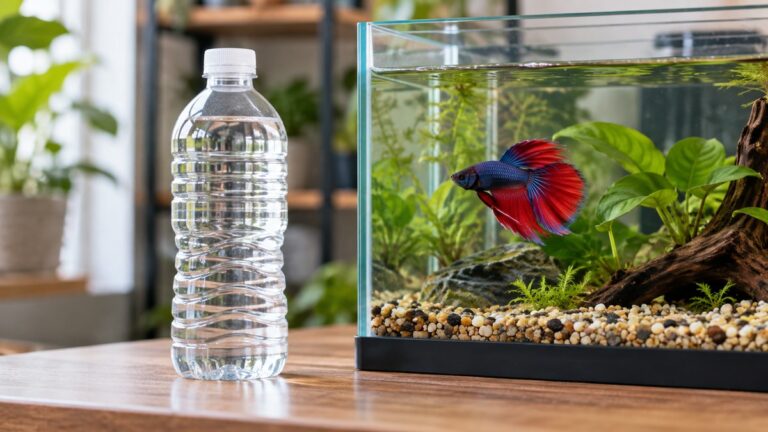
The pages we read do not give water temperature rules, the right pH for a betta, hardness limits or how much water to change. They also do not say how much chlorine is harmful to a fish, or compare tap water with bottled water. For bottled water, see our short guide on using bottled water for a betta. We prefer to say the sources are silent than to guess.
Local water also varies. A supplier can change its treatment, and some suppliers publish an annual water quality report. Check the latest information for your area before making assumptions about your own tap.
FAQ
Is regular tap water safe for a betta straight from the faucet?
The sources we read say tap water should be dechlorinated before it goes into an aquarium, because chlorine can kill fish and damage the biological filter.
Will leaving tap water out overnight make it safe?
Chlorine is volatile and leaves fairly quickly, according to the chlorination source. Chloramine is described as more stable, so standing is not a reliable fix. Ask your supplier which one you have.
What is a dechlorinator?
A conditioner that uses reducing agents to turn chlorine species into harmless chloride. The chlorination source says it can remove chloramine too.
Do I need to dechlorinate for a small water change?
The source says to dechlorinate tap water before using it in an aquarium. It does not give an exception for small volumes.
Is bottled water better?
The sources do not compare them. See our bottled water guide.
What if my fish seems sick after a water change?
Ask an aquatic vet. This guide does not give treatment advice.
Bottom line
Regular tap water can be used for a betta once it has been dechlorinated. Use a conditioner, find out whether your supplier uses chlorine or chloramine, and do not rely on letting the water stand.