Can You Use Spring Water for Betta Fish Tanks?
As an Amazon Associate we earn from qualifying purchases.
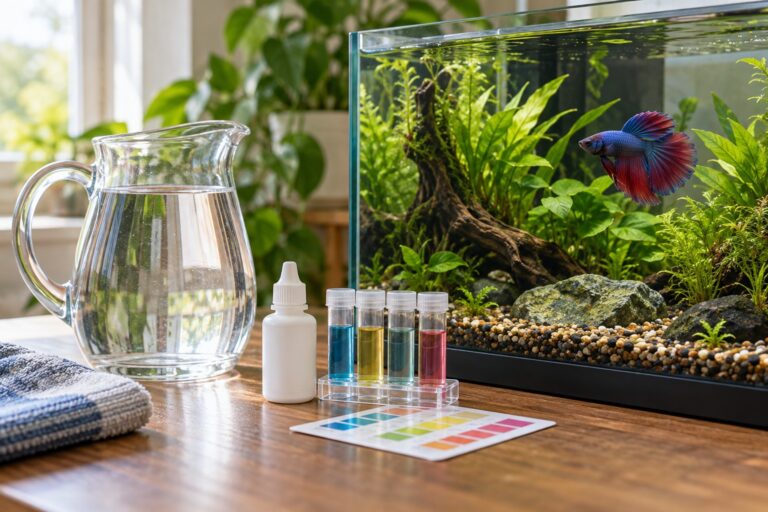
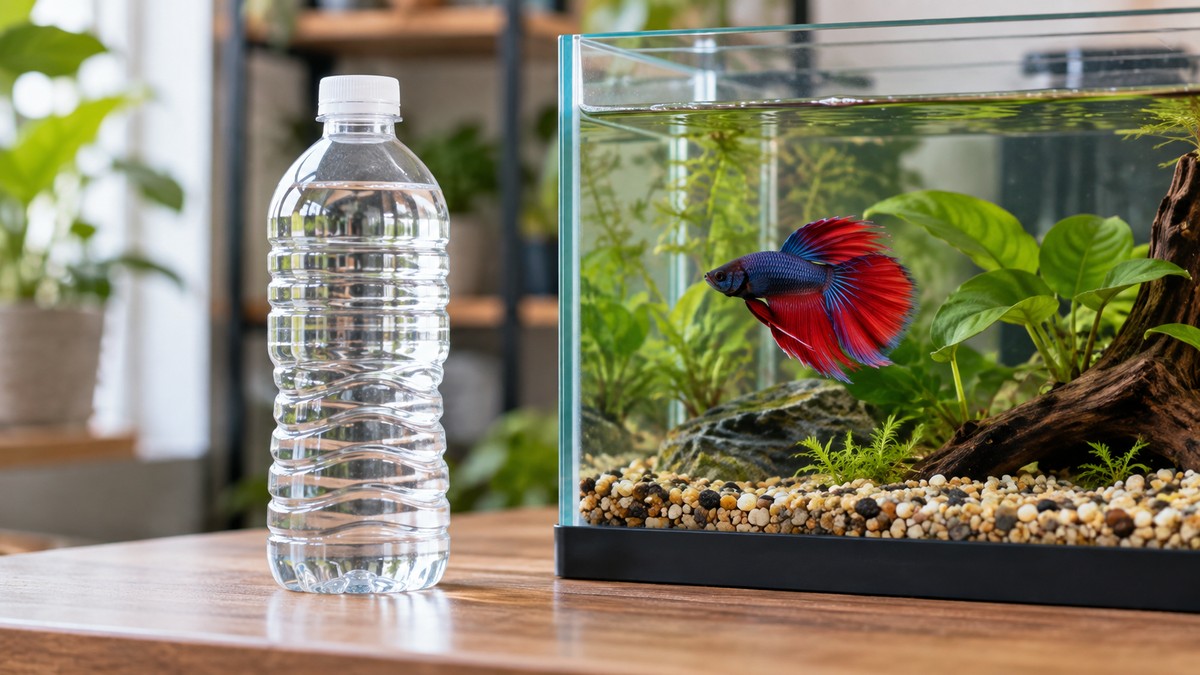
Can I use spring water for my betta fish? The sources we could read suggest the answer depends on what is in that particular water, not on the word spring. Spring water is simply water that rises naturally from an aquifer, and its mineral content varies widely. Betta fish are described as tolerating a wide pH range in the wild, but that does not mean every bottle off a shelf is the same or suitable.
This guide explains what spring water is, what the sources say about betta water chemistry, and why tap-water conditioners exist. We do not give a pass or fail on a brand. Instead we give you the questions to check on the label and the people to ask: your vet or a fish store.
Quick answer
- Spring water is groundwater that surfaces naturally, and its dissolved mineral content (TDS) varies from spring to spring.
- Wild bettas live in water with a pH ranging from slightly acidic (6.9) to highly alkaline (8.2), according to the encyclopedia entry.
- Tap water may contain chlorine or chloramine; conditioners exist for those, while bottled spring water is not described by the sources as needing them.
- For a specific bottle, check the label and ask a vet or aquarium store.
What spring water actually is
A spring is a natural point where groundwater rises from an aquifer and flows across the ground. Springs can form where the water table reaches the surface or where the terrain dips sharply. As water moves through underground rock it picks up dissolved minerals, which is measured as total dissolved solids, or TDS. That TDS can affect taste and produce carbon dioxide bubbles.
Some springs are mineral springs, with significant mineral content, and others with little mineral content are sometimes called sweet springs. Springs rich in sodium salts are called soda springs. The reference we read also notes that some springs contain arsenic above the World Health Organization standard of 10 parts per billion.
The point for a fish keeper is that the label spring water tells you the source, not the chemistry. One bottle may have little dissolved mineral content and another a lot. Without the numbers, you cannot compare them with a betta’s needs. Look for a printed mineral analysis or a TDS figure, and ask the store when it is missing.
What bettas tolerate, according to the sources
The Siamese fighting fish entry describes natural water that ranges from slightly acidic, pH 6.9, to highly alkaline, pH 8.2. It describes the fish as tolerant of low oxygen and poor water quality, thanks to a labyrinth organ that lets it breathe air at the surface. It gives no hardness values.
That tolerance is not a guarantee. The article says nothing about the right pH for a home tank or how quickly a fish can handle a change. If you switch water types, ask a vet or an aquarium store how to do it gradually. We are not offering a treatment plan.
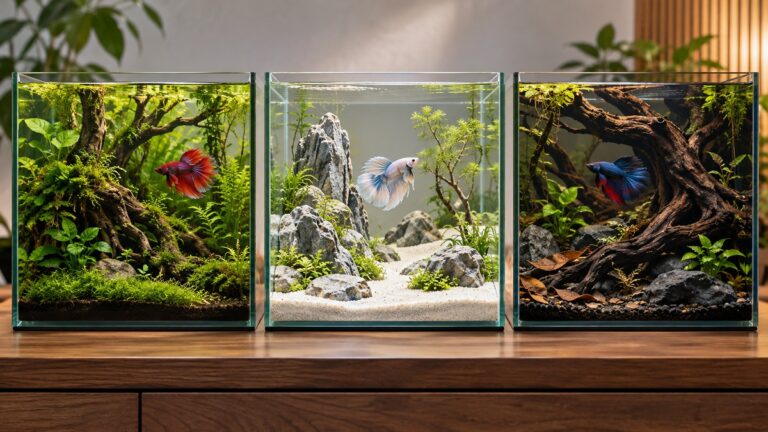
The entry also says bettas are carnivorous, should be housed with plants or rocky alcoves, and need a tank of at least 45 liters (about 10 gallons) if housed with other fish. Water type is one part of a larger setup.
Tap water, conditioners and where spring water fits
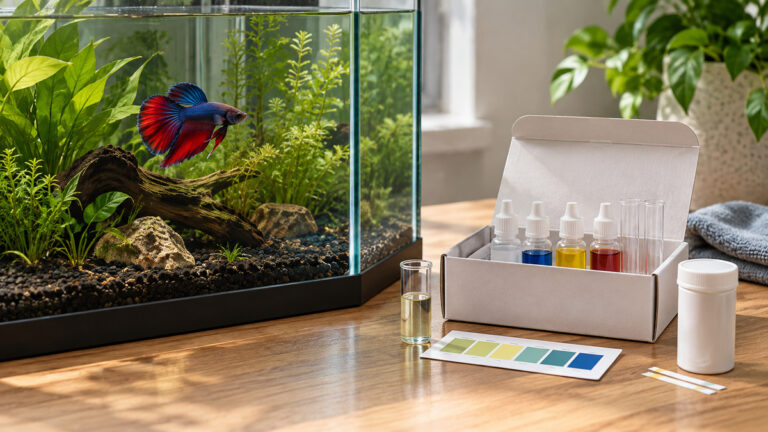
The water conditioner entry explains why most tap water needs treatment. If tap water is chlorinated, a basic dechlorinator, usually sodium thiosulfate, converts chlorine to chloride. But chloramine is now common in water disinfection, and simple dechlorinators can leave behind free ammonia, which the article describes as very harmful to fish. More complex conditioners use sulfonates to handle both, and advanced products add chelators such as EDTA for heavy metals and sometimes slime coat protectors.
Bottled spring water usually has not been disinfected the same way as municipal tap water, but the sources do not state this as a rule, and we will not assume it. Check the label for added ingredients. Some bottled waters are sold with added minerals for taste, which would change what is in your tank. A label that lists only water and natural minerals is more straightforward than one with additives.
If you are comparing, our pages on bottled water for betta fish and tap water for bettas go through the same decision, and one conditioner product is covered separately.
A practical checklist for a bottle of spring water
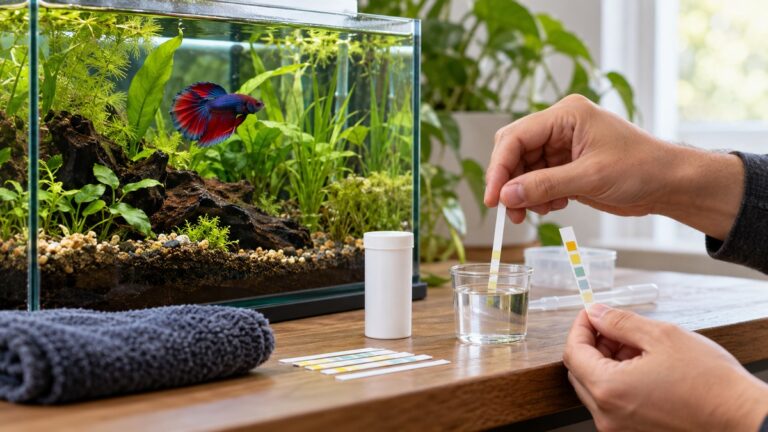
Read the label for the source type and any list of added minerals. Look for a stated TDS or mineral analysis. Check whether the bottle says anything about disinfection. Check that the water is clear; the encyclopedia entry on springs notes that iron or tannins can give spring water an orange color, which a bottle should not have.
Do not reuse a container that held anything else. Keep the water at room temperature before it goes in the tank, and pair it with a thermometer reading; the same sources that cover heaters describe tropical tanks at roughly 22 to 30 degrees C (72 to 86 degrees F). Our page Can Betta Fish Live in Cold Water covers that part.
Keep a record: bottle brand, date and what you did. If a problem arises, a vet can use it.
Mistakes to avoid
Assuming spring water is the same as distilled water, since the sources say spring water carries dissolved minerals. Assuming any bottle is safe because the label says natural. Changing the whole tank to a new water type in one step; ask a vet or aquarium store about gradual changes. Using a bottled water whose label lists added ingredients you cannot identify.
FAQ
Can I use spring water for my betta fish?
Possibly, if the label and mineral content are acceptable, but the sources do not give a yes for every bottle. Ask a vet or aquarium store about your specific water.
What pH do bettas live in?
The encyclopedia entry says natural water ranges from slightly acidic (6.9) to highly alkaline (8.2).
Does spring water need conditioner?
The conditioner entry discusses chlorine and chloramine in tap water. It does not say whether a given bottle needs treatment.
Why does the mineral content matter?
Spring water carries dissolved minerals measured as TDS, and it varies by spring.
Is bottled spring water the same as tap?
No. Tap may carry chlorine or chloramine, while a bottled water’s contents depend on the label.
What if my betta seems unwell after a water change?
Ask a vet. We do not give medical advice.
Bottom line
Treat spring water as a source description rather than a guarantee. Read the label, check for added minerals, compare the figures to what your vet or fish store recommends, and change water types gradually.