Best Liquid Water Test Kit for a Betta Tank
As an Amazon Associate we earn from qualifying purchases. Details
A liquid water test kit uses drops of reagent in a tube and a printed color card, instead of a dipped strip. Many aquarium keepers choose liquid kits because the counts on the box look larger and the readings feel more controlled. That is a fair reason, but it is not the whole story. The method, the per-parameter counts and the steps each week matter more than the bottle size. This guide explains what separates the liquid kits in this group, which two listings fit the keyword, and how to plan a liquid routine for a betta tank.
Quick answer
Choose a liquid kit if you want per-parameter counts and you are comfortable with a few extra steps each week. The Pawfly and Vaterbeing listings are the two liquid kits in this group, and they describe the same five parameters. Pawfly states 265 measurements, with pH (100), nitrite (45), nitrate (50), ammonia (30) and phosphate (40). A mail-in lab analysis is a service, not a kit you use at home, so it is left out. Before you buy, check whether the listing names the reagent method and a thermometer, because neither listing states them.
What a liquid kit changes
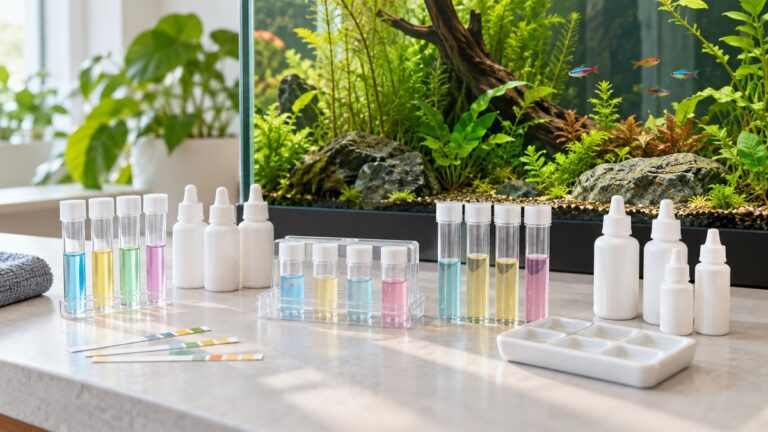
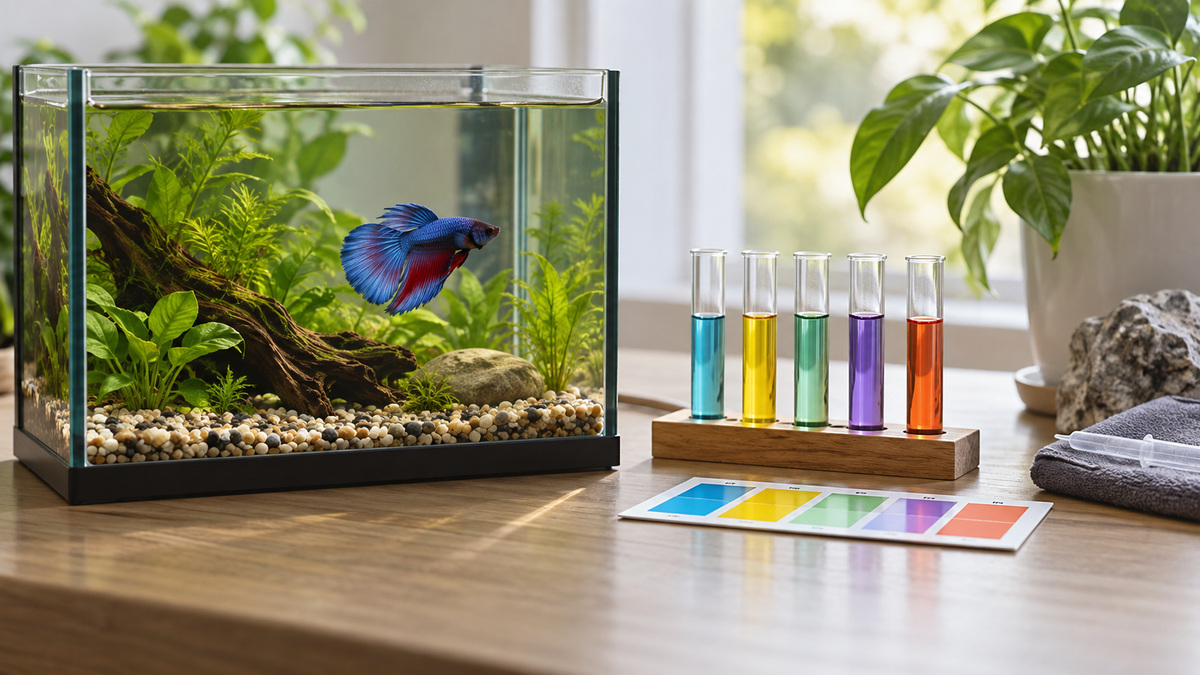
A liquid kit is read by eye, just like a strip, but the sample and the reagent are handled separately. You measure the water, add the drops, wait the time the instructions give, and compare the tube’s color with a card. The difference from a strip is the number of steps. More steps mean more chances to misread the tube, so a clear routine matters.
The listings in this group describe the reading the same way. The Pawfly listing says to compare the water’s hue to the color swatches for an instant result. That is useful, but the result depends on the card and the light, not on the bottle alone.
Reading a liquid tube has its own habits. Hold the tube against a white background, look straight down through it, and keep the card at the same angle each time. Shake the tube as the instructions say, and do not read it while the color is still forming. A tube that is read the same way every week gives you a comparison you can trust, even when the reading is only a rough guide.
The reagent method matters
Liquid reagents rely on a chemical method. The University of Florida IFAS guide on ammonia makes the point that methods can differ in how they respond to other products. It states that the Nessler method can give a falsely elevated ammonia reading after formalin use within 24 to 72 hours, and with ammonia binding products and many water conditioners. It also states that the ammonia salicylate method is not affected by ammonia binding products or formalin treatments.
Neither liquid listing in this group states its method. That is the main gap. If you use a binding conditioner or a treatment, ask the maker which method the ammonia reagent uses before you rely on the number.
Per-parameter counts
The Pawfly listing gives a count for each parameter, which is the most useful detail in this group. A count per parameter lets you plan the bottle around the one you use most. The Vaterbeing listing repeats the same counts, so the two products appear to describe the same routine. Confirm the brand and the package before you order.
Other methods are not liquid kits
A mail-in lab analysis works differently. You take a sample, post it, and receive an evaluation by email. That is a service with its own timing and its own cost. The ATI listing in this set describes that process, so it is not a liquid kit you run at home, and this guide does not pick it. If you want a home routine, stay with a bottle, a tube and a color card.
Products that fit this
Two liquid kits fit the keyword. Each card below states what its listing says about the parameters, package and use.
1. Pawfly 5 in 1 Aquarium Water Master Test Kit, Fish Tank Water Testing Kit (Five-parameter liquid kit)
Specs from the listing (checked 2026-10-11):
- Color: Blue Standard Kit Pack
- Item Weight: 10.9 ounces (about 0.68 lb)
- Package Dimensions: 7.4 x 4.92 x 3.5 inches; 10.93 ounces
- Included Components: Aquarium Water Master Test Kit
- Item package dimensions: 7.4 inches long, 4.92 inches wide, 3.5 inches high
Pros
- The listing gives per-parameter counts, so you can plan the bottle around the shortest one.
- The listing states 265 measurements, with pH (100), nitrite (45), nitrate (50), ammonia (30) and phosphate (40).
- The listing says the kit works for both freshwater and marine fish tanks.
Cons
- The listing does not include a thermometer, so ammonia readings may need a separate temperature check.
- The listing does not state which reagent method is used for each parameter.
- Another liquid listing in this set repeats the same counts, so confirm the brand and package before you order.
Best for: Keepers who want a liquid routine with per-parameter counts from one kit.
Skip if: You need a chlorine reading, or a pH scale wider than the listing states.
View on Amazon (affiliate link)
2. 5 in 1 Aquarium Water Master Test Kit, Fish Tank Testing Kit (Same counts, lighter pack)
Specs from the listing (checked 2026-10-11):
- Item Weight: 6.4 ounces
- Color: Green
- Size: Medium
- Warranty Description: 1-Year Warranty
- Item Package Dimensions L x W x H: 7.2 x 4.7 x 3.5 inches
Pros
- The listing names five parameters: pH, ammonia, nitrite, nitrate and phosphate.
- The listing states a one-year warranty on the kit.
- The listing gives a package weight of 6.4 ounces, lighter than the other liquid listing.
Cons
- The included components name only the kit itself, with no thermometer or separate chart listed.
- The listing says the directions are for adults 18 years and older, so a younger helper needs supervision.
- The listing repeats the same counts as the other liquid kit, so the bottle contents may match.
Best for: Keepers who want the same liquid counts in a lighter package and a stated one-year warranty.
Skip if: You want a kit whose contents list a thermometer or a separate color chart for each parameter.
View on Amazon (affiliate link)
Planning a liquid routine
Choose the day, the order of tests and the place you will read the tubes. Keep the card in the same spot, and use the same light every time. Write each reading in a log with the date, so you can see the trend rather than one number.
The IFAS guide’s timing advice applies here. It recommends weekly ammonia tests in a production system and an immediate test when fish appearance or behavior changes, including reduced feeding. A home tank is not a production system, so treat that as the guide’s logic rather than a fixed rule. For a new tank, test more often during the first weeks, because a new biofilter needs six to eight weeks to build up enough bacteria to reduce ammonia and nitrite.
Nitrite deserves the same attention. The IFAS guide states that nitrite is toxic to fish at levels as low as 0.10 mg/L. A liquid kit that reads nitrite on its own card gives you a clear point to watch, so keep that reading in your weekly log. A dedicated ammonia test kit for an aquarium can also give you a separate ammonia reading when you want a second check.
How to choose
Choose the Pawfly kit if you want the clearest per-parameter counts and you can handle a liquid routine. Its counts make it easy to plan a bottle, and the package is the heavier of the two.
Choose the Vaterbeing kit if you want the same counts in a lighter package and you like the stated one-year warranty. Confirm that its contents match the Pawfly listing before you order, because the bullets read the same.
Choose neither if you need a thermometer in the kit, a stated ammonia method on the card, or a chlorine reading. Neither liquid listing states those items. Look at a strip kit or add a separate thermometer and test. For more options, see freshwater fish tank water test kits.
Choose a strip kit instead if you want a faster routine with a dip and a wait. For that option, read the fish aquarium water test kit picks before you decide.
If you also run an aquaponics system, read the label first. None of the liquid listings in this group mentions aquaponics use, so do not assume the same counts or methods apply to a different system.
If this is your first liquid kit, start with the two parameters you need most, which for a betta tank are usually ammonia and nitrite. Run the first few tests with the instructions open, and tick off each step in your log until the routine feels automatic. Keep the reagent bottles, the tubes and the card together in one box, so the routine starts the same way every week.
Worked example: a six-week setup
This example uses hypothetical numbers only. You test ammonia and nitrite twice each week. After the setup, you test each one once each week. We use the Pawfly counts for the bottle: ammonia 30 tests and nitrite 45 tests.
Step 1. Setup tests for ammonia: 2 tests a week times 6 weeks equals 12 tests.
Step 2. Setup tests for nitrite: 2 tests a week times 6 weeks equals 12 tests.
Step 3. Ammonia left after setup: 30 tests minus 12 tests equals 18 tests.
Step 4. Nitrite left after setup: 45 tests minus 12 tests equals 33 tests.
Step 5. Weekly ammonia tests after setup: 18 tests divided by 1 test a week equals 18 weeks.
Check: 18 tests divided by 1 test a week equals 18 weeks, and 18 weeks plus the six setup weeks equals 24 weeks. The ammonia count, not the nitrite count, decides how long the bottle lasts.
The example shows why the bottle size is less useful than the parameter count. A liquid bottle can look large and still run short on the test you use most.
Mistakes to avoid
Choosing a liquid kit for its total count alone is the first mistake. Read the count for each parameter, then compare it with the tests you plan to run each week.
Ignoring the reagent method is the second. The IFAS guide shows that some methods react to binding products and formalin. Neither liquid listing states its method, so ask before you rely on an ammonia reading during a treatment.
Skipping the thermometer is the third. The IFAS guide says a good ammonia kit includes a thermometer, because the toxic share of ammonia depends on temperature and pH. The Pawfly and Vaterbeing listings do not state one, so add a thermometer to your own kit.
Reading the tube too early or late is the fourth. The wait time on the instructions matters because the color develops over that time. Use a timer, and read every tube the same way.
Reading the card under changing light is the fifth. Color comparison depends on the light, so read near a window in daylight or under the same bulb each week.
Treating a single reading as a diagnosis is the last. A test shows a number. For disease or injury, consult an experienced fish keeper or an aquatic vet.
Storing reagents carelessly is a quieter mistake. Keep bottles capped, keep them out of direct sun and away from heat, and check each date before use. A bottle that has been open for a long time may not give the color its card expects, so replace it rather than stretching it.
FAQ
Is a liquid kit more accurate than a strip kit?
The listings do not compare accuracy directly, so do not assume one format is better. A liquid kit gives more tests per bottle and a clearer count per parameter. A strip kit is quicker. Choose by the parameters you need and the routine you will keep.
Does the Pawfly kit test chlorine?
The Pawfly listing names pH, nitrite, nitrate, ammonia and phosphate. It does not name chlorine, so look at a dedicated chlorine check if you need one.
What is the difference between the Pawfly and Vaterbeing kits?
Both listings describe five parameters and repeat the same counts. The packages differ in weight and color. Check the package and the brand before you order, because the bullets read almost the same.
Can I use a liquid kit during a treatment?
Ask first. The IFAS guide shows that some ammonia methods are affected by formalin, binding products and certain conditioners. If you are treating a fish, consult an experienced fish keeper or an aquatic vet before you rely on a reading taken during treatment.
How long does a liquid bottle last?
It depends on how often you test each parameter. Divide each parameter’s count by the number of tests you plan each week, then use the shortest result as your limit. The worked example above shows the method.
Do I need a separate thermometer?
The IFAS guide says a good ammonia kit includes one, because the toxic share of ammonia depends on temperature and pH. Neither liquid listing in this group states that a thermometer is included, so buy one separately if your kit does not include it.
Are liquid reagents safe to keep at home?
The listings in this group do not describe a safety rating. Read the maker’s warnings on each bottle, keep reagents away from children and pets, and follow the manual for handling and disposal. A test measures the water; it does not treat it.
Bottom line
Choose a liquid water test kit if you want per-parameter counts and a steady weekly routine. The Pawfly kit has the clearest counts in this group. The Vaterbeing kit suits you if you want the same counts in a lighter package. Before you buy either, confirm the ammonia method, add a thermometer and plan the bottle around the parameter you test most often.
Sources
- UF/IFAS guide: Ammonia in Aquatic Systems: ammonia test methods and their interference, the thermometer in a good ammonia kit, nitrite toxicity, and biofilter timing