Betta Fish Tank Mates: What Can Live With a Betta
As an Amazon Associate we earn from qualifying purchases.
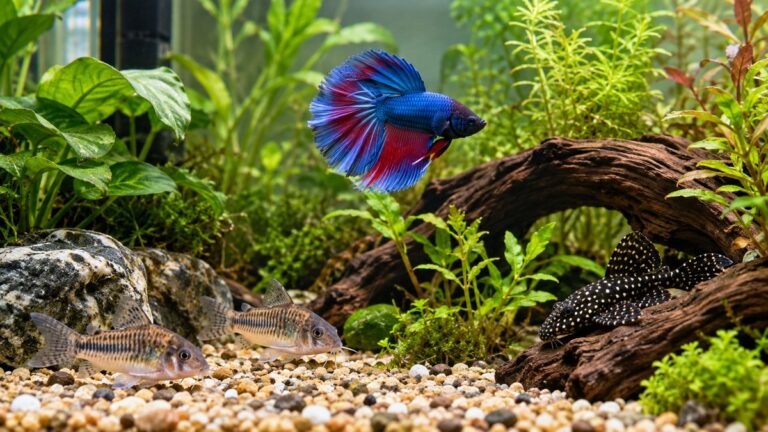
Betta fish that can live together depend more on tank size and the individual fish than on any fixed list. A betta is usually kept alone, but a few peaceful species are commonly suggested as tank mates in a large enough, well-planted tank. This guide summarizes what one hobby guide says about which animals are suggested, which to avoid, and how to set up a backup plan, and it is not a promise that any pairing will work with your betta. For illness or injury, ask a vet.
Quick answer
- A single betta needs about 5 gallons according to the source below; most suggested tank mates need 10 gallons or more.
- Snails and a moss ball are the lowest-risk additions for very small tanks.
- Avoid other male bettas, fancy or brightly colored fish, aggressive species and fin nippers.
- Always keep a divider or spare container ready in case the betta attacks or is attacked.
Why tank size comes first
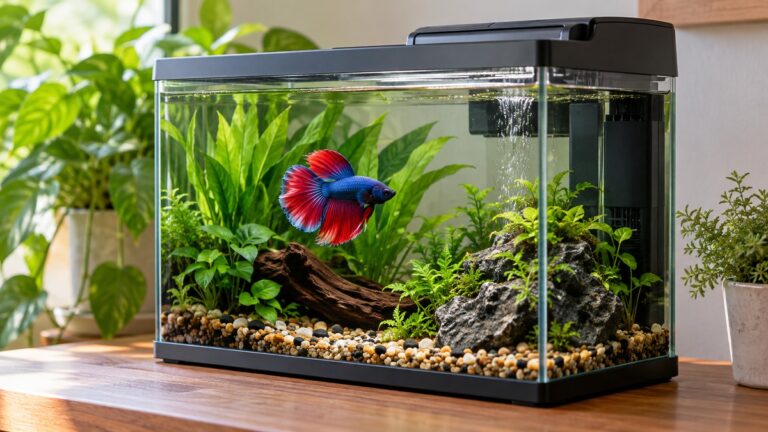
The guide used for this article puts a betta alone at 5 gallons, using a rule of roughly one gallon per inch of fish. Companions are listed with their own minimums: a mystery snail or marimo moss ball at 5 gallons; ghost shrimp, cory catfish, harlequin rasbora, African dwarf frog, neon tetra and ember tetra at 10 gallons; a feeder guppy at 8 gallons; a clown pleco at 15 gallons; and kuhli loaches at 20 gallons. A female group, often called a sorority, is given a 10 gallon minimum with five or more females, and a long tank preferred over a tall one. These are the guide's numbers, and other guides vary, so treat them as a starting point.
More water gives each animal room to get away from the others. In a small tank a betta that wants to chase has nowhere else to go, so the rest of this guide assumes the larger sizes. If your betta lives in a bowl or a very small tank, the simplest answer is that it should live alone. Our post on betta and goldfish explains one common pairing that does not suit the betta.
Animals the guide suggests
Mystery snail and marimo moss ball
The source calls the mystery snail docile, a feeder of leftover food and algae, and able to retreat into its shell if nipped. The marimo moss ball is a low-maintenance live plant described as safe for bettas. Both have a 5 gallon minimum in the guide, and the guide notes that snails are the only companion suggested for very small tanks.
Ghost shrimp
Listed at 10 gallons, with 2 to 4 shrimp suggested; the guide says six or more may breed. They scavenge the substrate. Shrimp are small, so the betta may treat them as food; dense plants and hides matter more here than for any other animal on the list.
Cory catfish
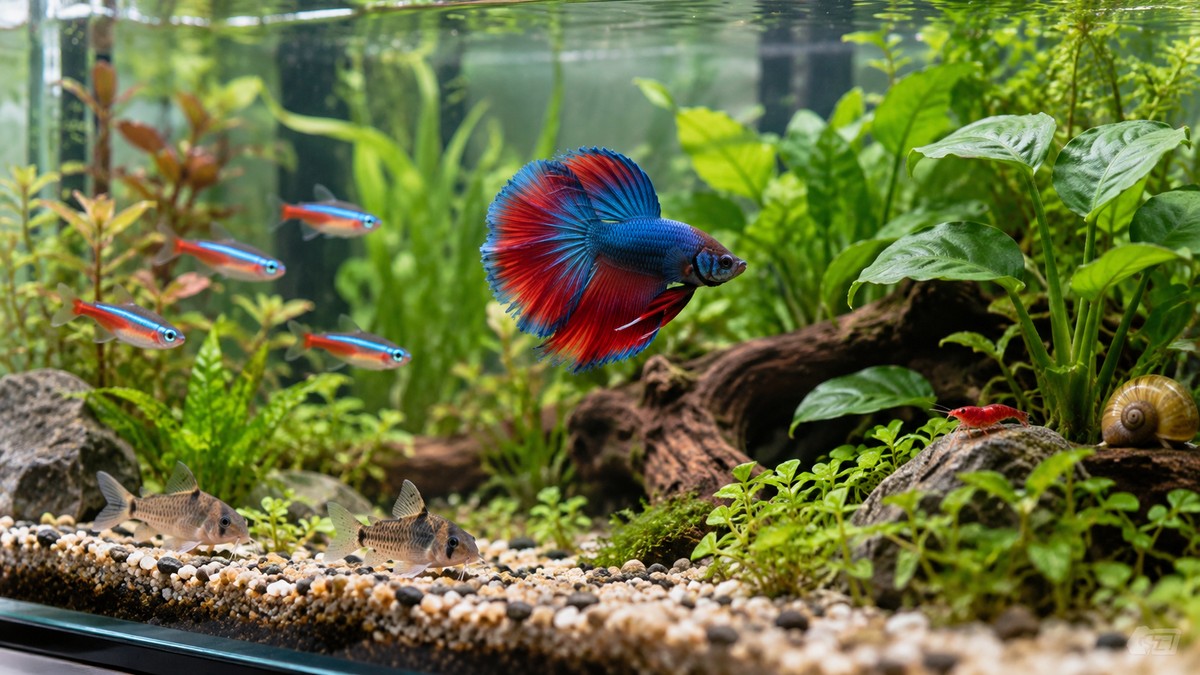
Described as non-aggressive bottom dwellers that should be kept in groups of 4 or more, with pygmy corys as a smaller choice. The 10 gallon minimum applies.
Harlequin rasbora
Described as peaceful, kept as a school of 5 to 6 at 10 gallons.
African dwarf frog
Peaceful according to the guide, to be kept at least two together, with access to the surface for air.
Neon and ember tetras
Neons are suggested in a group of 6 to 10 in a long, narrow tank with plenty of plants. Embers are suggested in groups of 4 to 6 and stay mid-tank, which the guide says reduces territorial conflict. Both need 10 gallons.
Feeder guppy, clown pleco and kuhli loach
The guide lists a plain feeder guppy as docile and hardy, but says to choose the plain feeder type rather than fancy guppies. It suggests the dwarf clown pleco, not the common pleco, at 15 gallons. Kuhli loaches are described as docile and need 20 gallons; because they burrow, the guide says sand may be needed.
What to avoid
- Other male bettas. They need a divider. Males and females should not be housed together.
- Fancy, long-finned or brightly colored fish, which a betta may mistake for rivals.
- Common pleco (the guide says up to two feet) and clown loach (can exceed a foot).
- Barbs and any aggressive species.
- Zebra danios, which the guide does not recommend because they are shoaling top feeders that may nip fins.
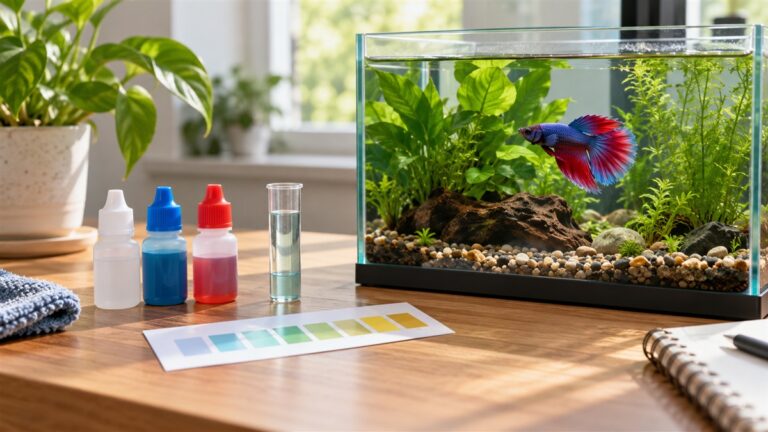
Our post on whether a betta can live in cold water is also worth reading, because many cold-tolerant species are a poor match for a betta's warm-water range. The guide gives 72 to 81 degrees Fahrenheit and a pH of about 7.0 to 8.0 and says all inhabitants should have similar needs.
How to introduce tank mates
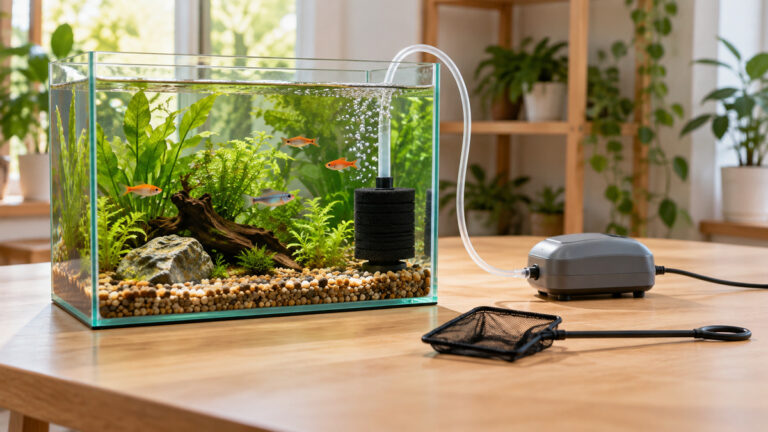
The guide says to add the betta to an established, filtered, heated tank; to quarantine new fish for 4 to 6 weeks; and to acclimate everyone gradually. It advises plenty of hiding spots and plants, feeding each species its own appropriate food, and watching closely for at least 72 hours and for several days after adding any companion. Hides and plants break line of sight, which is why decor appears in nearly every tank mate guide.
Signs it is not working
The source lists loss of appetite, fin tearing or visible wounds, constant chasing, prolonged quarreling and clamped fins as signs of aggression or stress. Clamped fins may also indicate illness, so if a fish looks unwell, ask a vet instead of guessing.
Have a backup plan
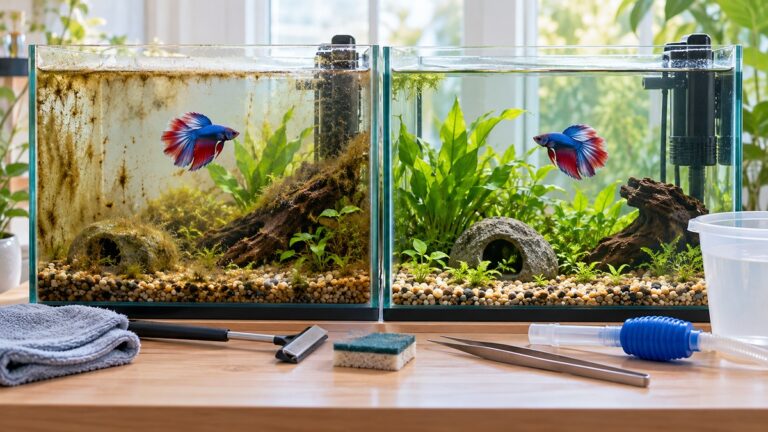
The guide recommends keeping an exile tank, container or divider ready before adding anyone, and removing the betta immediately if wounds appear or stress persists. If a companion does not work out, the betta can live alone. Planning this ahead is far easier than improvising when a fish is under attack.
A short decision guide
Under 5 gallons: betta alone. 5 gallons: a snail or a moss ball, if anything. 10 gallons: pick one group from the list and add it gradually. 15 to 20 gallons: more options, including a clown pleco or kuhli loaches. At every size, the individual betta decides. Some are calm, some attack anything that moves. You will only learn which yours is by watching.
FAQ
Can two male bettas live together?
No. The guide lists other male bettas as something to avoid, and says they need a divider.
Can a betta live with snails?
The guide suggests the mystery snail as docile and able to retreat into its shell, and says snails are the only companion suggested for very small tanks.
Can I keep a betta with shrimp?
Ghost shrimp appear on the list at 10 gallons, but they are small and the betta may hunt them, so dense cover is important.
How long should I watch new tank mates?
The guide says at least 72 hours, and for several days after adding a companion.
What if my betta attacks a tank mate?
Remove the betta or the other animal right away to a spare container or behind a divider, and ask a vet or fish store if anyone is injured.
Can a betta live with a goldfish?
See our separate post on bettas and goldfish for what the sources say.
Bottom line
Keep the betta alone unless you have at least 10 gallons, dense plants, a quarantine plan and a spare container, and then start with the most peaceful options on the list, a snail or a small group of corys, rather than any fish that looks like a betta.