Do Betta Fish Like Sunlight? Heat and Algae Facts
As an Amazon Associate we earn from qualifying purchases.
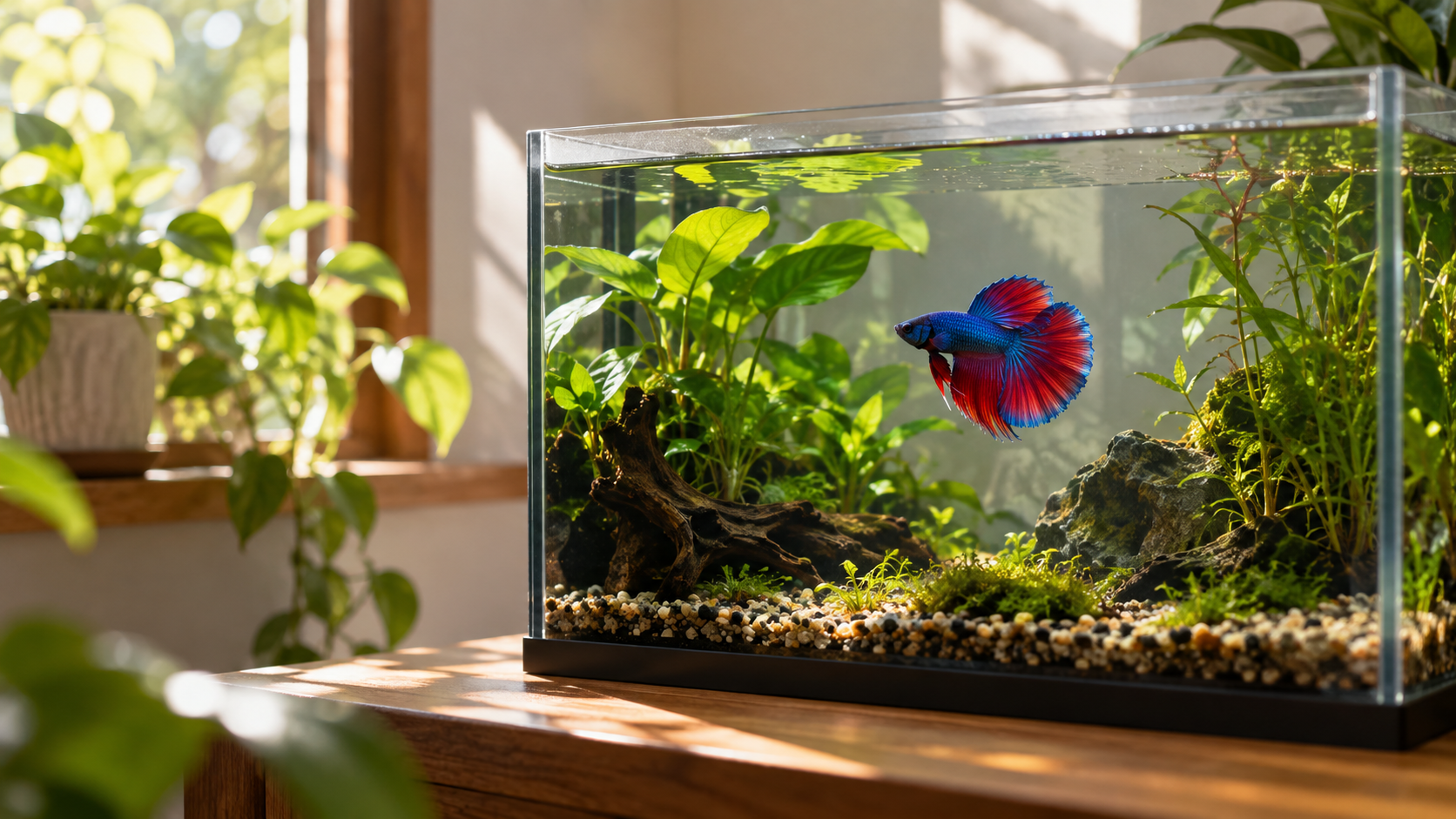
The person typing “do betta fish like sunlight” wants to know whether a betta benefits from sun on its tank. The sources opened for this guide do not say that bettas like or dislike sunlight. What they do say is practical: the Merck Veterinary Manual advises that a tank “should be located out of direct sunlight,” mainly because direct sun raises water temperature and promotes algae. Since warm water holds less oxygen, the heat effect matters for a betta. This guide sets out what is sourced and what is not.
Quick answer
- No opened source says bettas like sunlight, so a sourced yes or no is not possible.
- Merck says the tank “should be located out of direct sunlight,” to limit algae and heat.
- Direct sun can raise the water temperature, and warmer water holds less oxygen.
- Give the tank a steady light cycle and shade the water with plants or a lid, as general guidance.
What the sources say about direct sun
The Merck Veterinary Manual gives a clear placement rule in its home-setup guidance. It says: “The tank should be located out of direct sunlight. This helps limit the growth of algae in the tank.” The same page explains that “Although a moderate amount of algae is not harmful, a buildup of algae on the glass or in the water is unsightly and makes it harder to spot any health problems with the fish or their environment.”
That second point matters for a betta owner. Algae can hide changes in the fish and the water, so a heavy algae bloom makes the daily check harder. The source treats algae as a maintenance and observation problem, not as a direct threat to fish.
Sunlight, heat and oxygen
Heat is the main health link in the sources. The Merck page says that “Direct sunlight can also cause the water temperature in the tank to rise. The warmer the water becomes, the less oxygen it will hold. If the water gets too warm, the fish can suffocate and die.” That passage describes fish in general, not bettas specifically.
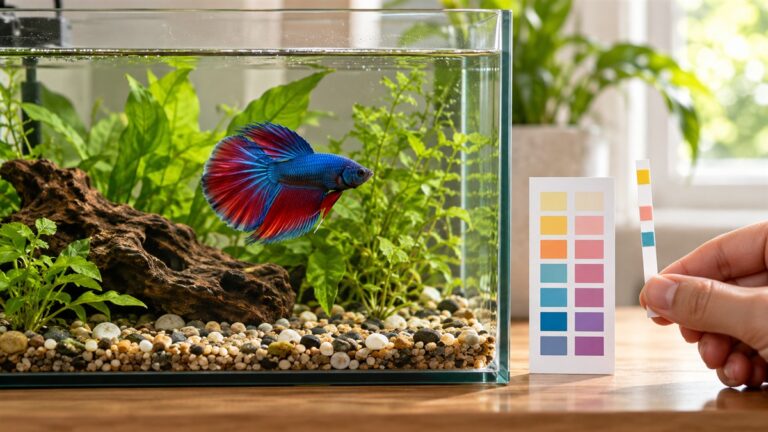
The UF/IFAS betta publication adds a temperature point. It says that “bettas thrive in warmer water and do not do well in cold water.” Warm is therefore not the same as hot. A sunny window can push the water past a comfortable range, and the sources do not give a home-tank range to check against. Use a thermometer and watch the reading across the day.
For heater choice and placement, see whether a betta fish needs a heater. A heater and direct sun both move the temperature, so check both together.
Shade, plants and covers
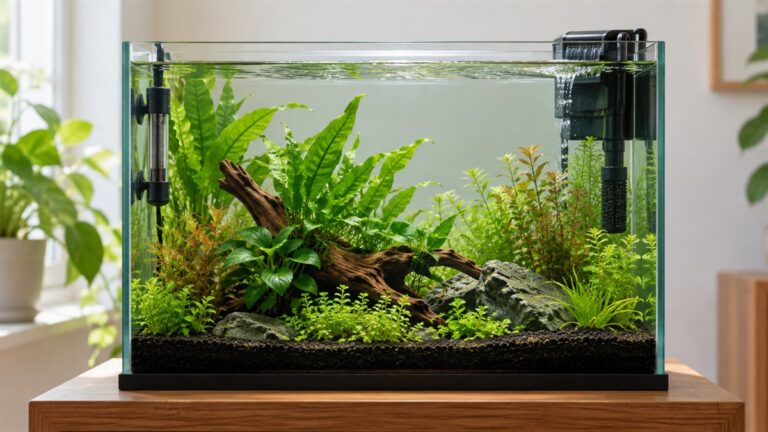
The Merck page notes that plants help in a practical way: “Plants, and floating plants in particular, can also minimize temperature changes by shading the water to keep it cool.” It also says that aquatic plants “help prevent the growth of algae by absorbing nutrients that would otherwise feed the algae.” These points come from a general fish-keeping source, and they apply to a betta tank as general guidance.
A lid or a canopy can also block light, but the opened sources do not describe lids for bettas. Any cover should leave the tank open enough for air exchange and for the surface to be checked.
Artificial light for a betta tank
The sources opened for this guide do not give a light intensity, a day length or a photoperiod for a betta. They also do not say whether bettas need a light at all. A timer on the tank light gives a steady cycle, which is general guidance rather than a sourced requirement. Keep the light off the same hours each day so the tank is not lit around the clock.
For light choices, see the guide to blue lights for betta fish. That guide compares products, while this one is about the sourced points on light and sun.
Placing the tank in a practical spot
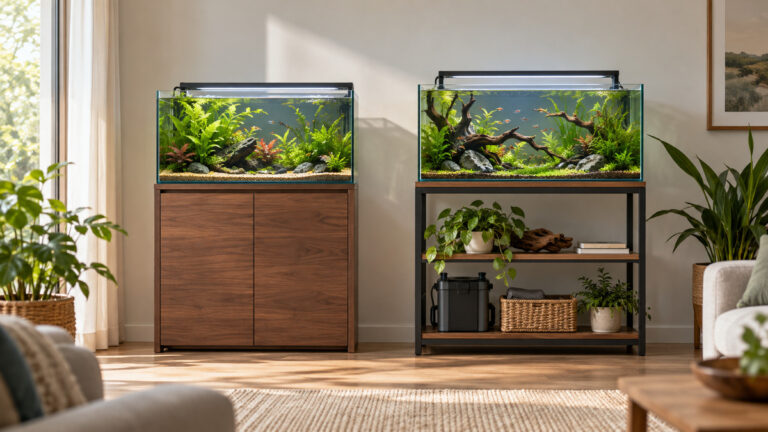
The Merck page also gives a practical placement rule. It says that “Your aquarium should be placed in a location that you can get to easily for feeding, cleaning, and general maintenance.” A spot that is hard to reach is harder to check each day, and a window spot can be hard to keep at a steady temperature. Check the thermometer at more than one time of day, and note whether the reading moves with the sun.
The same page warns about heat in general terms. Because “The warmer the water becomes, the less oxygen it will hold,” a tank that warms in the afternoon may hold less oxygen at that time. The sources do not give a measured oxygen target for a betta tank, so keeping the tank out of direct sun and watching the fish is the sourced step.
Algae adds work as well. The Merck page notes that “In addition, the tank requires more cleaning.” A sunny spot therefore adds maintenance even when the fish are not directly affected.
How we chose
The criteria for this guide were set before any product search. Only university and veterinary references were used, and retail pages were excluded. The points about sunlight come from the Merck home-setup page, and the points about temperature come from the IFAS betta and stress publications. Each quotation was checked against text opened on 2026-10-24. No product, price or rating appears in the sourced content.
What we could not verify
The sources answer the placement question, not the preference question. They say where to put a tank, and they describe the heat and algae effects. They do not say whether a betta enjoys sunlight, and they do not give the light levels or hours a betta needs.
What the sources do not say
- Whether bettas like or dislike sunlight or lamp light.
- A betta-specific photoperiod, or the number of hours of light per day.
- A light intensity for bettas, or the light type that suits them.
- A home-tank temperature range that would show how much sun is too much.
Frequently asked questions
Do betta fish need sunlight to stay healthy?
The sources opened do not say bettas need sunlight. They describe a tank out of direct sun to limit heat and algae. A tank can be healthy with an indoor light on a timer, as general guidance, if the water is tested and kept stable.
Can direct sun harm a betta tank?
The Merck page says direct sunlight can raise water temperature, and that warmer water holds less oxygen. It adds that “If the water gets too warm, the fish can suffocate and die.” That is a sourced risk for fish in general, and it applies to a betta tank.
How many hours of light does a betta need each day?
The sources do not give a betta-specific number of hours. A steady timer is a common practice, but this guide does not state a sourced figure. Keep the hours consistent and watch for algae growth.
Does sunlight cause algae in a betta tank?
The Merck page links direct sunlight to algae growth, and recommends placing the tank out of direct sun to limit it. Some algae is not harmful, but a heavy bloom makes the fish and water harder to check.
Should I cover a betta tank to block sunlight?
The sources do not describe lids or covers for bettas. Any cover should not block the surface, and it should allow the tank to be checked. Shading with plants is a sourced option, with the Merck page describing floating plants as shading the water.
Sources
- Providing a Home for Fish, Merck Veterinary Manual, opened 2026-10-24.
- Evolution, Culture, and Care for Betta splendens (UF/IFAS FA212), opened 2026-10-24.
- Stress: Its Role in Fish Disease (UF/IFAS FA005), opened 2026-10-24.