Can a Betta Fish Eat Goldfish Flakes?
As an Amazon Associate we earn from qualifying purchases.
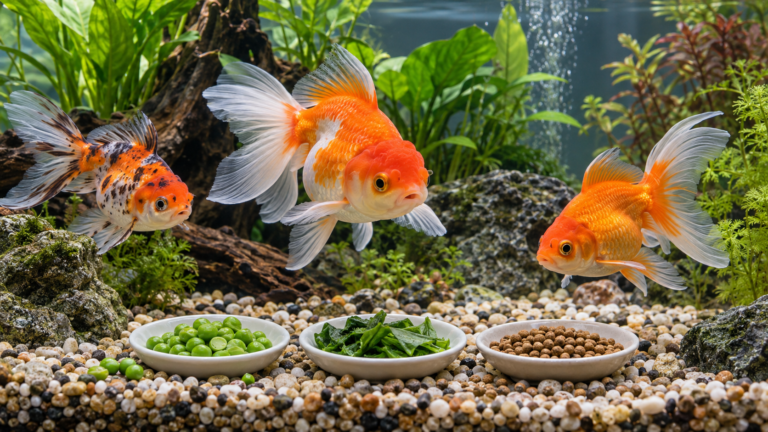
Can a betta fish eat goldfish flakes? The sources checked for this guide do not say goldfish flakes are safe for a betta, and they do not say they are unsafe. What they do show is that a fish’s diet should match its species. Commercial dried foods are formulated to contain the right nutrients for the fish they are made for, so a betta-labeled food is the safer default for a betta’s main diet.
Quick answer
- The sources checked do not name goldfish flakes and do not confirm them as a suitable betta food.
- Merck says a fish needs a diet suited to its type, and that commercial foods are “usually formulated to contain the proper mix of nutrients for your fish when fed properly.”
- FishBase places betta at a trophic level of 3.3 and goldfish at 2.0, so the two species are not estimated to eat the same mix of food.
- Use a food labeled for bettas as the main diet, read the ingredient list, and do not treat any single flake as a complete diet.
Why the species matters
The first question is what a betta is built to eat. FishBase gives a trophic level for each species, which is an estimate of where a fish sits in the food web. For the betta, Betta splendens, FishBase lists a trophic level of 3.3 with a note that the value is “based on food items.” For the goldfish, Carassius auratus, FishBase lists 2.0 and says the figure is “based on diet studies.” The gap means FishBase estimates that bettas feed higher on the food chain than goldfish do.
That estimate does not mean a betta cannot eat a plant-based or goldfish-style food at all. It means the two species are not estimated to share the same diet, so a food built around goldfish needs cannot be assumed to meet betta needs. Merck makes the same point in general terms: “You need to know the type of diet your fish require.” The goldfish flake is a product for one set of needs, and the betta owner has to check whether it covers the other set.
What a commercial flake is designed to do
Merck describes dried foods in general this way: “Commercial dried foods, such as pellets, flakes, or granules, are a good choice because they are usually formulated to contain the proper mix of nutrients for your fish when fed properly.” The key phrase is “when fed properly.” A flake can be a good food for the fish it was made for and still be a poor main diet for a different species.
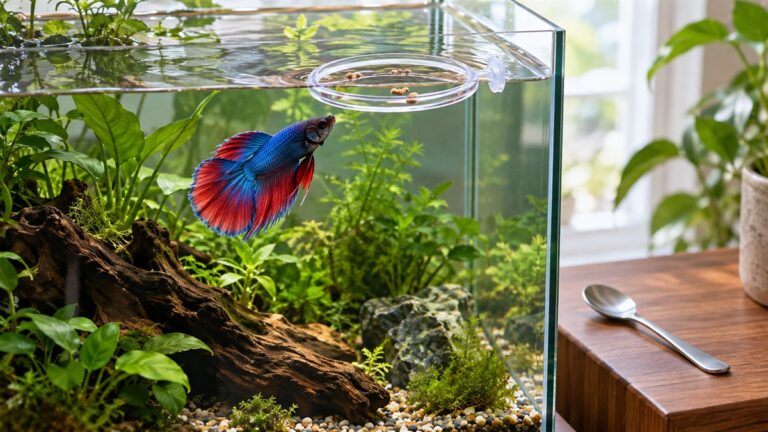
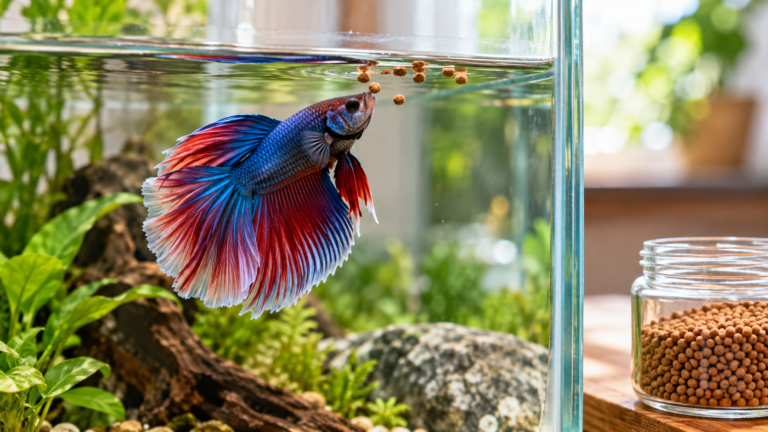
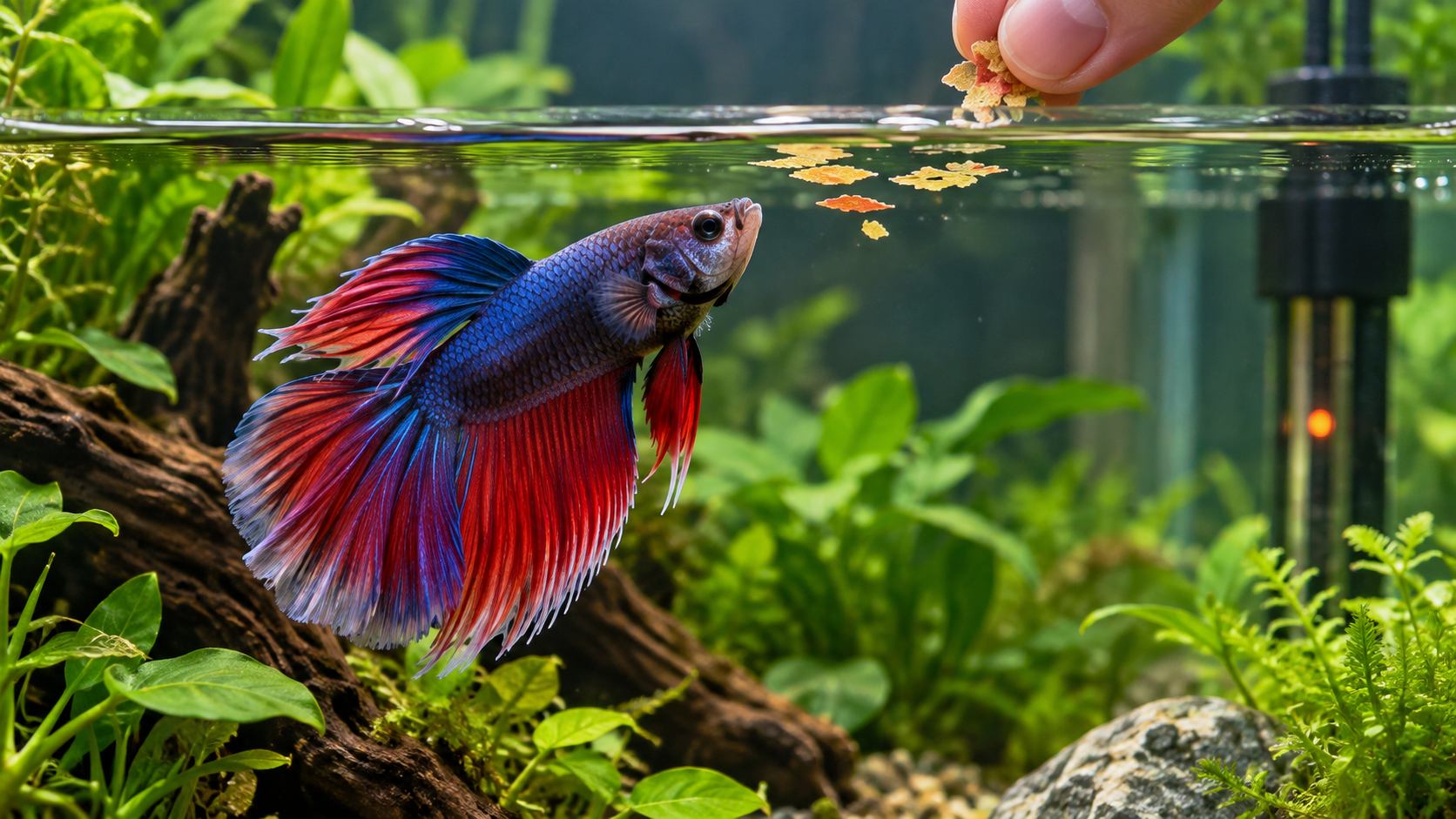
Form matters too. Merck notes that “fish that prefer to feed at the bottom should not be fed flakes that float on the surface.” The sources checked do not say where a betta usually feeds in the water column, so the betta owner should watch the fish at feeding time. If the fish mostly takes food near the surface, a floating flake fits the habit. If food falls past it, the flake may be a poor match for that fish.
Storage also changes what the fish gets. Merck says “Food should not be stored for excessive periods of time.” It adds that “In general, dried foods should be kept on hand for no more than 2 months.” An old tub of goldfish flakes that has been opened for months is not a reliable food, whatever the species.
Building a betta diet that works
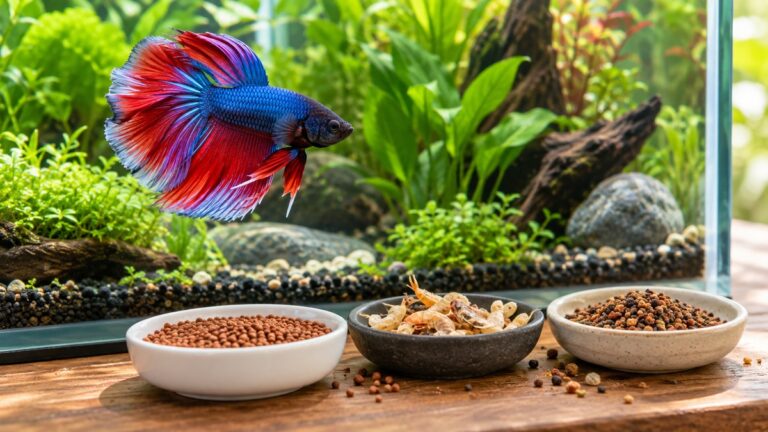
Merck recommends a structure rather than a single food: “A variety of foods should be fed, with one primary dietary source supplemented with other foods that provide necessary nutrients.” For a betta, that means choosing one main food made for bettas, then adding small extras only as a supplement. The main food carries most of the nutrition, and the extras add variety.
Live foods are a common temptation. Merck says live foods, “while generally a good source of protein and fat, can lack sufficient amounts of other elements and may not provide a complete diet.” Merck also says that a fish “fed only live food from day one may refuse other foods,” which matters if the owner later switches to a regular food. Live foods can also “sometimes introduce parasites or diseases into the fish’s environment,” so they add their own risk.
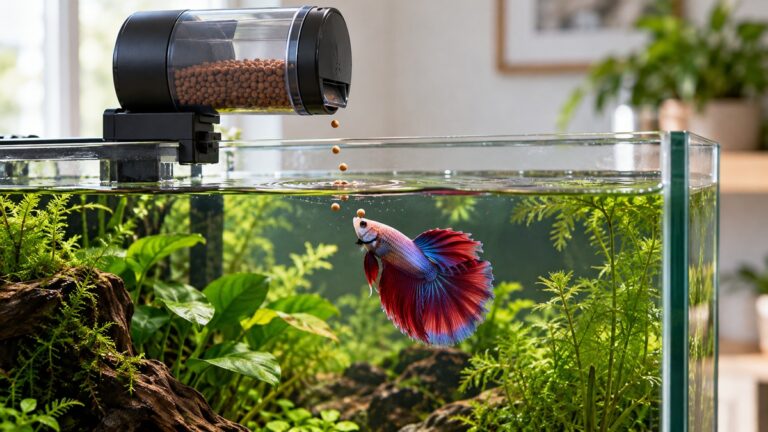
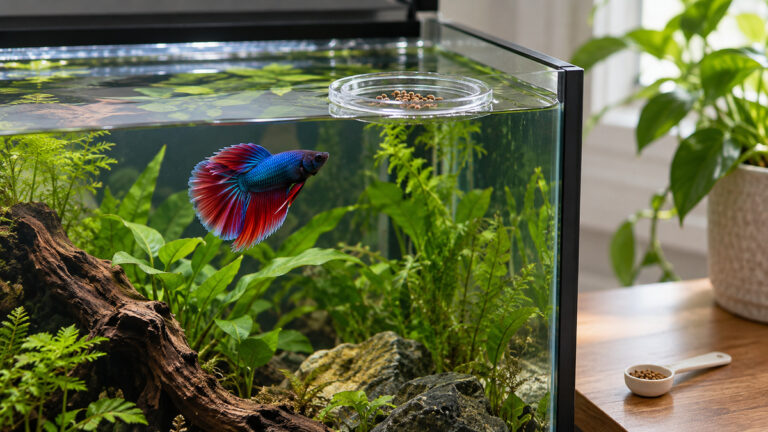
Portion size is the other common mistake. Merck is direct: “Overfeeding can lead to health problems as well as a dirty tank.” It also says “Feeding methods and rates vary with species, age, system, and water temperature,” which means no single amount fits every betta or every tank. The guide on how many pellets to feed a betta covers portions in more detail, and the guide on best betta food covers food types.
What to check on the label before buying
A label answers two questions quickly. First, is the food written for bettas or for another fish? Second, is the ingredient list mostly one or two bulk fillers, or does it list a range of protein and plant sources? The sources checked do not give a required ingredient list for betta food, so the label is the only practical check the owner can make at the store. Compare labels across two or three options rather than trusting a single bag.
Watch the fish after a change of food. Merck’s list of common signs of illness in fish includes “Not eating,” along with lethargy and loss of color. A betta that refuses food for a period, or that looks unwell after a diet change, needs a closer look. Merck’s advice is that complicated problems need veterinary care, so an experienced fish keeper or an aquatic vet is the right person to ask. Do not try to treat a sick fish with a food change alone.
How we chose
This guide relies only on sources that could be opened on 2026-10-24: two Merck Veterinary Manual fish care pages, which cover diet, feeding and health, and two FishBase species summaries for trophic level. No retail listings, prices or product reviews were used. The question is answered from what those pages say about species diet, commercial foods and feeding habits, and every direct claim is tied to one of them.
What we could not verify
The sources do not answer the exact question for a named product. No goldfish flake brand was opened, so the ingredient list, protein level and intended species of any specific flake remain unknown. The sources also do not give a betta feeding schedule or a betta-specific portion size.
What the sources do not say
The sources do not say that goldfish flakes are safe for bettas, and they do not say they are harmful. They do not describe the diet of wild bettas in detail beyond the trophic estimate, and they do not say where bettas usually feed in an aquarium. If a betta owner wants a firm yes or no for one product, the answer has to come from that product’s label and from an experienced fish keeper or an aquatic vet.
Frequently asked questions
Is it safe for a betta to eat goldfish flakes once in a while?
The sources checked do not give a safety answer for this case. Choose a food labeled for bettas for the main diet, and ask an experienced fish keeper or an aquatic vet if the fish shows any change after a new food.
Why does the species matter for fish food?
Merck says fish need a diet suited to their type, and FishBase estimates different trophic levels for betta (3.3) and goldfish (2.0). A food built for one species is not guaranteed to match another.
Can a betta live on flakes alone?
The sources describe one primary food supplemented by other foods, not a single flake as a complete diet. Choose a main food made for bettas, then add variety as a supplement.
What if my betta will not eat the new food?
Merck lists “Not eating” among common signs of illness in fish. Remove uneaten food, check the water, and ask an experienced fish keeper or an aquatic vet if the fish keeps refusing food.
How long should a fish food stay in the cupboard?
Merck says dried foods should be kept on hand for no more than 2 months, and that food should not be stored for excessive periods. Buy smaller containers and replace them on a regular schedule.
Sources
- Merck Veterinary Manual, “Providing a Home for Fish,” https://www.merckvetmanual.com/all-other-pets/fish/providing-a-home-for-fish (opened 2026-10-24)
- Merck Veterinary Manual, “Routine Health Care of Fish,” https://www.merckvetmanual.com/all-other-pets/fish/routine-health-care-of-fish (opened 2026-10-24)
- FishBase, Betta splendens species summary, https://www.fishbase.se/summary/Betta-splendens.html (opened 2026-10-24)
- FishBase, Carassius auratus species summary, https://www.fishbase.se/summary/Carassius-auratus.html (opened 2026-10-24)