Do Bettas Eat Shrimp?
As an Amazon Associate we earn from qualifying purchases.
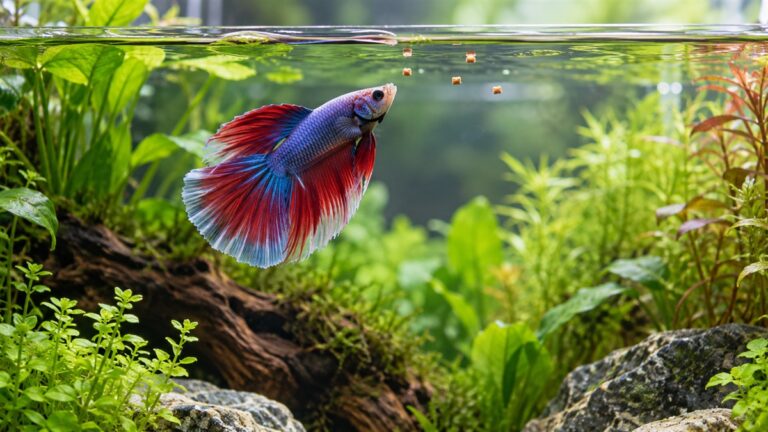
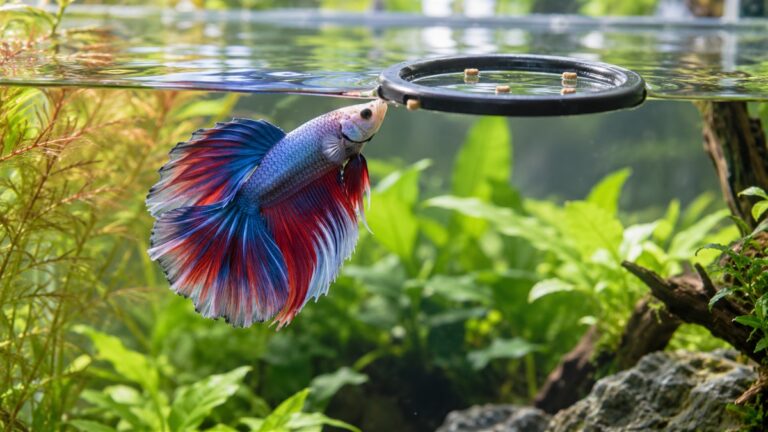
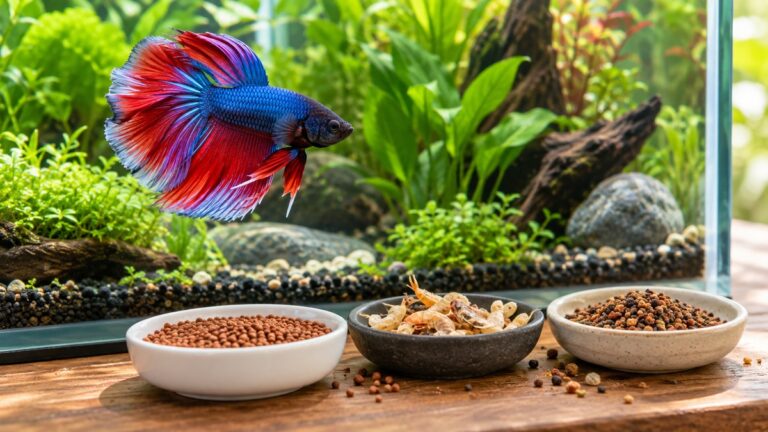
Do bettas eat shrimp? Yes, bettas can eat shrimp, but only in the form of food made for fish. The UF/IFAS publication on betta care lists adult brine shrimp among the “live or frozen feeds” that can be added to a betta’s diet. Frozen or freeze-dried brine shrimp is the usual way hobbyists offer it. Whether a betta should eat a living ornamental shrimp that shares its tank is a different question. The sources we opened describe feeding, not tank mates, and they do not say a betta will or will not hunt a live shrimp. The safe reading is that shrimp as food is sourced, and shrimp as a tank companion is not.
Quick answer
- The UF/IFAS publication names “adult brine shrimp” as a live or frozen feed that can be added to a betta’s diet.
- Feeding shrimp is a supplement, not a full diet. The Merck page says commercial dried foods are “a good choice” for pet fish when fed properly.
- The sources do not say whether a betta will eat a live ornamental shrimp kept in its tank, so do not add one on the assumption it is safe.
- Overfeeding and dirty food are the two feeding problems the sources warn about most.
What the UF/IFAS betta publication says about live and frozen food
The UF/IFAS publication FA212, “Evolution, Culture, and Care for Betta splendens,” covers feeding in its culture section. It says that “While a dry diet may be used exclusively, the addition of live or frozen feeds such as blood worms (Glycera spp.), adult brine shrimp, tubifex worms (Tubifex spp.), or mosquito larvae (Culicidae), may improve egg and larval quality.” The context matters. That sentence is written for fish raised as future breeders, where the authors say such fish “will benefit from use of other food items.” So brine shrimp is a sourced option for a breeding or growing fish. For a pet betta, the same publication treats a dry diet as a valid base.
The publication then adds a warning that applies to any live or frozen food: “proper storage and feeding regimens—avoiding overfeeding and water fouling—as well as clean sources of live feeds are very important considerations.” Uneaten shrimp that sits in the tank breaks down and adds waste. The sources do not give a feeding amount for a betta, so the guidance here is to offer only what the fish eats in a short time, then remove leftovers.
The publication also describes how hatchery bettas are fed. Young larvae start on “small live feed organisms such as brine shrimp nauplii,” then move to “commercially available diets.” That history helps explain why brine shrimp is familiar to bettas. It does not, by itself, say what an adult betta needs day to day.
Why the base diet matters more than a treat
The Merck Veterinary Manual’s disorders page gives a broad rule for fish feeding: “One of the most common contributors to illness or death in aquarium and pond fish is improper nutrition.” It adds that “It is very important to learn what diet best matches the needs of your fish.” A treat that replaces part of a balanced diet can therefore cause problems even if the treat itself is safe.
The Merck page on providing a home for fish is direct about the base diet. It says “Commercial dried foods, such as pellets, flakes, or granules, are a good choice because they are usually formulated to contain the proper mix of nutrients for your fish when fed properly.” For a betta, the sensible structure is a commercial pellet or flake as the main food, with brine shrimp as an occasional addition. The sources do not give a percentage split or a number of feeds per week, so any figure would be general guidance and is not included here.
Diet also has a species dimension. The Merck page on special considerations asks: “Will the same diet meet the nutritional needs of all species in the tank?” That question matters when a betta shares a tank with other fish or with shrimp. A food that suits a shrimp may not suit a betta, and a food that suits a betta may not suit the shrimp. The sources do not describe a diet that works for both.
Live shrimp in a betta tank
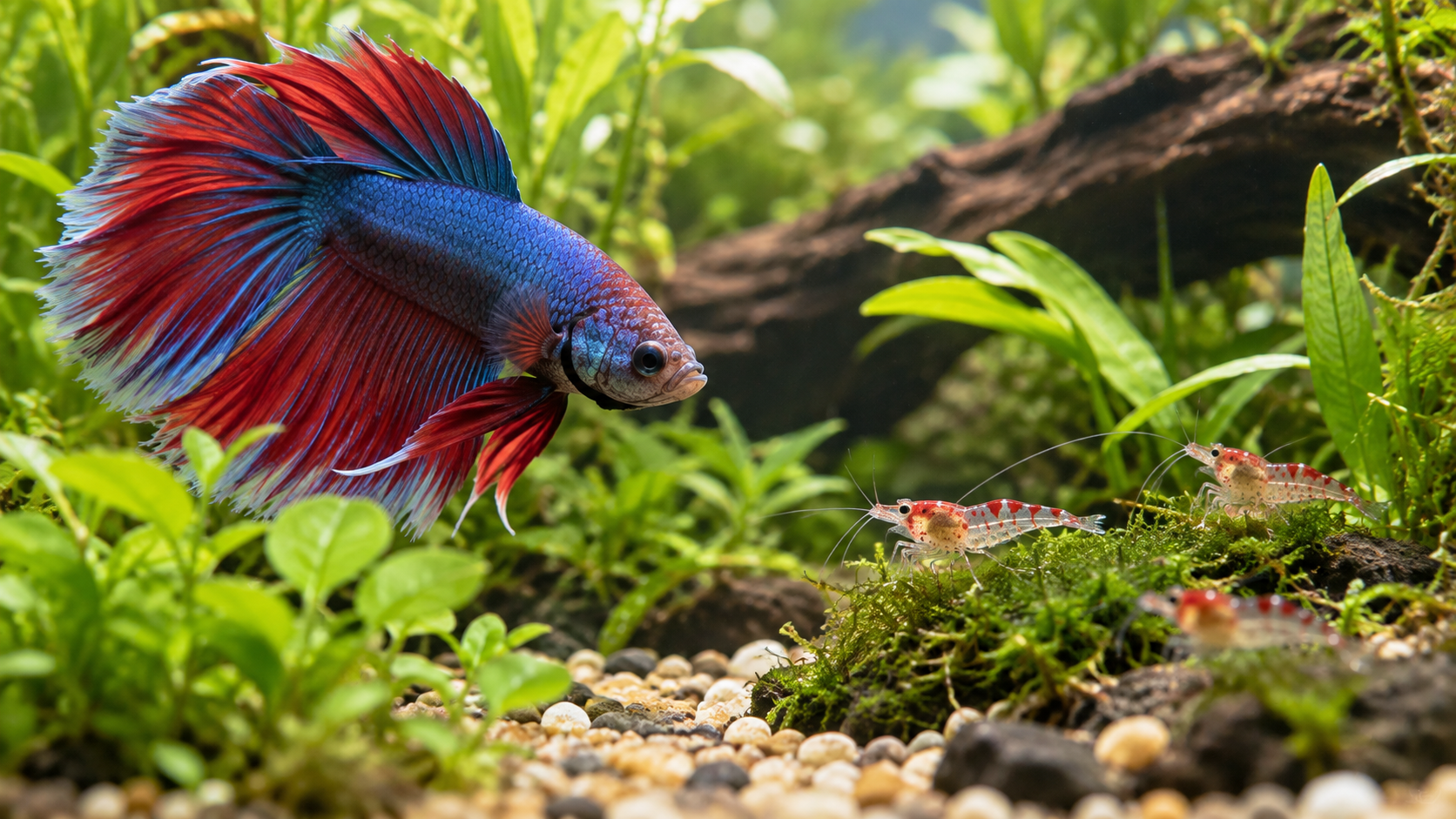
This is the question many readers mean when they ask whether bettas eat shrimp. A live ornamental shrimp in a betta tank is a different situation from a frozen brine shrimp in a feeding dish. The sources we opened do not address whether a betta will hunt, catch or eat a live ornamental shrimp kept as a tank companion. They also do not discuss whether a shrimp would be stressed or harmed by a betta. The Merck page on new fish notes that “the current residents sometimes respond aggressively, chasing or attacking the new fish.” That is a sourced general pattern about aggression to new arrivals, but the sources do not extend it to bettas and shrimp.
Because of that gap, the honest answer is that a live shrimp in a betta tank is not something the sources support. If you want shrimp in a planted tank, check the tank plan and the species of shrimp first, and do not assume the betta will leave them alone. A betta fed well may still chase and eat small moving foods, but that is a general observation and not a sourced rule.
Health is the other concern. The Merck disorders page says that “Fish may be infected by eating infected dead fish or by other routes of contact” in the context of one bacterial disease. The principle is that feeding animals can carry problems. Any live food, whether frozen or fresh, should come from a clean source. The UF/IFAS publication stresses “clean sources of live feeds.”
Practical feeding steps
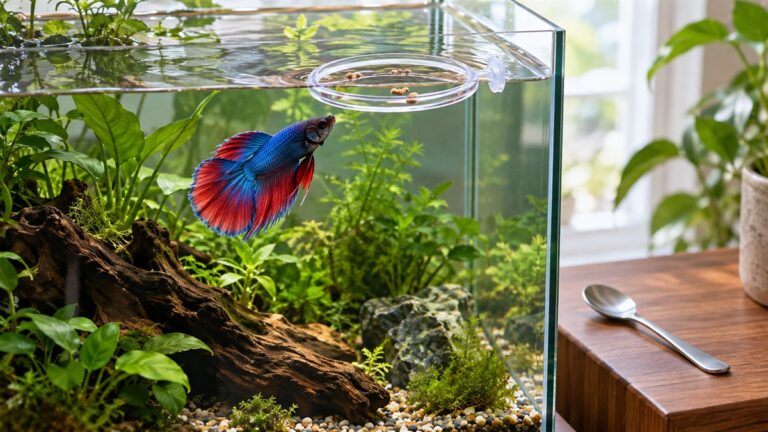
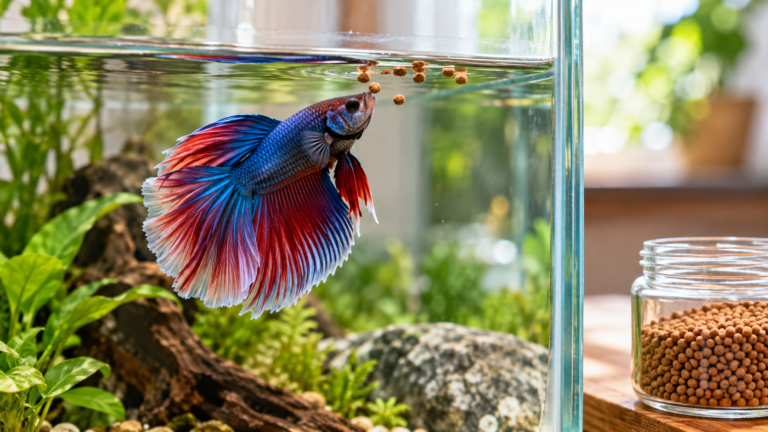
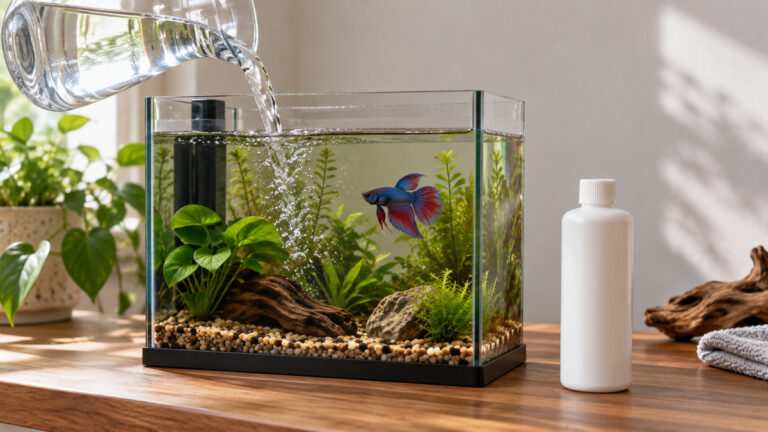
Start with a commercial betta food as the base, since the Merck page calls dried foods a good choice when fed properly. Offer brine shrimp only as an addition. Use frozen or freeze-dried shrimp from a fish-food source, thaw it as the package directs, and feed only what the fish takes within a short time. Remove anything left on the bottom. Keep the tank clean with regular water changes, and test ammonia if the water looks cloudy or the fish stops eating. For water change advice, see the best way to clean a betta fish tank.
Do not feed live shrimp caught from ponds or streams, since the sources emphasize clean sources of live feed. If a betta is not eating normally, check the water before changing the food. The Merck disorders page lists “loss of appetite” among signs that can accompany disease, so a sudden refusal of food is a reason to look at the tank, not only the diet.
Tank size and heating also affect how a betta eats and how waste builds up. For background on tank volume, see how big of a tank do betta fish need, and for heating, do betta fish need a heater.
How we chose
We used the UF/IFAS betta publication for the feeding statements about bettas, because it is a university extension document written about betta culture and care. We used two Merck Veterinary Manual pages for general fish nutrition and for the question of diets that must suit every species in a tank. We did not use retail food pages, product labels or hobby blogs for any factual claim. The sources were opened on 2026-10-24.
What we could not verify
The sources describe betta feeding in general and in hatchery settings. They do not give a feeding amount, a feeding schedule or a percentage of diet for a pet betta. They do not say whether a betta eats ornamental shrimp in a home tank, and they do not compare brine shrimp with other frozen foods for a pet betta.
What the sources do not say
The sources do not say that a betta will or will not attack a live shrimp in its tank. They do not give a safe number of shrimp for any tank size, and they do not discuss shrimp species. They also do not say how often a betta should eat brine shrimp, so any frequency given elsewhere is general guidance and is not sourced here.
Frequently asked questions
Is brine shrimp good for bettas?
The UF/IFAS publication lists adult brine shrimp among live or frozen feeds that can be added to a betta’s diet. It treats them as an addition to a dry diet, and it stresses clean sources and avoiding overfeeding.
Can a betta eat freeze-dried shrimp?
The sources do not discuss freeze-dried shrimp specifically. They name frozen and live feeds and note that proper storage matters. Follow the product label and feed only what the fish takes in a short time.
Will my betta eat the shrimp in its tank?
The sources we opened do not say. They do not describe a betta hunting or eating a live ornamental shrimp kept as a tank mate. Do not assume the two will live together safely without checking a source for that specific pairing.
Should bettas eat only pellets?
The UF/IFAS publication says that in betta culture “a dry diet may be used exclusively,” and the Merck page calls commercial dried foods a good choice when fed properly. The sources also show that live or frozen foods can be added. Pellets as a base is the simplest reading of the sources.
What happens if a betta is overfed?
The sources warn against overfeeding and water fouling. The Merck disorders page says improper nutrition is one of the most common contributors to illness or death in aquarium fish. Uneaten food should be removed, and the water should be checked.
Sources
- UF/IFAS EDIS FA212: Evolution, Culture, and Care for Betta splendens (opened 2026-10-24)
- Merck Veterinary Manual: Disorders and Diseases of Fish (opened 2026-10-24)
- Merck Veterinary Manual: Providing a Home for Fish (opened 2026-10-24)
- Merck Veterinary Manual: Special Considerations for Fish (opened 2026-10-24)