How Much Food to Feed a Betta Fish: Portion Guide
As an Amazon Associate we earn from qualifying purchases.
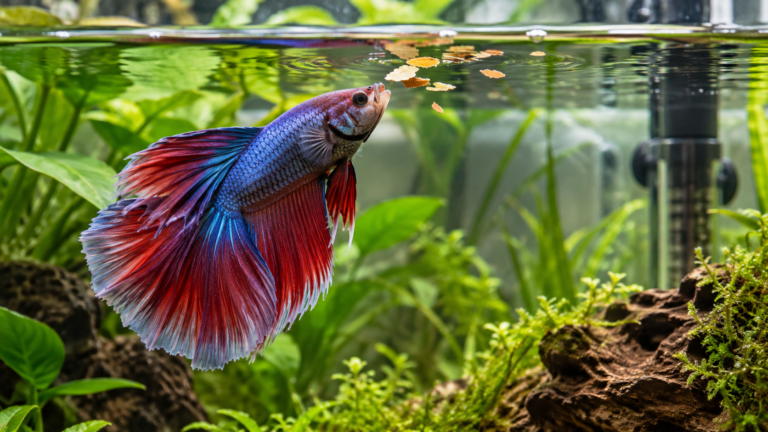
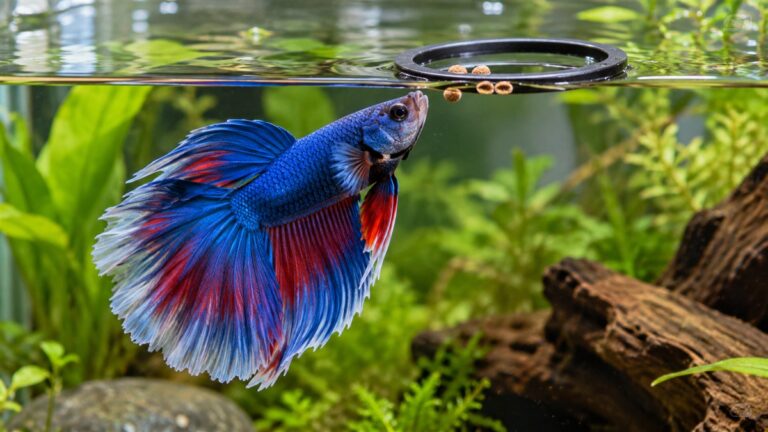
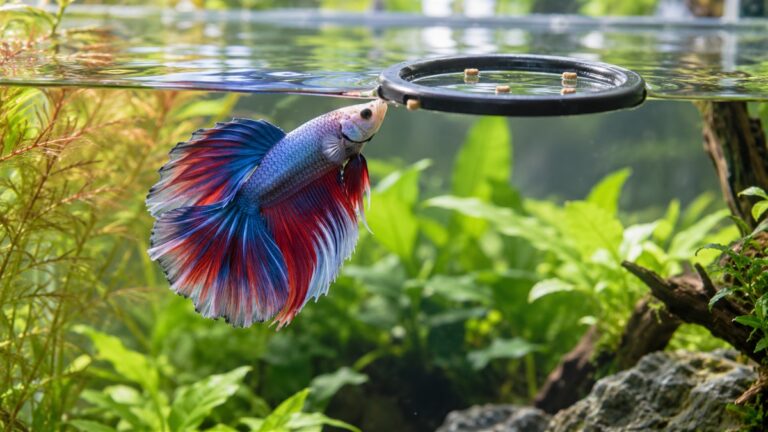
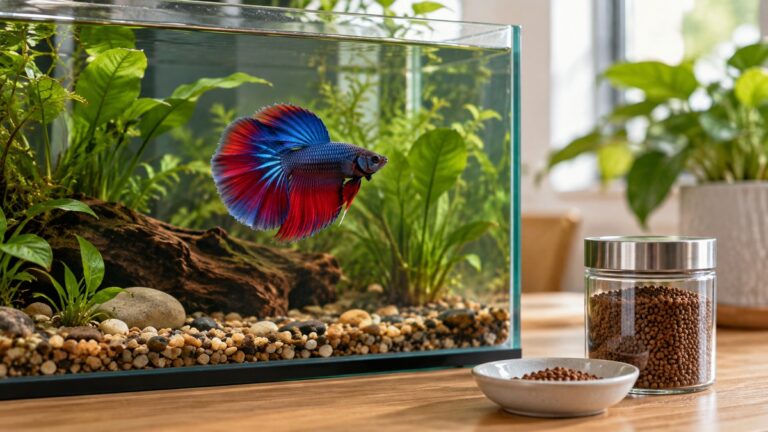
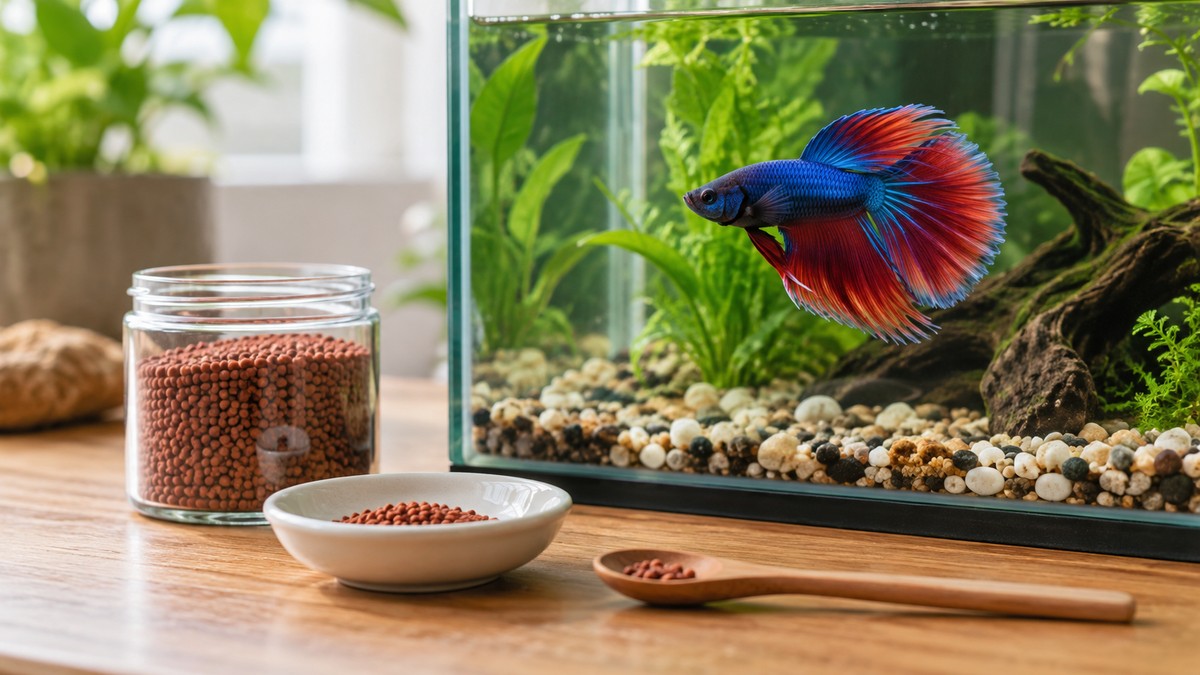
How much food do you feed a betta fish? The guidance from a veterinary answer service is 2 to 3 small pellets, once or twice a day, adjusted to the fish’s appetite and activity. That is a small amount on purpose. This guide turns that number into a routine you can follow: how to portion a meal, what to do with leftovers, how to tell whether you are giving too much or too little, and which foods belong in the bowl as treats rather than the main diet.
Quick answer
- Portion: 2 to 3 small pellets per feeding.
- Frequency: once or twice a day.
- Leftovers: take out uneaten pellets after a few minutes so they do not foul the water.
- Treats such as bloodworms or daphnia are fine now and then, but pellets stay the main diet.
- If you are unsure about your fish’s feeding, or symptoms get worse, ask a vet.
The basic portion and why it is small
The figure to start from is two to three small pellets per meal. A betta is a small fish, and the amount that suits it looks tiny next to the amount most people expect to pour in. The veterinary answer is also clear that the number is a starting point: adjust it based on how hungry and active the fish is, and if he consistently leaves food, offer a little less.
Notice the wording: small pellets. Pellet sizes differ between foods, and a pellet that is large will not make the same portion as a pellet that is tiny. The practical approach is to count pellets of the size you actually have, watch how your fish eats them, and keep the count steady for a few days before changing anything.
How often to feed
The guidance is once or twice a day. Both patterns work for an adult fish. A single meal is the simplest routine. Two smaller meals suit people who like to feed morning and evening. What matters more than the choice is consistency: the same time, the same count, the same observation of how much gets eaten.
If you split the amount across two meals, keep each meal inside the 2 to 3 pellet range rather than doubling the day’s total. When in doubt, the lower count and the lower frequency are the safer side of the range.
Step by step: a feeding routine
- Count out the pellets before you open the container over the tank, so you do not tip in extra.
- Drop them in one or two at a time and watch whether each one is taken.
- Wait a few minutes. Remove any pellets that are still floating or have sunk.
- Note what happened. If the fish ate everything quickly and looked for more, that is information. If he left food, that is information too.
- Repeat at the next meal with the same count, and only adjust after you have seen a pattern.
Why leftovers matter
Uneaten food does not just go to waste. The veterinary answer says to remove uneaten pellets after a few minutes to protect water quality, and it lists leftover food and a dirty tank among the signs of overfeeding. In a small tank, a few pellets rotting on the bottom is a real share of the water’s load. A simple net or spoon kept next to the tank makes removal a habit instead of a chore.
The same source lists bloating as a sign of overfeeding. A bloated look is a reason to cut back the portion and, if it persists, to ask a vet; this page cannot diagnose a fish. For related warning signs, see our guide to overfeeding signs and fixes.
What to feed besides pellets
Pellets are the main diet in this guidance, and treats are the extra. The veterinary answer names bloodworms and daphnia as acceptable occasional treats, with pellets remaining the base. That fits what general reference material says about the fish’s natural diet. The Wikipedia entry on the Siamese fighting fish describes the species as naturally carnivorous, feeding on zooplankton, small crustaceans and aquatic insect larvae, and states that bettas cannot subsist solely on vegetation or the roots of plants. So a diet built on a meaty pellet with an occasional treat is consistent with how the animal feeds in the wild.
Treat portions should be small too. A treat is an addition to a meal, not a reason to feed a full meal on top of the pellets. If you offer a treat, count it as part of that day’s feeding rather than as a bonus.
Young fish are different
The Wikipedia entry notes that young bettas have limited carbohydrate digestion because their intestines are shorter and their carbohydrate-digesting enzymes are less active than in adults. It also says fry can eat commercial artificial feed or live moving prey, with live prey generally preferred; examples given are baby brine shrimp, water fleas and mosquito larvae. The portion guidance on this page is for an adult fish with a single betta in a tank. Raising fry is a separate project with its own routine, and the sources used here do not give amounts for it.
Reading your fish
Appetite and activity are your best guides. A fish that eats eagerly, swims normally and leaves nothing behind is getting about the right amount. A fish that leaves pellets, hangs low and ignores food is a cue to reduce the portion and look at the whole picture, including water quality. A fish that seems unwell, stops eating or gets worse needs a vet who treats fish. The sources used for this page cover feeding amounts only and do not give treatment advice, and nothing here replaces a vet’s assessment.
Keep a note for a week or two: what you fed, how much was left, how the fish looked. A simple log makes patterns obvious. It also gives a vet something to work with if you ever need to ask.
Common mistakes
- Pouring from the container instead of counting. A shake can deliver far more than three pellets.
- Leaving leftovers in the tank. Remove them after a few minutes.
- Replacing pellets with treats. Bloodworms and daphnia are occasional.
- Feeding more because the fish begs. A betta will often ask for food whatever the amount, so go by the count and by what is left over.
- Changing several things at once. Adjust the portion or the frequency, not both, and watch for a few days.
FAQ
How many pellets is one betta meal?
The veterinary answer used here says 2 to 3 small pellets per feeding, once or twice a day.
Can I feed my betta twice a day?
Yes, once or twice a day is the stated range. If you feed twice, keep each meal within the 2 to 3 pellet range and watch for leftovers.
What should I do with food the fish does not eat?
Remove it after a few minutes. Uneaten pellets harm water quality, and leftover food is one of the signs of overfeeding listed in the source.
Are bloodworms and daphnia okay?
The source calls them fine as occasional treats, with pellets remaining the main diet.
Is my betta overfed if his belly looks round?
Bloating is listed among the signs of overfeeding. Cut the portion back, and ask a vet if it does not settle or the fish seems unwell.
How much do I feed a baby betta?
The sources used here do not give amounts for fry, only that they can eat commercial feed or live prey. Ask a breeder or a vet for a fry schedule.
Bottom line
Count out 2 to 3 small pellets, feed once or twice a day, take out what is not eaten, and adjust only after watching the fish. For how often to feed and what to do next, this feeding frequency guide goes further.