Can Betta Fish Eat Algae Safely? Diet and Tank Facts
As an Amazon Associate we earn from qualifying purchases.
Can betta fish eat algae? A betta may nibble it, but algae is not a food they are built for. The guides we read describe bettas as carnivores whose digestive systems are made for meat, such as insects, larvae and tiny crustaceans, not for plant matter. A bit of algae swallowed by accident is unlikely to be a crisis, yet it should never replace a proper diet, and a tank with a lot of algae is a sign to look at light and feeding, not a free snack bar for your fish.
Quick answer
- Bettas are carnivores. Their staple should be a high-quality pellet with animal protein as the first ingredient.
- Wild bettas swallow some algae and plant matter by accident while catching prey, but one guide says they cannot process it.
- Algae wafers and vegetables are treated as foods to avoid or to offer only rarely.
- Algae in the tank is controlled by light, feeding and water changes, not by asking the betta to eat it.
What a betta is built to eat
One guide on betta nutrition says bettas are carnivores and describes their wild diet as mosquito larvae, water fleas and tiny crustaceans. It says their digestive systems are built for meat, not plant matter or grain filler. A second guide on wild betta diets agrees that wild bettas are primarily carnivorous, opportunistic feeders, and lists insects such as mosquito larvae, flies and small beetles, crustaceans such as small shrimp and daphnia, and small fish and fry.
That picture explains the whole answer. A fish that evolved to snap at larvae at the water surface has no particular use for a mouthful of green film from the glass. The labyrinth organ lets a betta breathe air in shallow, standing water, which is where larvae are plentiful, and that is the habitat the food chain is built around.
So do bettas ever eat algae?
The guide on wild diets does say that wild bettas take in algae and plant matter, but it describes this as accidental. It happens when they swallow floating vegetation while gulping insects or crustaceans. The same guide states that bettas cannot process this plant matter, and for that reason recommends avoiding plant-based foods, including algae wafers and peas.
It is worth being fair to the other side. That article also recommends a spirulina-based food frequently, even though spirulina is an algae and the advice to avoid plant-based foods says the opposite. The article does not explain the conflict. A sensible reading is that a small amount of algae-derived ingredient in a prepared food is not the same as feeding an algae wafer as a meal, but the guide leaves the question open, so we will not claim more than that.
The betta nutrition guide helps here from a different angle. It does not mention algae directly, but it advises against plant-based fillers in generic flakes, and says that colour-supporting ingredients such as astaxanthin, beta-carotene and spirulina matter because bettas get their red, yellow and orange pigments only from food. In other words, small amounts of such ingredients in a quality pellet are described as useful, while bulk plant filler is not.
What to feed instead
The nutrition guide lays out a clear pattern, and it is the same pattern most hobby pages follow.
- Staple: a high-quality betta pellet, with fish meal, shrimp meal, krill or insect meal as the first ingredient.
- Treats: bloodworms, brine shrimp and daphnia once or twice a week, alongside the pellet. Frozen and freeze-dried options are described as the most practical.
- Live food: it carries a parasite risk, so the guide says to buy from controlled cultures rather than wild-caught prey.
- Amount: feed adult bettas once or twice a day and offer only what the fish can finish in a few minutes. Remove leftovers promptly.
- Skipping meals: the guide says adults can safely skip a day or go several days without food. The wild-diet guide suggests one fasting day a week to rest the digestive system.
The wild-diet guide adds that a mix of live and formulated foods improved growth and longevity in the species compared with either type alone, according to a study it cites, and that formulated food is higher in calories, so it should not be the only thing offered.
Foods to avoid
The nutrition guide lists generic tropical flakes made for omnivorous community fish, any food where wheat, rice or soy is the first ingredient, most human food (bread, crackers, anything salted, seasoned or high in carbohydrates) and fruit. It considers a tiny piece of plain boiled egg or plain cooked shrimp acceptable in small amounts. Algae wafers belong with the plant-based foods the wild-diet guide says to avoid.
Why you may still see a betta picking at algae
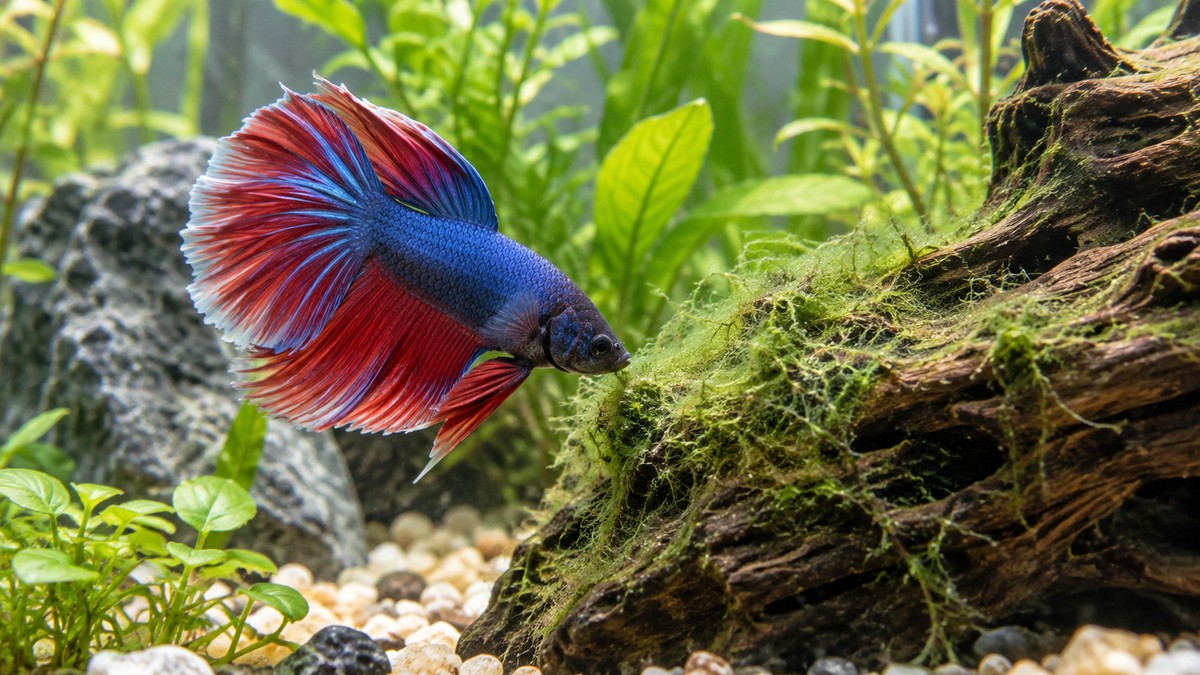
Bettas explore with their mouths. A fish that investigates a leaf, a rock or a film of algae is not necessarily eating it as a meal, and curiosity is not a nutrition plan. If your betta seems to hunt for food all day, the more likely issue is routine, not a craving for greens. A steady schedule of small portions, with a fasting day built in, tends to settle that kind of behaviour. If the fish stops eating or looks unwell, that is a question for a vet who treats fish, not for a tank guide.
Dealing with algae in a betta tank
Because the betta will not clean the tank for you, treat algae as a maintenance topic. Aquarium-care pages describe the same drivers: light, nutrients and time. One page on controlling algae lists excess nitrate and phosphate from fish waste and decaying food as the fuel, and recommends feeding less, since less food means less nitrate and phosphate, though fish still need to eat. It also says that live plants use available nutrients and starve algae, that older bulbs are worth replacing, and that slime can be wiped off glass and rocks and then siphoned out.
That lines up with the betta guidance above. Uneaten food breaks down into toxic ammonia, according to the nutrition guide, so smaller portions help the fish and the glass at once. For more on this specific question, see our post on whether algae is bad for betta fish, and if the real issue is overfeeding, signs of an overfed betta and how to fix it goes into portions.
Practical checklist
| Question | Short answer |
|---|---|
| Is algae a proper betta food? | No. Bettas are carnivores. |
| Are algae wafers a staple? | No. The wild-diet guide says to avoid them. |
| What is the staple? | A betta pellet with animal protein first |
| How often are treats offered? | Once or twice a week, per the nutrition guide |
| What controls tank algae? | Less light and food waste, live plants, routine cleaning |
FAQ
Will my betta die if it eats some algae?
Nothing in the guides we read suggests that a small amount swallowed by accident is a danger. They do say plant matter is hard for a betta to process, so it should not be fed on purpose. If your fish seems unwell, ask a vet who treats fish.
Can I give a betta algae wafers as a treat?
The wild-diet guide recommends avoiding them. Since bettas are carnivores, a frozen or freeze-dried meaty treat is the better choice.
Does spirulina count as algae for this purpose?
Spirulina is an algae, and the nutrition guide lists it among ingredients that support colour in a quality pellet. The wild-diet guide’s own advice on it is inconsistent, so the safest approach is to pick a pellet led by animal protein and let any spirulina be a minor ingredient.
Should I add an algae eater to keep a betta tank clean?
The pages we read do not endorse this for betta tanks, and the care guide on algae points to prevention instead. Tankmates also bring their own compatibility questions, which are outside this guide.
How much should I feed to avoid algae growth?
Offer a small portion once or twice a day that the betta can finish in a few minutes, and remove leftovers. The algae guide says feeding less lowers nitrate and phosphate, which algae use as fertilizer.
Bottom line
Treat algae as a tank problem, not a betta meal. Feed a meat-based pellet, add meaty treats once or twice a week, keep portions small, and manage light and waste so the algae has less to live on.