Betta Fish Fins: Torn, Ragged, or Discolored Causes
As an Amazon Associate we earn from qualifying purchases. Details
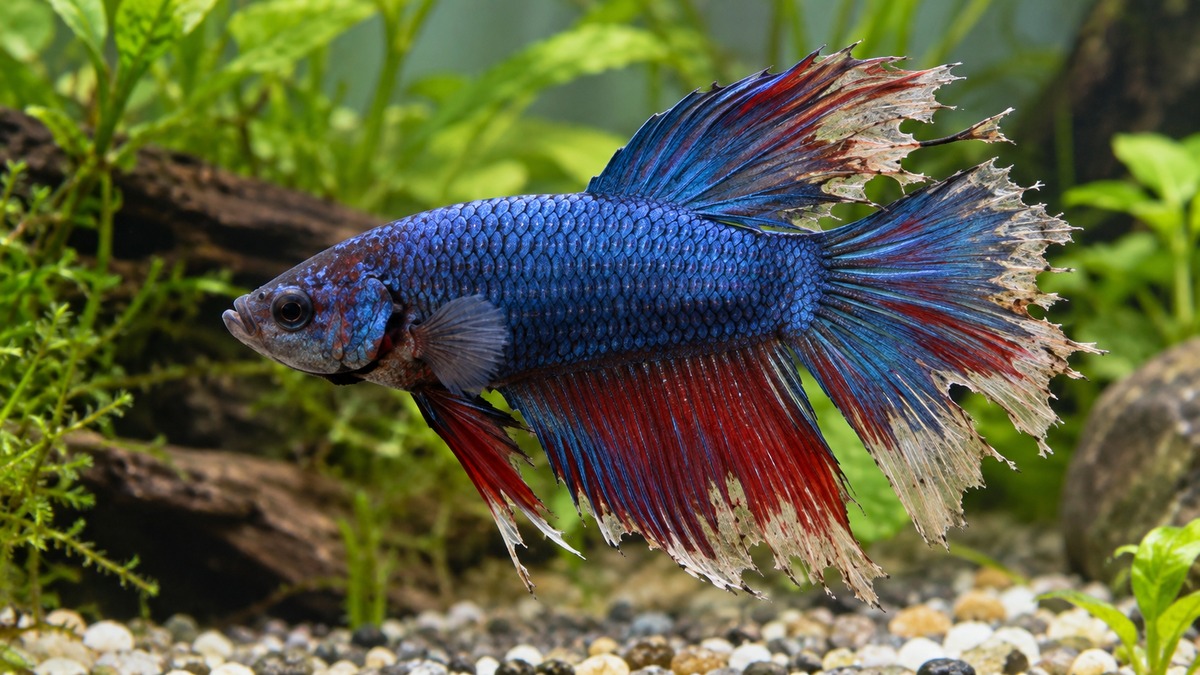
Betta fish fins that look torn, frayed, or discolored usually have one of three kinds of cause in the sources checked for this guide: damage from other fish or hard objects, a bacterial infection that causes ragged fins, or a fungal growth that can reach the fins. Stress and water conditions can make a fish more likely to get sick, so they belong in the picture too. A torn fin alone does not tell you which cause is involved, and the sources say a diagnosis needs an experienced fish keeper or an aquatic vet.
Quick answer
- Bettas that share a space can bite each other. UF/IFAS FA212 says that during aggression “the fish will then bite each other, particularly on the fins and flanks.”
- Merck lists “ragged fins” as a sign of an Aeromonas infection, along with bloody spots or ulcers on the body.
- Merck says a bacterial infection of the skin and fins can show as “bleeding and ulceration of the skin, fins, and tail,” and that diagnosis “requires laboratory testing.”
- Fungal growths can appear on fins. Merck describes “grayish-white, cotton-like growths on the skin, gills, eyes, or fins” from Saprolegnia.
Why betta fins get damaged
Betta fins are a result of breeding. UF/IFAS FA212 explains that today’s commercial bettas “have now been selected for bright colors as well as elaborate fins because the ornamental hobby is now the main market for this species.” The same publication describes the older history of the species, when males were selected for aggression. Its account says that when two males meet, “Males will almost immediately display aggressive behaviors,” and that as the aggression grows, the fish bite each other on the fins.
For a single betta in its own tank, fin-biting from a tank mate is not a factor. The FA212 text says biosecurity “is simplified for betta males kept in individual tanks because they and their maintenance equipment are more isolated from other sources of potential disease.” If another fish shares the tank, its behavior matters. A related guide on tank mates is here: tank mate for male betta.
Fins can also be damaged by objects. The sources checked for this guide do not describe a rough decor or plant that tears betta fins, so any advice about sharp edges in a tank should be treated as general precaution, not as a finding from these sources. Checking the tank for rough or sharp decor is a reasonable step while the cause is being sorted out.
Bacterial and fungal causes
Merck describes Aeromonas as “the most common bacterial infection of freshwater aquarium fish.” It says fish infected with Aeromonas or closely related bacteria “may show signs that include bloody spots or ulcers on the body, fluid accumulation in the abdomen (‘dropsy’ and ‘pinecone disease’), ragged fins, or enlarged eyes.” The ragged fin sign is useful as a warning, but it does not confirm the cause. Merck is explicit that “Diagnosis of a bacterial infection requires laboratory testing.”
A second bacterial disease described by Merck is vibriosis. It is described as “a common and potentially serious disease that affects many types of fish, although it is less common in freshwater species.” The source says “Vibrio bacteria are responsible for causing bleeding and ulceration of the skin, fins, and tail.” Merck adds that preventive steps include “minimizing stress and crowding,” which links the disease to the tank environment.
Fungus is the other cause. Merck’s description of Saprolegnia says the signs “include grayish-white, cotton-like growths on the skin, gills, eyes, or fins.” That is different from frayed edges. A fin with white fuzz should be seen by a vet, because the source says the fungus “can spread to the internal organs and deeper tissues of the body.”
Merck also lists “Ulcers (open sores)” among the general signs of illness in fish. If a fin has open sores, sores on the body, or bleeding, that is a reason to contact a vet sooner rather than later.
Water and stress
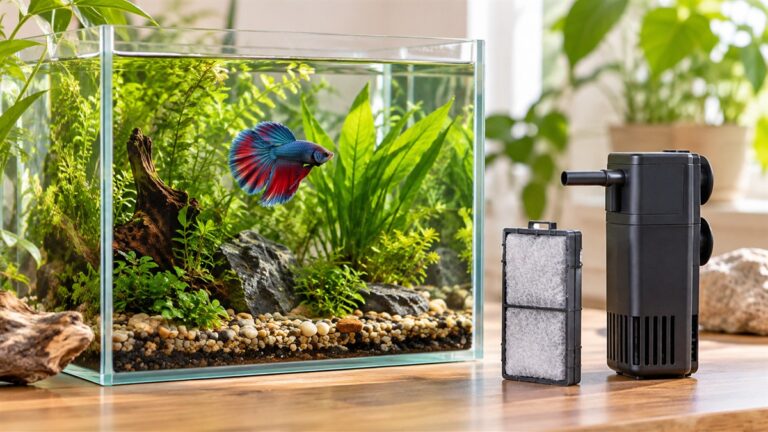
Merck says that “Many of the disorders and diseases that are known to occur in fish are the result of stress, poor water quality, overcrowding, and failure to quarantine any new or sick fish to avoid spread of disease.” That statement applies to the fins as well as the rest of the body. UF/IFAS FA212 says “Bettas prefer calm water as shown by research using flow as a stressor, so heavy filtration may actually be harmful to a betta’s health and welfare.” It also says that water quality “is not dependent on the size of the container, but rather on management and husbandry.”
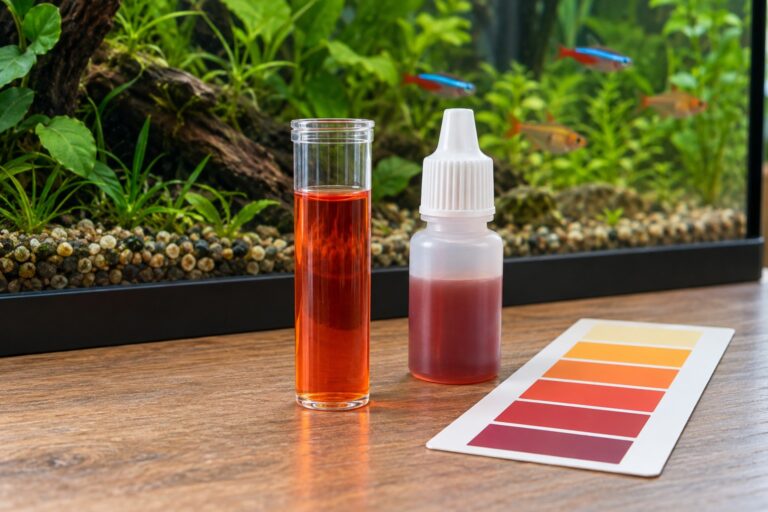
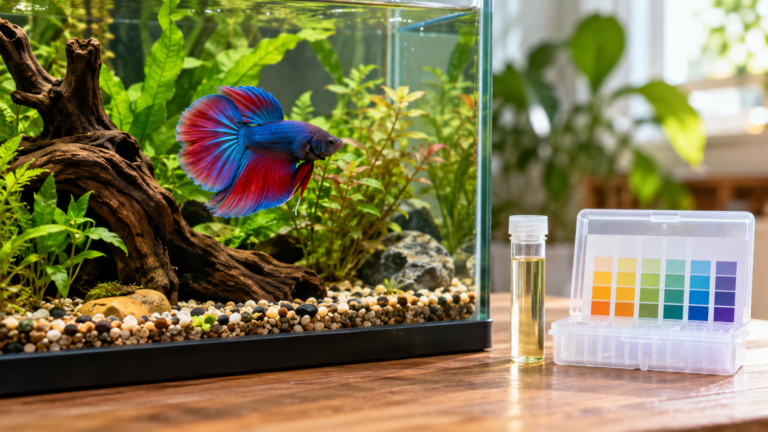
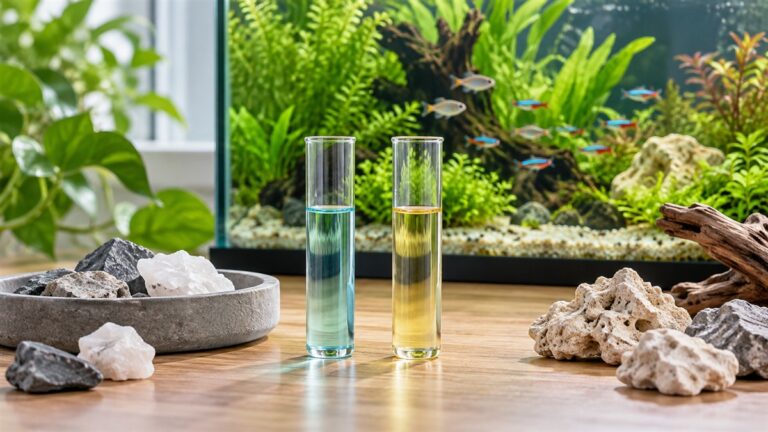
The UF/IFAS circular on stress defines stress as “a condition in which an animal is unable to maintain a normal physiologic state because of various factors adversely affecting its well-being.” It notes that an animal “is able to adapt to stress for a finite period of time,” and that the fish may look normal while its energy is depleted. For a betta with damaged fins, a practical step is to check the water with a test kit and to review whether the filter current is strong for a small tank. A guide to test kits is here: freshwater tank water test kit options.
Temperature is also part of the picture. FA212 says bettas “thrive in warmer water and do not do well in cold water.” The same passage advises that an unheated container should have room air kept “no less than 22°C (71.6°F).” A cold tank can add stress, and the sources link stress to the immune system.
Quarantine and new fish
Merck’s guidance on quarantine applies when a betta is new to a home or when fish share equipment. It says “Valuable pet fish should be quarantined for at least 30 to 60 days” in a separate tank before joining others. It also gives the principle that “Preventing disease is always preferable to treating it.” The routine health care page names water quality, nutrition, sanitation, and quarantine as the core of a health program.
What to do next
Start with an observation log. Note the date, which fins are affected, whether the fish is eating, whether it is rubbing on decor, and whether there are white spots, fuzz, or open sores. Merck lists “changes in swimming behavior and noticeable changes in the color or condition of the body and fins” as general signs of illness. Those notes help a vet decide what to look for.
Next, check the water. Test results are not a diagnosis, but they show whether the water is a likely contributor. UF/IFAS FA212 says “Good water quality, nutrition, and biosecurity will help prevent disease and promote good health.” A betta with ragged fins and an unchecked tank should have its water checked before any other step.
Do not add medicine based on a guess. FA212 says “Many drugs and chemicals can do more harm than good if they are used inappropriately.” It also says “If a disease outbreak does occur, proper diagnostics, including working with a fish veterinarian, will be key to successful management.” This guide does not name medicines or doses.
When to see a vet
See a vet or an experienced fish keeper when fins show bleeding, open sores, white fuzz, or fast spread to other fish. Merck notes that emergency care for pet fish is limited: “emergency medical treatment for pet fish is not as advanced or as readily available as it is for dogs and cats.” A vet with fish experience is the best source for a diagnosis, and a local aquarium club may be able to point to one. For a broader look at tank size, which affects how much room a betta has, see how big of a tank do betta fish need.
How we chose
The sources for this guide were chosen for their subject: fish disease, stress, and betta biology. The Merck Veterinary Manual pages cover disorders, routine health care, and emergencies. The UF/IFAS publications cover the betta species and stress as a cause of disease. All five sources are non-retail and were opened on 2026-10-24. Each quoted phrase was checked against the opened text, and no product listing or retail page was used.
The guide sorts the causes of fin damage into groups the sources describe, separates bacterial and fungal signs, and explains the environment and stress factors that the sources connect to disease. It ends with the steps the sources support and the point at which a vet should be involved.
What we could not verify
The sources checked for this guide do not give a method for telling a bite mark from a bacterial lesion at home. They also do not say how quickly a torn fin heals in a betta or whether long-finned varieties tear more easily than short-finned ones. Those points are outside the sources checked.
What the sources do not say
The sources do not give a betta-specific fin-rot diagnosis, a home treatment, or a dosing schedule. They do not say which fin damage is caused by current, which is caused by a tank mate, and which by a bacterial infection. They do not give a tank size or a filter flow rate for a betta with damaged fins. Merck’s description of vibriosis is for a broad group of fish, so it is not a betta-specific statement.
Frequently asked questions
Can a betta fin tear by itself?
The sources checked for this guide do not describe a betta fin tearing without a cause. They describe biting between males, bacterial infection with ragged fins, and fungal growth on fins. A tear without a visible cause still deserves an observation log and a water test.
Is ragged fin rot the same as a fungus?
No. Merck lists ragged fins as a sign of an Aeromonas bacterial infection, and separately describes Saprolegnia as a fungus with “grayish-white, cotton-like growths.” The two look different, and Merck says bacterial infection “requires laboratory testing.”
Do bettas fight over fins in a community tank?
FA212 describes males biting each other “particularly on the fins and flanks” when aggression grows, and it describes males that “will almost immediately display aggressive behaviors” when they meet another male. Because the sources describe male aggression, the question of which fish can share a tank should be discussed with an experienced fish keeper.
Does water quality cause torn betta fins?
The sources do not say that water quality tears fins directly. Merck links “poor water quality” to fish disorders in general, and FA212 says “water quality is not dependent on the size of the container, but rather on management and husbandry.” A water test can show whether the tank is a likely contributor.
Should I use medicine on a betta with damaged fins?
Ask a vet first. FA212 warns that “Many drugs and chemicals can do more harm than good if they are used inappropriately,” and Merck says antibiotic choice depends on laboratory testing. This guide does not give medicine names or doses.
Sources
- Merck Veterinary Manual, “Disorders and Diseases of Fish,” https://www.merckvetmanual.com/all-other-pets/fish/disorders-and-diseases-of-fish (opened 2026-10-24)
- Merck Veterinary Manual, “Routine Health Care of Fish,” https://www.merckvetmanual.com/all-other-pets/fish/routine-health-care-of-fish (opened 2026-10-24)
- Merck Veterinary Manual, “Emergencies of Fish,” https://www.merckvetmanual.com/all-other-pets/fish/emergencies-of-fish (opened 2026-10-24)
- UF/IFAS Extension, FA212, “Evolution, Culture, and Care for Betta splendens,” https://edis.ifas.ufl.edu/publication/FA212 (opened 2026-10-24)
- UF/IFAS Extension, Circular 919/FA005, “Stress: Its Role in Fish Disease,” https://edis.ifas.ufl.edu/publication/FA005 (opened 2026-10-24)