Betta Ich Symptoms: White Spots and What to Watch For
As an Amazon Associate we earn from qualifying purchases. Details
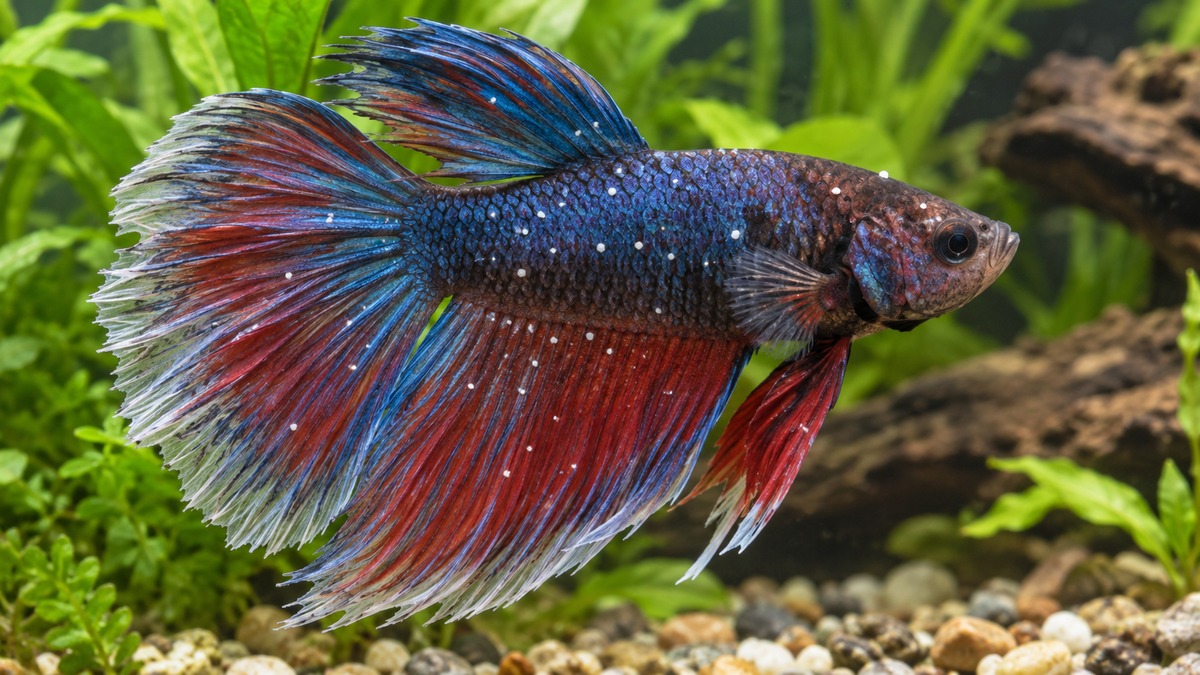
Betta ich symptoms most often begin as white spots on the skin and gills. Merck calls the disease “ich, or white spot disease,” and says its cysts “appear as visible white spots.” The sources checked for this guide do not give a full list of behavior signs for bettas, and they say a diagnosis needs a microscope check of the affected tissue. If a betta shows white spots, the next step is an exam by an experienced fish keeper or an aquatic vet, not a guess based on the spots alone.
Quick answer
- The main visible sign is small white spots. Merck says the cysts “appear as visible white spots,” and that the parasite burrows “into the skin and gills.”
- Merck says that diagnosis requires “Microscopic examination of diseased tissue,” so a spotted fish needs a check.
- Look-alikes include velvet, which causes “fine yellowish spots that are smaller and harder to see than the ones that occur with ich.”
- A fish with white spots should be seen by a vet. The sources say treatment should follow diagnosis, and this guide gives no medicine or dose.
What the white spots are
Merck describes ich as “a common protozoal infestation in home aquariums and ponds.” In freshwater fish the parasite is named Ichthyophthirius multifiliis. The source explains that the organisms “attach to the fish and burrow into the skin and gills,” and that “The resulting cysts appear as visible white spots.” These spots are the cysts of the parasite, which is why the white dots can look like small raised points on the body.
The disease moves quickly once it is established. Merck explains that the protozoa “create a wound in the fish and sink to the bottom of the tank or pond to reproduce,” and that “One parasite can produce hundreds of new organisms.” That rapid growth is why a few spots on one day can become many spots a few days later. The damage “can make a fish more susceptible to infection by other agents or cause a loss of bodily fluid,” according to the same section.
Because the spots are visible, a betta with ich is often noticed by its owner first. The sources do not say how long the spots take to appear after exposure, so this guide does not give a timeline. An observation log with the date the spots were first seen is still useful for a vet.
How ich differs from look-alikes
Several conditions can be confused with ich. Merck describes velvet, which is also called rust or gold dust disease, as caused by protozoan parasites that attack the gills and skin. Its spots are “fine yellowish spots that are smaller and harder to see than the ones that occur with ich.” Sometimes they “appear as a thin, velvety film covering the skin.” Velvet can also bring “loss of appetite, lethargy, and a tendency for affected fish to scratch against rocks or other hard objects.”
Merck also describes trichodinids, which may infest the gills or skin. Signs include “dulled coloration, a light gray-white covering of mucus on the body of the fish, gill damage, and general weakness.” Fish “often rub against objects to relieve itching.” This is a different finding from distinct round spots, but it can be hard to tell apart at a glance.
Merck’s description of Ichthyobodo, a skin and gill parasite, lists “steel-gray discoloration” and mucus that may be called “blue slime” or “gray slime.” Its behavioral signs include “lethargy, poor appetite, piping (swimming near the surface, trying to gulp air), flashing (scratching), and overall weakness and loss of condition.” These are listed for that parasite, and the sources do not say they are typical for every ich case.
Because these conditions overlap, the sources say a microscope check is the way to confirm the cause. A written description of spots and behavior is not a diagnosis.
Stress and water conditions
Merck says many fish disorders “are the result of stress, poor water quality, overcrowding, and failure to quarantine any new or sick fish to avoid spread of disease.” The UF/IFAS circular on stress defines stress as “a condition in which an animal is unable to maintain a normal physiologic state because of various factors adversely affecting its well-being.” The circular also says temperature is “one of the most important influences on the immune system of fish.”
The betta publication, UF/IFAS FA212, says bettas “thrive in warmer water and do not do well in cold water.” For an unheated container, it advises that room air be kept “no less than 22°C (71.6°F).” It also says that “Bettas prefer calm water as shown by research using flow as a stressor, so heavy filtration may actually be harmful to a betta’s health and welfare.” These are environment points, not a treatment, but they are relevant to a betta that already has spots.
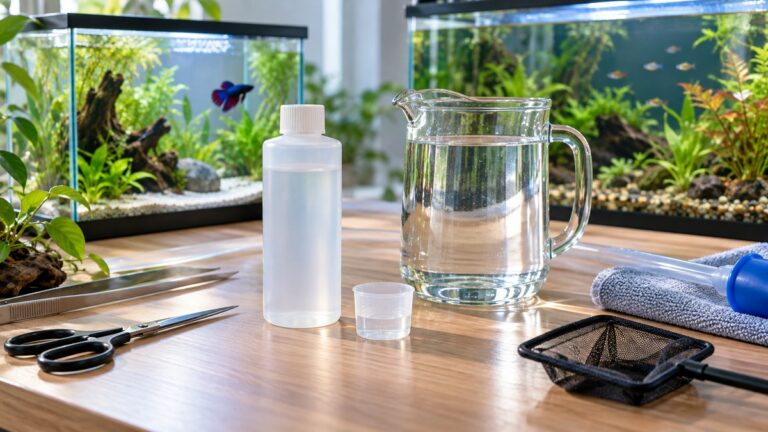
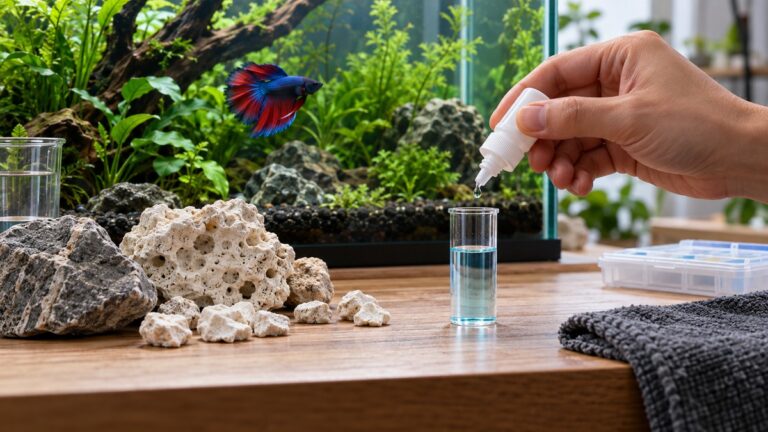
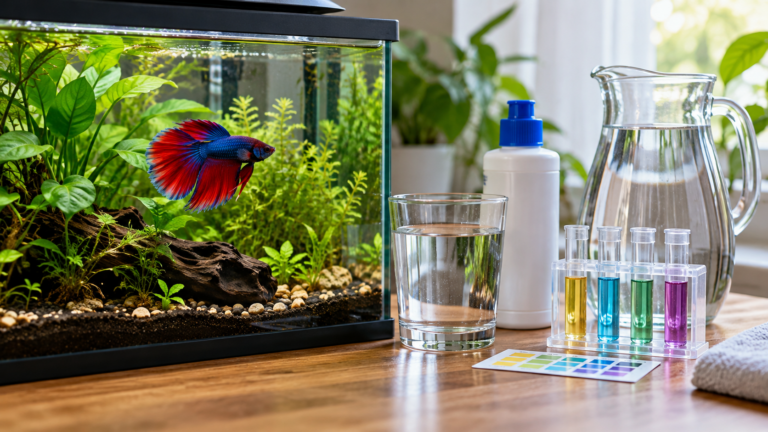
A practical step is a water test. A guide to test kits is here: freshwater tank water test kit options. A test result does not diagnose ich, but it can show whether the tank is a likely contributor to stress.
Quarantine and new fish
Merck’s guidance on quarantine is central to ich prevention in the sources. It says “Valuable pet fish should be quarantined for at least 30 to 60 days” in a separate tank before joining others. The routine care page also says “Preventing disease is always preferable to treating it.” A new betta, or a betta that shares equipment with other fish, should be kept apart from the rest until a vet advises otherwise.
FA212 makes the same point in its own words: “Good water quality, nutrition, and biosecurity will help prevent disease and promote good health.” Biosecurity refers to practices that reduce the risk of introducing infectious disease to a tank. The sources do not give a betta-specific quarantine length, so the Merck figure above is for valuable pet fish in general.
When to see a vet
See a vet or an experienced fish keeper if a betta has white spots, especially if the spots are increasing or if the fish is eating less, lying low, or scratching on objects. Merck lists “changes in swimming behavior and noticeable changes in the color or condition of the body and fins” as general signs of illness. Those signs, combined with spots, call for a diagnosis.
FA212 says “If a disease outbreak does occur, proper diagnostics, including working with a fish veterinarian, will be key to successful management.” It also warns that “Many drugs and chemicals can do more harm than good if they are used inappropriately.” The sources name treatments for ich in general, but this guide does not repeat them, and it does not give doses or schedules. Any treatment should be chosen with a vet after a diagnosis.
Merck notes that emergency care for pet fish is limited, saying “emergency medical treatment for pet fish is not as advanced or as readily available as it is for dogs and cats.” If a vet with fish experience is not nearby, a local aquarium club or specialty shop may be able to help find one. For a broader look at tank size, see how big of a tank do betta fish need.
How we chose
The sources for this guide were chosen for their subject: fish disease, parasites, stress, and betta biology. The Merck Veterinary Manual pages on disorders, routine health care, and emergencies describe ich and its look-alikes. The UF/IFAS publications cover betta biology and stress. All five sources are non-retail and were opened on 2026-10-24. Each quoted phrase was checked against the opened text. No product listing or retail page was used.
The structure follows the question a reader is likely to ask: what the spots are, how they differ from similar findings, what the environment has to do with it, and when to call a vet.
What we could not verify
The sources checked for this guide do not give a betta-specific symptom list for ich, and they do not give a home test that confirms the disease. They also do not say how often ich appears in home betta tanks, so this guide does not rank it against other causes.
What the sources do not say
The sources do not say how fast a betta’s spots appear after exposure, how many spots are typical at the start, or whether a betta always shows the same signs as other fish. They do not give a home treatment plan or a medicine dose for a betta. They do not say whether the water temperature used in treatment is the same as the temperature in FA212. Merck’s velvet and Ichthyobodo descriptions are general to aquarium fish, not betta-specific.
Frequently asked questions
What are the first betta ich symptoms?
The first sign described in the sources is a small white spot. Merck says the cysts “appear as visible white spots,” and the parasite burrows “into the skin and gills.” The sources do not give a betta-specific list of earlier signs, so a vet should be consulted if spots appear.
Can ich be confused with velvet on a betta?
Yes. Merck says velvet produces “fine yellowish spots that are smaller and harder to see than the ones that occur with ich,” and that it can appear as “a thin, velvety film.” The two can look similar, so a vet or experienced fish keeper should confirm which one is present.
Does ich spread to other fish?
Merck describes ich as a parasite that reproduces quickly, with “One parasite can produce hundreds of new organisms.” The sources do not give a specific transmission rate in a home tank. Keeping new fish in quarantine is the source-based prevention step.
Can stress cause ich?
Merck says disorders often come from “stress, poor water quality, overcrowding, and failure to quarantine.” The sources do not say that stress alone causes ich. They describe stress as a factor that can weaken a fish’s ability to resist disease.
Should I treat ich at home?
Talk to a vet or experienced fish keeper first. FA212 says “Many drugs and chemicals can do more harm than good if they are used inappropriately.” This guide does not provide medicine names or doses.
Sources
- Merck Veterinary Manual, “Disorders and Diseases of Fish,” https://www.merckvetmanual.com/all-other-pets/fish/disorders-and-diseases-of-fish (opened 2026-10-24)
- Merck Veterinary Manual, “Routine Health Care of Fish,” https://www.merckvetmanual.com/all-other-pets/fish/routine-health-care-of-fish (opened 2026-10-24)
- Merck Veterinary Manual, “Emergencies of Fish,” https://www.merckvetmanual.com/all-other-pets/fish/emergencies-of-fish (opened 2026-10-24)
- UF/IFAS Extension, FA212, “Evolution, Culture, and Care for Betta splendens,” https://edis.ifas.ufl.edu/publication/FA212 (opened 2026-10-24)
- UF/IFAS Extension, Circular 919/FA005, “Stress: Its Role in Fish Disease,” https://edis.ifas.ufl.edu/publication/FA005 (opened 2026-10-24)