Can Goldfish Recover From Fin Rot?
As an Amazon Associate we earn from qualifying purchases.
Can goldfish recover from fin rot? The sources opened for this guide do not give a recovery rate, and they do not use the term “fin rot” as a single named disease. What they do say is that bacterial infections of the fins are serious, need laboratory testing to identify, and are made more likely by stress and crowding. Recovery depends on finding the actual cause early, improving the water, and getting help from an aquatic veterinarian. This guide sets out what is supported and what is not.
Quick answer
- The sources opened for this guide do not say whether goldfish recover from fin rot, and they do not give a recovery rate.
- Merck says fish infected with Aeromonas or related bacteria may show “ragged fins,” and that “Diagnosis of a bacterial infection requires laboratory testing.”
- Merck says “Preventive steps include minimizing stress and crowding,” and the IFAS circular explains that damage to the skin opens a route for bacteria.
- When fins look damaged, the next step is to test the water, reduce stress, and contact an aquatic veterinarian. Medication should not be guessed at.
What the sources call the problem
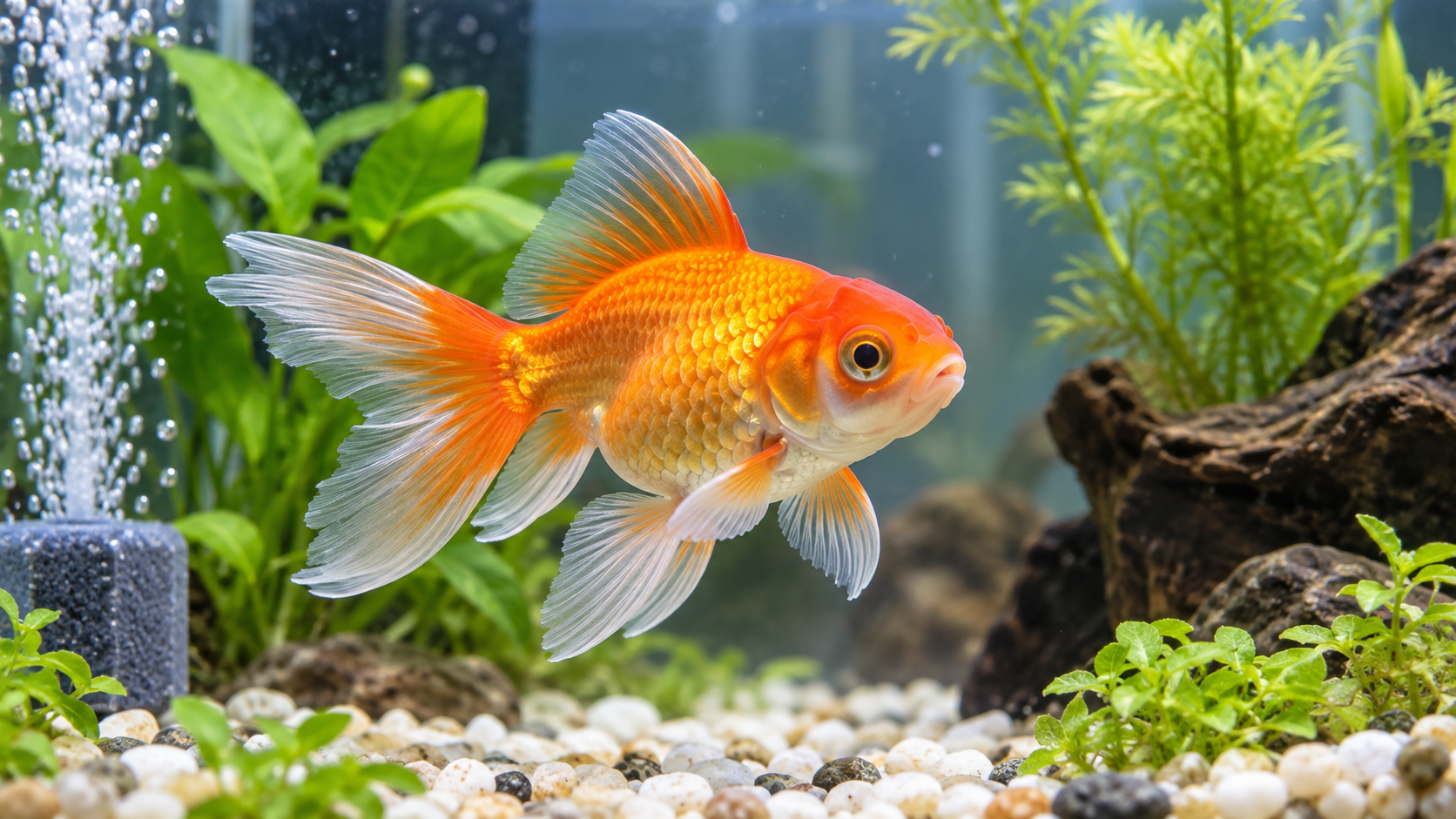
Fin rot is a common phrase among fish keepers, but the Merck Veterinary Manual does not organise its advice under that heading. Its disorders page groups fin and skin damage under bacterial causes. The page says that “Aeromonas infection is the most common bacterial infection of freshwater aquarium fish.” It adds that “Koi and goldfish are especially susceptible to a certain type of Aeromonas called Aeromonas salmonicida.” Goldfish are named directly in that passage, which makes the species relevant to the question.
The same passage lists the signs. Fish infected with Aeromonas or other closely related bacteria “may show signs that include bloody spots or ulcers on the body, fluid accumulation in the abdomen (“dropsy” and “pinecone disease”), ragged fins, or enlarged eyes.” Ragged fins are one sign among several, and they do not on their own identify the bacterium. A fish with ragged fins could have a different problem, and a fish with other signs could also have fin damage.
Merck also describes Vibrio bacteria as causing “bleeding and ulceration of the skin, fins, and tail.” That is a second bacterial cause that can damage fins. Taken together, the sources treat fin damage as a symptom that can come from more than one organism. Calling it a single disease would go beyond what the sources state.
Why stress and damage come first
The UF/IFAS circular “Stress—Its Role in Fish Disease” is a non-retail university source. It defines stress as a condition in which a fish is placed “in a situation that is beyond its normal level of tolerance.” It explains that the skin and fins act as a barrier, and that “When these are damaged, a window is opened for bacteria and other organisms to start an infection.”
The circular also notes that parasites can damage “gills, skin, fins, and loss of scales, which could create breaks in the skin for bacteria to enter.” This is the mechanism behind many fin problems. A fin that is torn, scraped or parasitised is a route for bacteria. Stress lowers the fish’s ability to resist, so a tank that is overcrowded, poorly filtered or unsteady in its water quality makes recovery harder even when the original damage is small.
Merck’s advice is consistent with this. It names minimising stress and crowding as preventive steps. For a keeper, that means the same things that help the fins grow back also reduce the chance of a second infection. Those are general husbandry steps, and they do not depend on any single product.
What to do when fins look damaged
The sources do not give a home treatment for fin damage. They do describe the sequence that a careful keeper should follow, which is to diagnose before treating.
- Test the water. The IFAS circular and Merck both treat water quality as central to the health of fish. Record the readings and compare them with the species’ needs.
- Reduce stress. Remove sharp objects, check for aggression among tank mates, and avoid sudden changes in temperature or water.
- Remove debris and uneaten food. Merck lists uneaten food among the solid wastes that beneficial bacteria break down, so leftover food adds to the load they must handle.
- Look at the whole fish. Bloating, bloody spots, eye changes and swimming problems point toward more serious disease than a simple fin tear.
- Seek a diagnosis. Merck states that a bacterial infection “requires laboratory testing.” A visual check at home cannot identify the bacterium.
Merck also says that many bacterial infections “can be treated with antibiotics,” and adds that laboratory testing is “necessary to determine which antibiotics will work against the particular bacteria.” This guide does not give doses or product names. Any medication should be chosen with an aquatic veterinarian or an experienced fish keeper who can see the fish.
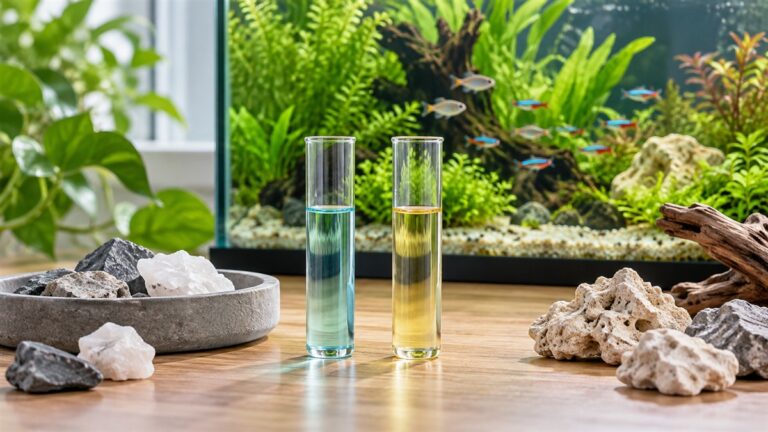
Water care is the part a keeper controls directly. The guide on when to add water conditioner to a fish tank covers one of the routine steps that affects water conditions. The guide on aquarium pH test kits explains why testing is the first step rather than a guess.
How we chose
The question was checked against two non-retail sources opened on 2026-10-24. The Merck Veterinary Manual was chosen because it is a veterinary reference with a disorders section that names goldfish and Aeromonas. The UF/IFAS circular was chosen because it is a university extension publication that explains stress as a cause of disease. Retail pages and product listings were not used. No product, brand or price was evaluated, and no recommendation is made for any treatment product.
The approach was to report what each source says in its own terms and to avoid turning a general statement into a promise. Where a sentence in a source is about bacteria in general, this guide does not apply it to goldfish as if the source had tested goldfish fin rot.
What we could not verify
The sources opened for this guide do not say whether a goldfish with fin rot will recover, how long recovery takes, or what share of cases heal. They also do not describe a fin rot treatment for goldfish, and they do not say whether fin rot is one disease or a name used for several conditions. Those points remain unverified here.
What the sources do not say
Neither source uses the phrase “fin rot.” Neither gives a recovery timeline. The Merck page names goldfish as especially susceptible to one bacterium but does not describe the course of infection in a goldfish. The UF/IFAS circular explains how stress and damage open the door to infection, but it does not follow a case from start to finish. Where this guide describes what to do next, that advice is general husbandry and veterinary referral, not a sourced recovery claim.
Frequently asked questions
Does fin rot always kill a goldfish?
The sources opened for this guide do not say that it does, and they do not say it always heals. Merck describes bacterial infections as serious and says that diagnosis needs laboratory testing. The outcome depends on the cause, how early it is found and the condition of the water. A keeper who sees fin damage should act early rather than wait.
Can a goldfish heal torn fins on its own?
The sources do not give an answer. The UF/IFAS circular explains that damaged skin and fins can allow bacteria to enter, which means that torn fins are not a risk that can be ignored. Improving the water and reducing stress are the steps the sources support, while the healing itself is not described.
What causes ragged fins on goldfish?
Merck lists ragged fins as one sign of Aeromonas or related bacterial infection. The UF/IFAS circular describes parasites that can damage the fins and create breaks in the skin. Stress and crowding are named as conditions that make infection more likely. The sources do not rank these causes for any given fish.
Should I use a medication for goldfish fin rot?
Merck says many bacterial infections can be treated with antibiotics, but that laboratory testing is needed to choose the right one. This guide does not recommend any product or dose. Speak with an aquatic veterinarian or an experienced fish keeper before using medication, because the wrong product can make the problem worse.
When should I see a vet about a goldfish?
Seek help when fin damage is spreading, when the fish has other signs such as bloody spots, swelling of the abdomen, enlarged eyes or lethargy, or when the fish is not improving after the water and stress are checked. An aquatic veterinarian can run the tests Merck describes as necessary for diagnosis.
Sources
- Merck Veterinary Manual, “Disorders and Diseases of Fish,” https://www.merckvetmanual.com/all-other-pets/fish/disorders-and-diseases-of-fish, opened 2026-10-24. Veterinary reference; bacterial disorders section.
- Merck Veterinary Manual, “Providing a Home for Fish,” https://www.merckvetmanual.com/all-other-pets/fish/providing-a-home-for-fish, opened 2026-10-24. Veterinary reference; waste and beneficial bacteria section.
- UF/IFAS Extension, Circular 919 (FA005), “Stress—Its Role in Fish Disease,” https://edis.ifas.ufl.edu/publication/FA005, opened 2026-10-24. University extension publication.