Freshwater Fish Bloating: Causes and What to Check
As an Amazon Associate we earn from qualifying purchases.
Freshwater fish bloating causes and what to check comes down to one question: is the swelling coming from food and water, or from disease? The sources we opened name overfeeding, poor water quality, stress, and certain infections as possible factors. None of them gives a single cause for a bloated danio, molly, or gourami, so this guide sets out what the sources do say and what to check at home. A swollen belly that spreads, or that comes with other signs, needs a veterinarian or fish health professional.
Quick answer
- Check feeding first. The University of Florida ammonia guide states that “Overfeeding is a major cause of high ammonia concentrations,” and uneaten food adds to the problem.
- Check water quality and stress. The Merck Veterinary Manual says many fish disorders “are the result of stress, poor water quality, overcrowding, and failure to quarantine any new or sick fish.”
- Look for other signs. Merck lists “fluid accumulation in the abdomen” among signs of a bacterial infection, along with bloody spots, ragged fins, or enlarged eyes.
- See a vet or fish health professional if swelling persists or spreads. Merck recommends: “Consultation with your veterinarian or fish health professional is recommended.”
Common causes of a swollen belly
Bloating is a sign, not a diagnosis. The sources connect a swollen-looking body to several different problems, so the fish’s other signs matter as much as belly size.
Feeding and waste come first in the hobby. The ammonia guide says that in most hobbyist systems “the digestion of the feed eaten by the fish is the primary source of the compound.” It also states that “Fish may not eat during periods of ammonia stress, and the uneaten feed will only make the situation worse.” Uneaten food is therefore both a feeding problem and a water problem. For a deeper look at feeding amounts, see how much and how often to feed a betta fish.
Food storage can matter too. Merck notes that “Improper storage of fish foods is a common cause of nutritional imbalance,” and advises that “Dry food should be kept in a cool, dry place and used or replaced every 2 months.” Merck also warns that live foods can carry problems: “Wild-harvested live foods may harbor parasites or other harmful organisms that can cause disease in fish.”
Stress and water conditions are the next group. The University of Florida stress article defines the problem this way: “Stress is caused by placing a fish in a situation that is beyond its normal level of tolerance.” Merck links stress, poor water quality, and overcrowding to many disorders, and it names failure to quarantine new fish as a route for disease to spread.
Infection and organ disease are the third group. Merck describes a bacterial infection in which fish can show “fluid accumulation in the abdomen” along with other signs. Merck also describes a parasite that attacks the kidneys of pond-raised goldfish and can lead to “bloated-looking fish, and death.” Goldfish in ponds are not the species in this guide, but the example shows that a bloated look can come from organ disease, not only from food.
What to check at home
Start with the parts of the tank you can control. The Merck routine care list sets out daily checks: “Check fish, water temperature, and equipment” and “Feed fish and remove any uneaten food.” Those two steps address the most common feeding and water causes the sources name.
- Feeding: count how much food goes in, and remove leftovers after feeding. Note whether the belly looks swollen before or after feeds.
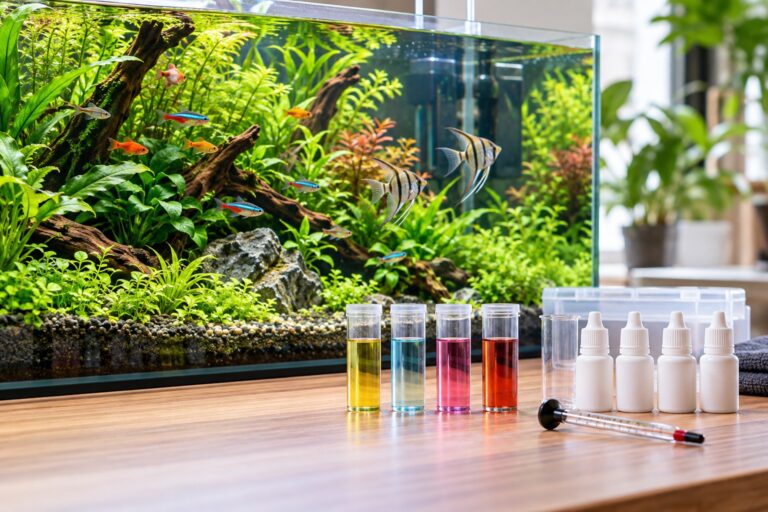
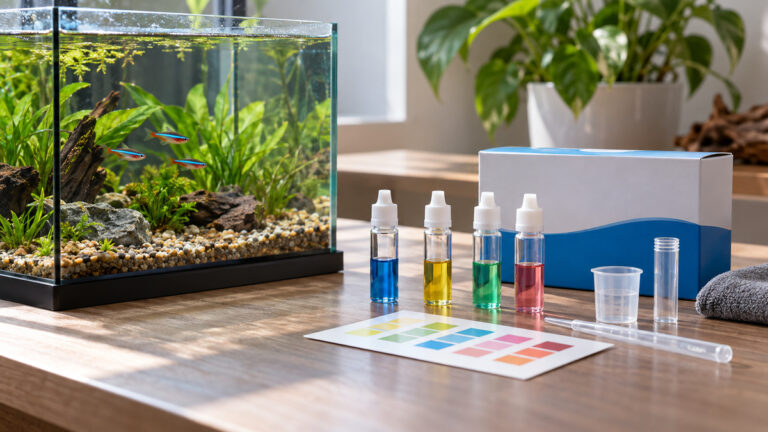
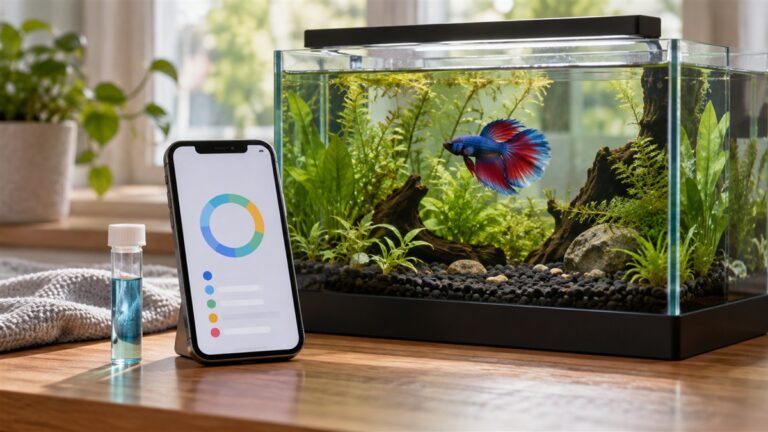
- Water: test ammonia, nitrite, and nitrate. Merck’s routine list includes “ammonia levels, nitrate and nitrite levels” as part of the regular test schedule.
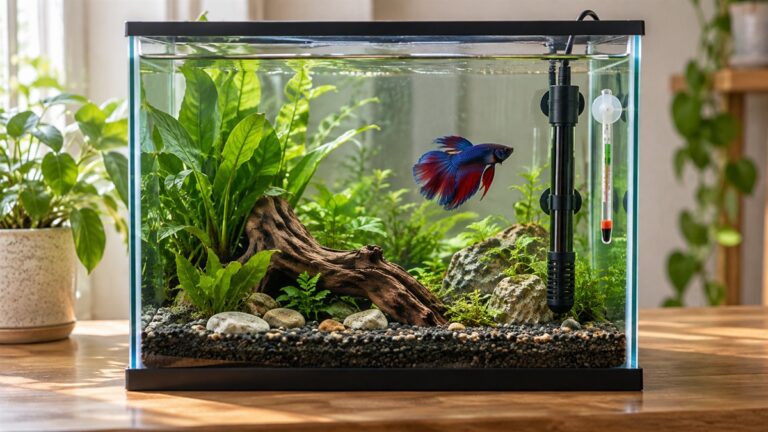
- Temperature: check the water with a separate thermometer. Merck advises having “a separate thermometer in the tank to monitor water temperature independently from the heater.”
- Behavior and body: look for ragged fins, bloody spots, enlarged eyes, or a fish that stops eating. The ammonia guide ties stopped eating to ammonia stress, and Merck lists these body signs with infection.
- Quarantine: if a new fish came in with the problem, note when it arrived. Merck names missed quarantine as a route for disease.
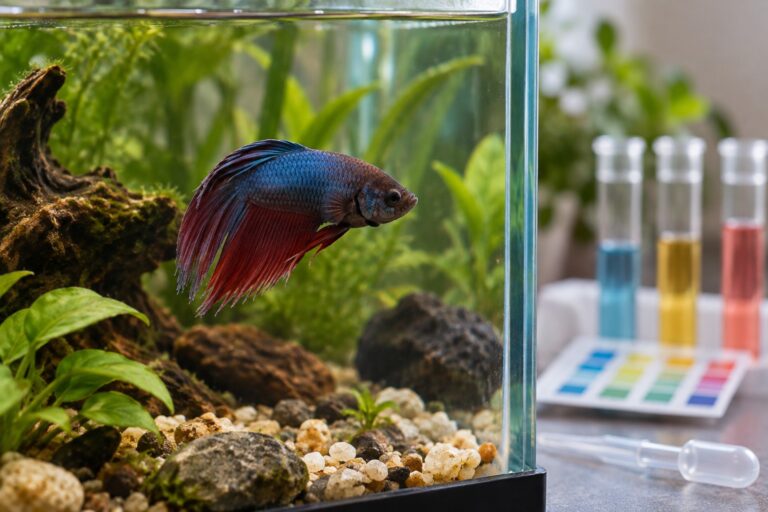
Write down what you find and when. If the fish is a betta, the betta fish bloat guide covers that species in more detail. A short log helps a veterinarian or fish health professional sort out whether the problem is feeding, water, or disease.
When to see a vet
Bloating that comes with other signs, that spreads, or that does not improve after checking feeding and water should go to a veterinarian or fish health professional. Merck says that for some bacterial problems, “Laboratory tests and assistance from your veterinarian or fish health professional are necessary to effectively treat” the disease. Choosing a treatment and its dose belongs to that professional. This guide gives no medication doses.
How we chose
This guide uses university extension pages and a veterinary reference. They name causes and signs without selling products, which fits a question about what to check rather than what to buy. Each page was opened on 2026-10-25 by curl, and every quoted sentence was checked against the text of that page. No retail page, product listing, or review was used for facts. The guide does not rank products.
What we could not verify
The sources do not cover each species in the title. None of the pages opened today describes bloating in danios, mollies, or gouramis by name, so any species-specific claim would be invented. The points below are the gaps.
What the sources do not say
- Danios: no source opened says why danios bloat or what their bloating looks like.
- Mollies: no source opened describes molly bloating, its causes, or its course.
- Gouramis: no source opened describes gourami abdominal swelling or its causes.
- Fasting: the sources do not say whether a bloated fish should be fasted, or for how long.
- Time to act: no source gives a number of days after which a swollen belly becomes urgent.
- Treatment choices and doses: not stated here, and not given in this guide.
Frequently asked questions
Is a bloated danio always overfed?
No. The sources connect overfeeding to high ammonia, and they describe infection and organ disease that can also make a fish look swollen. Check feeding and water first, then watch for other signs. If the swelling continues, see a veterinarian or fish health professional.
Why is my molly fish bloated and not eating?
The sources opened today do not cover mollies by name. The general signs in this guide, including a loss of appetite that the ammonia guide links to ammonia stress, point to a water check first. If the fish is not eating and the belly stays swollen, get professional advice.
Can poor water make a gourami look bloated?
Merck lists poor water quality as one of the factors behind many fish disorders. It does not explain how poor water causes a gourami’s belly to swell, so this guide does not make that link for gouramis.
Should I stop feeding a bloated fish?
The sources do not give a fasting schedule. They do say uneaten food adds to ammonia, so removing leftover food is supported by the sources. Ask a veterinarian or fish health professional before changing the feeding routine for a sick fish.
When is fish bloating an emergency?
The sources do not define an emergency. If the swelling is severe, spreads, or comes with bloody spots, ragged fins, enlarged eyes, or a fish that stops eating, Merck recommends consulting a veterinarian or fish health professional without delay.
Sources
- University of Florida IFAS Extension, “Ammonia in Aquatic Systems” (FA031), https://edis.ifas.ufl.edu/publication/FA031, opened 2026-10-25.
- University of Florida IFAS Extension, “Fish Nutrition” (VM114/FA096), https://edis.ifas.ufl.edu/publication/FA096, opened 2026-10-25.
- University of Florida IFAS Extension, “Stress: Its Role in Fish Disease” (Circular 919/FA005), https://edis.ifas.ufl.edu/publication/FA005, opened 2026-10-25.
- University of Florida IFAS Extension, “Evolution, Culture, and Care for Betta splendens” (FA212), https://edis.ifas.ufl.edu/publication/FA212, opened 2026-10-25.
- Merck Veterinary Manual, “Disorders and Diseases of Fish,” https://www.merckvetmanual.com/all-other-pets/fish/disorders-and-diseases-of-fish, opened 2026-10-25.
- Merck Veterinary Manual, “Routine Health Care of Fish,” https://www.merckvetmanual.com/all-other-pets/fish/routine-health-care-of-fish, opened 2026-10-25.
- Merck Veterinary Manual, “Providing a Home for Fish,” https://www.merckvetmanual.com/all-other-pets/fish/providing-a-home-for-fish, opened 2026-10-25.