Do Betta Fish Like Small Tanks? A Tank Size Guide
As an Amazon Associate we earn from qualifying purchases.
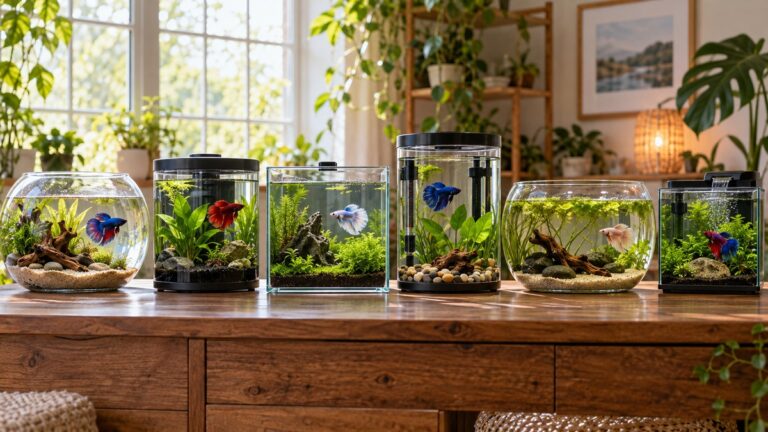
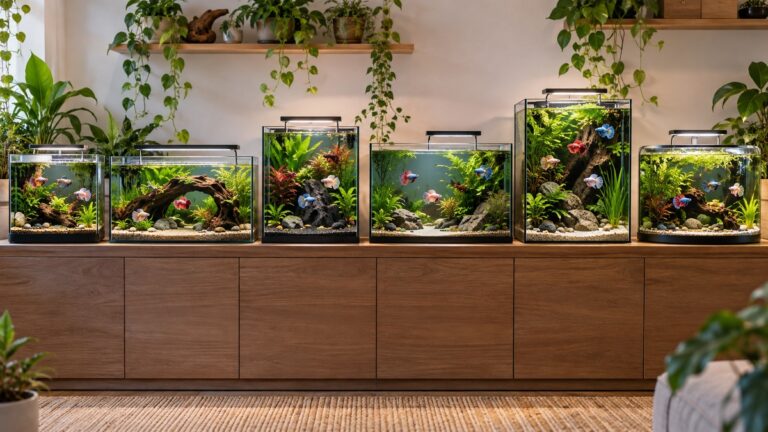
Do betta fish like small tanks? Not in the way the old “bowl” myth suggests. Bettas come from shallow water, which is why they cope with modest depth, but they are territorial animals that look for space, cover and a place to claim. A small tank can work, yet a bigger one is easier to keep stable and gives a betta more to explore. This guide explains where the myth came from, what the wild habitat tells us, and how to think about size.
Quick answer
- Bettas come from shallow, slow-moving, heavily planted water, so they are not deep-water fish.
- They seek out territory even when alone, so a decorated tank with plants or rocky alcoves suits them.
- A source on the species gives about 10 gallons (45 litres) as the minimum when a betta lives with other fish.
- Bigger is easier: more water changes slowly, which makes mistakes less costly.
Where the small-bowl myth came from
Many people think bettas live in puddles, so a tiny bowl must be fine. There is a grain of truth in it. Wild bettas live in shallow, slow-moving water with abundant vegetation, including marshes, floodplains and paddy fields. Shallow water in hot air also loses oxygen quickly, which creates a significant oxygen deficit. Bettas cope because they have a labyrinth organ, a lung-like structure that lets them breathe air at the surface. The source says this helps explain why bettas tolerate low oxygen and poor water quality.
The mistake is turning “tolerates poor conditions” into “likes a small container.” Tolerance is survival, not preference. A wild paddy field is far larger than a bowl, has plants everywhere, and offers escape routes. It is also open to a huge volume of water. A bowl has none of that.
What bettas actually seem to want
Territory and cover
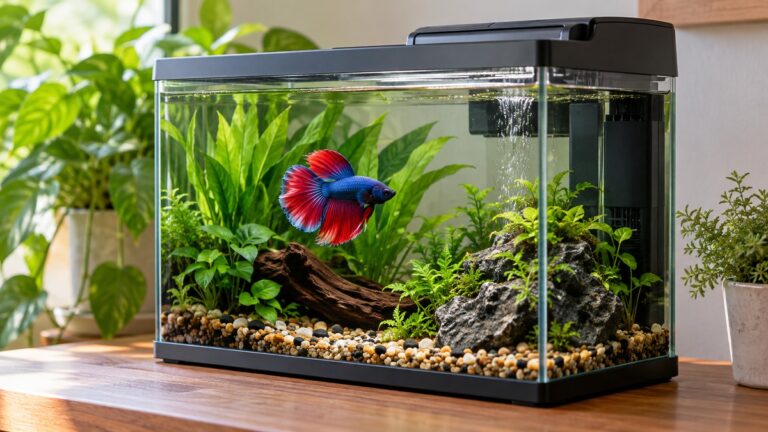
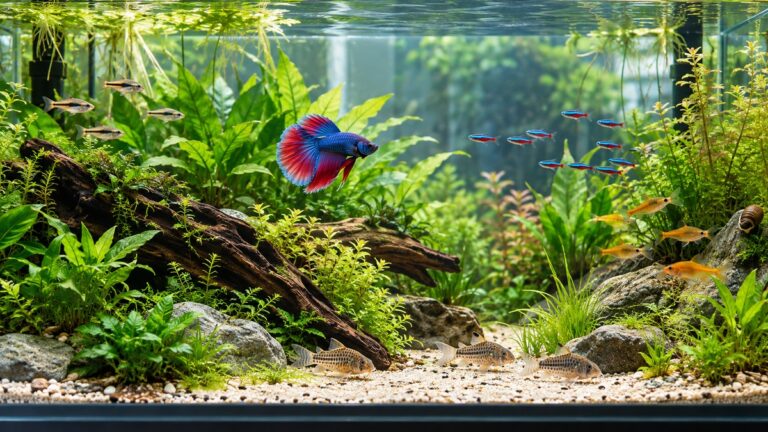
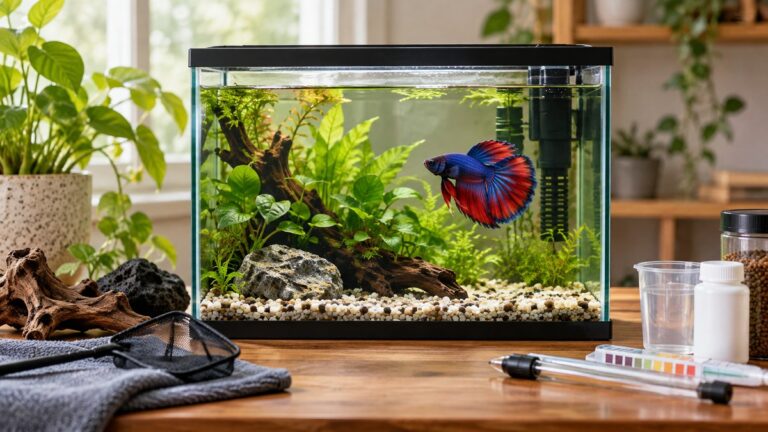
The same reference says bettas seek out territory even when kept alone, so they tend to do well in a decorated tank with plants or rocky alcoves. A larger footprint gives you room to build more than one area: a dense plant corner, an open swim lane and a shaded cave. Read our page on what betta fish like in their tank for ideas.
Access to the surface
Because bettas breathe air, they need to reach the surface easily. They can even rest on objects above the water surface. A tank that is too deep for a fish with long fins, or one with no gap under the lid, works against that. Shallow and wide beats tall and narrow.
Space that stays stable
The wild pH range is described as slightly acidic (6.9) to alkaline (8.2), and air temperature in the habitat ranges from about 15 C (59 F) to 40 C (100 F). You cannot copy that variety in a home tank, and you should not try. What you can do is keep water steady. In a small volume, one missed water change, one overfeeding or one warm day moves the numbers faster. The source does not give an aquarium temperature, so look at our temperature guide for setup advice.
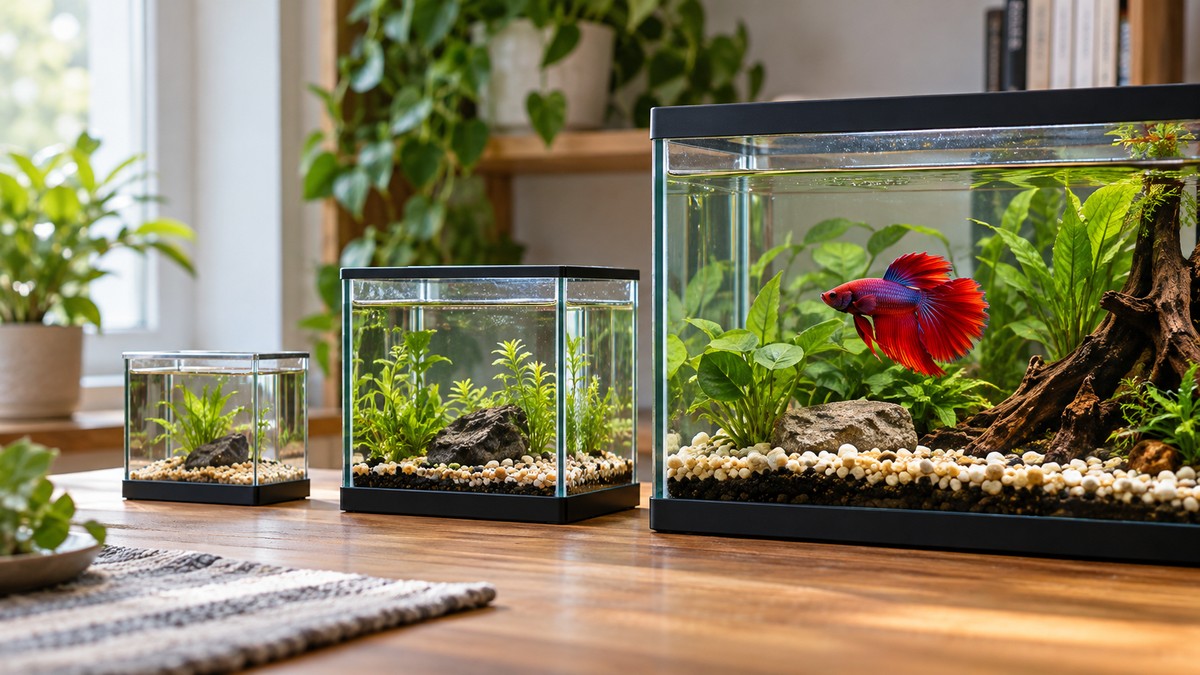
Small versus large: a practical comparison
| Factor | Small tank | Larger tank |
|---|---|---|
| Water stability | Changes quickly, needs closer watching | Changes slowly, more forgiving |
| Decor and territory | Limited room for plants and caves | Room for several zones |
| Tank mates | Not suitable; the source’s minimum is about 10 gallons with other fish | Possible, with care |
| Equipment | Fewer choices that fit | More heater and filter options |
| Footprint | Fits a desk | Needs a stand and space |
The table is a general comparison, not a rule from the source. The source gives the 10-gallon figure for fish kept together; it does not give a minimum for a single betta.
How to judge a tank before you buy it
Ignore the label on the box and look at the shape. Ask four questions. First, can the betta reach the surface without a long swim? A wide, moderate-depth tank answers yes more often than a tall cylinder. Second, is there a gap between the water line and the lid? A betta breathes air, so a sealed gap-free top works against him. Third, how much of the tank can you fill with plants and caves while leaving open swimming room? Because bettas look for territory even when alone, a tank where decor takes up the whole floor leaves nothing to explore, while one with no decor leaves nowhere to hide. Fourth, can you reach every corner for cleaning? A tank you cannot clean easily tends to be cleaned less often.
Listings often claim a size is suitable for a betta. Treat that as marketing and compare it with what the habitat sources say: shallow, planted, slow-moving water and room to claim a patch. If a tank cannot offer that, a larger one is the better buy.
If you have only a small space
Not everyone has room for a large tank. If you must use a smaller one, a few habits help:
- Check the water often. Small volumes shift quickly, so look at the tank every day.
- Do regular partial water changes rather than waiting for the water to look dirty.
- Keep stocking simple: one betta, no crowding with decor that leaves no swimming space.
- Use soft plants and smooth decor, and leave the area near the surface open.
- Keep the tank away from direct sun and drafts. Our page on sunlight, heat and algae explains why.
If the fish looks lethargic, clamps its fins, stops eating or breathes oddly, ask a fish-store specialist or a vet who treats fish rather than guessing.
Common questions
Is a bowl okay for a betta?
The sources describe the wild habitat as shallow but large and planted, and they do not recommend a small bowl. Bowls are hard to keep stable and rarely give room for plants. A tank with a lid gap and cover is a better choice.
How many gallons does a betta need?
The reference cited here gives about 10 gallons (45 litres) as a minimum when a betta lives with other fish, and does not state a figure for a single fish. Our gallon guide covers sizing in detail.
Why do bettas survive in tiny containers at the store?
The labyrinth organ lets them breathe air and tolerate low oxygen and poor water quality, according to the source. Surviving is not the same as thriving, and store cups are temporary.
Do bettas get lonely in a big tank?
The source describes bettas as highly territorial and says males are best kept apart from each other, so company is not a need. Space and cover matter more.
Is a deeper tank better?
Not necessarily. The wild habitat is shallow, and a betta must reach the surface to breathe. Wide beats tall for most setups.
Bottom line
Bettas do not “like” small tanks; they put up with them. Choose the largest tank you can keep clean, make it shallow enough to reach the surface, and fill it with plants and hiding places so he can claim a territory.