Aquarium Nitrate Test Kit
As an Amazon Associate we earn from qualifying purchases. Product links on this page go to Amazon, and a purchase made through them may earn us a commission at no extra cost to you.
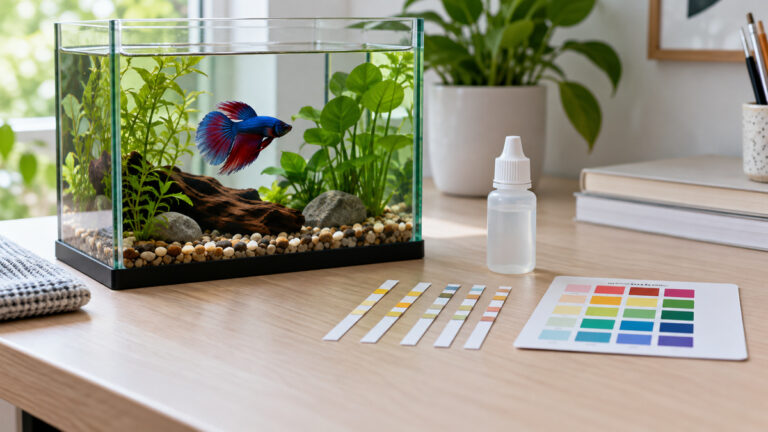
An aquarium nitrate test kit is a set of test strips or liquid reagents that shows how much nitrate is in tank water. Nitrate is the end product of the nitrogen cycle, and it builds up between water changes. Most kits sold for aquariums are multi-parameter strip packs, and nitrate is one of several readings on each strip. This guide compares six listed strip kits that name nitrate, shows how many weekly checks each pack gives, and explains what the sources say about nitrate in fish tanks.
Quick answer
- Any strip kit in this roundup that lists nitrate will do the job. Choose by how many strips you get and which other readings you want.
- A 50-strip pack gives about 50 weekly nitrate checks, roughly 11 months. A 150-strip pack gives about 150, roughly 35 months.
- No listing states a nitrate measuring range in mg/L, so read results against the printed color chart and not against a number in the listing.
- The UF/IFAS ammonia guide says nitrate is less toxic than ammonia and nitrite. Keep nitrate low, but do not treat a single reading as the whole picture.
What nitrate is and why it matters in a betta tank
Nitrate sits at the end of the nitrogen cycle. Fish waste and uneaten food break down into ammonia. Bacteria turn ammonia into nitrite, and other bacteria turn nitrite into nitrate. The UF/IFAS ammonia guide states this plainly: “Nitrate is a less toxic by-product of nitrification”. The same guide adds that nitrate “has various fates depending on the type of aquaculture production system.” In a small tank with no live plants and few water changes, nitrate can keep rising.
For a betta, the practical question is how much nitrate is too much. The UF/IFAS guide answers with history rather than a target. It says: “Traditionally, nitrate has been considered non-toxic to fish even at levels up to 200 mg/L.” The same passage then says that more recent research suggests nitrate may be more harmful than once believed. That is a reason to watch nitrate trends rather than rely on the old figure. This guide does not give a safe nitrate number for bettas, because none of the sources opened for this post states one.
The UF/IFAS betta guide adds context about water management. It says that water quality “is not dependent on the size of the container, but rather on management and husbandry.” A nitrate test is one way to check the management. A water change is the usual way to lower nitrate, and the betta guide ties limited filtration to frequent water changes.
Comparison table
The table uses only the strip counts, parameter lists, included items, and pH ranges printed in each listing. “Not stated” means the listing does not say.
| Listing (ASIN) | Strips | Nitrate listed | Other readings listed | Tube or thermometer | pH range in listing |
|---|---|---|---|---|---|
| 7IN1 Aquarium Test Strips, AKSBTEC (B0FR1PVMND) | 50 | Yes | pH, carbonate, hardness, total chlorine, free chlorine, nitrite, total alkalinity | Not stated | 6.2 to 8.4 |
| 9-in-1 Aquarium Water Test Kit, Aquatic Eden (B0D25HZ18B) | 100 | Yes | iron, copper, nitrite, chlorine, pH, total hardness, carbonate hardness, total alkalinity | Not stated | 6.2 to 8.4 |
| DaToo 8 in 1 Aquarium Test Kit (B0CLTKX9M5) | 100 | Yes | ammonia, pH, total alkalinity, carbonate, hardness, free chlorine, nitrite, temperature | Thermometer included | Not stated |
| 7-in-1 Aquarium Water Ammonia Test Strips, A QUILA (B0GY43M92L) | 150 | Yes | pH, total alkalinity, hardness, chlorine, nitrite, ammonia nitrogen | Test tube and thermometer included | Not stated |
| 7-way Aquarium Test Strips, FUNSWTM (B08MZDLC15) | 100 | Yes | nitrite, hardness, free chlorine, pH, carbonate, total alkalinity | Test tube and thermometer sticker included | 6.5 to 8.5 |
| 9-in-1 Aquarium Test Strips, MuBoo (B0H6THSX14) | 50 | Yes | pH, total alkalinity, GH, total chlorine, free chlorine, copper, iron, nitrite | Not stated | Not stated |
Weekly test math
This is the calculation that matters most for a nitrate kit. It uses the listing’s strip count and a single test per week.
- Formula: weekly nitrate checks per pack = number of strips, because each listing says its strips test several readings at once, nitrate included.
- Duration in weeks = strips divided by tests per week. With one test per week, duration in weeks equals the strip count.
- Duration in months = weeks multiplied by 12 and divided by 52.
- 50 strips: 50 weeks, about 11.5 months (AKSBTEC, MuBoo).
- 100 strips: 100 weeks, about 23 months (Aquatic Eden, DaToo, FUNSWTM).
- 150 strips: 150 weeks, about 35 months (A QUILA).
Two cautions apply. First, this assumes the strip is used only for the weekly check. If you also run a strip for ammonia during a new setup, the pack is used faster. Second, the math counts strips, not reading accuracy. Frequent checks during a cycle use more strips than a steady-state routine.
Picks
{{PICKS}}
Each pick is described from its own listing. The “Best for” and “Skip if” lines use only the strip count, parameter list, and included items printed in that listing.
1. AKSBTEC 7IN1 Aquarium Test Strips, 50 Strips
The listing names nitrate, nitrite, hardness, free chlorine, pH, carbonate, and total alkalinity as its seven parameters. It is a 50-strip pack and gives the test steps as a 2-second dip, a 30-second hold, and a color-chart match. The listing describes the strips as suitable for both freshwater and saltwater tanks.
Best for: a small pack for a single betta tank, with a nitrate reading included.
Skip if: you want ammonia on the same strip, since the listing’s seven parameters do not include ammonia.
Limitation: the listing gives a pH range of 6.2 to 8.4 and does not give a nitrate range in mg/L.
2. Aquatic Eden 9-in-1 Aquarium Water Test Kit, 100 Strips
The listing names nine parameters, including nitrate, nitrite, pH, copper, and iron. It gives a 100-strip count, which the weekly math above turns into about 23 months of nitrate checks at one test per week. The listing says results come in about 60 seconds.
Best for: a longer-running pack that also covers copper and iron.
Skip if: you do not need copper or iron readings, since a smaller pack would cost you fewer strips per month of use.
Limitation: the listing does not state a pH range in its detail block beyond 6.2 to 8.4, and it does not give nitrate units.
3. DaToo 8 in 1 Aquarium Test Kit, 100 Strips
The listing names eight parameters plus temperature, including nitrate and nitrite, and says the kit includes a thermometer. The bullets describe a thickened fiber paper strip and a double-sealed foil bag. It is one of only two listings here that includes a temperature reading.
Best for: a kit where nitrate and a thermometer come in one pack.
Skip if: you need a nitrate range printed in mg/L. The listing does not give one.
Limitation: the listing’s bullets are cut off in the research file, so the full parameter list should be checked on the live listing before you buy.
4. A QUILA 7-in-1 Aquarium Water Ammonia Test Strips, 150 Strips
The listing names seven parameters, including nitrate, nitrite, and ammonia nitrogen. It is the largest pack in the table at 150 strips, and it includes a test tube and a thermometer. The weekly math gives about 35 months of nitrate checks at one test per week.
Best for: a long-running pack that also gives an ammonia reading, with a tube for sampling.
Skip if: you want a smaller first purchase to see how often you test.
Limitation: the listing gives no pH range, and its nitrate reading has no mg/L range.
5. FUNSWTM 7-Way Aquarium Test Strips, 100 Strips
The listing names seven parameters, including nitrate, nitrite, and pH, and says the pack includes a test tube and a thermometer sticker. It gives a pH range of 6.5 to 8.5, the only range in the table with that upper bound. The listing says it suits betta fish tanks among other uses.
Best for: a 100-strip pack with a tube and a sticker thermometer.
Skip if: you do not want a kit that also lists hardness and carbonate readings. Those readings are not needed for a nitrate-only check.
Limitation: the listing does not give a nitrate range in mg/L.
6. MuBoo 9-in-1 Aquarium Test Strips, 50 Strips
The listing names nine parameters, including nitrate and nitrite, and says each strip reads them together. It is a 50-strip pack in a resealable pouch. The listing says the color chart shows ideal ranges for all nine parameters.
Best for: a small pack for a single tank, with copper and iron readings included.
Skip if: you want a longer pack. At one test per week, 50 strips last about 11 months.
Limitation: the listing states no pH range and no nitrate range in mg/L, and no tube or thermometer is named.
Dropped from the pool
The research file lists twelve products. Six are in the table above. The others were not used for these reasons:
- Digital Aquarium Water Test Kit, app-enabled (B0G4HWY69V): the listing’s main feature is an app-based scanning system, which is a different type from a plain strip kit. Its bullets do not give strip counts or nitrate ranges, so the weekly math cannot be applied.
- AKSBTEC 11-in-1 with 150 strips (B0FH2D375P), Droplytix 10-in-1 kit (B0DTK43WB9), AESCULIX 9-in-1 with 100 count (B0HDYWWQSM), WHITE SHARK OCEAN 11-in-1 (B0G24KPNDW), and KEASLYFL 9-in-1 (B0D66F8ZZ8): these also list nitrate and are the same strip-kit type. They were not selected to keep the table to six. Their parameter lists are similar to the picks above.
How we chose
We limited the pool to strip kits whose listings name nitrate as a parameter. Each pick was judged on four facts printed in its own listing: the strip count, the parameter list, any included tube or thermometer, and the pH range where one is given. We did not use prices, ratings, or review counts. The weekly math uses the strip count and one test per week. That is a planning assumption and not a claim about how often any reader should test.
What we could not verify
Several things a betta owner would want are missing from the listings and from the sources opened for this post.
- A nitrate measuring range in mg/L for any strip in the table.
- The accuracy of any strip against a lab method.
- Whether the color chart matches the strip across different lighting conditions.
- The shelf life of an opened pack, beyond the storage notes some listings give.
What the sources do not say
The UF/IFAS ammonia guide describes nitrate as a by-product and says that a water quality test kit is worth owning. It does not name a nitrate target for aquarium fish, and it does not compare strip kits. The UF/IFAS betta guide covers the species and its water management, but it does not give a nitrate number or a test schedule. The EPA page sets drinking water standards for nitrate, measured as nitrogen. It does not apply to aquarium water, and this post does not use it as an aquarium target.
The UF/IFAS ammonia guide makes one point that applies here: “All aquaculturists and hobbyists should invest in a dependable water quality test kit.” That is general advice about testing, and it does not identify which kit to buy.
Reading a nitrate result
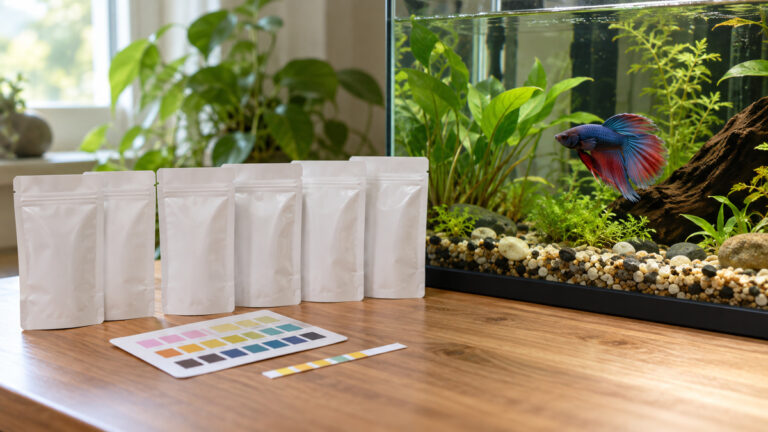
A strip result is only useful if you read it the same way each time. Dip the strip, hold it for the time the listing gives, and compare the color to the chart in good light. Keep a simple log with the date, the reading, and any water change done that week. A rising trend over several weeks tells you more than one reading does.
The UF/IFAS ammonia guide says that water changes can help in the short term. In tank systems, it notes that “water changes and the use of ammonia-binding products can alleviate ammonia toxicity in the short term.” It also says that for long-term management, the system should be set up to keep the problem from returning. A nitrate log helps you see whether the routine is working.
For related reading, see Best Ammonia Test Kit for Aquarium for an ammonia-focused comparison, and Best Aquarium Water pH Test Kit for pH. For a wider multi-parameter comparison, see Best Fish Tank Test Kit.
FAQ
What is a nitrate test kit for an aquarium?
It is a set of strips or liquid reagents that reads the nitrate level in tank water. Most aquarium kits are multi-parameter strip packs, so nitrate is one reading among several. The listings in this guide name nitrate on every strip kit in the table.
How often should you test for nitrate?
No source opened for this post gives a test schedule for betta tanks. The weekly math in this guide uses one test per week as a planning assumption. Test more often while the tank is new or when a reading changes.
What nitrate level is safe for a betta?
The sources opened for this post do not give a safe nitrate number for bettas. The UF/IFAS ammonia guide notes that nitrate was traditionally considered non-toxic up to 200 mg/L and that recent research suggests it may be more harmful than once believed. Watch the trend and keep up water changes.
Do you need a separate ammonia test?
Some strip kits include ammonia, and others do not. The table shows which ones list it. The UF/IFAS ammonia guide explains that most commercial ammonia test kits measure total ammonia nitrogen, which is “the same as parts per million (ppm).” If your kit does not list ammonia, buy a separate ammonia test for a new tank.
Are strip kits accurate enough for a betta tank?
The listings do not state accuracy against a lab method, and no source opened here compares strips with a liquid kit. Use the strips for trends and read the color chart in good light.
Bottom line
For nitrate, pick a strip kit that lists nitrate, has enough strips for the months you plan to test, and includes the readings you actually need. Count weeks by strip count, log every reading, and watch the trend, because no listing or source opened here gives a nitrate target for bettas.
Sources
- University of Florida IFAS Extension, “FA031: Ammonia in Aquatic Systems”, https://edis.ifas.ufl.edu/publication/FA031 (opened 2026-10-24)
- University of Florida IFAS Extension, “FA212: Evolution, Culture, and Care for Betta splendens”, https://edis.ifas.ufl.edu/publication/FA212 (opened 2026-10-24)
- US Environmental Protection Agency, “National Primary Drinking Water Regulations”, https://www.epa.gov/ground-water-and-drinking-water/national-primary-drinking-water-regulations (opened 2026-10-24)