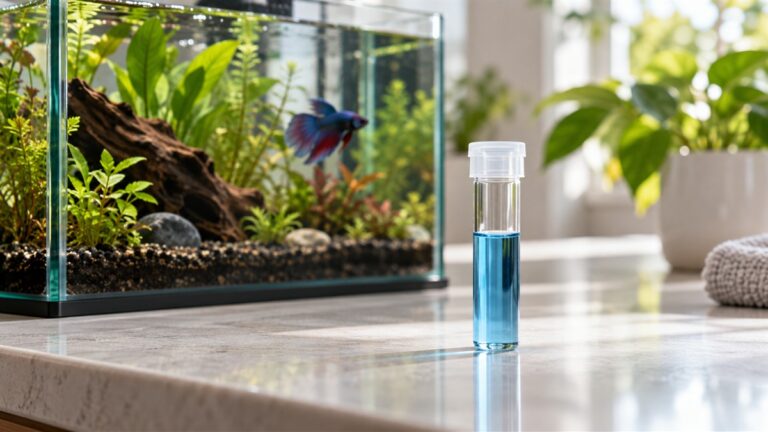
Fish Tank pH Strips
As an Amazon Associate we earn from qualifying purchases.
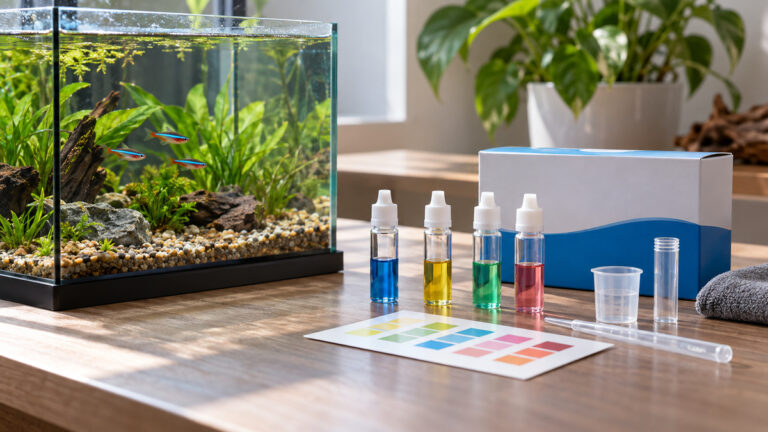
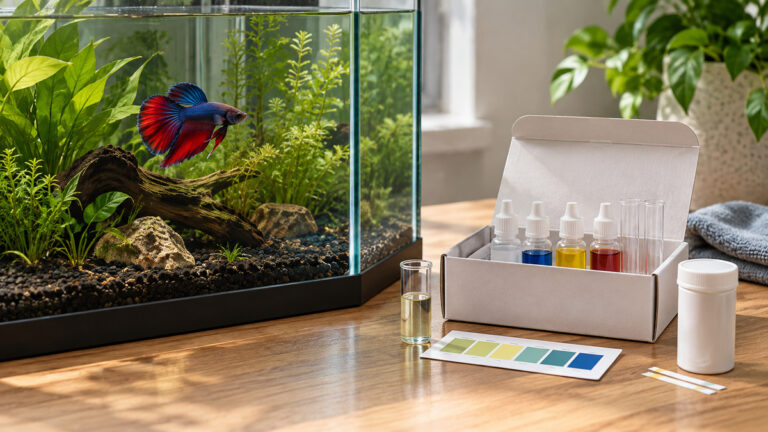
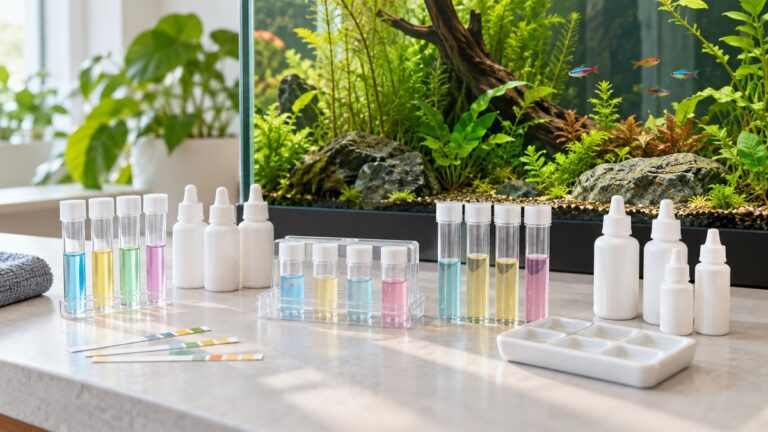
Fish tank pH strips are dip-and-compare test strips that show the pH of aquarium water by colour, so a betta owner can check the water without setting up a liquid kit. The best strip for most beginners is one whose listing names pH clearly, comes in a pack size you will finish before the strips age, and states a pH range that matches the reading you expect. Both the UF/IFAS and Merck pages treat pH as a routine check, not a one-time step.
Quick answer
- Choose a strip whose listing names pH among its parameters. Eleven listings in the research pool do, and six are covered in detail below.
- Match the strip count to how often you will test. Weekly testing uses roughly one strip per week, so a 50-count pack lasts close to a year.
- Read the listed pH range before you buy. The ranges that appear in the pool run from 6.0-8.0 to 6.5-8.5, and several listings state no range at all.
- If a reading looks wrong or a fish looks unwell, the sources point toward a fish veterinarian or an experienced fish keeper rather than a strip alone.
What the sources say about pH testing
The Merck Veterinary Manual says that “Water quality must be routinely monitored for levels of chlorine, pH” in fish care, and that the water should be tested before fish are added: “The water quality should always be tested before adding fish to the aquarium or pond”. It adds that the pH of tap water varies from place to place and that the level can be checked with “readily available home test kits.” Merck also notes that you can take a sample to a veterinarian or pet store for a fuller analysis.
The UF/IFAS publication Ammonia in Aquatic Systems makes a related point about kit design. It says that “a good ammonia test kit will include a TAN test, a pH test, and a thermometer.” The same publication adds that the more toxic un-ionized ammonia fraction depends on pH and temperature, so a pH reading is not optional when you check ammonia. It also advises that an aquarist “should invest in a dependable water quality test kit, learn how it works, and use it regularly.”
Put together, the two pages support three habits: test before the fish goes in, test during routine water changes, and read the pH alongside the other values on the same strip. Neither page gives a pH target for betta tanks, so the target has to come from another source or from your own testing history.
Comparison table
The table lists every valid pH listing in the research pool. Each row uses only the specs and bullets of that listing. “Not stated” means the listing does not give a pH range in its specs or bullets.
| Listing (ASIN) | Strips listed | Parameters named in listing | pH range in listing | Other listed detail |
|---|---|---|---|---|
| AAwipes 8-in-1 (B0D2RG3LXR) | 50 | 8, including pH, ammonia, free chlorine, nitrate, nitrite, hardness, total alkalinity, sodium chloride | Not stated | Ammonia pad waits 180 seconds |
| DaToo 8+1 (B0CLTKX9M5) | 100 | 8 plus temperature, including pH, ammonia, carbonate hardness, total alkalinity | Not stated | Ammonia wait 2-3 minutes |
| SaySummer 9-in-1 (B0DD7B4VJG) | 125 | 9, including pH, ammonia, nitrate, nitrite, copper, free chlorine, hardness, alkalinity | Not stated | Listing states a two-year shelf life |
| FUNSWTM 7-in-1 (B08MZDLC15) | 100 | 7, including pH, carbonate, total alkalinity, hardness, free chlorine, nitrate, nitrite | 6.5 – 8.5 | Includes a test tube and thermometer sticker |
| AKSBTEC 7IN1 (B0FR1PVMND) | 50 | 7, including pH, carbonate, hardness, total chlorine, free chlorine, nitrate, nitrite | 6.2 – 8.4 | Material listed as PVC plastic |
| Droplytix app-enabled 10-in-1 (B0G4HWY69V) | 10 | 10, read through a mobile app | 6.0 – 8.0 | Mobile app listed as an included component |
| A QUILA 7-in-1 (B0GY43M92L) | 150 | 7, including pH, total alkalinity, hardness, chlorine, nitrate, nitrite, ammonia | Not stated | Includes a test tube and thermometer |
| WHITE SHARK 9-in-1 (B0G2488PDN) | 100 | 9, including pH, nitrate, nitrite, total hardness, free chlorine, copper, carbonate, alkalinity | Not stated | Listing says results in 60 seconds |
| A QUILA 9-in-1, 25 count (B0H1L3FTV1) | 25 | 9, including pH, alkalinity, hardness, chlorine, nitrite, sulfate, copper, iron, ammonia | Not stated | Listing says 25 uses per pack |
| Aquatic Eden 9-in-1 (B0D25HZ18B) | 100 | 9, including pH, iron, copper, nitrate, nitrite, chlorine, total hardness, carbonate hardness, total alkalinity | 6.2 – 8.4 | Listing says results in 60 seconds |
| A QUILA 9-in-1, 50 count (B0H1L7JS9Y) | 50 | 9, including pH, ammonia, alkalinity, hardness, chlorine, nitrite, sulfate, copper, iron | Not stated | Listing says freshwater and saltwater |
How the pack size compares with a testing schedule
The formula is simple: strips listed divided by 52 equals years of weekly testing, assuming one strip per test session. The sources do not set a testing schedule, so this is an arithmetic guide rather than advice. For 25 strips the result is about 0.48 years. For 50 strips it is about 0.96 years. For 100 strips it is about 1.92 years, for 125 strips about 2.40 years, and for 150 strips about 2.88 years.
The SaySummer listing states a two-year shelf life. A 125-strip pack tested once a week would run past that listed shelf life, so that pack suits someone who tests less often. This is the main reason pack size should be checked against the schedule, not just the price per strip, which this post does not cover.
The picks
Six listings get full sections below. Each section repeats only what the listing says, then gives a best-for and a skip-if line taken from those facts. The five other valid listings appear in the table above.
AAwipes 8-in-1 Aquarium Test Kit, 50 strips
- Listing facts: 50 strips, eight parameters that include pH and ammonia nitrogen, fiber paper with what the listing calls non-bleeding colours, and a sealed bottle.
- Best for: a reader who wants pH and ammonia on the same strip in a modest pack.
- Skip if: you need a fast ammonia read, because the listing says pad 8 waits 180 seconds.
- Gap: no pH range appears in the bullets for this listing.
DaToo 8+1 Aquarium Test Strips, 100 strips
- Listing facts: 100 strips, an “8+1” parameter test with an extra thermometer, and thickened fiber paper that the listing describes as durable.
- Best for: a reader who wants a temperature reading alongside pH and the other strip values.
- Skip if: you want a fast ammonia result, because the listing says ammonia needs two to three minutes.
- Gap: the bullets for this listing name no pH range.
SaySummer 9-in-1 Aquarium Test Strips, 125 strips
- Listing facts: 125 strips, nine parameters including pH, a moisture-resistant bottle with desiccant, and a two-year shelf life stated in the bullets. The listed uses include betta tanks.
- Best for: a reader who wants the largest single pack in the table and a pH check on the same strip.
- Skip if: you plan to test weekly for more than two years, because the calculation above shows the pack would outlast the listed shelf life.
- Gap: this listing gives no pH range in its specs.
FUNSWTM 7-in-1 Aquarium Test Strips, 100 strips
- Listing facts: 100 strips, a listed pH range of 6.5 to 8.5, a test tube and thermometer sticker in the kit, and a bullet that names betta fish tanks among the suitable setups.
- Best for: a reader who wants the listed range printed on the product page and a kit that includes a sample tube.
- Skip if: you need a listed pH range wider than 6.5 to 8.5.
- Limitation: the listing describes the strips as fiber paper with no colour bleeding, which the listing does not test against other brands.
AKSBTEC 7IN1 Aquarium Test Strips, 50 strips
- Listing facts: 50 strips, a listed pH range of 6.2 to 8.4, seven parameters that include pH, carbonate, hardness, total chlorine and free chlorine, and a usage note that says a green border marks the ideal range.
- Best for: a reader who wants a colour guide printed on the strip usage note and a modest pack.
- Skip if: you prefer fiber paper, because the listing names PVC plastic as the material.
- Limitation: the listing covers both freshwater and saltwater tanks, so it does not focus on betta tanks alone.
Aquatic Eden 9-in-1 Aquarium Test Strips, 100 strips
- Listing facts: 100 strips, a listed pH range of 6.2 to 8.4, nine parameters that include carbonate hardness and total alkalinity, and a bullet that says results come in 60 seconds.
- Best for: a reader who wants pH, carbonate hardness and total alkalinity on one strip.
- Skip if: you want an ammonia pad, because the listed parameters do not include ammonia.
- Limitation: the listing does not give a pH range wider than 6.2 to 8.4.
Reading a pH strip correctly
The usage steps are printed in several listings, and they are close to identical across the pool. The AAwipes listing says to dip a strip for two seconds for pads one to seven, then remove it without shaking off excess water and hold it horizontally for 30 seconds before comparing colours. Its ammonia pad is handled separately, with a five-second dip and a 180-second wait. The DaToo listing gives a similar method with the strip dipped into a sample in a test tube, then placed horizontally for 30 seconds, with ammonia needing two to three minutes. The Aquatic Eden listing says results come in 60 seconds, and the WHITE SHARK listing gives the same figure. The FUNSWTM listing says to wait 15 to 30 seconds.
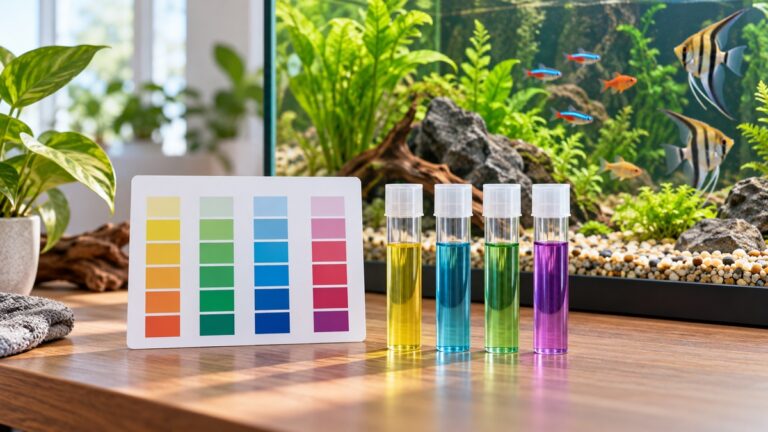
These differences matter in practice. A reader who times the wait differently will read a different colour, so the timing in the listing is the reference for that product. Compare the strip against the chart on the bottle, in the light the listing recommends, and read it at the time the listing gives. Keep the same method for every check so that a change in the tank shows up as a change in colour rather than a change in technique.
Two more details matter for a betta tank. Merck says the water should be tested before fish are added, so the first reading is a baseline for the tank, not a verdict. Merck also says a pH check fits into routine water changes and cleanings, so a strip used during a water change gives a second reading at the same time as the change. The UF/IFAS page adds that pH and temperature both affect how much of the ammonia present is the more toxic form, so a pH reading alone does not describe ammonia risk.
Storage affects the result too. The A QUILA listing advises keeping hands dry, avoiding fingers on the test area, capping the bottle tightly after each use, and storing it in a cool, dry place away from humidity. The SaySummer listing says its bottle includes a desiccant to keep the strips accurate after opening. A strip that has been left open or in a humid room may read differently from a fresh one, and the listings give no test of how much that matters.
Listings dropped from the pool
One listing in the pH pool was dropped. The Just Fitter Alkaline Water pH Test Strips listing (B0D1BTRNBX) is a general litmus-paper product. Its title and bullets centre on drinking water and a range of liquids, with aquariums named as one use among several. It does not present itself as an aquarium test kit, so it is not one of the picks. For a betta tank, a general liquid strip is the wrong type of product.
How we chose
We kept only strips and kits whose listing names pH as one of its parameters. From that set we picked six listings that cover different strip counts, different pH ranges and different parameter sets, so a reader can compare them. Each pick gets a best-for and a skip-if line based only on the listing. We did not use prices or customer ratings, and the table shows only the specs and bullets printed on each listing. The table keeps the other five valid listings visible so the choice is not hidden.
What we could not verify
Several listings make accuracy claims. Some say results are up to a stated percentage accurate, and others say the strips are developed by experts. The sources we opened do not compare strip brands or test strip accuracy, so those claims remain unverified here. The same applies to claims about colour matching and bleeding, which are listing statements only.
What the sources do not say
- The sources we opened do not give a target pH for a betta tank.
- They do not say how accurate a dip strip is compared with a liquid drop kit.
- They do not give a set testing schedule for a home aquarium.
- They do not name any strip brand, so none of the picks is endorsed by the sources.
FAQ
Are fish tank pH strips accurate enough for a betta tank?
The listings make accuracy claims, but the sources we opened do not test strips. Use strips as a routine check, read them in the light the listing describes, and watch for changes over time rather than trusting one reading. If a reading is unexpected, compare it with a second test before you change anything in the tank.
What pH should a betta tank be kept at?
The sources we opened do not give a betta-specific pH target. The Merck page says pH varies with where the water comes from, so the starting point is your own tap water. Stable readings matter more than a single number. If readings look wrong or the fish looks unwell, ask an experienced fish keeper or a fish veterinarian rather than adjusting the tank by guesswork.
How often should you test the pH?
The sources do not set an interval. Merck says to test before fish are added and to include testing in routine water changes and cleanings. UF/IFAS says to use the kit regularly. A weekly check during water changes fits both statements, but that is a practical choice, not a rule from the sources.
Do you need a separate ammonia test?
UF/IFAS says a good ammonia test kit should include a TAN test, a pH test and a thermometer. Several listings in the table include ammonia on the same strip, and some do not. Check the parameter list before buying, and remember that the pH reading is needed to judge how much of the ammonia is the more toxic form.
Can pH strips replace a liquid test kit?
The sources do not compare the two. Both are colour-match tests, and the listings describe timing differences in the strips. If you want the same method for every check, pick one format and stay with it so the readings stay comparable. For a broader comparison of kit types, see the aquarium pH test kit guide.
Bottom line
Choose a fish tank pH strip whose listing names pH and states a range you can check against, size the pack to how often you will test, and keep the readings as a trend rather than a single snapshot. If you are still choosing a tank or heater, the betta tank size guide covers the setup side, and the water quality test strip roundup compares more strip listings.
Sources
- UF/IFAS EDIS, “Ammonia in Aquatic Systems” (FA031), opened 2026-10-24: https://edis.ifas.ufl.edu/publication/FA031
- UF/IFAS EDIS, “Evolution, Culture, and Care for Betta splendens” (FA212), opened 2026-10-24: https://edis.ifas.ufl.edu/publication/FA212
- Merck Veterinary Manual, “Providing a Home for Fish”, opened 2026-10-24: https://www.merckvetmanual.com/all-other-pets/fish/providing-a-home-for-fish