Freshwater Fish Tank Water Testing
As an Amazon Associate we earn from qualifying purchases.
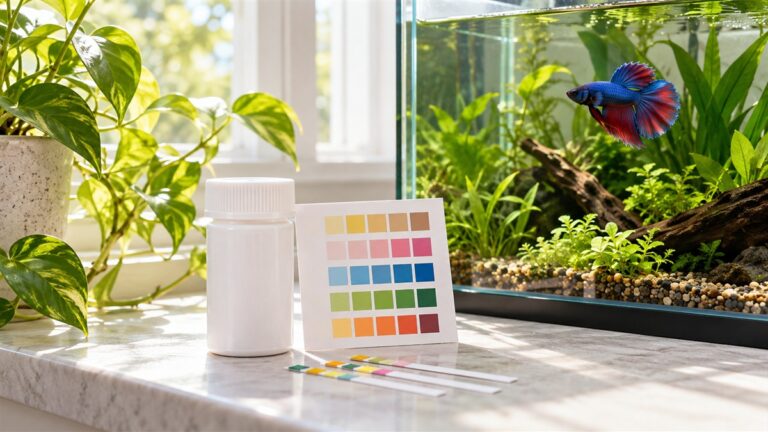
Freshwater fish tank water testing means checking the chemistry of the water a fish lives in, usually for ammonia, nitrite, nitrate, pH, chlorine and hardness, so that problems show up before the fish shows symptoms. For a betta, the most useful kit is one that covers the parameters the sources name, comes in a count you will use, and states clearly what each reading means. The UF/IFAS and Merck pages both treat routine water testing as part of basic husbandry, not an optional extra.
Quick answer
- Pick a kit that tests the core parameters: ammonia, nitrite, nitrate and pH. UF/IFAS describes ammonia as the first check because fish produce it directly.
- Choose between strips and digital probes based on how often you want to check. Strips are a snapshot; the monitor in the pool is a continuous probe with alerts.
- Count the tests per pack against your schedule. The sources recommend regular testing, so a pack that runs out in a few months is a poor fit.
- Treat any unexpected reading as a reason to check again and to ask an experienced fish keeper or a fish veterinarian, not as a reason to dose the tank.
What the sources say about routine testing
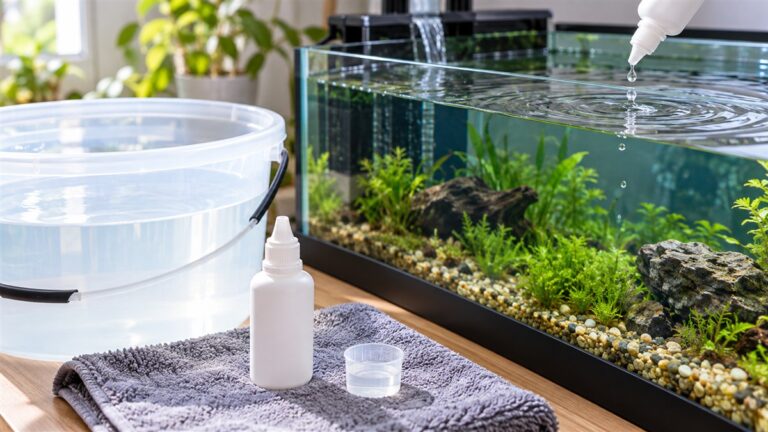
The Merck Veterinary Manual states that “The water quality should always be tested before adding fish to the aquarium or pond to ensure that the water conditions are optimal.” It adds that a home kit lets you include water quality testing in routine water changes and cleanings, including filter medium changes. Merck also says that “Poor water quality is the most common cause of environmental-related diseases in fish”, which is the reason the testing step is worth doing before a problem appears.
The UF/IFAS publication Ammonia in Aquatic Systems is written for aquaculture and aquariums. It says that “All aquaculturists and hobbyists should invest in a dependable water quality test kit.” and that a good ammonia test kit includes a TAN test, a pH test and a thermometer. It also explains that nitrite is toxic at levels as low as 0.10 mg/L, and that nitrate is treated as less toxic but can accumulate in closed systems with little water exchange.
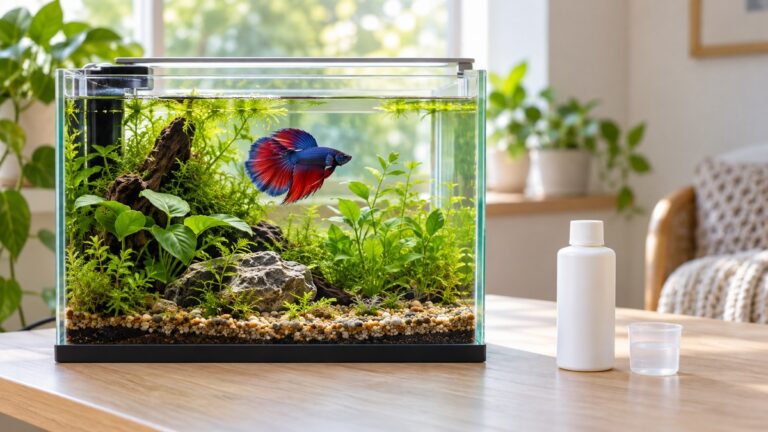
The UF/IFAS betta publication, Evolution, Culture, and Care for Betta splendens, links water quality to management rather than to the size of the container. It says that “water quality is not dependent on the size of the container, but rather on management and husbandry.” It also advises that aquariums of limited volume and reduced filtration should be managed with “frequent water changes”, which is where a routine test kit earns its place.
Comparison table
The table lists every valid kit and monitor in the research pool that names freshwater use or a parameter a betta owner would check. Each row uses only the specs and bullets of that listing. “Not stated” means the listing does not give that detail in its specs or bullets.
| Listing (ASIN) | Count listed | Parameters named in listing | pH range in listing | Other listed detail |
|---|---|---|---|---|
| Droplytix app-enabled 10-in-1 (B0G4HWY69V) | 10 | 10, read through a mobile app, including ammonia, nitrate and nitrite | 6.0 – 8.0 | Mobile app and test strips included |
| A QUILA 7-in-1 (B0GY43M92L) | 150 | 7: pH, total alkalinity, hardness, chlorine, nitrate, nitrite, ammonia | Not stated | Test tube and thermometer included |
| Aquatic Eden 9-in-1 (B0D25HZ18B) | 100 | 9: iron, copper, nitrate, nitrite, chlorine, pH, total hardness, carbonate hardness, total alkalinity | 6.2 – 8.4 | Listing says results in 60 seconds |
| FUNSWTM 7-in-1 (B08MZDLC15) | 100 | 7: nitrate, nitrite, hardness, free chlorine, pH, carbonate, total alkalinity | 6.5 – 8.5 | Test tube and thermometer sticker |
| AKSBTEC 11-in-1 (B0FH2D375P) | 150 | 11, including ammonia, nitrate, nitrite, pH, alkalinity, carbonate, hardness, chlorine, copper, iron, temperature | 0 – 14 | Ammonia and temperature strips included |
| AESCULIX 9-in-1 (B0HDYWWQSM) | 123 per specs | 9: pH, nitrate, nitrite, carbonate and KH, total alkalinity, hardness, free chlorine, copper, phosphate | 6.5 – 8.5 | Listing covers ponds and swimming pools too |
| MuBoo 9-in-1 (B0H6THSX14) | 50 | 9: pH, total alkalinity, general hardness, total chlorine, free chlorine, copper, iron, nitrate, nitrite | Not stated | No ammonia parameter in the listing |
| FUNSWTM 9-in-1 (B0DTK43WB9) | 150 per kit, 100 per specs | 9, including ammonia, pH, nitrate, chlorine, nitrite, hardness, alkalinity, copper | 6.0 – 8.0 | Test tube and thermometer included |
| A QUILA 9-in-1, 50 count (B0H1L7JS9Y) | 50 | 9, including pH, ammonia, alkalinity, hardness, chlorine, nitrite, sulfate, copper, iron | Not stated | Listing says freshwater and saltwater |
| Smart aquarium water monitor (B0DYHJM7SK) | Not a strip | Electronic probe: pH, salinity, temperature, TDS | Not stated | App and SMS alerts; pH calibration powder included |
How the count fits a schedule
The formula is strips listed divided by 52 equals years of weekly testing, assuming one strip per test session that checks several parameters at once. The sources do not set a schedule, so the arithmetic only shows whether a pack suits a weekly habit. A 50-count pack covers about 0.96 years at that pace, a 100-count pack about 1.92 years, and a 150-count pack about 2.88 years.
The FUNSWTM 9-in-1 listing shows a conflict that a buyer should check. Its specs list a unit count of 150 and also list 100 for the number of items, while the kit text says 150 strips. The formula gives 1.92 years for 100 strips and 2.88 years for 150, so the count in the pack itself is the figure to confirm before you rely on the schedule.
The picks
Six listings get full sections. Each section repeats only what the listing says, then gives a best-for and a skip-if line based on those facts. The other valid listings appear in the table above.
Droplytix App-Enabled 10-in-1 Water Test Kit
- Listing facts: 10 count, a mobile app and test strips in the kit, a listed pH range of 6.0 to 8.0, and bullets that say it suits freshwater, saltwater, betta and shrimp tanks.
- Best for: a reader who wants a phone-based readout instead of matching colours by eye.
- Skip if: you do not want to use a phone app, or you need a larger count.
- Gap: the bullets do not say how the app reads the strip, so the method is listing-only.
A QUILA 7-in-1 Aquarium Water Ammonia Test Strips, 150 strips
- Listing facts: 150 strips, seven parameters including pH, total alkalinity, hardness, chlorine, nitrate, nitrite and ammonia, and a test tube and thermometer included.
- Best for: a reader who wants ammonia, nitrite and nitrate on one strip with a sample tube for collecting water.
- Skip if: you need copper or iron testing, because those are not in the parameter list.
- Gap: the listing states no pH range.
AKSBTEC 11-in-1 Aquarium Test Strips Kit, 150 strips
- Listing facts: eleven parameters including ammonia, nitrate, nitrite, pH, temperature, carbonate and hardness. The kit includes ammonia strips, a temperature strip and a tube.
- Best for: a reader who wants the widest parameter list in the pool.
- Skip if: you want a freshwater-only kit, because the listing describes dual use for freshwater and saltwater and marine tanks.
- Gap: the listed pH range is 0 to 14, which is wider than most strips in the pool.
FUNSWTM 9-in-1 Aquarium Test Strips, 150 count
- Listing facts: nine parameters including ammonia, pH, nitrate, nitrite, chlorine, hardness, alkalinity and copper, plus a test tube and thermometer, with a listed pH range of 6.0 to 8.0.
- Best for: a reader who wants an ammonia test in a pack with a sample tube and thermometer.
- Skip if: the count matters to you, because the listing gives both 150 and 100 in different places.
- Gap: the listing does not explain which count applies to the kit as sold.
Smart Aquarium Water Monitor (electronic probe)
- Listing facts: an electronic probe that measures pH, salinity, temperature and TDS, with app and SMS alerts, three mounting options, and six pH calibration powder packets in the box. The listing says to rinse the probe under tap water monthly.
- Best for: a reader who wants continuous readings with alerts rather than periodic dips.
- Skip if: you want a kit with no electronics or a lower cost of entry, which this post does not compare.
- Gap: the listing does not state a freshwater-only use, and the salinity reading is listed for both freshwater and saltwater tanks.
MuBoo 9-in-1 Fish Tank Water Test Strips, 50 count
- Listing facts: 50 strips, nine parameters including pH, total alkalinity, general hardness, total and free chlorine, copper, iron, nitrate and nitrite, and a resealable pouch.
- Best for: a reader who wants a small pack covering the water chemistry parameters but not ammonia.
- Skip if: you need an ammonia reading, because the parameter list omits it.
- Gap: the listing does not state a pH range.
Building a testing routine from the sources
A routine is simpler than a list of kits. The sources give three moments to test, and a betta owner can build a log around them. The first is before any fish goes into a new tank, when Merck says the water should be tested to make sure the conditions are optimal. The second is during each water change, when Merck says the kit can be used as part of routine water changes and cleanings. The third is after a change in the tank, such as a new filter medium, because Merck lists filter medium changes among the routine cleanings where testing fits.
Between those points, the sources recommend regular use rather than a fixed count. UF/IFAS says that a hobbyist should learn how a kit works and use it regularly. A simple log of date, parameter, colour reading and the water change that day gives a trend line. The log matters more than any single value, because a rising nitrate reading across several weeks tells you something a single test cannot.
The betta publication from UF/IFAS adds a reason to keep the log. It says that aquariums of limited volume and reduced filtration should be managed with frequent water changes, so uneaten feed and waste do not build up. A tank with a small volume and a light filter therefore depends more on the water change schedule and on the testing that tells you whether that schedule is enough. The sources do not give a number of days between changes, so the log is the only way to see whether a given schedule is working in your tank.
When a reading moves outside the range the kit labels as normal, the sources do not suggest a home fix as the first step. Merck says different causes of a problem, such as water quality, nutrition and infection, should be checked before treating, and it points to a fish veterinarian for that work. A test result is therefore a prompt to check again, to review what changed, and to ask for help if the fish shows signs of illness. It is not a signal to add a product to the water without advice.
Keep the kit itself in good condition. The A QUILA listing advises keeping hands dry, avoiding touching the test pads, capping the bottle tightly after each use, and storing it in a cool, dry place. A strip that has absorbed humidity may read differently from a fresh one, and the listings do not test how much difference that makes. Keeping the storage advice in mind is an inexpensive way to keep the readings consistent over a long pack.
Listings dropped from the pool
Two listings were dropped. The Hygger Salinity Tester (B0BG1TF8WT) is a transparent acrylic hydrometer for salinity in marine tanks, which is the wrong type for a freshwater betta tank. The Yiffer Ammonia Fish Tank Test Strips (B0FWPGQPPJ) test ammonia only, so they do not cover the wider water chemistry this roundup compares. Both are named here so the drop is visible.
How we chose
We kept kits and monitors that name at least one core freshwater parameter, and we preferred listings whose parameter list includes ammonia, nitrite or nitrate. From that set we picked six that differ in format, count and parameter coverage: an app-based kit, a strip kit with a tube, a wide-range kit, a kit with an ammonia test and sample tube, an electronic probe, and a smaller strip pack without ammonia. The table keeps every other valid listing visible. We did not use prices or customer ratings anywhere in this post.
What we could not verify
Listings make accuracy and speed claims, including result times and “accurate” wording. The sources we opened do not compare kits or test their accuracy, so those claims stand as listing statements only. The same applies to the app readout on the Droplytix kit and the alert function on the monitor.
What the sources do not say
- The sources we opened do not give a betta-specific target for any of the parameters a kit measures.
- They do not compare strips with liquid drop kits, or digital probes with either.
- They do not say how many tests per month a betta owner should run.
- They do not name a kit brand, so none of the picks is endorsed by the sources.
FAQ
What should a freshwater fish tank test kit cover?
The UF/IFAS ammonia publication says a good ammonia test kit includes a TAN test, a pH test and a thermometer. For a betta tank, ammonia, nitrite, nitrate and pH are the core parameters to look for. Chlorine matters when you fill with tap water, and Merck lists chlorine, pH, temperature and salinity among the routine checks.
Do strips or a digital probe work better?
The sources do not compare them. Strips give a colour reading at the moment of the dip, and the monitor in the table gives continuous readings with alerts. The choice depends on how often you will check and whether you want to read colours yourself. Pick one method and keep it so your readings stay comparable from week to week.
How often should a betta tank be tested?
The sources do not set an interval. Merck says to test before fish are added and during routine water changes, and UF/IFAS says to use the kit regularly. Testing at each water change is a practical routine that follows both statements, but it is a choice, not a rule from the sources.
Why does the nitrite reading matter so much?
UF/IFAS says nitrite is toxic to fish at levels as low as 0.10 mg/L. That number is listed in the publication, but the sources we opened do not translate it into a strip colour, so check which colour your strip uses for nitrite before you act on a reading.
Is a single test enough to judge the tank?
No. A single reading is a snapshot. Merck says water quality should be monitored routinely, and UF/IFAS says a dependable kit should be used regularly, which means trends matter more than one result. If a reading is unexpected or the fish looks unwell, ask a fish veterinarian rather than relying on one test.
Bottom line
For a betta tank, choose a freshwater test kit that covers ammonia, nitrite, nitrate and pH, size the count to a regular schedule, and log each reading so you can see a trend. If you need a narrower guide to a single test type, the freshwater water test kit roundup covers more kits, and the colour chart guide explains how to read strips against a printed chart.
Sources
- UF/IFAS EDIS, “Ammonia in Aquatic Systems” (FA031), opened 2026-10-24: https://edis.ifas.ufl.edu/publication/FA031
- UF/IFAS EDIS, “Evolution, Culture, and Care for Betta splendens” (FA212), opened 2026-10-24: https://edis.ifas.ufl.edu/publication/FA212
- Merck Veterinary Manual, “Providing a Home for Fish”, opened 2026-10-24: https://www.merckvetmanual.com/all-other-pets/fish/providing-a-home-for-fish