Ammonia Test Strips for a Fish Tank: How to Choose
As an Amazon Associate we earn from qualifying purchases. Details
Ammonia test strips for a fish tank give you a fast, dedicated check on the reading that matters most in a new setup. They are simpler than a full multi-parameter kit, and they fit a routine of frequent checks. This guide explains when a dedicated ammonia strip makes sense, how to read the timing on each listing, and what to check before you buy. Strips are a tool for a schedule, so the supply and the reading routine matter as much as the price on the box.
Quick answer
Choose ammonia test strips when you want one clear reading and a simple dip. Pick a supply that matches how often you will test, and check the timing on the listing before you buy. UF/IFAS states that ammonia is colorless and odorless even at toxic levels, so a strip is the only dependable check. Strips that test only ammonia leave nitrite and pH untested, so plan a separate test for those readings. Read each strip in the light the listing recommends, and test again after a water change or after adding a fish.
What an ammonia strip measures
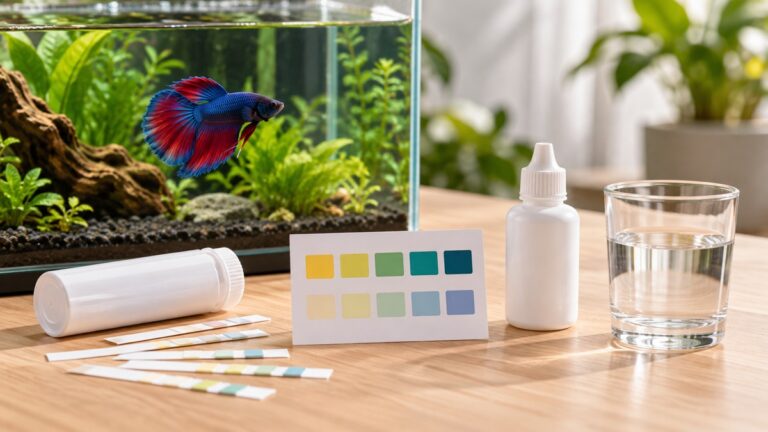
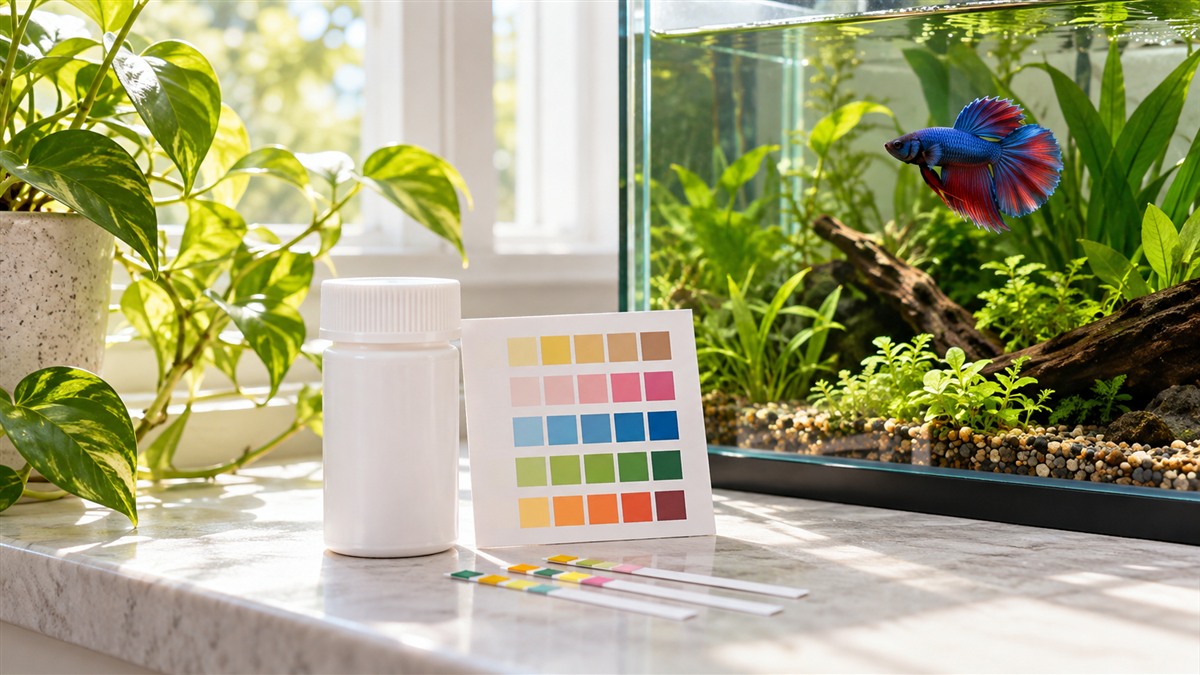
An ammonia strip reads one parameter: ammonia. You dip the strip, wait for the listed time, and compare the pad to a color chart. The result is a single color match, which can be easier to read than a multi-parameter card when you are learning. The listings in this group are built around that simple routine.
UF/IFAS explains why the single reading matters. Ammonia is colorless and odorless even at toxic levels, so testing is the only way to know it is present. The same guide adds that un-ionized ammonia is about 100 times more toxic to fish than ionized ammonium, and that the toxic share increases with higher pH and temperature. A strip gives you the ammonia result; a pH reading and a thermometer give you the context to judge it.
Dedicated strips versus multi-test strips
A dedicated ammonia strip covers one question. A multi-test strip covers ammonia and several other parameters, such as nitrite, nitrate, pH, hardness and chlorine. A dedicated strip is simpler to read and easier to explain to a beginner. A multi-test strip covers more ground per dip, but it asks you to read several pads and keep track of several timings.
For a new betta tank, many owners start with a dedicated ammonia strip and add a second test for pH and nitrite. That approach keeps each reading clear. If you prefer one dip for everything, choose a multi-test strip that clearly names ammonia on the same strip set, and check the timing for each pad.
Why the strip needs a second reading
UF/IFAS says a good ammonia test kit includes a TAN test, a pH test and a thermometer, because the toxic share depends on pH and temperature. A dedicated strip does not give you those inputs. You will need a pH reading and a thermometer to judge the ammonia number. Neither is a complicated purchase, but both are needed for a complete picture. If you are building a full kit around the strips, the freshwater fish tank water test kit guide covers the wider set of readings.
1. Ammonia Test Strips for Fish Tank, 50ct Ammonia Aquarium Test Strips (Dedicated ammonia strips, 50 count)
Specs from the listing (checked 2026-10-16):
- Unit Count: 50 Count
- Recommended Uses For Product: Ammonia Test, Aquarium
- Package Dimensions: 4.49 x 1.93 x 1.89 inches; 1.76 ounces
- Included Components: ammonia test strips
Pros
- The listing states a 50-count supply of ammonia strips
- The listing says to dip the strips, wait 2 minutes, and compare the colors
- The listing describes the strips for saltwater and freshwater aquariums and ponds
Cons
- The listing gives a 2-minute wait, so the timing is longer than a quick dip
- The listing does not mention a pH reading, a thermometer or a nitrite test
Best for: Owners who want a dedicated ammonia strip with a longer wait and a clear single-parameter routine.
Skip if: You want a strip that also reads nitrite or pH on the same pad, or you need a quick read under 30 seconds.
View on Amazon (affiliate link)
2. 75-Count Ammonia Test Strips for Fish Tank (Dedicated strips, 75 count)
Specs from the listing (checked 2026-10-16):
- Item Weight: 1.76 ounces
- Included Components: 75 Ammonia test strips
- Item package length: 4.37 inches; width: 1.89 inches; height: 1.85 inches
Pros
- The listing states 75 strips, the largest ammonia-only supply among the picks here
- The listing says the strips suit frequent monitoring at 2 to 3 times per week
- The listing gives a clear sequence: dip for 2 seconds, hold for 2 minutes, then compare within 30 seconds
Cons
- The listing sets a tight window of 30 seconds for the color compare, so timing matters
- The listing says to read under natural daylight, which may limit when you can test
Best for: Owners who plan frequent ammonia checks and want the biggest ammonia-only supply in this guide.
Skip if: You need a strip for more than one parameter, or you cannot read the pad in daylight.
View on Amazon (affiliate link)
3. DIPSTIK Ammonia Test Strips for Fish Tank,Feshwater & Saltwater (50ct) (Fiber paper strips, 50 count)
Specs from the listing (checked 2026-10-16):
- Material Type: Fiber Paper
- Unit Count: 50 Count
- Package Dimensions: 4.41 x 1.93 x 1.93 inches; 1.41 ounces
Pros
- The listing says the strips use fiber paper with no color bleeding pads
- The listing recommends use at least twice per week for monitoring
- The listing gives a 2-second dip followed by a 30-second color wait
Cons
- The listing says the strips are not reusable, so every check uses a new strip
Best for: Owners who want a 50-count ammonia supply with a simple dip and a 30-second read.
Skip if: You want a multi-parameter strip or you plan to test rarely.
View on Amazon (affiliate link)
4. Ammonia Test Strips,60 Strips Aquarium Test Kit for Fish Tanks & Ponds (60-strip ammonia pack)
Specs from the listing (checked 2026-10-16):
- Item model number: AMM60
- Color: Ammonia
- Item Weight: 1.41 ounces
- Item package length: 4.41 inches; width: 1.85 inches; height: 1.81 inches
Pros
- The listing states a 60-strip pack for ammonia readings
- The listing says readings are available within 2 minutes
- The listing names fish tanks, aquariums and ponds as uses
Cons
- The listing gives little detail on the dip and compare steps, so read the card closely
- The listing names ponds as well as fish tanks, so it covers a broader set of uses than a betta tank needs
Best for: Owners who want a 60-strip ammonia pack and are comfortable with a 2-minute read.
Skip if: You need detailed step-by-step timing on the listing, or you need a strip that tests more than ammonia.
View on Amazon (affiliate link)
5. Aquarium Ammonia Test Strips (50 Pack) – Fast & Accurate Ammonia Testing for Freshwater & Saltwater (50-pack ammonia strips with support)
Specs from the listing (checked 2026-10-16):
- Unit Count: 50 Count
- Included Components: Ammonia Test Strips (50 Pack)
- Recommended Uses For Product: Quick Ammonia Testing for Aquariums
Pros
- The listing states 50 strips sealed for freshness, with a 2-minute read
- The listing says the strips suit freshwater and saltwater tanks
- The listing says to close the cap tightly after each use and store in a cool, dry place
Cons
- The listing describes the strips as non-toxic, which is a manufacturer claim this guide does not verify
- The listing does not state a shelf-life period after opening
Best for: Owners who want a 50-count ammonia pack with a 2-minute read and clear storage directions.
Skip if: You need a verified shelf-life period, or you want a strip that tests more than ammonia.
View on Amazon (affiliate link)
How to read the timing
Timing is where most strip mistakes happen. The listings in this group do not agree on a single routine, so read each listing’s directions before your first test.
The listings describe a range of approaches. One describes a 2-second dip, a 2-minute hold, and a color check within 30 seconds. Another says to dip for 2 seconds, wait 30 seconds for the pad to change color, and compare. A third says results appear in 2 minutes. These are not the same routine. Use a timer, and follow the listing you bought rather than a routine from another brand.
If the listing says to hold the strip horizontally, do so. If it says to read under natural light, read the pad in daylight. A dim room can make two shades look alike, and that creates a false reading.
How often to test
The right schedule depends on the tank and the stage of setup. UF/IFAS advises that, in a production system, ammonia should be tested once a week, and immediately any time fish appearance or behavior changes, including reduced feeding. A home tank is not a production system, but the same logic supports a regular routine.
One listing in this group says to test two to three times per week for frequent monitoring. Another says to use the strips at least twice per week. These are useful ranges for a new tank, where the biofilter is still developing. A new biofilter requires six to eight weeks to build up enough bacteria to effectively reduce ammonia and nitrite levels, so a new tank may need more frequent checks than an established one.
Our general guidance for a betta tank is to test at least weekly, add a check after each water change, and test the same day if the fish’s appearance or behavior changes.
How to choose ammonia strips
Use these rules before comparing individual listings.
Match the supply to the schedule
Count the strips you need for your routine, then divide the supply by the number of tests per week. A listing that gives 50 or 75 strips can look generous, but it runs out faster if you test twice or three times a week. Do the division before you buy.
Check the timing and the light
Choose a listing whose timing you can follow. If the directions ask for a hold of two minutes and a read within 30 seconds, you need a timer and a clear place to read the pad. If the listing says natural light, plan your test near a window or at a time of day with good light.
Read the claims carefully
Some listings describe strips as accurate, fast or non-toxic. Those words are the manufacturer’s claims. This guide does not verify them, and it does not give an accuracy figure for any strip. Compare the color chart, the timing and the instructions instead.
Plan for the second readings
Add a pH reading and a thermometer to your list, because ammonia alone does not tell you the toxic share. If you want nitrite or nitrate, choose a multi-test strip or a separate test. Make the plan before you need it, so a surprising reading does not catch you without tools.
Worked example: strips used on a schedule
Suppose you test ammonia twice a week for the first eight weeks of a new tank, when the biofilter is still developing. That is 2 times 8 equals 16 tests, which leaves 75 minus 16, or 59 strips.
Next, suppose you then switch to a weekly routine, plus one check after each water change, which averages about two checks a week. At two checks per week, the 59 strips left last 59 divided by 2, which equals 29.5 weeks. That is roughly seven months of routine testing.
The lesson is simple. A supply that looks large on the box can still run short if you test often during setup. Count the tests every month, and reorder before the strips run out, not after.
Mistakes to avoid
Most strip errors come from rushing the timing or misreading the light.
Dipping too long or too short
Follow the timing on the listing you bought. A strip dipped for too long can give a different color than the chart shows. A strip read too early may not have developed the color yet. Set a timer before the first dip.
Reusing a strip
Several listings in this group say the strips are not reusable. Use one strip for each test, and throw the used strip away. Do not dip the same strip twice to check a result.
Storing the strips in a humid room
Several listings in this group say to store the strips in a cool, dry place and to close the cap tightly after use. A bathroom shelf or a window ledge in direct sun can be a poor spot. Keep the bottle in a drawer or cabinet away from the tank’s humidity, and check the bottle before each test. A bottle that has been left open may give readings you cannot trust.
Touching the test area
Keep your fingers off the test pads. Several listings say to keep hands dry before handling the strips and to keep wet fingers out of the bottle. Moisture can change the pad, and oil from fingers can affect the color.
Reading under the wrong light
If the listing says to read under natural light, do so. Compare the pad with the chart in the same light each time. A change in light can change the color you see.
Assuming a clear tank is safe
UF/IFAS states that ammonia is colorless and, even at levels toxic to fish, odorless. Clear water does not tell you the ammonia level. Test regularly, especially during the first weeks of a new setup.
Reading an unexpected result
An unexpected strip reading is a reason to repeat the test, check the timing, and check the light. It is also a reason to check your method. UF/IFAS notes that one ammonia method can read falsely high after formalin use within 24 to 72 hours, and after ammonia binding products and many water conditioners. Another method is not affected by those products.
If you have used a treatment or conditioner, read the test method in the listing or the maker’s manual. If the reading stays high or the fish changes appearance or stops eating, ask an experienced fish keeper or an aquatic vet. This guide does not give dosing or medical instructions.
For a wider look at strip options, see the fish tank water quality test strips guide, and keep a copy of the fish tank test strip color chart near your kit.
FAQ
Do I need ammonia strips for a betta tank?
Yes, if you want a dedicated check on the reading most tied to a new tank. UF/IFAS states that ammonia is colorless and odorless even at toxic levels, so a test is the only dependable way to know it is present.
Are dedicated ammonia strips enough on their own?
They are enough for ammonia, but not for a complete picture. UF/IFAS says a good ammonia kit includes a pH test and a thermometer, because the toxic share depends on those inputs. Add those readings, and add nitrite testing if you want it.
How often should I use ammonia strips?
Test at least weekly, add a check after each water change, and test the same day if the fish’s appearance or behavior changes. A new tank may need more frequent testing while the biofilter develops.
Why does a new tank need several weeks?
A new biofilter requires six to eight weeks to build up enough bacteria to effectively reduce ammonia and nitrite levels. Keep testing through that period, and avoid adding several fish at once.
Why do the timings differ between listings?
Each listing describes its own routine, with different dip times, hold times and read windows. Follow the listing you bought, and use a timer for each test.
Does a water change fix a high ammonia reading?
A water change can reduce ammonia toxicity in the short term, according to UF/IFAS. It does not replace a working biofilter, and it does not tell you the level. Test before and after the change to see the effect.
Should I dose a medication if the strip shows ammonia?
A high reading is a reason to check the water and speak with an experienced fish keeper or an aquatic vet about the fish.
Bottom line
For a fish tank, choose ammonia test strips when you want a clear, dedicated check. Match the supply to your schedule, follow the timing on the listing you bought, and read the pad in the light the listing recommends. Add a pH reading and a thermometer so you can judge the number. Test weekly, add checks after water changes, and test right away if a fish changes appearance or stops eating.
Sources
- UF/IFAS, Ammonia in Aquatic Systems (FA31): ammonia is colorless and odorless, un-ionized ammonia is about 100 times more toxic than ionized ammonium, the test kit contents, the testing frequency advice, the formalin and binding-product note, nitrite threshold, biofilter timing, and water change limits.